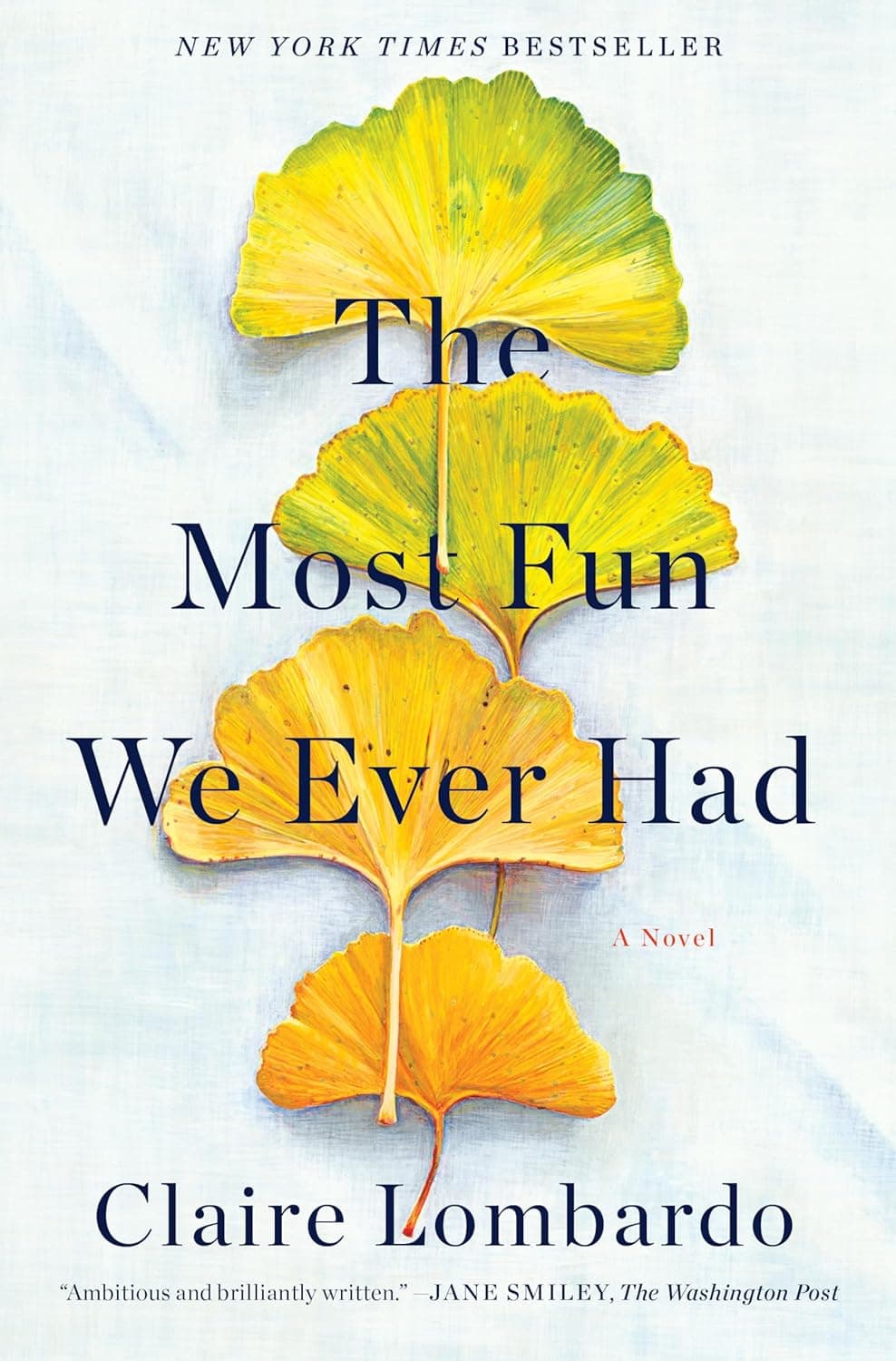
Claire Lombardo’s The Most Fun We Ever Had traces a single family across decades, mapping how a luminous marriage radiates through the lives of four very different daughters. Moving between past and present, the novel treats love, loyalty, and secrecy as living forces—messy, sustaining, and sometimes corrosive. What emerges is a portrait of kinship that is as contradictory as it is enduring.
Major Themes
The Complexity of Family and Sisterhood
At the novel’s center is the volatile, magnetic orbit of the four Sorenson sisters—Wendy, Violet, Liza, and Grace—and their lifelong tether to their parents, Marilyn and David. Lombardo treats sisterhood as a shifting terrain of rivalries, loyalties, and misread intentions, where identity is built in contrast to—and in imitation of—the others. The family home on Fair Oaks anchors this theme: it’s a gravitational center to which everyone returns in crisis, a repository of memory that both binds and traps.
The Ideal vs. Reality of Love and Marriage
The Sorenson parents’ marriage gleams like an ideal against which the daughters measure their own relationships, often to painful effect. The title’s wry promise—“the most fun we ever had”—exposes the paradox that joy and difficulty are inseparable: Liza’s relationship with Ryan buckles under depression, Violet’s marriage to Matt suffers from emotional evasions, and Wendy’s epic love with Miles Eisenberg becomes a locus of grief. The ginkgo tree—site of the parents’ first intimacy and a later sanctuary—embodies endurance: love as something grown, weathered, and tended, not bestowed.
Secrets and Their Consequences
Concealment powers the plot and reshapes the family’s inner architecture, proving that hidden truths never stay still. Violet’s relinquished son, Jonah Bendt, detonates old defenses when he returns, while Grace’s invented law-school acceptance and Liza’s affair metastasize from small omissions into isolating burdens. The novel’s dual timeline mirrors secrecy’s structure—what’s buried in the past runs under the present—suggesting that revelation both wounds and makes repair possible.
Supporting Themes
Motherhood and Identity
Motherhood remakes and unsettles the women of the novel, from Marilyn’s unplanned plunge into childrearing to the daughters’ uneasy transformations. It intensifies the pressures of romantic ideals and secrecy: Violet’s private history refracts her parenting, Liza’s pregnancy throws her partnership into relief, and Wendy’s grief reshapes her caretaking instincts. The theme asks who these women are apart from the roles they perform—and whether such separation is possible.
The Passage of Time and Memory
By braiding timelines, the book shows how remembered moments curate identity and mythologize love. David’s luminous recollection of meeting Marilyn beneath the ginkgo becomes a touchstone that steadies them even as later memories complicate the story. Time softens some edges and sharpens others, revealing how nostalgia can comfort, distort, and propel the present.
Mental Health and Grief
The novel treats depression and bereavement as family conditions, not private failings. Ryan’s illness reroutes Liza’s desires and choices, while Wendy’s mourning for Miles reshapes her risk-taking, candor, and propensity to blow things open. These struggles strain bonds but also create new forms of tenderness and resilience, mapping the costs of loving someone through pain.
Theme Interactions
-
Family & Sisterhood ↔ Secrets: Private histories redraw the lines of inclusion and exclusion among the sisters; secrecy creates codependencies (especially between Wendy and Violet) that both protect and poison intimacy. When truths surface, the family’s loyalty is tested—not to shatter the unit, but to force its reconfiguration.
-
Ideal Love ↔ Secrets: The blazing ideal of the parents’ marriage casts shadows where the daughters stash their disappointments; concealment often fills the gap between what love “should” be and what it is. Hints of undisclosed pasts in the parents’ story further complicate the ideal, suggesting endurance depends on truth-telling as much as devotion.
-
Motherhood ↔ Ideal Love: The labor of mothering collides with romantic myth, shifting marriage from swoon to sustenance. For Marilyn and her daughters, caregiving magnifies isolation and need, recentering love as daily work rather than perpetual rapture.
-
Time & Memory → All Themes: Nonlinearity reframes every bond; yesterday’s certainties become today’s revelations. As memories are revised, the family renegotiates what to forgive, what to keep, and what to let go.
-
Mental Health & Grief ↔ Family Bonds: Illness and loss expose cracks but also invite radical honesty. The family’s ability to absorb pain becomes a measure of its durability.
Character Embodiment
Marilyn and David As the novel’s radiant core, they embody the Ideal vs. Reality of Love and Marriage: incandescent devotion sustained by labor, argument, and need. Their bond, symbolized by the ginkgo and grounded in private struggles, is both a beacon and a burden for their children.
Wendy Volatile, loyal, and fiercely candid, Wendy bridges Family and Sisterhood with Secrets as both keeper and revealer. Grief for Miles recalibrates her courage and recklessness, pushing her to force reckonings that hurt in the short term but clear space for change.
Violet Perfectionism and control are Violet’s armor, forged to protect a past she’d rather erase. She sits at the crossroads of Secrets and Motherhood, her marriage strained by what she withholds and her identity threatened by what returns.
Liza A classic middle child, Liza shoulders responsibility until it suffocates her. Mental Health and Grief intersect in her life through Ryan’s depression; her affair marks the fault line between the ideal she was taught to pursue and the lonely reality she inhabits.
Grace The youngest reimagines herself through pretense, a lie that grows until it isolates her. Her arc ties Family and Sisterhood to the Passage of Time and Memory, revealing a late-born “only only-child” longing to be seen on her own terms.
Jonah Jonah is the novel’s living secret and its catalyst for truth. His presence forces the family to recalibrate love’s terms—expanding the circle while confronting the cost of what was hidden.
Matt, Ryan, and Others Partners become mirrors and pressure points: Matt’s steadiness falters under unspoken needs; Ryan’s illness reshapes Liza’s choices; colleagues and friends surface the gaps between who the characters are and who they pretend to be.