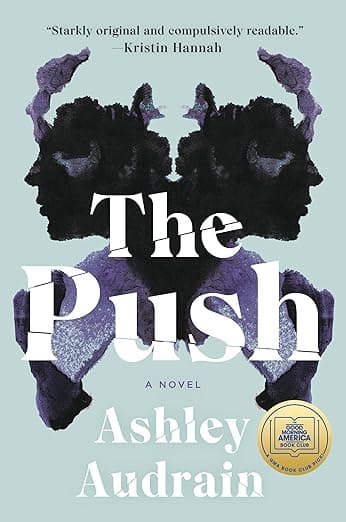
Opening
As these final chapters unfold, Blythe Connor pushes toward connection and truth, risking everything to reclaim her role as a mother. Her late-night call to Fox Connor, a fraught visit with their daughter Violet Connor, and a cascade of revelations climax in a snow-lit moment of possible confession that refuses to resolve cleanly.
The story tightens around the collision of past and present, love and fear—leaving Blythe, and us, suspended between what is felt and what can be proven.
What Happens
Chapter 81: A Late-Night Call
Reeling from a private awakening, Blythe phones Fox after midnight, determined to see more of Violet without apologizing for a version of motherhood she refuses to disown. On her third try, Gemma answers; when Fox comes to the phone, Blythe says, “I need to see her more. I want to do better.”
In the same breath, she asks for the painting of Sam Connor that Fox took when he left—the last intact symbol of the family she lost. The line goes quiet. When Fox finally speaks, his voice is flat: he claims he doesn’t know where it is.
Chapter 82: The Closest Thing
Blythe collects Violet from school and announces a new midweek custody plan: every Wednesday and Thursday night. Violet sits rigid, thumbing a phone Blythe didn’t know she had. Asked who she’s texting, Violet answers, “Mom and Dad,” meaning Gemma and Fox.
Unsure how to bridge the distance, Blythe drives two hours to introduce Violet to Mrs. Ellington, the woman who mothered Blythe in everything but name. In the antiseptic hush of the care home, Mrs. Ellington—bright, affectionate, and adrift in dementia—calls Blythe beautiful and remembers her as “always so thirsty.” Violet recoils from the smell, the strangeness, the intimacy she’s being asked to witness.
On the way back, Violet turns on Blythe: “Who was that woman? She wasn’t your mother. She was Black.” Blythe says simply, “She was the closest thing I had.” Pressed about why she never seeks out her own mother, Blythe admits, “Because I’m scared to know who she became.” The gulf between them feels final; Blythe senses Violet choosing a life without her.
1975: Cecilia
The narrative flashes back to Cecilia, who knows in her bones she isn’t built for motherhood. After a sedated, forceps delivery, she looks at the baby through the nursery glass and feels nothing—no urge to hold, to feed, to stay. Outside with a cigarette, she tells her husband, Seb, “We could get in the car now and go. Just us.” Her milk never comes; the baby thrives on formula, quiet and undemanding—what Seb calls a blessing.
The chapter braids a chilling origin story for Blythe’s lineage of care: Cecilia’s aversion, detachment, and the decision to give up her dreams to perform a role that empties her—an early, unambiguous articulation of Nature vs. Nurture and Generational Trauma.
Chapter 83: The Day Before
At eleven, Blythe sits while Cecilia wrestles a snarl from her hair. In the tug and ache, a confession: Blythe doesn’t have to become a mother. Cecilia once wanted to be a poet—“I haven’t written a word since I had you.” She tells Blythe some parts of us are born, others are made by how we’re treated.
Then the cut that never heals: “I don’t want you learning to be like me. But I don’t know how to teach you to be anyone different.” The next day, Cecilia leaves. The lesson lands like a curse—that motherhood devours a woman’s self, the stark thesis of The Dark Side of Motherhood.
Chapter 84: Edward Scissorhands
The morning after Mrs. Ellington, Blythe offers an olive branch: she understands if Violet needs Gemma as a mother figure. Violet detonates—“You wish you never had me, don’t you?”—and Blythe, panicked, grabs her arm, twisting hard. In the shock of contact she feels a “physical rush of hurting her,” and releases when she sees a flicker of satisfaction on Violet’s face. Violet bolts; Fox retrieves her from school, disregarding their new agreement.
That night, Fox arrives with Sam’s painting—Gemma’s sending it back. The frame is cracked; the canvas is stabbed. “Violet,” he says. On the porch, he unloads a secret: when Violet was little, just after Sam’s birth, she used his modeling knives to slice up all of Blythe’s good clothes. He threw everything out and never told her. The two of them laugh—wild, hollow laughter at the grotesque domestic absurdity. Before he leaves, Fox says, “She wasn’t always easy. But she deserved more from you… And you deserved more from me.” After the door shuts, a voicemail: an unfamiliar woman reports Blythe’s mother has died. The callback number cuts off.
Chapter 85: I Pushed Him
On Christmas Eve, Blythe stands in the snow outside Fox and Gemma’s house, clutching the manuscript—her account, written to Fox. Violet appears at the window. Their eyes lock. Hope rises; Blythe wants to say she’s sorry, to ask for another start.
Violet mouths words. Blythe leans in. Again—the same silent phrase—then Violet presses her palms to the glass: I pushed him. Blythe calls up, “Say it again!” But Violet’s gaze drops to the manuscript in Blythe’s arms. Fox’s shadow forms behind her. Violet turns away, leaving Blythe alone with a confession that may be real—or the perfect weapon of Perception, Reality, and Gaslighting.
Character Development
Blythe moves from self-doubt to a hard-edged clarity that still can’t deliver certainty. Attempts to root connection in her own past fail, but Fox’s revelation cracks the narrative that she’s hysterical or cruel.
- Blythe: Reclaims her desire to mother; confronts Violet; admits fear of becoming her mother; receives partial vindication from Fox; ends suspended between truth and unknowability.
- Violet: Reveals open hostility and strategic control; seems to take pleasure in pain; history of calculated destruction emerges; wields ambiguity as power.
- Fox: Shifts from skeptic to enabler unmasked; admits he hid Violet’s early violence; offers a too-late apology that acknowledges his complicity.
- Cecilia: Solidifies as the origin point of inherited harm; her exit scripts Blythe’s fear that motherhood erases the self.
Themes & Symbols
The generational loop tightens. Cecilia’s aversion to motherhood, her abandonment, and Blythe’s own faltering attempts suggest a cycle that is both inherited and rehearsed—a pattern of longing and recoil that nurtures absence as much as presence. Blythe’s fear of discovering who her mother became mirrors her dread of who Violet already is, pressing the question of whether nature or experience writes the story.
Perception remains unstable. Fox’s porch confession briefly aligns Blythe’s perception with reality, puncturing years of gaslighting. But the final window scene destabilizes everything again: Violet’s words are clear enough to wound, slippery enough to deny. The novel locates terror in that sliver of doubt.
Symbols sharpen the emotional stakes:
- Sam’s painting: a relic of pure maternal love, returned pierced and broken—Violet’s assault on Blythe’s one unblemished memory.
- The manuscript: Blythe’s attempt to seize the narrative; a visible threat to Violet’s control and to Fox’s preferred story of their family.
- The modeling knife and shredded clothes: early, concealed evidence of harm—violence hidden in the ordinary.
Key Quotes
“I need to see her more. I want to do better.” Blythe refuses confession yet offers commitment, reframing motherhood not as apology but as endurance. The line stakes her claim to Violet without ceding her truth.
“She wasn’t your mother. She was Black.” This cruel dismissiveness exposes Violet’s antagonism and signals how she polices belonging. It reduces Blythe’s most formative bond to a technicality, severing empathy on sight.
“Because I’m scared to know who she became.” Blythe names the fear that governs her inaction: discovering her mother will mean confronting a possible future self. The line binds past and present in a single, paralyzing mirror.
“I haven’t written a word since I had you.” Cecilia equates motherhood with artistic death. The confession imprints Blythe with the belief that to mother is to erase the self.
“I don’t want you learning to be like me. But I don’t know how to teach you to be anyone different.” Cecilia’s most honest gift is also a curse: recognition without remedy. It crystallizes the novel’s portrait of inheritance as a trap.
“She wasn’t always easy. But she deserved more from you… And you deserved more from me.” Fox’s late admission acknowledges two failures at once: their daughter’s difficulty and the adults’ abdications. It offers empathy without absolution.
“I pushed him.” Whether confession or manipulation, the words weaponize ambiguity. They grant Blythe the truth she seeks—just long enough to make it hurt when it slips away.
Why This Matters and Section Significance
These chapters deliver the story’s reckoning. Fox’s porch confession retroactively validates Blythe’s long-maligned perceptions, exposing how denial and secrecy enabled Violet’s harm. Flashbacks to Cecilia reposition Blythe’s struggle within a lineage of abandonment, revealing how fear of becoming one’s mother can quietly shape every choice.
The ending insists on ambiguity as the truest form of horror. By refusing to certify Violet’s guilt, the novel traps Blythe—and the reader—between evidence and yearning. What remains is not a solved mystery but a portrait of motherhood under pressure: the fragile bond between story and reality, the cost of being disbelieved, and the desperate, dangerous ways we reach for the ones we love.