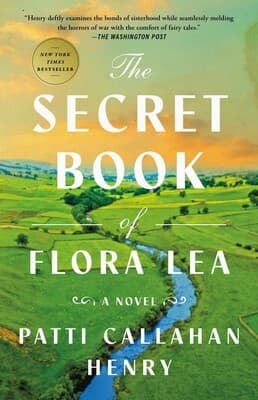
Hazel Mersey Linden and Flora Lea Linden / Dorothy 'Dot' Bellamy's lives are forever changed when Hazel steals a parcel, leading her on a journey to uncover the truth behind a beloved story and her sister's disappearance. As Hazel grapples with guilt and buried memories, she must confront the past to find answers in the present. The chapters weave together past and present, revealing secrets and challenging the very nature of truth and memory.
Chapter 11: Welcome to the Aberdeen Cottage
In September 1939, Hazel and Flora arrive at the Oxfordshire countryside home of Bridgette 'Bridie' Aberdeen and her son, Harry Aberdeen. The cottage seems magical, "sprouted from the earth," with a blue door, overflowing window boxes, and a cozy, book-filled interior. For Hazel, this setting immediately evokes the fantasy world of Whisperwood, a safe haven from the dangers of The Impact of War.
Flora initially resists Bridie's welcoming embrace, but Bridie's charm quickly wins her over. Hazel, ever the responsible older sister, insists they send a postcard to their mother, Camellia Linden, immediately. Before dinner, Hazel reads their mother's note aloud: "Be brave and watch out for each other," reinforcing the powerful theme of Sisterhood and Family Bonds and solidifying Hazel's role as Flora's protector.
Chapter 12: An Emotional Accident
The narrative jumps to March 1960. Hazel walks into Hogan’s Rare Book Shoppe to confess to stealing the parcel. She finds police inspectors questioning Poppy. In the back room, she confesses to Edwin and Tim Hogan, explaining the story of her sister, their evacuation, and the private world of Whisperwood she created. Edwin, initially furious, is moved to tears by her story and decides not to press charges, embodying the theme of Guilt, Blame, and Forgiveness. He insists Hazel purchase the parcel, including the damaged illustrations.
Edwin tells Hazel that "stories and books tend to find their rightful owners" and gives her the original receipt from the publisher. On it, Hazel finds a name, Linda Andrews, and a phone number in Cape Cod, Massachusetts. After missing a coffee date with her fiancé, Barnaby Yardley, Hazel rushes home and finds another letter from a journalist, Dorothy Bellamy, which she angrily rips up. She calls the number, and a woman named Peggy Andrews answers. When Hazel explains that Whisperwood was her story, Peggy grows cold, denies it, and abruptly hangs up, introducing the central mystery of Truth, Memory, and Secrets.
Chapter 13: The Boy Next Door
The perspective shifts to Peggy Andrews in Cape Cod. She is deeply unsettled by Hazel's call. She lies to her mother, Linda, claiming it was a wrong number, and takes the phone off the hook. Peggy reflects on her secluded life and how the success of Whisperwood has revitalized her mother, who has been grieving the loss of her husband in Pearl Harbor and her sister, Maria.
Later, while walking on the beach, Peggy runs into her childhood friend, Wren Parker. She confides in him about the "weird call" from London. She explains that her mother first told her the stories of Whisperwood as a child to comfort her after her father's death. Wren is skeptical that the call is a mere coincidence and encourages her to investigate, planting a seed of doubt in Peggy's mind.
Chapter 14: Everywhere and Nowhere
Back in London, Hazel is devastated by the phone call. She opens a trunk she has kept hidden, filled with memories of Flora: the tattered teddy bear, Berry; newspaper clippings of her disappearance; and Harry's sketches. The act of opening the trunk symbolizes her decision to finally confront her buried grief. She calls her best friend, Kelty, for support. Hazel shows Kelty the contents of the trunk and, for the first time, tells her about Whisperwood.
Upon hearing the name, Kelty has a stunning realization. She remembers that on her first day as an evacuee at the Aberdeens', a five-year-old Flora told her not to be scared because Hazel would "take us to Whisperwood." This is a monumental breakthrough for Hazel; it's the first proof that Flora spoke of their secret world to someone else. Realizing the story could have been passed on, Hazel decides she must overcome her twenty years of silence and guilt. Her next step is clear: she has to go back to Binsey and speak to Bridie Aberdeen.
Chapter 15: Just Bridie
The story returns to September 1939, detailing the sisters' first dinner at the Aberdeen cottage. Before the meal, Flora asks Hazel if their new location is Whisperwood, highlighting how deeply The Power of Stories and Imagination has shaped her perception of reality. At the dinner table, the atmosphere is warm and welcoming. Bridie insists the girls call her "Just Bridie" and entertains them with the Greek myth of Persephone and the autumn equinox.
Harry and Hazel share a subtle, knowing glance during grace, hinting at a budding connection between them. Hazel observes the easy affection Bridie and Harry show Flora and feels a pang of jealousy. While she is grateful for their kindness, she feels protective of the special world she created just for her sister. The scene establishes the Aberdeens' home as a place of warmth and storytelling, but also underscores Hazel's internal conflict between gratitude and her fierce desire to protect the unique bond she shares with Flora.
Character Development
- Hazel Linden: In 1939, she embraces her role as Flora's protector. In 1960, she transitions from passive grief to active investigation.
- Peggy Andrews: Introduced as reclusive and defensive, deeply attached to her mother and the story she believes is hers.
- Bridie Aberdeen: Established as an eccentric, warm, and nurturing figure.
- Edwin Hogan: His character is deepened from a simple shop owner to a compassionate man.
- Kelty: Her role as Hazel's supportive best friend is solidified, and she becomes an active participant in Hazel's quest.
Hazel's character arc is particularly significant. She evolves from a woman burdened by guilt and silence to one determined to uncover the truth, marking a pivotal shift in her journey.
Themes & Symbols
- The Power of Stories and Imagination: Hazel's private storytelling for Flora contrasts with Peggy's commercialized version of Whisperwood.
- Truth, Memory, and Secrets: Competing truths and fragmented memories drive the conflict.
- Guilt, Blame, and Forgiveness: Hazel's guilt over stealing the book mirrors her deeper guilt regarding Flora's disappearance.
- The Trunk: Symbolizes Hazel's repressed grief and memories.
- The Aberdeen Cottage: Symbolizes safety, warmth, and refuge.
Key Quotes
"Stories and books tend to find their rightful owners."
Edwin's words to Hazel after she confesses to stealing the parcel. This quote highlights the central theme of the story: the power of stories and their ability to connect people across time and space. It also suggests that Hazel's journey to uncover the truth about Whisperwood is a destined one.
"What are you scared of?"
Wren's question to Peggy after she tells him about the call from London. This simple question forces Peggy to confront her own fears and insecurities, hinting that there may be more to her family's story than she knows. It serves as a catalyst for Peggy's own journey of self-discovery.
Why This Matters and Section Significance
These chapters are the engine of the novel's plot, transforming the story from a tale of unresolved grief into an active literary mystery. The introduction of Peggy Andrews's point of view is crucial, as it provides the reader with a competing narrative. Kelty's recovered memory is the critical breakthrough that validates Hazel's quest and gives her a clear path forward. This section firmly establishes the central conflict: the battle over the ownership of a story, which is intrinsically linked to the fate of a lost little girl.