Chapter 16: Not That Long Ago and Not So Far Away
The narrative flashes back to September 1939, immersing the reader in Hazel Mersey Linden and Flora Lea Linden / Dorothy 'Dot' Bellamy's first night as evacuees in Binsey. Amidst their fear and uncertainty, Flora seeks refuge in their imaginary world, prompting Hazel to begin the first Whisperwood story in their new surroundings. They become powerful lions, drinking from a river of stars to gain strength, a tale that comforts Flora and solidifies storytelling as their primary coping mechanism and an essential part of their Sisterhood and Family Bonds.
That night, Hazel pens a postcard to their mother, Camellia Linden, attempting to project bravery and reassurance. A haunting dream follows, where the postcard washes away before reaching London, symbolizing her fear of disconnection from her mother and home. The next morning brings a small comfort: a beautiful, realistic pencil drawing of Flora’s stuffed bear, Berry, slipped under their door. Hazel correctly assumes it is from Harry Aberdeen, and the kindness eases her anxiety. At breakfast, Bridgette 'Bridie' Aberdeen's warmth and the simple luxury of fresh porridge with cream charm Hazel. Seeing Harry running in from the fields fills her with wonder and excitement about this new world, a stark contrast to the grim reality of The Impact of War. The chapter concludes with Flora waking in a panic, fearing Hazel has abandoned her, prompting Hazel to make a promise she will later break: "Never. I would never leave you."
Chapter 17: I Would Never Leave You
In March 1960, the weight of her broken promise hangs heavy as Hazel returns to Binsey for the first time in twenty years, a pilgrimage into her past filled with memories and the burden of Guilt, Blame, and Forgiveness. She shares an emotional reunion with Bridie, who welcomes her warmly and reveals she has been waiting for Hazel's return. Hazel confesses her long-held guilt, believing her actions led to the police suspecting Bridie and Harry after Flora’s disappearance. Bridie absolves her, explaining that the police and townspeople needed a scapegoat, and her own secretive past—having a child with a married man who abandoned her—made her an easy target.
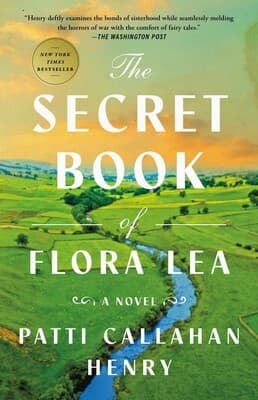
Hazel reveals the true reason for her visit: the existence of Whisperwood, a book by an American author named Peggy Andrews. She explains that Whisperwood was the secret world she created for Flora, a story no one else should know. This revelation sparks a flicker of Grief, Loss, and Hope; they both entertain the possibility that Flora could be alive and might have told the story to someone. Bridie reveals that Harry is now an artist living in a colony in St. Ives, Cornwall, and encourages Hazel to find him, as he is the only other person who might have known about Whisperwood. Bridie wisely tells her, "Sometimes we have to face our dragons," urging Hazel to confront her past directly.
Chapter 18: You Can't Find What's Gone
Driven by her conversation with Bridie, Hazel visits the Thames Valley Police Department to speak with Chief Inspector Aiden Davies, the original investigator on Flora’s case. She presents the book as potential new evidence, suggesting that if the story is alive, Flora might be too. She asks for the names of the four volunteer nurses who lived nearby at the time of the disappearance, and he provides them, including the name Imogene Wright. Davies mentions that a journalist, Dorothy Bellamy, is also researching the case, and Hazel implores him not to share her new information, wanting to protect her family from further public scrutiny.
On her way to a dinner meeting with her fiancé, Barnaby Yardley, Hazel is struck by a street artist’s painting of the Pied Piper, which she interprets as a dark omen about the power of stories to lead children astray. She then has a brief, silent exchange with her half-brother, Tenny, that marks a moment of rare understanding between them. At dinner, Barnaby is clearly displeased that Hazel has spent the day "hunting down the past," creating a palpable tension between them. He sees her quest as a threat to their future in Paris, revealing a fundamental conflict in their relationship. Later, he offers to pay for the expensive illustrations she bought, but she refuses, insisting on her independence and her sole responsibility for matters related to her past.
Chapter 19: There Is Only Ours
The narrative shifts to Cape Cod, focusing on Peggy Andrews. She is deeply unsettled by Hazel's phone call and the questions it raised about the origin of her stories. She confronts her mother, Linda, who reiterates the family myth: that she and Peggy’s aunt invented Whisperwood to comfort Peggy after her father died at Pearl Harbor. Peggy presses for specifics, particularly about the name, but her mother remains vague, insisting, "There is no mine or yours. There is only ours."
Although Peggy wants to believe her mother, a seed of doubt has been planted. The theme of Truth, Memory, and Secrets now directly involves Peggy's own identity and creative source. That night, unable to sleep during a storm, she retrieves the piece of paper with Hazel's phone number from the trash. In a symbolic act, she hides it under her mattress. The allusion to "The Princess and the Pea" is clear: like the princess, Peggy is sensitive to a small, hidden truth that is causing her profound discomfort, a truth that could upend her entire world.
Chapter 20: It's a Mystery and It's Also True
Hazel visits her mother, Camellia, at her stately London home on the 14th birthday of her half-brother, Tenny. The visit highlights the emotional distance that has existed between mother and daughter since Camellia remarried. Hazel is still grappling with the feeling that her mother’s new life was a betrayal of their original family. They have a raw, honest conversation where Camellia admits her own guilt for sending the girls away during the war, and Hazel tearfully admits she never blamed her.
Seizing the moment of connection, Hazel tells her mother everything: about the secret world of Whisperwood and the book that has now surfaced. She hands the book to Camellia, who immediately understands the profound implication.
"I am praying, Mum, I am praying it was Flora who told the story."
The shared hope that Flora might be alive instantly bridges the gap between them. When Hazel's stepfather, Alastair, enters, Camellia quickly hides the book, forming a silent pact with Hazel. For the first time in years, they are united in a secret mission, their bond as mother and daughter renewed by the shared hope of finding Flora.
Character Development
- Hazel Linden: She transitions from passive grief to active investigation, confronting her past and seeking the truth, even at the risk of her relationship with Barnaby.
- Bridie Aberdeen: She is revealed as resilient, wise, and deeply forgiving, with a backstory that adds depth and reinforces her empathy. She acts as a catalyst, pushing Hazel to face her "dragons."
- Peggy Andrews: Her perfect world is disrupted, forcing her to question the foundational story of her own life and work, introducing a central mystery about her identity and the source of her creativity.
- Camellia Linden: She transforms from a figure Hazel views with some resentment into a grieving mother who carries her own profound guilt. The revelation about Whisperwood revitalizes her hope and repairs her bond with Hazel.
- Barnaby Yardley: His character is complicated as his desire for a future unburdened by the past clashes with Hazel's need to resolve it, creating a central conflict in their relationship.
Themes & Symbols
Themes
- Guilt, Blame, and Forgiveness: This theme is central to Hazel's journey as she seeks forgiveness from Bridie and confronts her own inability to forgive herself. The theme extends to Camellia, who reveals her own long-held guilt over Operation Pied Piper.
- The Power of Stories and Imagination: The chapters explore the dual nature of stories. In 1939, Whisperwood is a sanctuary and a source of strength. In 1960, its unexpected reappearance is both a source of hope and a potential threat.
- Truth, Memory, and Secrets: Nearly every character grapples with secrets. Bridie reveals the truth about Harry's father, Hazel confesses the existence of Whisperwood, and Peggy begins to suspect a secret at the heart of her own family's story.
Symbols
- The Pied Piper Painting: It symbolizes Hazel's deepest fear: that her own story, Whisperwood, acted as a malevolent force that lured Flora to her doom.
- The Crumpled Paper Under the Mattress: This is a direct allusion to "The Princess and the Pea," representing a small, uncomfortable truth that Peggy cannot ignore.
- The Postcard: In the 1939 flashback, the postcard symbolizes the fragile thread connecting Hazel and Flora to their old life, with the nightmare representing her profound fear of being lost and forgotten.
Key Quotes
"Never. I would never leave you."
This quote, spoken by Hazel to Flora in 1939, foreshadows the central conflict of the novel. Hazel's broken promise haunts her and drives her quest to uncover the truth about Flora's disappearance.
"Sometimes we have to face our dragons."
Bridie's words serve as a call to action for Hazel. She encourages Hazel to confront her past directly, rather than allowing it to continue to define her present.
"There is no mine or yours. There is only ours."
Linda's vague response to Peggy's questions about Whisperwood highlights the theme of Truth, Memory, and Secrets. It suggests that the story's origins are more complex and intertwined than Peggy realizes.
Why This Matters and Section Significance
This section marks a critical turning point in the novel, transforming Hazel's static grief into an active quest. Her decision to visit Binsey sets the present-day plot in motion. The introduction of Peggy Andrews establishes the novel's dual narrative structure, expanding the mystery beyond Flora's disappearance to include the origins of the book itself. The reunions with Bridie and Camellia provide Hazel with absolution, new leads, and allies, transforming her solitary burden into a shared mission.