What This Theme Explores
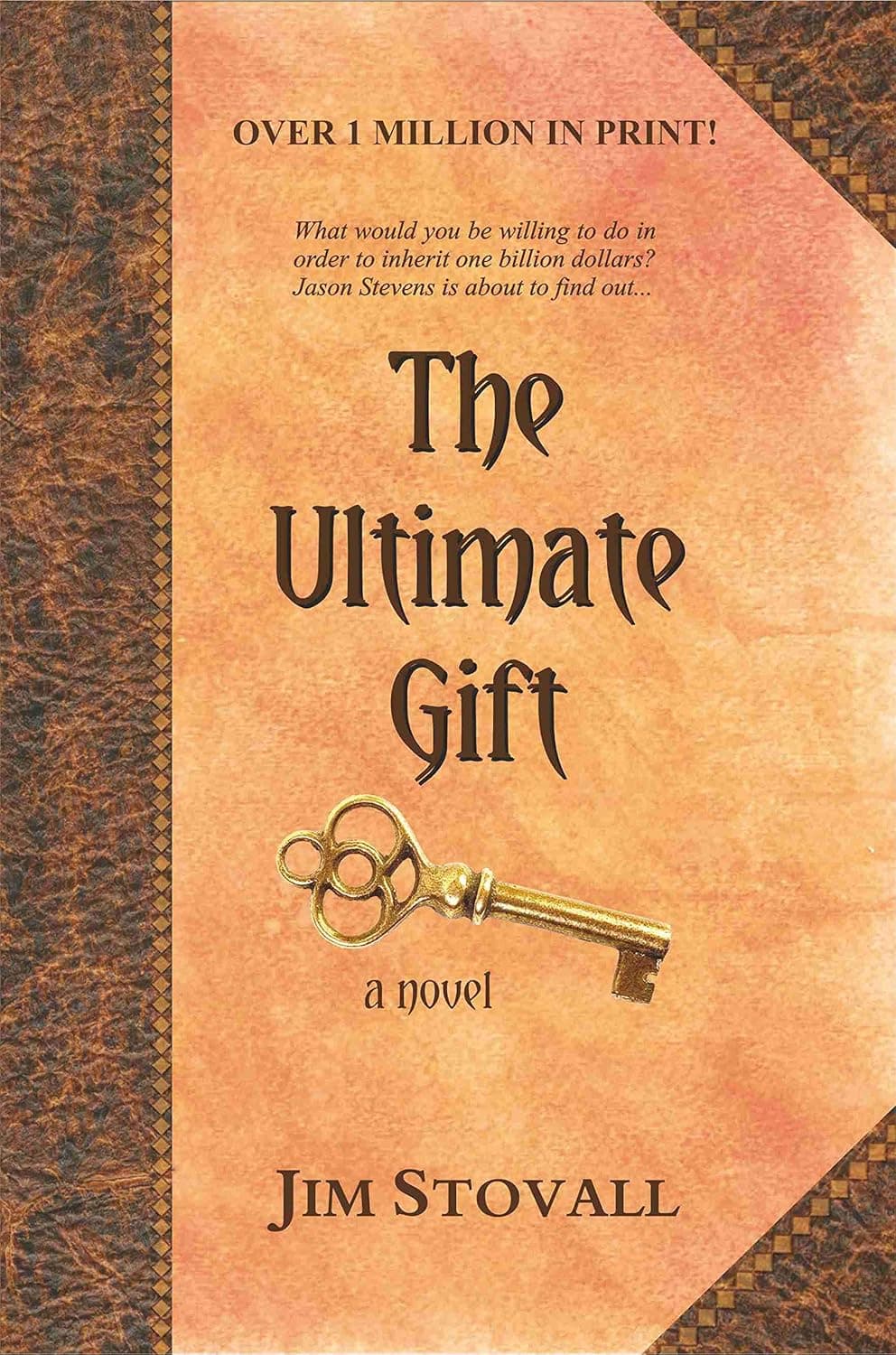
The Supremacy of Love in The Ultimate Gift frames love not as sentiment but as the animating principle of a meaningful life—one that orders work, friendship, family, generosity, and gratitude. It is the hidden engine behind Howard "Red" Stevens' elaborate test and the hard-won discovery that remakes Jason Stevens. The story asks whether love can correct character, redeem wasted privilege, and build a legacy that outlasts wealth. Ultimately, it treats love as the only gift capable of gathering all the other “gifts” into a coherent vision of purpose.
How It Develops
The theme first appears as a quiet undertow rather than a declaration. Jason’s resentment over his lack of inheritance is met by Miss Margaret Hastings with the calm statement that Red “loved you too much” to leave him money, reframing the entire ordeal as an act of difficult, corrective love. Early assignments in work, money, and friendship nudge Jason away from self-gratification toward principles rooted in care for others; even Red’s past—like the tale of Mr. Theodore J. Hamilton giving Red a kidney—models a costly love that sustains lives and relationships.
Midway, love becomes experiential and diversified. Jason learns to love learning in a remote village, to practice self-respect by solving problems, to redefine family through the bonds at the Red Stevens Home for Boys, and to love life through laughter. These chapters show love not as abstraction but as a daily practice, where purpose emerges as a loving dream aimed at other people’s flourishing.
By the end, the story names what it has been showing. The concluding “gifts”—Giving, Gratitude, A Day, and finally The Gift of Love—make explicit that generosity and thankfulness are expressions of love rightly ordered. Jason’s final assignment is to connect love to every prior lesson; his completed report demonstrates not just comprehension but transformation, revealing love as the integrating principle of his new character.
Key Examples
Specific scenes crystallize how love becomes the standard by which every other gift is measured.
-
Red’s tough love reframes inheritance: Miss Hastings explains why Jason received no money—“He loved you too much to do that.” This line turns deprivation into devotion, insisting that genuine love seeks a person’s growth over their immediate comfort. It casts Red’s entire will as a rescue mission from the spiritual emptiness wealth had produced in his family.
-
The love between friends sustains life: Red’s circle of friendship moves beyond sentiment to sacrifice, most dramatically when Mr. Hamilton donates a kidney to Red. Even the youthful pact where Red and Gus Caldwell brand each other’s calves shows mutual risk and foresight—love as shared survival and loyalty that endures over decades.
-
Family redefined by care rather than blood: At the Red Stevens Home for Boys, Jason recognizes that belonging grows from commitment, not lineage.
“You know what’s amazing? Not one of those boys has a family, but each of them knew more about a family than I did. I think family is not as much about being related by blood as it is about relating through love.” The moment exposes the poverty of Jason’s biological ties and elevates love as the criterion for genuine kinship.
-
Final synthesis through giving and gratitude: In the closing lessons, Jason learns that real generosity originates in love and that gratitude is love’s attentive memory. His final report ties each “gift” back to love, proving that the disciplines he practiced were not discrete virtues but facets of a single, relational ethic.
Character Connections
Red embodies love as foresight and stewardship. Rather than indulge his heirs, he designs an ordeal calibrated to pull Jason out of entitlement and into service. His final warning—holding Jason to the highest standard—shows love as accountability, a refusal to confuse comfort with care.
Jason’s arc charts love’s transformative power. He begins hollowed out by privilege and ends with a purpose oriented toward others, discovering that love reorganizes priorities: work becomes service, dreams become missions, and wealth becomes a tool rather than a goal.
Mr. Hamilton and Miss Hastings extend Red’s love beyond his death through fidelity and patience. Their meticulous execution of the plan models love as covenant—an abiding commitment to a friend’s values and to Jason’s growth, even when doing so is demanding and slow.
Emily embodies unguarded, life-affirming love. Facing terminal illness, she welcomes joy, offers it freely, and teaches Jason that loving life is not naïveté but courage—the choice to savor meaning despite suffering. Her presence reframes Jason’s hardships as invitations to love more deeply, not reasons to withdraw.
Symbolic Elements
The “ultimate gift” itself symbolizes love as an integrated way of living rather than a single emotion or item. Each lesson functions like a facet of a gem; only when turned together do they refract the full light of love’s purpose.
Red’s kidney stands as a literal emblem of sacrificial love—giving a piece of oneself so another can live. It compresses the story’s ethic into a single act: love measured not in words but in embodied cost.
The Red Stevens Home for Boys symbolizes chosen family and the generative power of care. Within its walls, love constructs belonging where blood ties have failed, suggesting that true family is built by commitment and compassion.
Contemporary Relevance
In a culture that equates success with income and visibility, the story insists that love is the only durable metric of a life well-lived. It challenges readers to invest in people over possessions, to see work as service, and to measure dreams by the good they do for others. By tracing Jason’s move from entitlement to empathy, the narrative offers a countercultural blueprint: love is not a feeling to be pursued but a practice that forms character and community.
Essential Quote
“When we truly love others, our love makes each of us a different person, and it makes each one we love a different person too.”
This line captures love’s transformative reciprocity: it changes the giver and the receiver, re-creating identity through relationship. It also distills the book’s thesis that every “gift” reaches fulfillment only when animated by love, the force that turns personal growth into shared flourishing.