
The Best Study Apps for ADHD Students in 2026 (Ranked)

Ishan Chawla
Student, Northwestern University
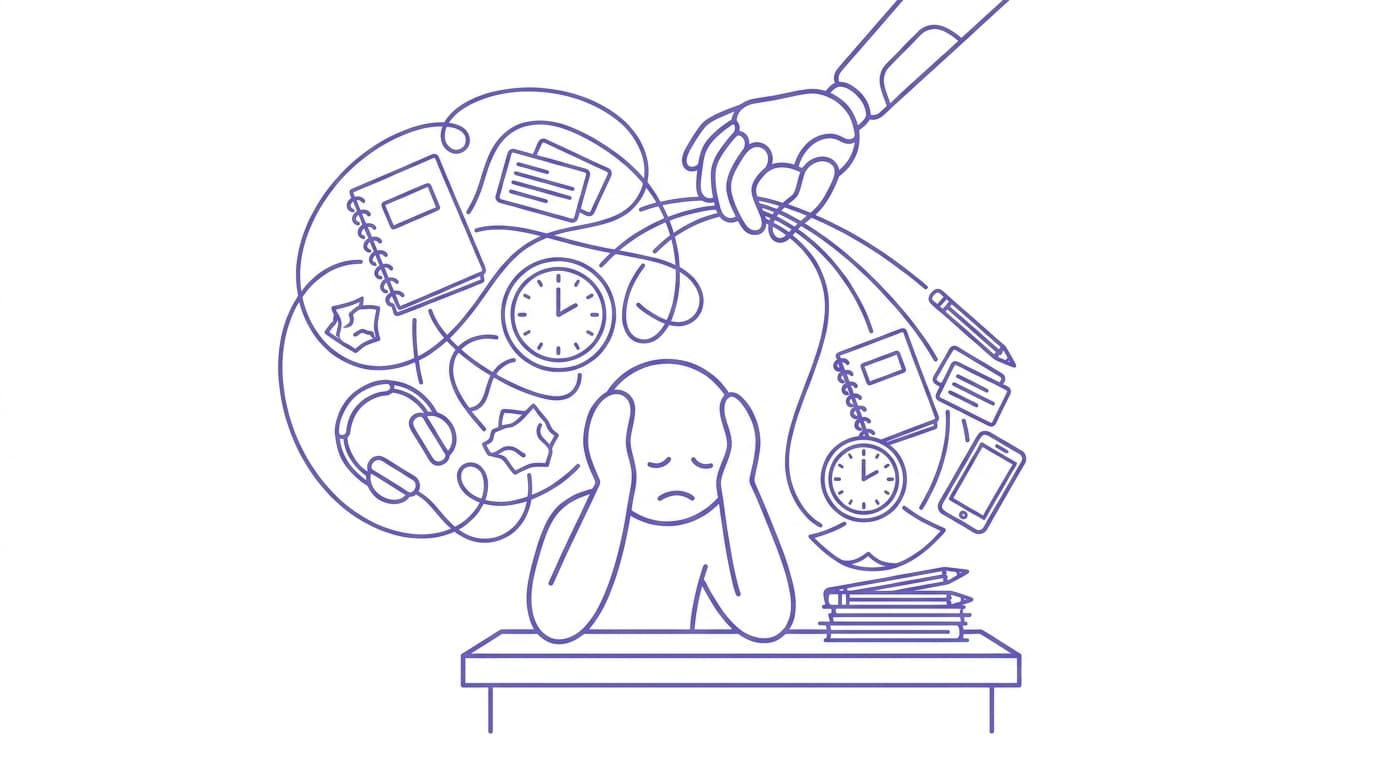
Struggling to focus on lectures and readings? We ranked the best study apps for ADHD students in 2026.
If you have ADHD, you already know the problem isn't that you don't want to study. It's that the standard method of studying is designed to work against your brain: sit still for hours; listen to long, difficult lectures; take neat notes. Then, repeat the process, rereading notes and rewatching those same lectures later. It's time-consuming, repetitive, and not the best way to learn in 2026.
The good news: study apps have gotten dramatically better at removing the friction points that make studying with ADHD so exhausting. The bad news: most "best study app" lists are written for neurotypical students and just rank whoever has the biggest marketing budget or user base.
This list is different! We ranked these apps on three things that actually matter for ADHD students:
- How little manual effort they require. Every extra step (formatting notes, making your own flashcards, organizing folders) is a chance for the task to fall apart.
- How many ways they let you engage with material. Reading isn't the only way to learn, and for many ADHD students it's the worst one.
- Whether they create quick feedback loops. Quizzes, flashcards, and interaction beat passive review.
Let's dive in.
1. Turbo AI — Best Overall for ADHD Students
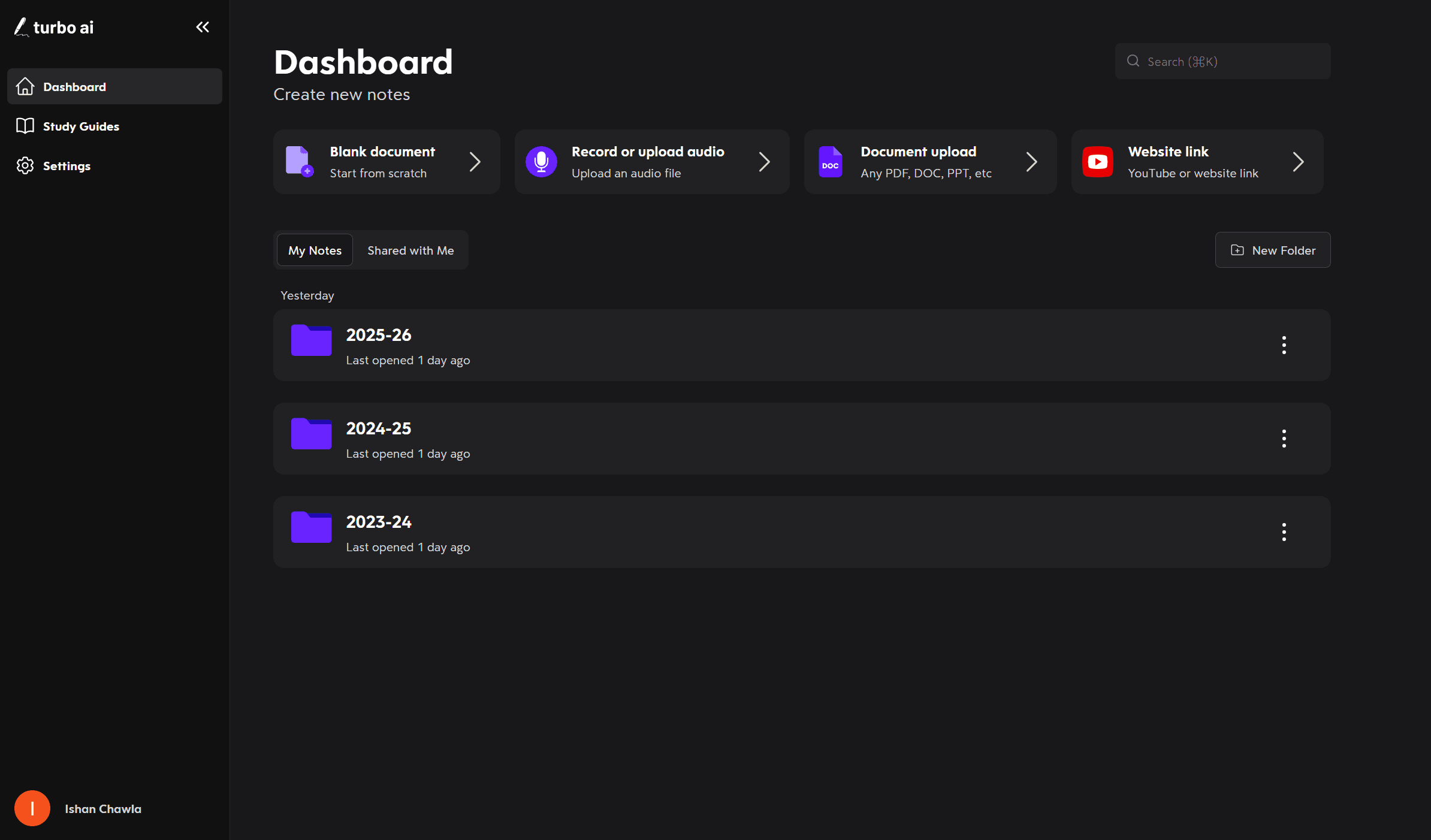
Turbo wins this list for a simple reason: it removes the single biggest failure point in the ADHD study workflow: note-taking itself.
You upload a lecture recording, a PDF, a document, or even a YouTube video, and Turbo automatically generates clean, organized notes from it. So, if you zoned out for ten minutes of lecture (happens to the best of us), you didn't lose that content forever. It's in your notes anyway.
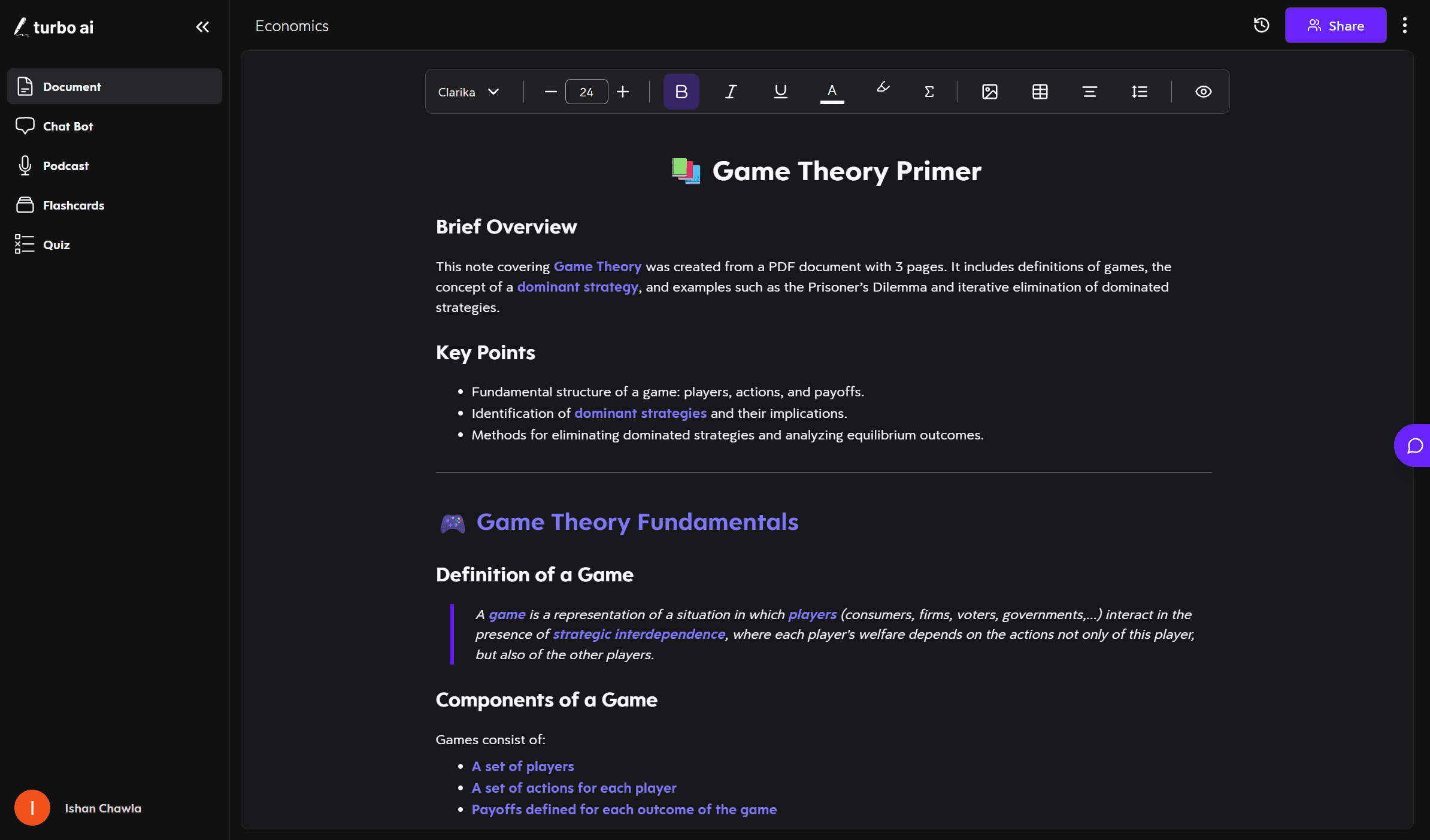
But the reason it works so well for ADHD specifically is what happens after the notes exist. Instead of rereading, which is both boring and one of the least effective study methods, you can engage with the same material in whatever mode your brain is up for that day:
- Chat with your notes.
- Listen to a podcast of your notes.
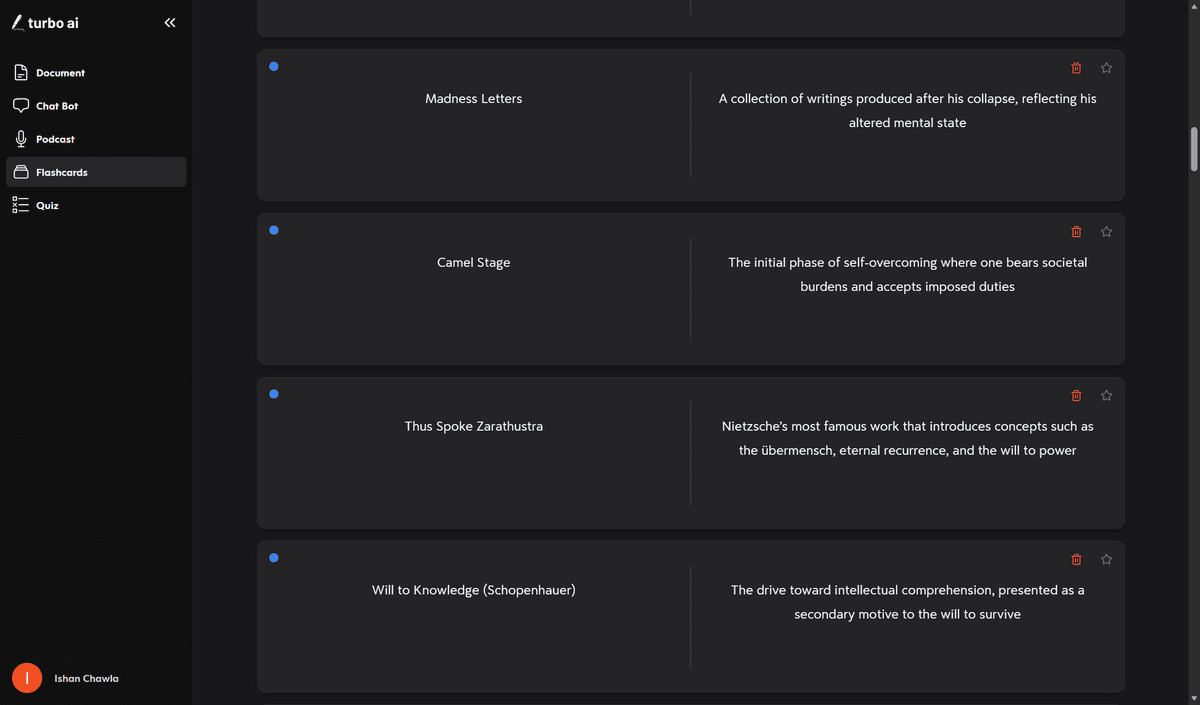
- Flashcards, auto-generated.
- Multiple choice quizzes.
Turbo's Flashcards
Turbo's Quiz Feature
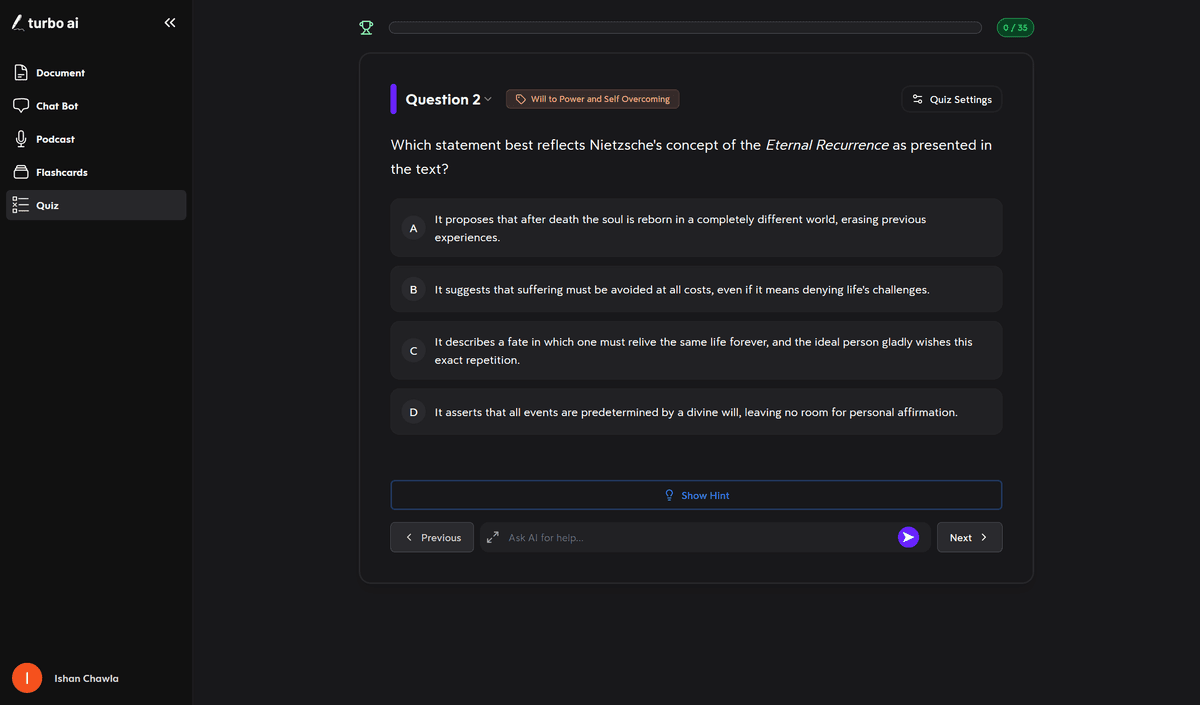
The variety matters more than it might sound initially. A common ADHD experience is that a study method works great for two weeks and then suddenly falls apart. With Turbo, you're not locked into one method. The same lecture can be notes on Monday, a podcast on Wednesday, and a quiz the night before the exam.
Pricing: $20/month billed monthly, or $10/month billed annually. The annual plan works out to $120/year, or roughly the cost of one textbook.
Best for: Students who struggle with live note-taking, lose focus during lectures, or burn all their energy on prep work (making flashcards, rewriting notes) before actual studying begins.
2. Quizlet — Best for Pure Flashcard Review
Quizlet is the oldest tool on the list, and it's still good at what it does: flashcards, matching games, and practice tests. The gamified modes give you the quick rewards and feedback loops that ADHD brains tend to love.
The catch: Quizlet doesn't make the material for you. You either build your flashcard sets manually or you rely on other students' sets, which may not match your class. For ADHD students, the setup cost is often one of the most taxing steps.
Best for: Students who already have their notes handled and just want a polished, digital flashcard experience.
3. NotebookLM — Best for Research-Heavy Classes
NotebookLM lets you upload sources and chat with them, and its Audio Overview feature works similarly to Turbo's podcast feature, which is useful for ADHD students who absorb spoken content better than text.
The limitation is that NotebookLM is a research tool, not a study system. There are no flashcards, no quizzes, and no spaced repetition. You'll still need another app to actually test yourself. It answers questions about your documents well, but it doesn't push you to retain anything, and isn't strikingly different from the traditional LLMs like ChatGPT or Claude.
Best for: Research-heavy courses where students sort through academic literature.
4. ChatGPT — Best General-Purpose Assistant
ChatGPT can explain any concept, quiz you, simplify dense readings, code, and even become a pseudo-therapist (although this may be ill-advised for both mental health and privacy reasons). Still, its flexibility is unmatched.
But that flexibility is also the problem: it's a blank text box. You have to decide what to ask, paste in your material every time, and structure your own study sessions. For ADHD students, infinite possibilities with zero structure is often not the best combination. It also doesn't store your course materials, so there's no persistent notebook to come back to.
Best for: Quick explanations when you're stuck on a specific concept or homework assignment.
5. StudyFetch — Best for Structured Study Plans
StudyFetch converts your materials into notes, flashcards, and quizzes; adds an AI tutor ("Spark"); and includes customized study calendars. If externally-imposed structure helps you, the planning features are a plus.
Here, the feature list is long, but the individual features tend to be shallower than dedicated alternatives, and the interface is quite busy.
We also did a more extensive review of StudyFetch, check it out on our blog! Turbo AI vs. StudyFetch
Best for: Students who want the tool with the greatest number of features.
Honorable Mentions
- Solvely: strong for step-by-step homework help, especially math, but it's a problem-solver rather than a study system.
What Actually Matters When Choosing
If you take one thing from this article: the best study app for ADHD is the one that requires the least willpower to use.
Ask yourself:
- Where does my current system break? If it's during lectures, you need automatic note generation (Turbo). If it's making study materials, you need auto-generated flashcards and quizzes (Turbo, Knowt). If it's motivation to review, you need gamified feedback (Quizlet) or audio you can consume passively (Turbo, NotebookLM).
- Do I actually retain what I read? If not, prioritize apps with audio and interactive modes over pretty note-taking.
- Will I still use this in week six? Free trials exist for a reason. Test the app during a real week of classes, not syllabus week, and don't purchase unless you're sure the tool is helpful.
The Bottom Line
Most study advice for ADHD students boils down to simply trying harder in areas where the student falls apart. Good tools take the opposite approach. Turbo redesigns the workflow so there are fewer places for each student to fall apart.
That's why Turbo tops this list. It catches everything from your lectures automatically, then gives you five different ways to actually learn it, so the days when reading feels impossible aren't wasted days.
Ishan Chawla
Student, Northwestern University