Opening
Diana’s rescue detonates a chain of revelations: hidden ghosts, searing wounds, ancient orders, and a spell that shackles her own magic. Back at the living Bishop house, histories surface—family, alchemical, and time-bent—until the union of witch and vampire points toward the unthinkable: conception.
What Happens
Chapter 31: It’s Time to Wake Up and Be a Witch
Trapped in La Pierre’s oubliette, Diana Bishop hovers between delirium and visitation as her parents’ ghosts arrive. Rebecca weaves a fable about a caged witch who must remember how to fly; the story becomes instruction, and Diana reaches for a silver thread of power. Aboveground, Matthew Clairmont and Baldwin push a rescue into motion.
Guided by the “silver ribbon,” Diana rises from the pit. Baldwin’s hostility crashes into Matthew’s urgency as they hustle her to a helicopter. In flight, Diana goes into shock; Matthew offers his blood, and she takes it herself—reclaiming agency after Satu Järvinen accused Matthew of controlling her.
At Sept-Tours, Ysabeau de Clermont and Marthe orchestrate triage in Matthew’s tower: burns, a mangled ankle, a deep arm gash, and terrible bruising. Under Ysabeau’s hard-eyed pressure, Matthew confesses an old crime—he killed a woman he loved in Jerusalem during a fight with Baldwin, the reason he wears the Knights of Lazarus coffin. When Diana finally sees the scorched symbols lacing her back, she faints. Revived, she confronts Matthew about killing Gillian Chamberlain and drugging her with his blood; he admits both, terrified of losing her. Diana recounts Satu’s torture and the brand burned into her skin—a star and crescent, the de Clermont seal—staking a claim on her body and exposing the Knights to the Congregation. France is no longer safe. They plan for Madison.
Chapter 32: A Gambit
On the de Clermont jet, Baldwin warns Diana that her “release” feels like a chess gambit—a sacrifice to secure advantage—and urges decisive play. Matthew counters by invoking his title as Grand Master of the Knights of Lazarus, forcing Baldwin to submit. After landing in New York, they drive to the Bishop house in Madison, where Diana explains the place is alive, haunted, and has opinions; her aunts leave it time to “acclimate” to a vampire.
In her parents’ old room, Diana and Matthew acknowledge a silvery chain binding them—she feels it, he can hear it when he listens. The intensity sparks involuntary witchlight, and the sentient house politely shuts the door. When Sarah and Em return, Sarah’s hostility flares, then redirects into brisk competence: she heals Diana’s fractured collarbone and cheekbone and repairs the sprained ankle with sure, elegant spells, earning Matthew’s respect.
When they examine Diana’s back, the star-and-crescent brand confirms the Congregation knows about the Knights. Sarah’s temper spikes toward Matthew, and Diana’s protective instincts ignite witchfire—deadly, bright, and controlled only by Matthew’s steadiness. Once calm returns, he explains the Knights to her aunts. A fragile alliance clicks into place.
Chapter 33: King of the Beasts
At dawn, Diana overhears Matthew, Sarah, and Em arguing and learns the truth: her parents spellbound her as a child. The revelation shatters her—she blames herself for their deaths and flees into the woods. Matthew follows, explaining Rebecca and Stephen bound her to hide her from the Congregation and Peter Knox. Diana remembers Knox’s visit when she was small and realizes her mother’s bedtime stories are coded lessons to reopen power.
Matthew forces training that strips away reason: predator and prey in the trees. He stalks; she runs until instinct takes over. With her eyes closed, she opens a “third eye,” reading the forest’s life currents and pinpointing him. As he launches a final pounce, she lifts—flying—hair lit with harmless witchfire. Hovering, she shapes a microcosm of her own magic and lays it in his palm, a fierce vow of trust.
They reconcile. Back at the house, Diana makes peace with her aunts and shares that she saw her parents’ ghosts at La Pierre. Dinner is tight but thawing: Matthew’s charm and French wine soften Sarah, and Tabitha the cat chooses the vampire over any witch.
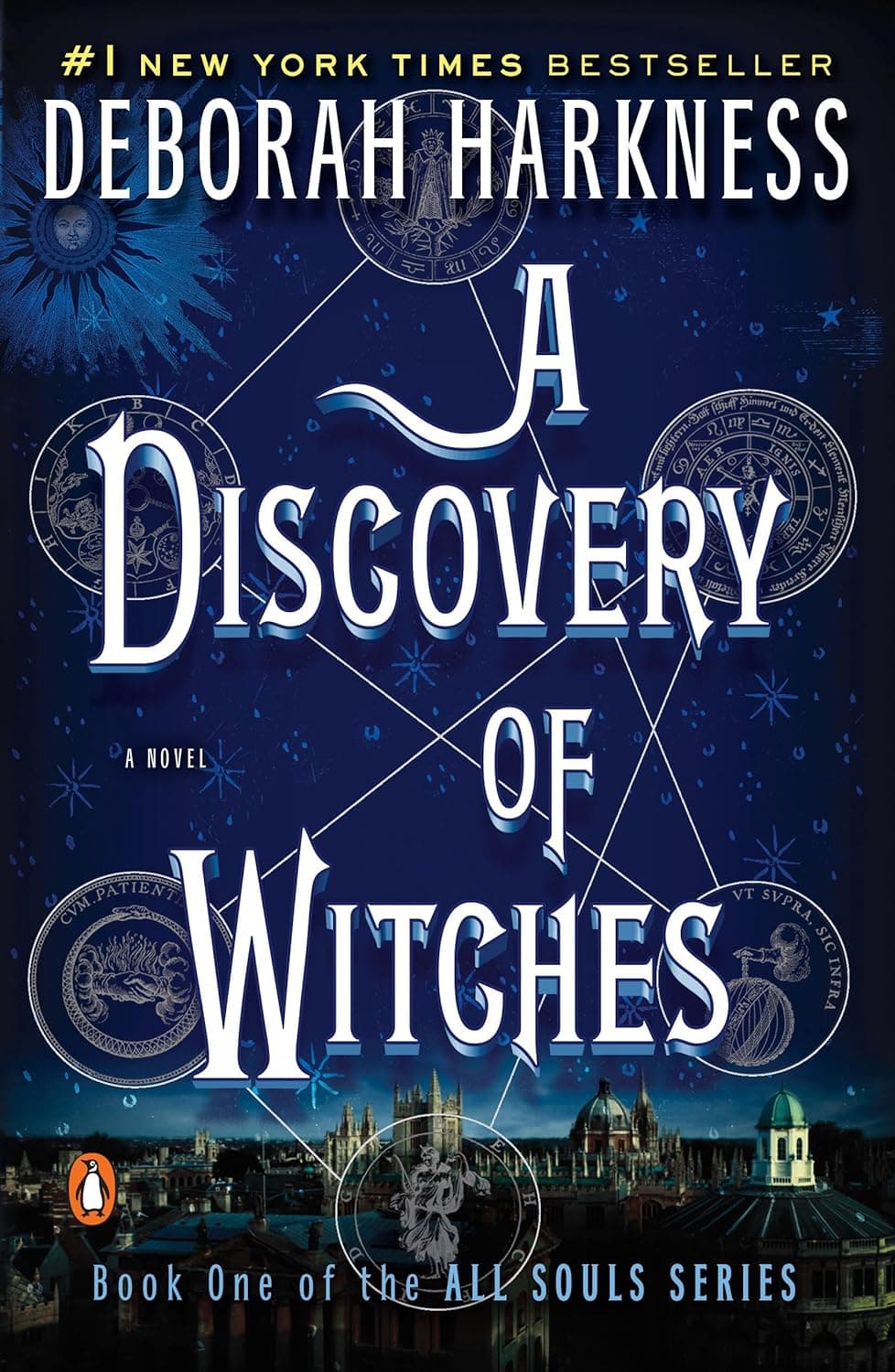
Chapter 34: A Discovery of Witches
Morning meditation turns into mastery as Diana pulls and tames witchwater. At breakfast, she casually summons a tub of butter across the room. Matthew proposes a theory: her parents’ binding tethered magic to need rather than command, explaining the instinctive surges.
The house intrudes—delivering a hidden envelope from Rebecca. Inside: a letter and a missing illuminated leaf from Ashmole 782 depicting the “chemical wedding.” Rebecca’s words reveal a “shadowed man” in Diana’s future—Matthew—and that she and Stephen sacrificed themselves to divert the Congregation’s gaze. The page shows a queen wearing the de Clermont crest. On the letter’s reverse, Stephen’s familiar hand matches the script that added a Bodleian subtitle to Ashmole 782, exposing another truth: he is a timewalker who traveled to the nineteenth century to bewitch the manuscript for his daughter. Sarah confirms that Diana carries the same dormant ability.
News rings in: Marcus Whitmore and Miriam are flying in. Matthew wants them at an inn; Diana refuses, declares Marcus her son, and the house and its ghosts swing the doors wide. The Bishop and de Clermont lines begin to merge under one roof.
Chapter 35: Conceptio
Around the dining table, the family parses the letter and the alchemical leaf. They weigh the cryptic note—“It begins with absence and desire. It begins with blood and fear. It begins with a discovery of witches.”—and debate Stephen’s timewalking. To dig deeper, Sarah and Matthew team up in the stillroom with the Bishop grimoire, finding a spell to reveal what paper hides. Their collaboration marks a new, pragmatic respect.
Marcus and Miriam arrive at twilight. Marcus wins Sarah with whiskey and a Revolutionary-era anecdote about another Sarah Bishop; Miriam stays cool, eyeing both witch and cat. Matthew, still furious Marcus disobeyed orders, keeps his distance. Sarah refuses to pause for family drama: she lays out the letter and the illuminated “chemical wedding.” Miriam studies the image, then asks Diana the next stage after conjunctio. Diana breathes the answer—“Conceptio”—and collapses under the weight of its implication: a witch and a vampire might conceive.
Character Development
Diana moves from survival to authorship of her power, claiming family, magic, and future in one sweep. The people around her must evolve to meet that change.
- Diana Bishop: Unlocks instinctive magic (witchlight, witchwater, witchfire, flight), reframes her parents’ binding as protection, and asserts authority—accepting Marcus as her son and shaping a cross-species household.
- Matthew Clairmont: Drops secrecy for stewardship—confessing past violence, yielding control to Sarah’s healing, and training Diana with feral honesty while learning to trust her judgment.
- Sarah Bishop: Sets prejudice aside for competence and care; heals Diana, partners with Matthew in the stillroom, and becomes a strategic anchor for the new alliance.
- Baldwin de Clermont: Shows both menace and code—antagonistic yet bound to Matthew’s command, foreshadowing future clashes governed by ancient law.
- Marcus Whitmore and Miriam: Extend the de Clermont “family” into the Bishop house, testing boundaries as the clans knit together.
Themes & Symbols
Family, Lineage, and Belonging [link only on first mention]: The Bishop house folds vampires into its bones, expanding kinship by choice and oath as much as by blood. Diana’s declaration that Marcus is her son formalizes a cross-species family unit that can stand against the Congregation.
Identity and Self-Acceptance: The spellbinding externalizes Diana’s lifelong self-denial. Training strips away scholarly rationalization until instinct answers; the result is not chaos but coherence—power yoked to will and love.
The Power of History and Memory: Ghosts advise, a grimoire reveals, and a timewalker father reroutes the nineteenth century to safeguard his daughter. The past is not a record—it is an active collaborator, handing Diana the means to survive the present.
Magic vs. Science and Reason: A historian trained to revere evidence must close her eyes to see truly. Matthew’s predator lesson forces Diana to privilege sensation over analysis, proving that knowledge and instinct together—not in opposition—unlock her craft.
The Chemical Wedding: The illuminated page literalizes conjunctio—the marriage of opposites—bridging witch and vampire, scholarship and sorcery. Miriam’s leap to conceptio reframes the union as generative, threatening the Congregation’s taxonomy of creatures.
The Bishop House: A guardian and arbiter, the house controls doors, privacy, and secrets. It is the Bishop archive and conscience, deciding when to reveal the letter and when to shelter intimacy—its will aligning with Diana’s growth.
Key Quotes
“It begins with absence and desire. It begins with blood and fear. It begins with a discovery of witches.”
Rebecca’s message collapses love, danger, and identity into a prophecy of action. It binds Diana’s private longing to a wider historical arc, making Ashmole 782—and Diana herself—the catalyst of change.
Baldwin warns the release feels like a “gambit.”
The single word reframes Diana’s rescue as strategy, not mercy. It primes the household for decisive, offensive moves rather than passive defense, and colors every subsequent choice in Madison.
Rebecca writes of a “shadowed man” in Diana’s future.
The phrase sanctifies Matthew’s place in Diana’s destiny without erasing choice; it’s permission and warning at once. It also shows Rebecca and Stephen working with foreknowledge—parents orchestrating from the edge of time.
“Conceptio.”
Diana’s whispered answer shifts the alchemical frame from union to creation. The possibility of a witch–vampire child threatens the Congregation’s laws and biology alike, escalating the novel’s stakes from forbidden love to species-defining change.
Why This Matters and Section Significance
These chapters pivot the book from chase-and-romance to revelation-and-power. Diana accepts the cost and scope of her magic, Matthew yields control to collaboration, and the Bishop–de Clermont alliance becomes a single household with shared purpose. Ashmole 782 transforms from coveted object to personal legacy—time-altered for Diana—and the “chemical wedding” points toward conceptio, a potential that could upend the creature world’s assumptions. With the house as sentinel and family as strategy, the stage is set for open conflict with the Congregation and a story that now aims to rewrite history itself.