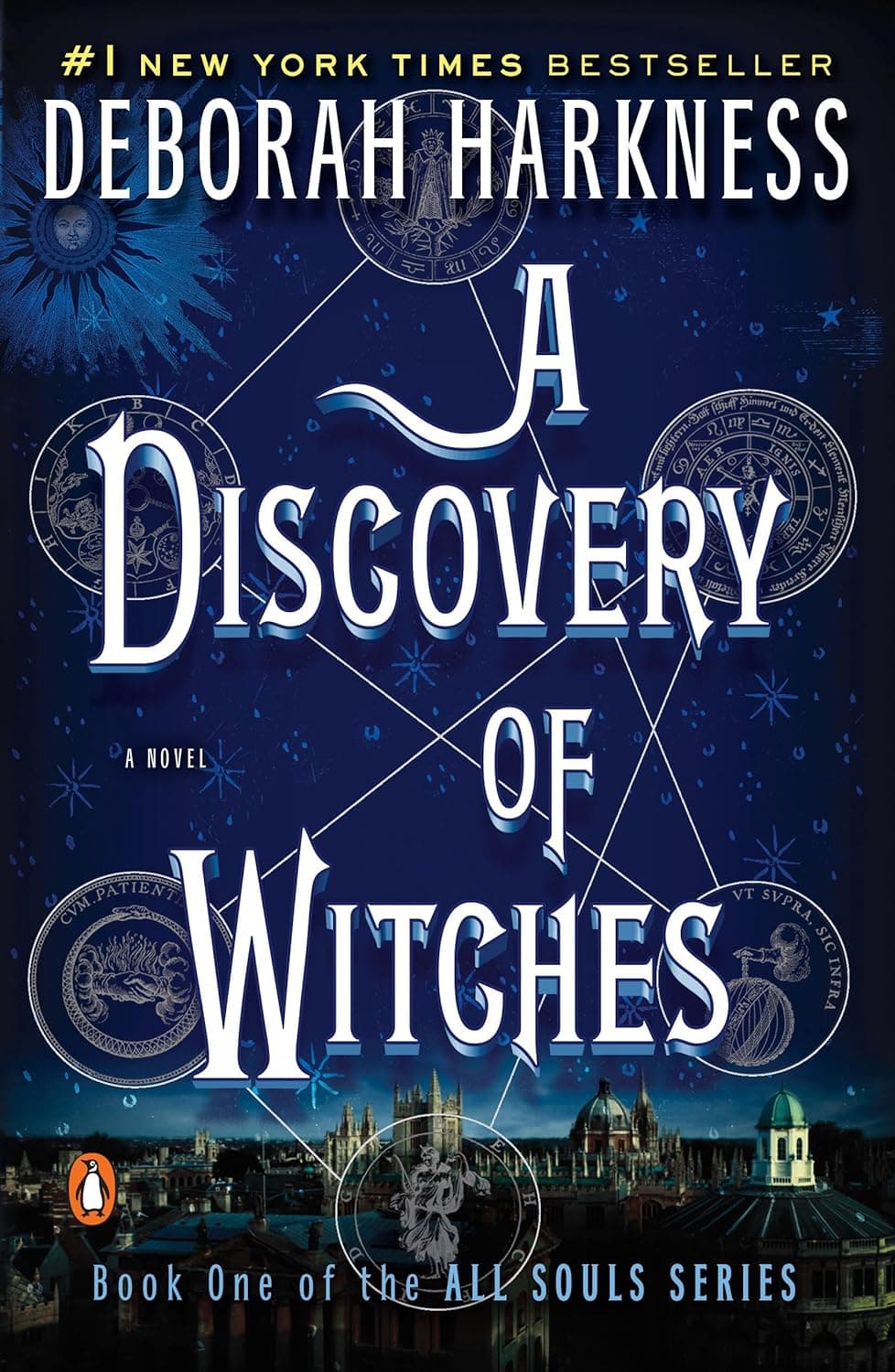
What This Theme Explores
Origins, Evolution, and Extinction asks where creatures come from, how they change, and whether they are doomed to vanish—and what kind of knowledge might save them. The novel braids genetics, alchemy, and myth to show that origin stories are never just about the past; they shape identity, power, and the rules of belonging. It probes whether scientific explanation and magical lore can coexist, and whether survival demands breaking from inherited laws and prejudices. Ultimately, it treats origin as both a mystery to be solved and a responsibility: knowledge must catalyze transformation, not entrench fear.
How It Develops
The theme first surfaces as an intellectual puzzle. In the hushed corridors of Oxford, Matthew Clairmont—a biochemist who studies evolution—fixates on Ashmole 782 after Diana Bishop accidentally summons it. Hints accumulate: witches are weakening, vampires struggle to sire new kin, daemons drift without a traceable lineage. What begins as a scholarly curiosity about a lost manuscript quickly expands into a species-level alarm.
The middle movement translates myth into data. Matthew reveals his genetics lab and a global project that treats creature decline as a measurable, biological crisis rather than a curse. The shift is crucial: alchemical symbols now sit beside sequenced genomes, and the fear of extinction gains empirical teeth. Through daemon testimony, the theme widens from vampire and witch anxieties to a more profound question—how do beings without a creation story understand themselves at all?
By the end, the inquiry turns personal and future-facing. Diana’s DNA—marked by chimerism and an ancient, unknown lineage—disrupts the categories the Congregation polices. She is no longer simply a historian of origins; she is evidence that evolution may already be occurring in unexpected ways. The couple’s decision to timewalk reframes the quest for Ashmole 782: not a nostalgic return to beginnings, but a strategic search for the knowledge needed to adapt, interbreed, and survive.
Key Examples
-
Matthew’s annotated Darwin: Diana finds Matthew’s copy of On the Origin of Species covered in notes linking descent, common ancestry, and creatures. His marginalia exposes the novel’s central hypothesis—that witches, vampires, daemons, and humans may share origin pathways—and frames Ashmole 782 as the missing evidence that could confirm (or refute) a shared biological story.
-
The laboratory reveal in Chapter 32: Matthew discloses an international genetics effort studying species origin and extinction, including creatures. Presenting data that witch markers have degraded over centuries converts rumor into research, transforming the treasure-hunt plot into a race against measurable decline.
-
Daemons’ plea in Chapter 24: Agatha Wilson insists that daemons’ most basic need is a story of their beginning. Unlike witches and vampires, who inherit lineages, daemons lack a coherent origin myth; their anxiety is not about power but identity. The theme thus expands from biological survival to existential belonging.
-
Diana’s chimerism: When Marcus and others interpret Diana’s AB-negative blood and absorbed foreign DNA, they reimagine her not as an outlier but as a model of adaptive possibility. Her body suggests a biological mechanism for inter-species compatibility—evolution not as abstract theory, but as a pathway for reproduction and continuity.
Character Connections
Matthew’s dual identity—as ancient vampire and modern scientist—embodies the novel’s synthesis of lore and lab. His long memory makes him a witness to attrition; his research turns grief into method. Haunted by species decline, he pursues origins not for nostalgia but for leverage: if creatures share ancestry, then their futures might intertwine in ways the covenant forbids. His arc dramatizes a shift from managing risk within old laws to courting adaptation beyond them.
Diana’s journey rewrites her relationship to origin from denial to agency. A scholar who prefers the archive to the altar, she initially refuses magical inheritance; the genome makes refusal impossible. Once revealed as a chimera from an unknown clan, she moves from studying the past to becoming its hinge—a living argument that categories can hybridize and that survival may require crossing them. Her body, scholarship, and choice to timewalk fuse scientific and alchemical modes of knowing.
Peter Knox weaponizes origins. For him, provenance is power, and power must be monopolized. He seeks Ashmole 782 to restore witch supremacy, interpreting extinction as a zero-sum contest rather than a shared problem. His rigidity exposes the political danger of origin stories: they can preserve identity—or justify domination.
Agatha Wilson articulates the daemon predicament with moral clarity. Without lineages or rites of making, daemons lack a communal past to stabilize the present. Her advocacy reframes the book’s stakes: the “Book of Life” is not merely a key to reproduction or power but a remedy for narrative absence, the first step in belonging.
Symbolic Elements
Ashmole 782: As a “Book of Life,” it condenses the theme’s tensions—combining alchemical imagery, genealogies, and creation myths with the promise of scientific corroboration. Its missing leaves embody lost histories and the costs of secrecy; recovering it is less about retrieval than about reassembly and reinterpretation.
DNA and genetics: Sequences and markers function as a modern grammar for bloodlines, translating magic into data without erasing wonder. The lab’s findings insist that decline is a process with causes and, potentially, solutions—turning fate into a problem set.
Alchemy: Conjunctio and conceptio literalize transformation through union. Alchemy models evolution as purposeful change—matter refined through combination—prefiguring the novel’s argument that inter-species bonds can generate new forms of life and knowledge.
Darwin’s On the Origin of Species: More than a prop, it frames creature crisis within descent with modification. By placing creatures inside an evolutionary narrative, the book recasts “curse” as “mechanism,” creating urgency and ethical stakes around intervention.
Contemporary Relevance
The story’s obsession with ancestry, testing, and hybridity mirrors current debates over genetic genealogy, reproductive technology, and who gets to define “species” or “purity.” In an era of climate-driven extinction, the novel’s pivot from mourning loss to engineering survival feels urgent—and contentious. Its warning against segregationist laws and its embrace of integration speak to polarized societies: survival may depend on cooperation across boundaries once treated as sacred. Most importantly, it challenges readers to use origin knowledge ethically—to build solidarities and futures, not hierarchies and walls.
Essential Quote
“From the first dawn of life, all organic beings are found to resemble each other in descending degrees, so that they can be classed in groups under groups.” Against this passage, Matthew had written “ORIGINS” in large black letters. In the margins Matthew had written “COMMON PARENTS” and “ce qui explique tout.”
This marginalia distills the theme: evolution links creatures through descent, and shared ancestry is both an explanation and a call to action. By moving origins from myth to a common biological story, the quote reframes extinction as a collective problem—and cooperation, even interbreeding, as a plausible solution.