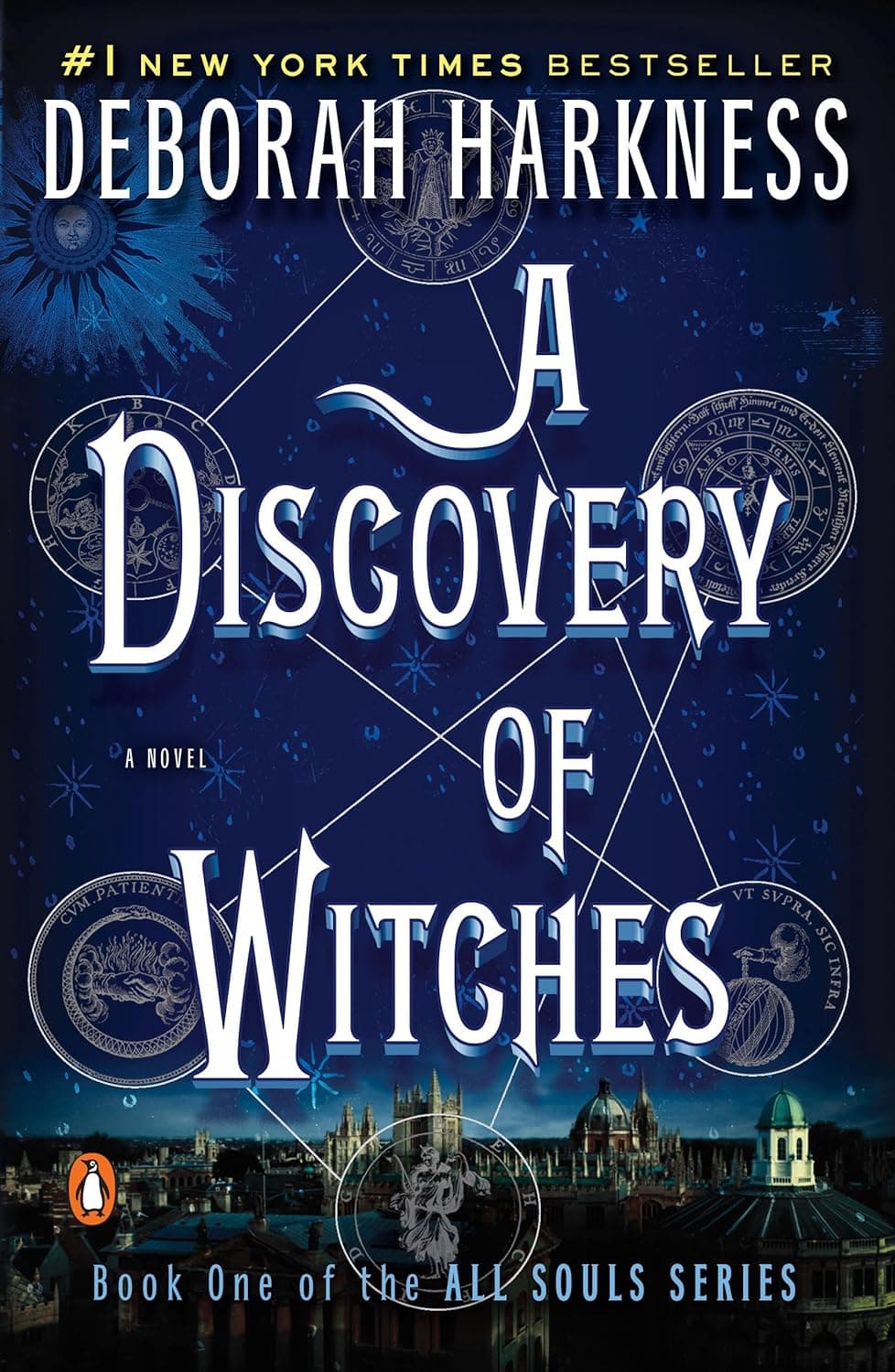
What This Theme Explores
Secrets and Deception in A Discovery of Witches asks whether concealment protects or corrodes—and at what cost. The novel probes why characters hide truths: fear of exposure, the lure of power, inherited shame, and the hope of safety. It shows that deception operates outwardly (lies, omissions, political cover-ups) and inwardly (self-blinding), and that both forms warp identity and relationships. Ultimately, the story suggests that disclosure is risky but necessary, making truth-telling the crucible for intimacy, alliance, and self-acceptance.
How It Develops
The novel layers secrecy from the personal to the civilizational. Early on, Diana Bishop sustains a polished academic life by denying the depth of her magic—an act of self-protection that doubles as self-erasure. Meanwhile, Matthew Clairmont approaches her with studied restraint and “purely academic” interest, masking a century-long pursuit of Ashmole 782. Even small fibs, like Diana’s white lie to Gillian Chamberlain about her Mabon plans, establish a world where secrecy is social currency. Ashmole 782 itself—a bewitched palimpsest—sets the tone: the past is quite literally hidden, and who controls access to truth controls the future.
As the action shifts to Sept-Tours, private concealments widen into institutional ones. Matthew’s family past and predatory instincts press against his polished exterior, while the Congregation’s Covenant is revealed as a founding secret that regulates interspecies relationships under the guise of peace. Deception becomes a political weapon: Peter Knox manipulates evidence and emotion to corral Diana, exemplifying how half-truths keep a fearful order in place. The stakes escalate from romantic misdirection to species-level cover-ups, and secrecy becomes the architecture of power.
In the final arc, buried truths detonate. Gillian’s complicity and the misinformation around the Bishops’ deaths crack open, leading to the revelation that Diana’s parents spellbound their daughter to protect her. Matthew’s own sealed compartments—his connection to Juliette and leadership of the Knights of Lazarus—come into the light, clarifying that his reticence has always been both personal and political. Only when these secrets are owned aloud can Diana claim her magic and forge authentic alliances; the path to belonging runs through revelation, not concealment.
Key Examples
-
Diana’s self-deception: Diana’s initial control over her identity depends on refusing her power, a choice that offers safety at the price of wholeness. Her denial is less a lie told to others than a narrative she tells herself—one the story slowly dismantles.
Here, with my hard-earned doctorate, tenure, and promotions in hand and my career beginning to blossom, I’d renounced my family’s heritage and created a life that depended on reason and scholarly abilities, not inexplicable hunches and spells. — Chapter 1-5 Summary This confession frames the novel’s ethical question: is a life built on selective truths truly secure, or merely stalled?
-
The nature of Ashmole 782: The manuscript’s enchanted palimpsest is a perfect emblem for institutional secrecy: history isn’t gone—it’s been hidden. The spell that veils the text exposes how knowledge can be engineered to withhold rather than reveal.
This was not an ordinary palimpsest. The writing hadn’t been washed away—it had been hidden with some sort of spell. But why would anyone go to the trouble of bewitching the text in an alchemical book? — Chapter 1-5 Summary The book’s concealment drives every faction’s agenda, showing how truth becomes a battleground.
-
Matthew’s hidden motives: Matthew initially cloaks desire under scholarship, deflecting scrutiny and guarding leverage. His confession reframes his pursuit of Diana as part of a centuries-long quest, collapsing the boundary between personal attraction and strategic obsession.
"I’m not interested in her!" Matthew’s cue exploded into the white ball. "I want the manuscript. I’ve been trying to get my hands on it for more than a hundred years." — Chapter 36-40 Summary The eruption signals how unsustainable his partitions have become; secrecy strains both romance and ethics.
-
The lie about Diana’s parents: Gillian and Knox weaponize narrative control, insisting witches killed the Bishops to force Diana’s loyalty. Their deception reveals how power brokers cast lies as public safety.
"Rebecca Bishop and Stephen Proctor were keeping secrets from other witches. We needed to discover them. Their deaths were unfortunate, but necessary." — Chapter 26-30 Summary The rhetoric of “necessity” exposes the moral rot behind institutional secrecy.
-
The spellbinding: The greatest concealment is intimate—a parental spell that shapes Diana’s very self. This “loving lie” raises the novel’s thorniest question: can protection justify theft of agency?
“‘That you are reading this means that your father and I succeeded. We were able to convince the Congregation that it was your father—and not you—whose power they sought... We trust that you are old enough now to understand.’” — Chapter 31-35 Summary The revelation catalyzes Diana’s growth, transforming secrecy from shield to shackle she must remove.
Character Connections
Diana Bishop embodies the inward face of deception. Her intellect and routine become tools of avoidance, but once she confronts the spellbinding and claims her power, she models how truth-telling reconfigures identity and possibility. Her arc argues that self-knowledge requires risking the loss of one’s safest story.
Matthew Clairmont is secrecy personified: an ancient predator in a scholar’s suit, a lover who is also a strategist. His concealed histories—the Knights of Lazarus, Juliette, blood-soaked instincts—complicate his protectiveness into control. As he learns to disclose rather than manage, the novel reframes strength as transparency, not mastery.
Peter Knox is the theme’s dark mirror. He curates information, manipulates omissions, and justifies coercion by invoking communal good. Through Knox, the book indicts the idea that ends excuse deceptive means, especially when “order” depends on suppressing truth.
Sarah Bishop and Emily Mather practice omission as care, honoring a promise yet hindering Diana’s growth. Their silence shows how love can misread protection, and how even well-meant secrecy can infantilize the person it seeks to save.
Ysabeau de Clermont guards legacies scarred by violence and grief. Her reticence around family wounds and influence underscores how trauma breeds secrecy—but also how sharing those histories becomes an act of trust that knits fragile alliances.
Symbolic Elements
Ashmole 782 concentrates the theme into an object: a repository of erased origins whose concealment dictates power. Chasing the book becomes a pursuit of unredacted history—and of agency over the story creatures tell about themselves.
Matthew’s hidden drawer and the seals of the Knights of Lazarus externalize his layered identity. The compartment’s quiet click—proof of a life organized around sanctified secrecy—makes visible the machinery of private power (Chapter 21-25 Summary).
The oubliette where Satu Järvinen imprisons Diana literalizes erasure: a “place of forgetting” that aims to remove a person from memory and record. As a symbol, it condemns regimes that preserve themselves by burying inconvenient truths—and people.
The Bishop grimoire, a domestic “cookbook,” reframes knowledge as lineage-bound and intimate. It suggests that not all secrets are corrosive; some are sacred trusts—until their exclusivity denies rightful heirs the truths they need to live fully.
Contemporary Relevance
In an age of curated feeds and algorithmic opacity, the novel’s insistence that concealed narratives distort communities feels urgent. The Covenant echoes institutions that sustain order by hiding inconvenient histories, while Diana’s journey from denial to integration mirrors personal struggles to live authentically despite social pressures to self-edit. The story argues for responsible transparency: telling the truth not to sensationalize, but to repair. It’s a call to confront family, institutional, and cultural secrets so that intimacy and justice have room to grow.
Essential Quote
Here, with my hard-earned doctorate, tenure, and promotions in hand and my career beginning to blossom, I’d renounced my family’s heritage and created a life that depended on reason and scholarly abilities, not inexplicable hunches and spells. — Chapter 1-5 Summary
This admission crystallizes the theme: secrecy can masquerade as success while quietly shrinking the self. By naming her self-deception, Diana begins the conversion of secrecy into truth—a move the novel treats as the prerequisite for love, power, and belonging.