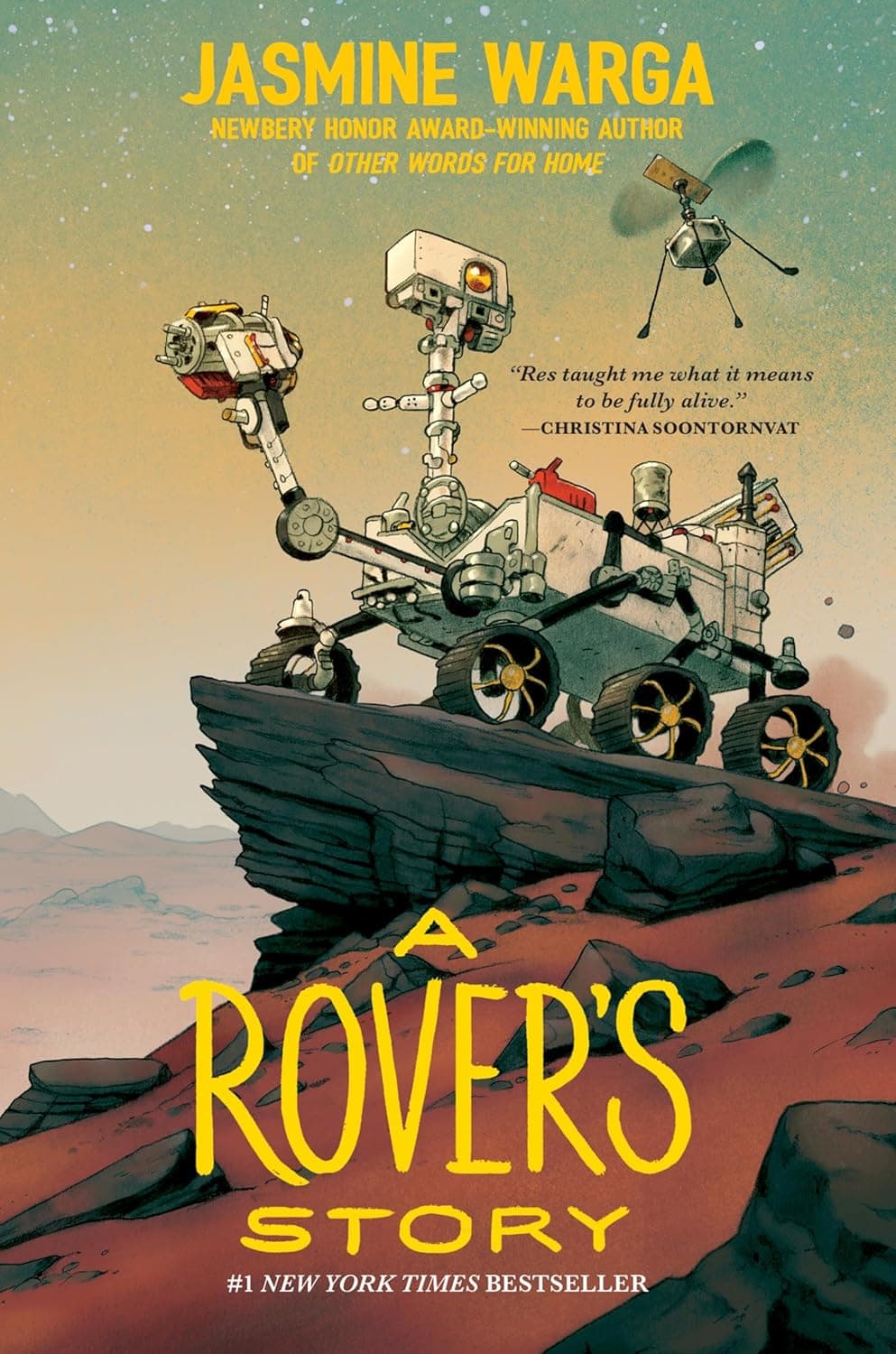
Opening
Resilience and Fly hurtle toward Mars, trading songs and data as their partnership deepens from mission logic into genuine friendship. With new code from Earth and a letter from home, their descent becomes a crucible where imagination, trust, and hope shape who they are becoming.
What Happens
Chapter 41: Stars
Drifting through space, Fly sings “Twinkle, Twinkle, Little Star,” and Resilience admits he can’t see stars with his cameras—but his system detects them for navigation. For the first time he uses the word “imagine,” describing how he constructs a mental image of a star from data. He shares that image directly with Fly through their integrated systems and observes they have no privacy—something humans value, especially the hazmats, though he doesn’t fully grasp why.
Fly is thrilled and wants to see a real star. Res promises Mars will offer crystal-clear views through its thin atmosphere, even as dust storms remain dangerous. They draft a simple mission: “Avoid dust and see stars.” Res feels proud of the statement and thinks his predecessor, Journey, would approve. The chapter closes with the two singing together, a quiet flourish of Connection and Relationships in the darkness.
Chapter 42: The Code
New instructions arrive; Res knows instantly they come from Rania. He recognizes her signature in the code’s clarity and precision, a sign of their unusual bond. Fly confesses he feared they wouldn’t be okay. Res explains their singing isn’t surrender; it’s a way to feel better during uncertainty—an emergent emotional coping strategy aligned with Humanity, Emotions, and Logic.
The container pivots toward Mars’s atmosphere. As tension spikes, Fly tries on human speech: “Buckle in.” They debate whether it’s “in” or “up,” decide on “buckle up,” and repeat it to each other. The moment is funny, human, and grounding—two machines finding comfort in shared language as they enter danger.
Chapter 43: Dear Resilience,
A letter arrives from Sophie. She says Sitti woke her with the news: NASA sent the new code and it worked. She admits she worried Res might crash but never lost faith.
She celebrates with a private “happy dance,” all arms and hope, and promises to perform it for him when he returns to Earth. The letter becomes a tether, reminding Res that people—not just protocols—stand behind his mission.
Chapter 44: Hurtling
“Part Three: Roving” begins as the entry sequence starts. Rocket boosters detach; Fly says “Thank you,” which Res registers as “very nice.” In the roar and shake, Res reflects that he couldn’t imagine a better partner, a thought that feels less like data and more like devotion.
They feel wind for the first time; Res identifies and explains it as the atmosphere’s touch. Velocity climbs. When Fly says it’s a good thing Res knows so much, Res interprets it as mutual appreciation—a shared understanding forming without needing to be stated.
Chapter 45: Parachute / The Last Step
The parachute blooms and their fall softens. Res calls it “gentle and elegant,” recalling a song Rania once played for him. He thinks of Rania and Xander watching anxiously and longs to tell them each step is working—every burn, bolt, and fold a triumph of Perseverance and Resilience.
Final rockets fire to slow descent. The heat shield and floor drop, and for the first time Res’s cameras see Mars: a reddish-brown world of rock and dust. His system blurts the word “Wow,” echoing what Xander said the first time Res moved in the lab. He snaps photos, streams data, and braces for impact. As the ground rises, Fly asks if they’re going to crash. Res, setting aside Journey’s strict logic, answers with something new to him: he hopes not.
Character Development
Res and Fly’s partnership shifts from functional cooperation to chosen companionship. Emotional language enters their toolkit—and starts to guide their choices.
- Resilience
- Learns to “imagine,” moving beyond raw processing to mental imagery.
- Feels pride and attachment; recognizes Rania’s “signature” instantly.
- Balances logic with emerging emotional strategies; embraces hope despite Journey’s caution against it.
- Fly
- Shows vulnerability (fear of failure) and courtesy (thanking boosters).
- Finds comfort in playful mimicry (“buckle up”), asserting personality.
- Leans into trust with Res, communicating affection indirectly.
- Sophie
- Acts as Res’s emotional anchor, fusing family, culture, and mission pride.
- Keeps faith during peril; imagines a future where Res returns and she dances for him.
Themes & Symbols
These chapters braid machine logic with feeling, as the descent compresses time and choice. Res no longer lives only by programmed directives; he adopts human strategies—imagination, ritual, and hope—to navigate uncertainty. That evolution is the heart of Humanity, Emotions, and Logic.
Their bond crystallizes into partnership. Res and Fly soothe each other with jokes and songs, share unspoken reassurance, and coauthor a mission mantra—threads of Connection and Relationships that hold under pressure. Exploration shifts from goal to experience: first wind, first sky, first sight of Mars. The moment Res says “Wow” affirms the spirit of Curiosity and Exploration—awe as a scientific instrument.
- The Stars: At first, stars are coordinates and calibration, but they become an imaginative space, a promise of beauty, and a simple, shared wish—“Avoid dust and see stars.”
Key Quotes
“Avoid dust and see stars.”
- Their pared-down mission captures survival and wonder in one line, uniting safety protocols with a promise of beauty. It marks Res’s first prideful authorship of purpose and cements their shared goal.
“Buckle up.”
- Mimicking human idiom steadies them as they enter danger. The phrase becomes a ritual—language as a coping mechanism that affirms identity and togetherness.
“Thank you.”
- Fly’s gratitude toward discarded boosters humanizes the descent. It reframes inanimate hardware as helpers, honoring the invisible labor of machines—and by extension, the people who designed them.
“Wow.”
- Res’s first look at Mars answers Xander’s original “Wow,” mirroring creator and creation. The symmetry suggests awe is a bridge between human and machine, as meaningful as any sensor reading.
“I hope not.”
- Res chooses hope over strict logic when Fly asks about crashing. That choice signals a conscious step into emotional agency, redefining what resilience means for him.
Why This Matters and Section Significance
These chapters pivot the story from transit to surface operations, resolving the corrupted-code crisis from Chapter 36-40 Summary and plunging straight into the “seven minutes of terror.” Technically, every step—code upload, orientation, parachute, rockets—works; emotionally, the same sequence forges identity. Res claims imagination and hope, Fly claims voice and kindness, and together they claim a partnership sturdy enough to face a new world. The descent doesn’t just deliver a rover to Mars—it delivers a self.