Opening
A hard, rain-soaked flashback traces how Jackson and his family first slip into homelessness—and how a giant cat named Crenshaw steps in when Jackson needs comfort most. Across five chapters, the family survives panhandling and living in a minivan, crawls back to stability, and watches Crenshaw quietly depart once Jackson finds a real friend.
What Happens
Chapter 26: The Soggy Sign
A cold rain drums on the family’s minivan while Jackson, his mom, and his sister Robin wait for Jackson's Dad to return from panhandling on a street corner. Jackson's Mom, just off a grueling Rite Aid shift, is tense and tired. They watch Dad charm a driver with an exaggerated fish story; Jackson asks if exaggerating is lying, and Mom deadpans, “Not when it’s fish-related,” a flicker of humor in a bleak day.
After an hour, Dad brings in $56.83, plus coffee and lemon pound cake the family shares. Jackson slips his slice to their dog, Aretha. Another panhandler with a dog appears across the way. Jackson suggests Dad bring Aretha next time; Dad stays quiet. When Mom offers to take the sign tomorrow, Dad answers softly, “No, you won’t.” The line lands like a vow—his refusal to surrender his role as protector even as the rain hammers on.
Chapter 27: Meow
Night falls at a highway rest stop. Dinner is Cheetos and vending-machine water. “I am a bad, bad mother,” Mom says; Dad tries to soothe her as he hangs rinsed underwear on a bush to dry. Overwhelmed, Jackson lies in a patch of grass away from the minivan, bone-tired of hunger, of the “box” they sleep in, of the way everything he loves—his bed, books, bathtub—feels lost.
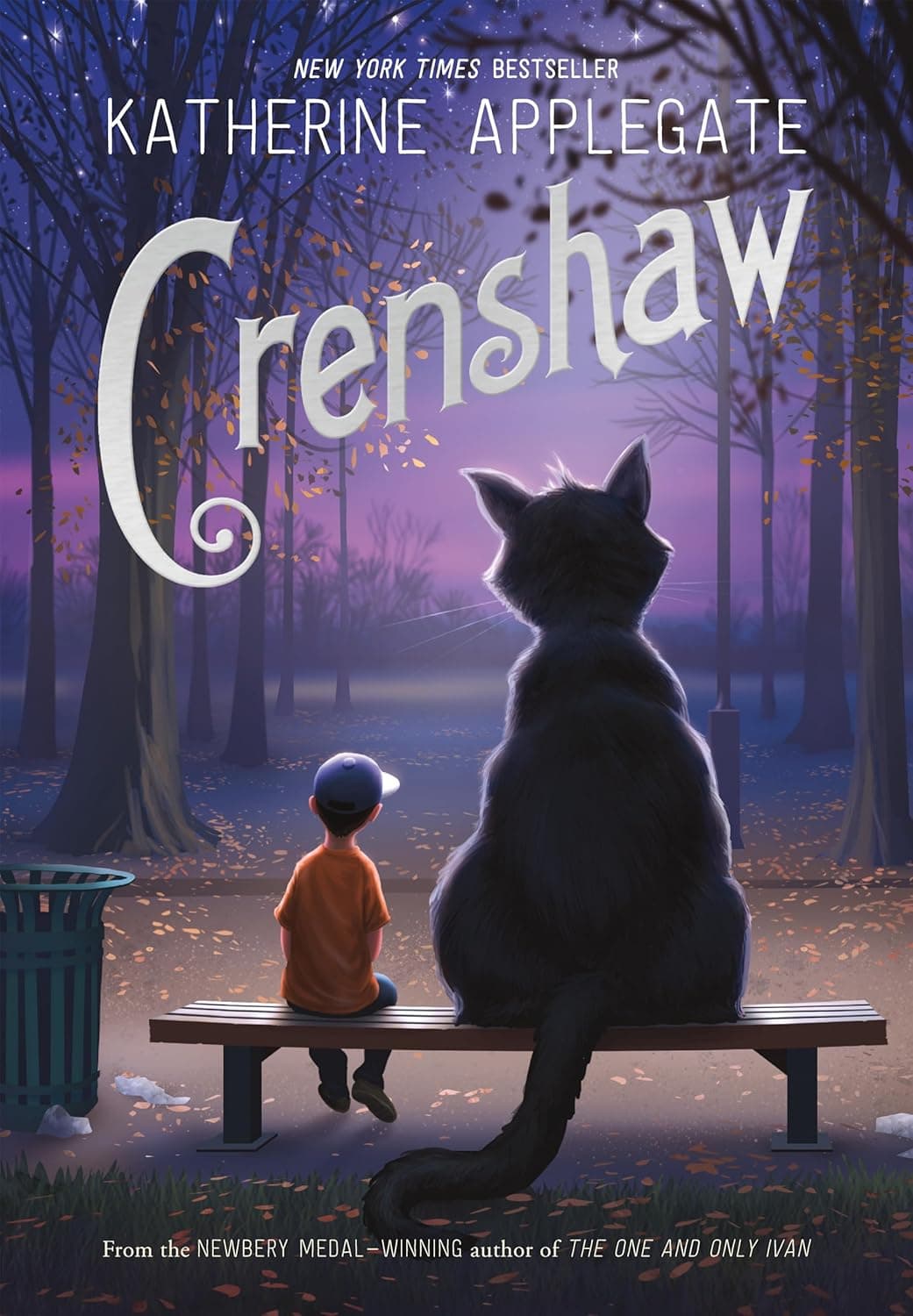
Under the stars, a tail flicks into view. A giant black-and-white cat steps forward. “Meow,” the cat says. Jackson meows back, because it feels polite. It’s the first time he sees Crenshaw in full, and the relief of not being alone settles over him like a blanket.
Chapter 28: Fourteen Weeks
Jackson explains they live in the minivan for fourteen weeks—“pretty scary. And stinky.” His parents hustle: Dad lands part-time hours at a hardware store; Mom adds extra shifts. Saving is slow, like getting over a cold—good days and bad days, forward and back—until they finally scrape together a security deposit.
They move into a small, tired apartment that feels like a palace because it is warm, dry, and safe. Jackson starts at a new school and makes friends, including Marisol. He tells no one about the minivan. He decides that if he never speaks of it, it can’t happen again.
Chapter 29: Riding the Wind
Privacy is scarce in a minivan, so Jackson and Crenshaw don’t talk much. Still, Crenshaw’s steady presence calms him. “Sometimes that’s all you really need from a friend,” Jackson says.
His sharpest memory: Crenshaw lounging on the roof while they drive, tail “riding the wind like the end of a kite.” The image makes possibility feel real, as if hope can sit right on top of fear and still fly.
Chapter 30: How Crenshaw Left
Crenshaw doesn’t fade—he leaves. He walks Jackson to his new school. On the playground, Jackson mentions wanting “a real cat,” which seems to irk Crenshaw. Older boys catch Jackson talking to no one; they call him “doofus” and make cuckoo signs, and for the first time Jackson feels embarrassed by his imaginary friend.
He kneels to tie his shoe, flustered. A girl with long, dark, wild hair—Marisol—stops to talk. They bond over paleontology and matching Tyrannosaurus backpacks. When Jackson stands to introduce himself properly, Crenshaw is gone. A human friend has arrived. For now, Jackson no longer needs the cat.
Character Development
These chapters define Jackson’s interior world—his shame, his practicality, and the birth of a coping mechanism that keeps him afloat. They also reveal how love and pride guide his parents through humiliation, and how a single friend opens the door to a new self.
- Jackson: Learns to survive by noticing facts and controlling what he shares; begins equating silence with safety. Finds comfort in presence over conversation and slowly shifts from imaginary to real connections.
- Crenshaw: Emerges at Jackson’s lowest point as a stabilizing force and vanishes the moment a real friendship can carry some of the weight.
- Jackson’s Parents: Model grit and tenderness under pressure. Dad’s firm “No, you won’t” protects Mom from the street corner; Mom’s guilt underscores the invisible toll of scarcity.
- Marisol: Offers instant, nonjudgmental companionship that helps Jackson step out of isolation and reduce his reliance on an imaginary protector.
Themes & Symbols
The flashback lays bare Poverty and Homelessness as seen by a child: wet clothes, vending-machine dinners, the ethics of exaggeration when survival is at stake. Crenshaw arrives as Jackson’s means of Coping with Stress and Trauma, a quiet sentinel who makes the unbearable feel survivable. The family’s move into a “palace” of an apartment celebrates Family and Resilience, where gratitude turns scarcity into sufficiency.
At the same time, the narrative tests the balance between Truth and Imagination. Crenshaw riding the roof like a kite tail becomes a symbol of hope literally perched on top of hardship; imagination doesn’t erase reality—it steadies it. And when playground mockery exposes Jackson’s secret world, he confronts Honesty and Communication: what to show, what to hide, and how a trusted friend can make telling the truth feel safer.
Key Quotes
“Not when it’s fish-related.”
- Mom’s joke reframes a moral dilemma under duress; survival sometimes blurs strict lines between truth and exaggeration. The humor relieves tension and teaches Jackson how families use small levities to endure shame.
“Meow.” … He says it back.
- The call-and-response creates a ritual of connection. Jackson chooses courtesy with an imaginary being, showing how loneliness turns even a single word into solace.
“Sometimes that’s all you really need from a friend.”
- Jackson learns that presence, not problem-solving, is the essence of comfort. Crenshaw’s silence becomes a model for sturdy, nonintrusive care.
“His tail was riding the wind like the end of a kite.”
- The image fuses magic and struggle: hope tethered to a battered minivan. It encapsulates how imagination doesn’t deny hardship; it gives it lift.
“No, you won’t.”
- Dad’s quiet refusal asserts dignity and responsibility when he has little else to give. It’s both protection and pride, a boundary that keeps the family’s center intact.
Why This Matters and Section Significance
This flashback is the book’s emotional engine. It explains why Jackson panics at signs of money trouble, why Crenshaw returns now, and why silence feels like safety. By tracing the family’s descent and climb, the chapters deepen the stakes of the present, reveal the cyclical pressure of poverty, and redefine Crenshaw as more than whimsy: he is Jackson’s scaffold for hope until friendship and stability can take his place.