Opening
Pressed by scarcity and secrets, Jackson tests the edges of right and wrong while his carefully ordered world tilts toward the uncanny. A clay cat resurfaces, an old friend is named aloud, and logic buckles as his dog seems to notice what shouldn’t be there. The pressure builds until it breaks, forcing Jackson to face the costs of survival and the possibility that imagination might be a lifeline in a world defined by Poverty and Homelessness.
What Happens
Chapter 36: Survival of the Fittest
Jackson admits he has stolen four times: two jars of baby food for his hungry sister Robin, a pack of gum, and—most recently—a dog cookie. He remembers how easy it feels, like a magic trick: the baby food goes into his pockets while his mom and Robin are in the restroom, and he even waves to a classmate in the next aisle without consequence. Later, he lies to his mom that he discovered the jars in the back of a cupboard. The relief that softens his family’s faces makes the lie feel necessary.
He wrestles with the ethics—he feels worse about the lie than the theft. To make sense of it, he borrows the logic of nature shows: survival of the fittest, lions and zebras. But he knows he isn’t a lion; he’s a kid who understands right from wrong. The memory ends with a wry, bitter punchline—Robin devours the baby food so fast she throws up on his cheetah book. He accepts the splatter as his punishment, a reminder that necessity doesn’t erase guilt.
Chapter 37: A Going-Away Present
Jackson comes home to Aretha clamping his old, handmade clay statue of Crenshaw between her teeth. She bolts straight to the house of his best friend, Marisol. Jackson finds Aretha digging in Marisol’s old sandbox—one of her favorite burial grounds. Marisol, in the middle of building a cat climbing structure, retrieves the statue: a standing cat in a baseball cap. Jackson shrugs it off as “lame.” Marisol offers him three dollars.
Overwhelmed, Jackson tells her to keep it as a “going-away present,” a slip that reveals more than he intends. He backpedals, but Marisol is already listening closely. To shift the topic, Jackson asks about imaginary friends; Marisol confides she once had one named Whoops. That trust gives Jackson permission to admit he had a big cat. Marisol’s parting wisdom—“You should never forget your imaginary friend… What if you need him someday?”—lands just as she christens the statue: “Crenshaw would be a good name for a cat, I think.”
Chapter 38: A Logical Explanation
Walking home, Jackson keeps looking back at Marisol. Her naming Crenshaw without being told rattles his carefully stacked facts. His mind sprints toward order: maybe the statue has his name written on the bottom. Perhaps a teacher or his mom labeled it.
He steadies himself with a mantra: “There’s always a logical explanation. Always.” The moment exposes a fault line in Jackson’s worldview. Facts are his flotation device, but now he’s drifting into the waters of Truth and Imagination, where logic can’t neatly account for what just happened.
Chapter 39: Bam
That night, Jackson perches on a mattress in a room stripped for a yard sale. His race car bed is dismantled and tagged for tomorrow. Jackson's Dad and Jackson's Mom step in to praise him for being helpful and uncomplaining. “You’re pretty amazing… Let’s keep him around,” his dad says, trying to lighten the room. The compliment lands heavy—another reminder that Jackson’s role is to be brave, quiet, and low-maintenance.
After they leave, the powerlessness crests. He compares his life to a bumper car with no steering wheel—every hit comes from elsewhere. The pressure needs a release valve. He hurls a plastic mug. “Bam.” The crash satisfies; water snakes down the wall. No one comes. Alone with the shards, Jackson meets the raw edge of Coping with Stress and Trauma: the mess that stays after the sound fades.
Chapter 40: A Cartoon Character
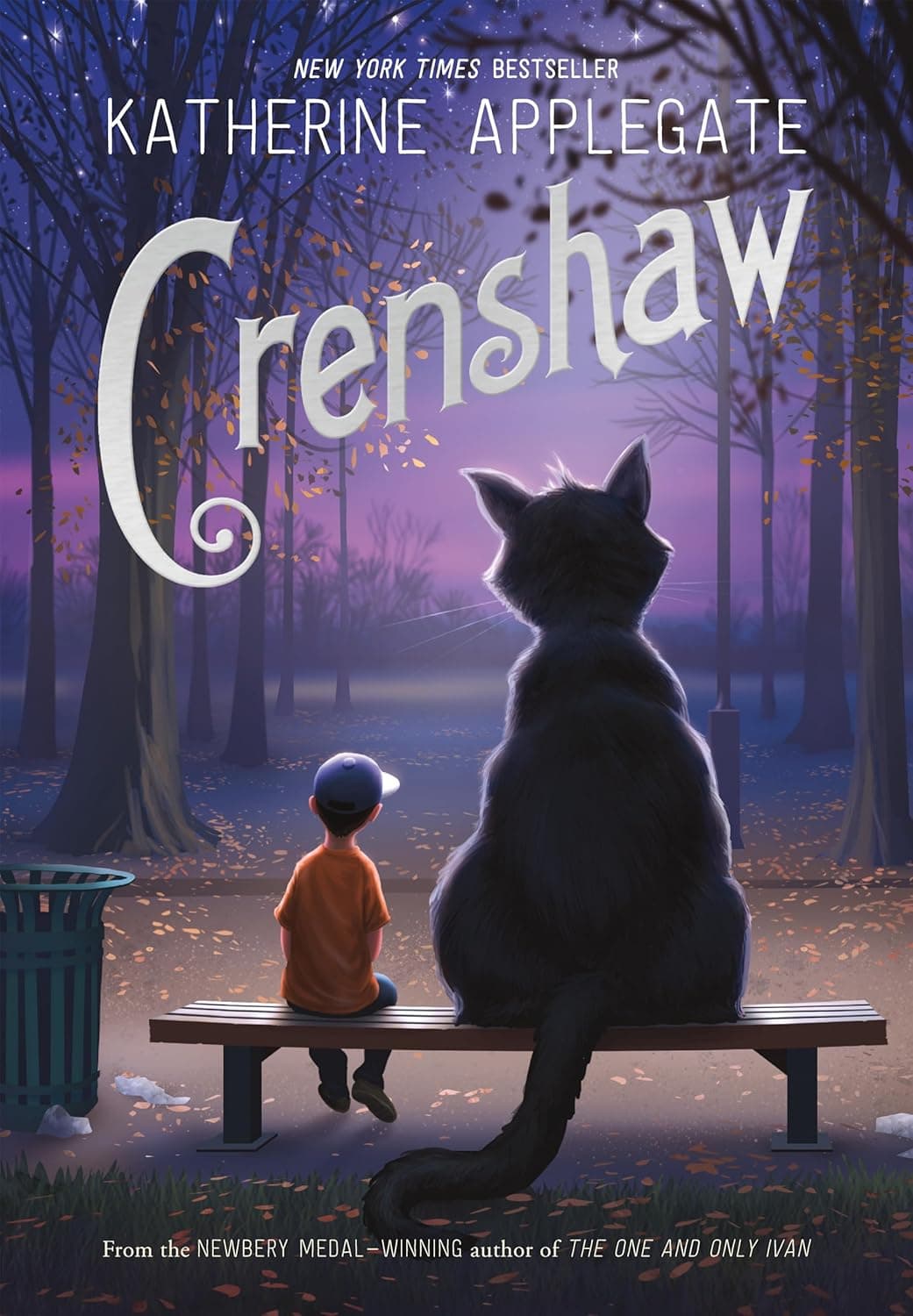
Jackson wakes from a dream of a giant talking cat with a bubble beard and jolts to a new realization: Aretha tried to lick and play with Crenshaw. Dogs are good at lots of things, but they can’t see imaginary friends—or read a kid’s mind.
Two possibilities square off. Either Crenshaw is real in some way Jackson can’t explain, or Aretha is echoing Jackson’s tension and body language. He reaches for memories from the minivan years and can’t—or won’t—retrieve them. With no answer that satisfies, he buries his face in the pillow and wills himself back to sleep, suspended between what he knows and what he has seen.
Character Development
Jackson’s guard drops, and with it, the tidy story he tells himself about control. He wants to live by facts, yet his choices and experiences pull him toward a more complicated truth.
- Jackson: Survival logic tempts him, but guilt about lying outweighs the thrill of getting away with theft. He risks vulnerability with Marisol, loses control in a private outburst, and starts to accept that facts alone can’t hold his world together.
- Marisol: Her empathy and gentle curiosity create safety for Jackson. By sharing Whoops and naming the statue, she validates both memory and imagination without judgment.
- Jackson’s Parents: Loving but distracted, they praise his stoicism without seeing how it isolates him. Their optimism and jokes can’t patch the widening cracks.
Themes & Symbols
Poverty squeezes Jackson into moral gray zones—stealing food becomes an act of survival, not delinquency. Yet the emotional cost remains: lying corrodes trust, and the yard sale strips away not just objects but identity. As possessions leave, the past reappears in the form of a clay cat, insisting that buried needs surface.
Truth and imagination collide in small, seismic moments. Marisol names Crenshaw; Aretha seems to notice him; Jackson clings to explanations. The tension isn’t simply whether the cat is “real,” but whether Jackson can accept that imagination can tell a kind of truth facts can’t.
Symbols sharpen this conflict:
- The smashed mug: a child’s relic turned into shrapnel, a clean break in his composure.
- The clay statue: a piece of Jackson’s history he tried to bury, now unearthed, demanding attention.
- The bumper car image: the lived sensation of instability—contact without control.
Key Quotes
“There’s always a logical explanation. Always.” Jackson’s mantra is both shield and prison. It protects him from fear but blocks him from acknowledging emotions—and possibilities—logic can’t neatly contain.
“You’re pretty amazing… Let’s keep him around.” Meant as comfort, his dad’s line underscores how Jackson’s value feels tied to silence and strength. The joke lands as pressure, hastening the eruption that follows.
“You should never forget your imaginary friend… What if you need him someday?” Marisol reframes imagination as a resource, not a weakness. Her advice invites Jackson to treat Crenshaw as emotional infrastructure rather than childish excess.
“Crenshaw would be a good name for a cat, I think.” The casual naming cracks Jackson’s certainty. It’s the story’s pivot into wonder—a tiny phrase that makes the impossible feel intimate and near.
“Bam.” A single syllable releases stockpiled dread. The sound becomes a heartbeat of agency, then an echo in a quiet house that doesn’t come running.
Why This Matters and Section Significance
These chapters mark a turning point where Jackson’s external crises and internal defenses collide. Confession, a resurfaced artifact, and an inexplicable naming push him beyond the limits of tidy logic. His private explosion signals that stoicism no longer protects him; it isolates him. By the end, even Aretha’s response suggests that Jackson’s world will now include realities he can’t measure but must learn to live with—setting the stage for him to accept help from the very figure he’s tried to forget.