Opening
On the brink of eviction, Jackson finally faces what he’s been dodging: the truth about his family’s poverty and his own need for comfort. With help from his imaginary friend Crenshaw and the compassion of his real-life friend Marisol, he shifts from secrecy and control to honesty and connection. These chapters bring the external crisis to a head and unlock Jackson’s internal turning point.
What Happens
Chapter 41: The Truth, Jackson
Jackson wakes to find Crenshaw asleep in his bed, wrapped around the family dog, Aretha. Fed up, Jackson demands answers and tries to push the cat away—only for Crenshaw to steer the conversation toward truth. He reminds Jackson of the time he stole a yo-yo as a little kid and tried to pin it on his imaginary friend, a memory that mirrors the dog treat Jackson swiped from Marisol’s house and still hasn’t eaten.
Crenshaw tells Jackson that truth matters to him because it matters to Jackson. He positions himself as a guide—a conscience—nudging Jackson to stop avoiding hard realities. Prodded, Jackson pitches the stolen dog treat out the window. Trying to reassert control, he points out the ridiculousness of a giant cat cuddling a dog; Crenshaw hisses, Aretha bolts, and the room spins into a chaotic mash of imagination and real life Jackson can no longer keep neatly apart.
Chapter 42: A Yard Sale
The family holds a yard sale that makes Jackson feel inside out, as if strangers are pawing through their private lives. To paper over the humiliation, Jackson’s Dad plays guitar while Jackson’s Mom sings, turning the driveway into a makeshift party. The act cracks when Jackson overhears his mom murmur that the money they’ve made is “not even close to what we need.”
A man offers to buy Jackson’s dad’s guitar—the very instrument Jackson is named after. Jackson and Robin freeze; Robin tries to trade the man her beloved bunny trash can instead, a small, tender protest against a world that wants to take what they love. Dad turns the offer down in public but pockets the buyer’s number, and Jackson knows what that means. The moment exposes the brutal calculus of Poverty and Homelessness: survival may cost the family its history and identity.
Chapter 43: Final Eviction Notice
The landlord arrives with an envelope stamped “FINAL EVICTION NOTICE.” With much of their furniture already sold, Dad leans against a bare wall and tells the kids they’re “going to be taking a little drive,” a euphemism that only sharpens the blow. Robin rounds on Jackson for saying things would be okay, and their mom steps in to shoulder the blame.
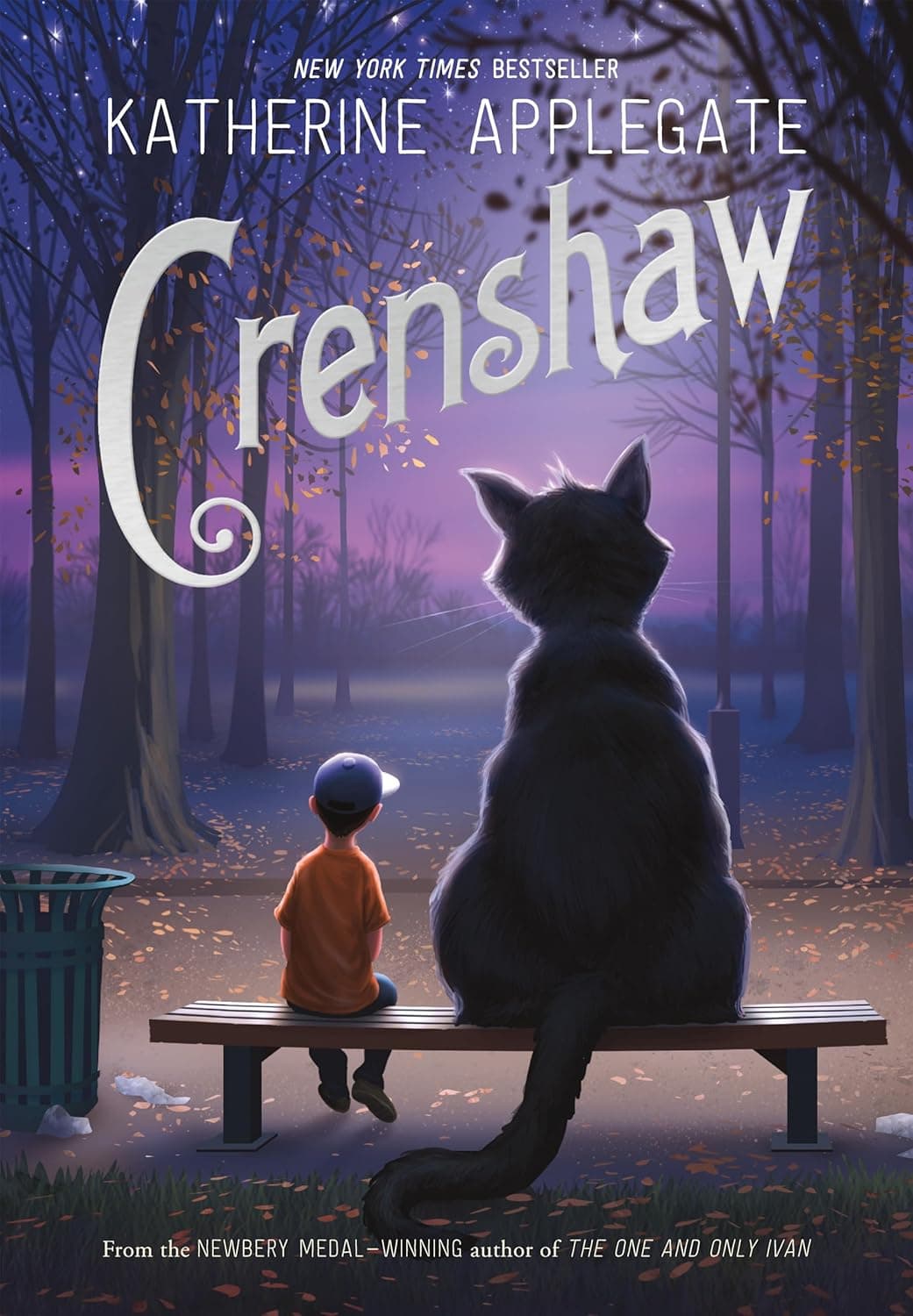
Jackson flees to his stripped-down room, where Crenshaw waits on the bed. This time Jackson doesn’t argue. He presses his face into the cat’s fur and cries, thinking about how little adults seem to know. Crenshaw’s steady presence becomes a lifeline—a tool for Coping with Stress and Trauma when reality is too heavy to carry alone.
Chapter 44: Telling Marisol
When Marisol shows up for their dog-walking job, Jackson nearly invents a story about a sick relative. As he opens his mouth, he hears Crenshaw whisper, “The truth, Jackson,” a line that nudges him toward Honesty and Communication.
Jackson chooses honesty. He tells Marisol everything: the hunger, the yard sale, the looming eviction, the fear he can’t quantify. As they walk, with Crenshaw cartwheeling ahead like a neon sign only Jackson can see, Jackson takes the final risk—he admits he has an imaginary friend, a giant, talking cat. He hands his whole story to someone else for the first time.
Chapter 45: Enjoy the Magic
Marisol doesn’t flinch. She doesn’t need proof. She says not everything in life requires explanation—some things, like why she loves building or why there are no rainbow M&Ms, just are. Her view challenges Jackson’s reliance on facts and points him toward the value of wonder and Truth and Imagination.
She reminds him of the second-grade magic show he ruined by explaining the trick. “You took the magic away,” she says, urging him to “just enjoy the magic while you can.” She promises their friendship will hold, wherever he goes, and leaves him with a final “fun fact”: “You can’t see sound waves, but you can hear music.” Jackson walks away lighter, seen, and unafraid to let magic help bear the truth.
Character Development
Jackson’s pivot from control to candor reshapes every relationship in these chapters. He stops treating Crenshaw like a problem and begins using him as support, and he lets Marisol into the part of his life he’s guarded most.
- Jackson: Moves from denial to vulnerability. He throws away the stolen treat, accepts comfort from Crenshaw, and tells Marisol the truth—even the unbelievable parts.
- Crenshaw: Evolves from nuisance to guide. He embodies Jackson’s conscience, pushing him toward emotional honesty and connection.
- Marisol: Emerges as a steady, empathetic friend whose openness reframes Jackson’s world. She validates the unseen and gives Jackson language for wonder.
- Jackson’s Parents: Their cheerful facade crumbles under financial strain. The possible sale of the guitar signals identity loss and deepening desperation.
- Robin: Her tearful offer of the bunny trash can and accusation that Jackson “lied” reveal the crisis’s impact on the youngest family member.
Themes & Symbols
Truth and Imagination: Crenshaw insists that truth matters and helps Jackson face it, while Marisol argues that the imaginative can be real in its effects. Together they show that facts and wonder aren’t enemies; imagination can carry truths the mind can’t yet hold.
Honesty and Communication: Jackson’s confession to Marisol breaks his isolation. Where his parents try to shield the kids with euphemisms and performance, Jackson’s plain speaking builds trust and relief.
Poverty and Homelessness: The yard sale and eviction transform abstract fear into visible loss. Strangers bargaining over family treasures, a father taking a buyer’s number for his guitar, and a bare-walled apartment map the steady erosion of stability and self.
Symbol: The Guitar: The instrument that gives Jackson his name symbolizes family identity, artistry, and hope. Its potential sale marks the cost of survival and the vanishing space for joy.
Key Quotes
“The truth, Jackson.”
Crenshaw’s refrain becomes the moral compass of the section. It punctures Jackson’s evasions and reframes the imaginary friend as a force for clarity, not escape.
“Not even close to what we need.”
Overheard at the yard sale, Mom’s line shatters the party facade. It grounds the family’s crisis in numbers that won’t add up, no matter how sweet the songs.
“FINAL EVICTION NOTICE.”
The blunt typography of the envelope turns fear into fact. It triggers Jackson’s surrender to comfort and reveals why imagination becomes necessary, not frivolous.
“We’re going to be taking a little drive.”
Dad’s euphemism shows the limits of parental protection. The soft words only highlight the hard truth the kids already feel.
“You took the magic away.”
Marisol reframes Jackson’s need to explain as a form of control that robs life of wonder. Her challenge invites him to balance facts with mystery.
“You can’t see sound waves, but you can hear music.”
Marisol’s metaphor captures the book’s thesis: the unseen can be deeply real. Crenshaw may be invisible to others, but his comfort and guidance resonate.
Why This Matters and Section Significance
These chapters form the emotional apex of the novel. Externally, eviction becomes unavoidable; internally, Jackson chooses connection over control. Confiding in Marisol integrates his two selves—the fact-seeker and the wonder-bearer—and redefines Crenshaw not as a problem to fix but as a resource to embrace. The story moves from private survival to shared strength, showing how friendship, truth-telling, and imagination work together to carry what facts alone cannot.