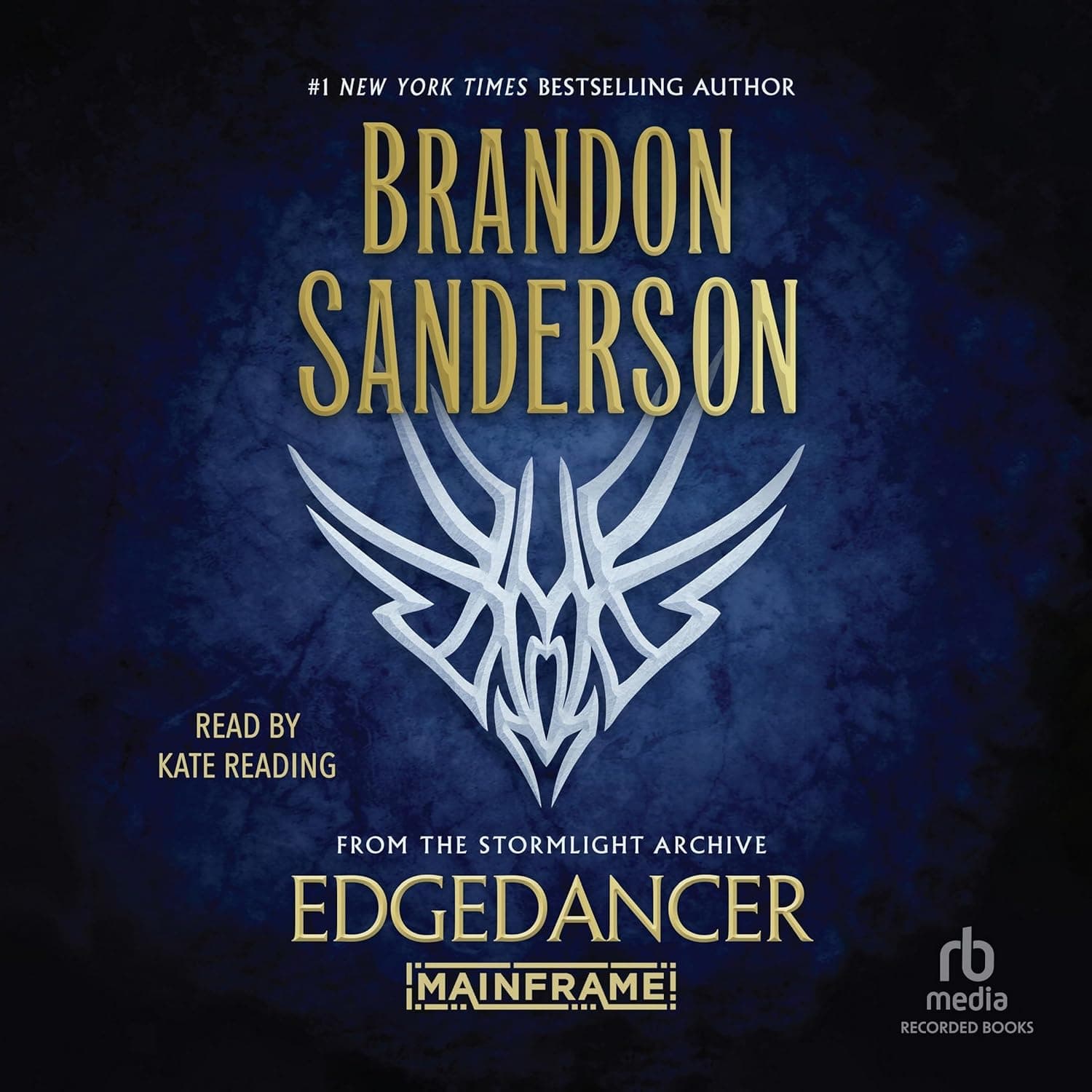
Edgedancer Summary
At a Glance
- Genre: Epic fantasy novella
- Setting: Roshar—primarily Azimir (Azir) and Yeddaw (Tashikk), between Words of Radiance and Oathbringer
- Perspective: Close third-person through Lift
- Place in Series: “Stormlight 2.5,” bridging major arcs and lore
Opening Hook
Lift wants dinner, not destiny. But when a food-obsessed thief from the Reshi Isles stumbles into the palaces and alleys where gods and Heralds meddle, her jokes and swagger can’t hide the tug toward something bigger. Pursued by a figure she calls Darkness, Lift learns that the cost of staying small is letting others be forgotten. As a new, unnatural storm bears down, she discovers that listening—truly listening—can be the bravest kind of heroism.
Plot Overview
Act I: Azimir — A Thief, a Feast, and a Miracle
In the Azish capital of Azimir, thirteen-year-old Lift slips into the Bronze Palace during the selection of a new Prime Aqasix, aiming not for jewels but for the emperor’s dinner—the caper introduced in the Prologue. Her only companion is her anxious cultivationspren, Wyndle, whom she jokingly calls a “pet Voidbringer.” The heist curdles into terror when a relentless lawman in black and silver hunts her: Darkness, secretly Nale, Herald of Justice, executing nascent Radiants to prevent a new Desolation.
With a clumsy thief named Gawx in tow, Lift slips through halls and kitchens, burning calories into “awesomeness”—Stormlight that lets her slick and heal. Darkness corners her and uses a creature to leech her power. After a narrow escape and a stolen roll to refuel, Lift is forced into a choice when Darkness’s minions kill Gawx. She chooses compassion over survival, awakening her power of Regrowth to heal his fatal wound. Witnessing the miracle, Azish viziers declare Gawx the new Prime; his first act is to pardon Lift, sparing her from Nale’s judgment. Uneasy with attention and duty, she runs.
Act II: Yeddaw — Pancakes, Trenches, and the Hunt
Freedom tastes like pancakes, so Lift chases ten legendary varieties in Yeddaw, a city carved into vast stone trenches, as covered in Chapters 1-5 and Chapters 6-10. She knows Darkness has followed. While scrounging and scheming, she finds a grim orphanage run by the caustic “The Stump,” whose brusque exterior masks an inexplicable streak of charity. A chance encounter with the philosopher Arclo—a Sleepless whose body is a swarm of hidden cremlings—adds riddles and warnings to the mix. Darkness’s apprentices, including the spectral killer Szeth-son-Neturo, scour the trenches for a Surgebinder.
Lift thinks Arclo is the target until stolen breakfasts and eavesdropping reveal more. The truth sharpens as rumors of an unnatural storm—the Everstorm—roll in: Darkness isn’t chasing the philosopher at all. The Surgebinder he seeks is the Stump, who has unknowingly been healing the children in her care with the Surge of Progression.
Act III: The Everstorm — An Oath on a Rooftop
As the Everstorm arrives, the chase crescendos, detailed in Chapters 11-15 and Chapters 16-20. Lift races across rain-slick roofs to shield the orphanage. On its crown, in wind and thunder, she confronts Darkness. She does not triumph through strength but by clarity—speaking the Second Ideal of the Edgedancers: “I will listen to those who have been ignored.” Power steadies her. She summons Wyndle into a Shard-rod and forces Nale to look, really look, at what the storm reveals below: parshmen transformed, the Desolation already begun.
The revelation breaks him. The Herald of Justice weeps and flees into the storm, purpose shattered. Lift turns back to what matters—healing the Stump’s wounds, then the quiet, constant needs around her. Finally, she accepts what she’s been dodging: responsibility. She chooses to return to Azir and help Gawx, trading running away for running toward.
Central Characters
For a fuller roster and relationships, see the Character Overview.
-
Lift: A streetwise spark of chaos whose jokes and hunger mask fierce empathy. Her rare ability to turn food into Stormlight makes her physicality central to her magic and underscores her theme: care is practical, embodied, and often small-scale. Across the novella she moves from “I won’t be grown” to “I will be present,” anchoring Edgedancer’s heart.
-
Darkness (Nale): Herald of Justice and avatar of law without mercy. Centuries of trauma have narrowed his vision to statutes and technicalities—a shield against fear of another apocalypse. Confronted by the Everstorm, he collapses under the revelation that his crusade not only failed but harmed those he meant to protect.
-
Wyndle: The fretful cultivationspren tethered to Lift, forever wishing for a dignified gardener and getting a whirlwind instead. His caution, patience, and gentle humor ground Lift’s impulsiveness, and his very form—vines coalescing into tools—embodies growth shaped toward service.
-
The Stump (Yaela): Gruff, blunt, allergic to praise. She quietly uses Progression to heal children while complaining about their noise, a contradiction that fascinates Lift. As an unknowing Radiant, she personifies the overlooked doing good without recognition—the very people the Edgedancers swear to remember.
-
Arclo: Philosopher and Sleepless, a hive-mind wrapped in human mannerisms. He is both observer and mirror, asking Lift questions that cut past bravado and hinting at the deeper Cosmere, where identity and purpose are choices made again and again.
-
Gawx: The clumsy thief elevated by miracle to Prime. His rise reframes “worth” as something conferred by compassion and belief as much as by birth or polish; his first decree—pardoning Lift—models the mercy Nale lacks.
-
Szeth-son-Neturo: A quiet shadow at Darkness’s side, the executioner’s blade made obedient. His presence underscores the peril facing Radiants and foreshadows the tangled destinies converging in Oathbringer.
Major Themes
Explore broader context on the Theme Overview.
-
Compassion for the Overlooked: Lift’s oath—“I will listen to those who have been ignored”—reframes heroism as attention paid to those most easily dismissed: street thieves, orphans, refugees. The novella insists that noticing is action, and that small mercies accumulate into world-shaping change.
-
Justice and Law vs. Personal Morality: Nale’s rigid legality collides with Lift’s people-first ethics. By forcing the Herald to witness the Everstorm’s reality, the story argues that laws without empathy calcify into cruelty, while justice requires context, conscience, and the courage to see.
-
Coming of Age and Accepting Responsibility: Lift clings to the idea that she “stopped at ten” to dodge the weight of duty. Her choice to return to Azir—and to stay present with the needy—marks a mature acceptance that power binds her to others, not just to freedom.
-
Finding Purpose and Identity: What begins as a quest for pancakes becomes an embrace of identity: Edgedancer, guardian of the ignored. Purpose here is not grand destiny but deliberate attention, a self defined by who you serve and how you show up.
Literary Significance
Edgedancer functions as the crucial bridge between Words of Radiance and Oathbringer, delivering major character turns without bloating the mainline series. It elevates Lift from comic relief to moral compass, reshapes Nale from inscrutable pursuer to tragic figure, and widens the map to include Azir and Tashikk at street level. The novella showcases Sanderson’s knack for pairing tight, propulsive plotting with thematic clarity—using a compact tale to seed Cosmere lore, deepen the Knights Radiant mythos, and center a philosophy of care as heroism.
Historical Context
Published in 2016—first in Arcanum Unbounded, then as a standalone—Edgedancer exemplifies the modern fantasy novella as series architecture. Originating as a stretch goal tied to The Way of Kings leather-bound Kickstarter, it reflects the author’s collaborative relationship with readers and a publication model that reserves space for intimate, side-angle storytelling within sprawling epics.
Critical Reception
- Praise: Readers and critics highlighted Lift’s singular voice, the novella’s tight pacing, and its outsized impact on the overarching Stormlight narrative. Many consider it essential reading for the series.
- Criticism: A minority found Lift’s slang and willful immaturity grating; even so, her arc and the story’s emotional payoff won over most skeptics.
A collection of memorable lines appears on the Quotes page.