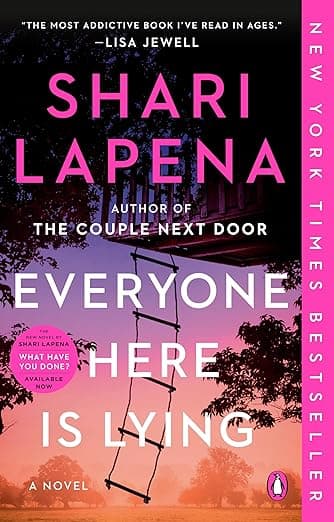
At a Glance
- Genre: Psychological thriller, domestic noir
- Setting: Stanhope, a placid, upper-middle-class suburb (present day)
- Perspective: Multi-POV third person with unreliable angles
- Tone: Claustrophobic, paranoid, fast-paced
- Structure: Short, propulsive chapters; shifting suspects; chilling final beat
Opening Hook
A single bad decision shatters the glossy calm of Stanhope. When nine-year-old Avery Wooler vanishes, neighbors who wave on the sidewalk begin watching one another from behind blinds. Secrets multiply; alibis thin. Every truth sounds like a lie, and every lie sounds plausible. By the time the town gets its miracle, the story has already turned into something much darker.
Plot Overview
After ending his affair with his neighbor, Nora Blanchard, Dr. William Wooler comes home boiling with frustration and finds his daughter, Avery Wooler, there when she should be at choir. Avery, volatile and defiant, pushes him past his limit. He strikes her, then flees, sickened by what he’s done. Hours later, Avery is reported missing. The case lands with Detective Gully, and the suburb’s sheen flakes off fast. To avoid exposure, William lies about his movements and his affair—an early crack in the novel’s core of Deceit and Lies—and quickly becomes the prime suspect.
Stanhope’s gaze widens. Nora’s husband, Al Blanchard, has been stalking the motel where Nora met William, seething with suspicion. Then a tip rattles the town: an anonymous caller claims Avery got into a car belonging to Nora’s teenage son, Ryan Blanchard. The story hardens around the boy; the police lean in; neighbors choose sides. As attention funnels toward Ryan, the town becomes a study in Manipulation and Control—of evidence, emotion, and narrative.
The tipster is unmasked as Marion Cooke, a nurse who works with William. She confirms her account, and Ryan is arrested. Then everything flips: Avery reappears. She tells police that Marion abducted her out of jealous obsession with William and held her in a basement. Avery says she escaped by pushing Marion down the stairs to her death. The public hails her as brave; the police close the file.
But the final note curdles the triumph. During a televised interview, Avery slips—“I was angry. She double-cross—” The host pounces. The implication crystallizes: Avery wasn’t just a victim. She engineered her own “disappearance” with Marion as an act of Revenge and Obsession against William for striking her. When Marion tried to redirect the scheme to destroy Nora by framing Ryan, Avery killed her and spun the kidnapping tale. The book ends with the camera still rolling and the mask of innocence sliding off.
Central Characters
In Stanhope, secrets are currency. Each character spends theirs to buy safety, control, or love—and pays with collateral damage.
- Avery Wooler: A brilliant, volatile nine-year-old who craves control and attention. She weaponizes perception, stage-managing her disappearance and ultimately seizing the narrative.
- William Wooler: A respected doctor whose shame—over his affair and his temper—makes him evasive and manipulable. His lies dig the grave he’s desperate to avoid.
- Erin Wooler: A mother clinging to normalcy. She misreads the depth of the family’s fractures and underestimates the danger within her own home.
- Nora Blanchard: William’s neighbor and lover, immobilized by guilt and fear. Her choices fracture her family and feed the town’s rumor mill.
- Al Blanchard: A husband consumed by surveillance and suspicion. His obsession turns him into both watchdog and unwitting participant in the chaos.
- Ryan Blanchard: A teenager whiplashed by adult sins he didn’t commit. He becomes the community’s convenient villain when panic demands a face.
- Marion Cooke: A quiet colleague warped by fixation. Her need to possess William curdles into stalking and plotting—and a fatal clash with Avery.
- Detective Gully: A cool, observant investigator who tracks the lies without losing sight of the frightened child at the center—or the possibility that the story is still wrong.
For a fuller lineup, see the Character Overview.
Major Themes
-
Deceit and Lies: From William’s cover-ups to Avery’s performance of victimhood, deception structures every relationship and propels every turn of the plot. The novel suggests that in a community built on appearances, lying isn’t an aberration—it’s the operating system.
-
Appearance vs. Reality: Stanhope’s lawns and carpools disguise rot: a violent adulterer, an obsessive nurse, a child who can outmaneuver adults. Lapena mines the gap between what looks safe and what is true to create dread with every reveal.
-
Family Dysfunction: The Woolers and Blanchards implode under stress, secrecy, and betrayal. Domestic spaces—meant to protect—become sites of harm where private failures spill into public disaster.
-
Guilt and Blame: Shame freezes characters in place and makes them easy to steer. William’s guilt silences him; Nora’s paralyzes her; others redirect blame to survive, even if it destroys someone else.
-
Manipulation and Control: Characters jockey to script the town’s story—spouses surveil, police apply pressure, neighbors judge. Avery learns fastest: power lies in deciding which version of events becomes the truth.
-
Revenge and Obsession: Retaliation drives both Avery and Marion, their agendas briefly aligned, then fatally at odds. The novel shows how fixation narrows moral vision until cruelty feels justified.
Literary Significance
Everyone Here Is Lying is Lapena’s domestic noir distilled: a high-concept premise detonated in a neighborhood where image is everything. The novel’s tight chapters, shifting perspectives, and relentless redirection keep readers complicit in misreading clues—mirroring how Stanhope misreads itself. Its final ambiguity refuses comforting closure, inviting readers to question innocence, culpability, and the narratives communities choose to believe. As a contemporary thriller, it exemplifies the genre’s fascination with the hidden violence of ordinary spaces and cements Lapena’s reputation for elegant, crowd-pleasing suspense that leaves a bruise.
For a scene-by-scene recap, see the Full Book Summary.