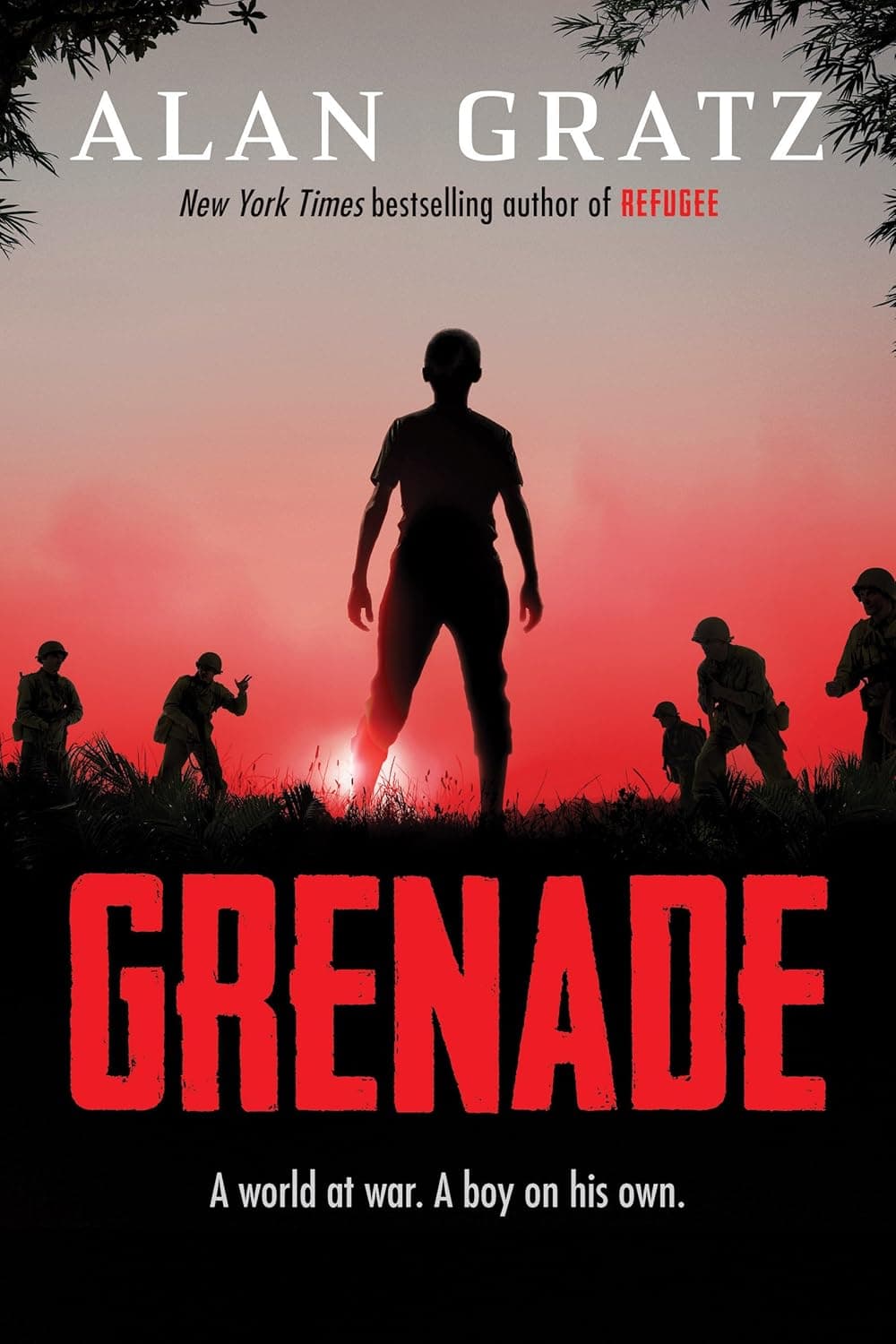
Opening
The novel pivots from fear to full-blown atrocity as two paths—an American Marine’s and an Okinawan boy’s—close in on each other. Across five chapters, war strips away innocence, exposes institutional cruelty, and forces both protagonists to confront who they are becoming under fire.
What Happens
Chapter 16: Mortars and Monsters
As Ray Majors marches south through rain and the thump of mortars, veterans in his squad trade survival tactics. The Old Man insists on running straight during shelling; Big John Barboza shrugs that fate decides everything: “There’s a bomb or a bullet or a grenade out there with everybody’s name on it.” The words send Ray back to childhood—his father, a WWI vet, returning from war broken and violent. Ray relives the day he botched the slaughter of a pig, and his father came at him with a butcher knife, carving a scar that outlasts his love and raises questions he still can’t answer.
The column halts when Okinawan refugees appear on the road. Marines keep their distance, but the civilians seem terrified, unarmed, drenched. Ray edges toward a woman holding a baby—then Big John shouts. Japanese soldiers fling off blankets and fire point-blank, killing the Old Man. The Marines blaze back into the crowd. When the gunfire dies, bodies—Americans, Japanese, and Okinawan civilians—cover the road. Ray realizes he emptied magazine after magazine into the blur, almost certainly killing innocents. He feels himself become the monster the locals feared, and worse, a mirror of his father. He also knows he would do it again to survive, a revelation that drags him into The Horrors and Dehumanization of War.
Chapter 17: The Schoolhouse
Hideki Kaneshiro searches for his sister, Kimiko Kaneshiro, at her high school, now half-destroyed by bombs. Inside, a classroom lies frozen in terror—desks, books, and rows of dead schoolgirls. Fighting nausea and grief, Hideki checks each face. Relief and guilt flood him when Kimiko isn’t among them; as a fifth-year, she may have already been sent to a hospital.
Rummaging through rubble, Hideki finds an army order directing fifth-year girls to a hospital in Ichinichibashi, far to the south—straight toward the American advance. Terrified yet resolved by his promise to his father, he peers through a blasted wall and sees Shuri Castle, now the Japanese headquarters, shining like a distant guarantee. He decides to move toward the castle first. When American troops enter the village, he feigns death under a desk among the corpses. A young, freckled Marine in a poncho—a “turtle-man”—steps in, studies a framed class photo, folds it, and pockets it before leaving. Hideki is left with a new fear: why would an American want a picture of Okinawan girls?
Chapter 18: The Front Lines
On the march, Ray studies the school photograph he pocketed, wondering if the men firing from offshore would have still done so had they seen the children. He knows he has already done the same. Big John tries to patter the fear away, but their destination swallows any humor. News arrives: Germany has surrendered. It means nothing to men bogged down in the Pacific, and only mail lifts morale.
Ray’s letter from home carries a photograph of him and his father smiling as pirates at a state fair. Warmth surges, then gives way to memories of drunken rages. He wonders whether his father opposed his enlistment not out of selfishness, but a desperate effort to spare him from becoming a monster. As the platoon pushes south, they pass men with “thousand-yard stares,” trudging north like ghosts. The ground turns to shell craters and abandoned gear; unburied Japanese bodies rot beside the path. A lifelong hunter, Ray feels he will never hunt again. Mortars begin to fall as they reach the front and dive into foxholes. In bleak humor, Big John scrawls “DECEASED” across Zimmer’s letter about traffic tickets, a joke that sounds too much like a prediction.
Chapter 19: The Cave of Despair
Traveling at night under American shelling, Hideki slips down a hill and lands in a maggot-filled mud pit. He tears off his infested clothes, shivering naked in the rain, feeling himself reduced to a “ghost.” He contemplates using a grenade on himself, as he was taught, but clings to his promise to find Kimiko. All he has left are the sack of the Emperor’s photographs and two grenades.
A sentry drags him into a cave hospital after he fails a password challenge. Inside, a lieutenant presides over rows of wounded soldiers and terrified civilians. Hideki offers the Emperor’s photos to prove loyalty, and the officer orders him to don a dead soldier’s uniform. The lieutenant refuses water to the wounded, then announces a pre-dawn counterattack on an American camp. When Hideki protests their certain defeat, he is struck. The officer escalates the plan: strap explosives to the Okinawan civilians and use them as human bombs. A woman in a pristine blue kimono is bound with dynamite—an image Hideki cannot forget. Cursing the Okinawans as expendable, the lieutenant returns Hideki’s grenades and drives everyone out for the suicide assault, shattering Hideki’s belief that the Imperial Army defends his people.
Chapter 20: Kakazu Ridge
At first light, Big John orders the assault on Kakazu Ridge, a Japanese stronghold the Army has failed to take for over a month. Ray repeats his mantra—“Stay low, don’t bunch up, and run like hell”—and sprints upslope through mud and machine-gun tracers. A mortar annihilates Gonzalez mid-stride. Ray, Big John, Zimmer, and one other new Marine alone reach the saddle, a low notch between two peaks.
Pinned by crossfire, Ray discovers Big John has lost his helmet and right ear to shrapnel. Dazed but functional, Big John accepts a bandage and starts calculating. He predicts a counterattack will slam through the saddle and orders the men to be ready. Ray must force himself to raise his head and aim. The valley below, cratered and blackened like the moon, goes quiet as Japanese artillery suddenly stops—that dreaded silence before a ground assault. Ray tightens his grip and waits, fear and duty fused into one.
Character Development
Both protagonists confront the selves war is making of them—one through what he has done, the other through what he refuses to become.
- Ray Majors: Horror at the refugee massacre collapses the boundary between him and his violent father. A photo from home complicates that judgment, suggesting his father’s opposition to enlistment was protective. Ray’s fear at Kakazu Ridge coexists with action, redefining courage as persistence under terror.
- Hideki Kaneshiro: The schoolhouse and cave crush his faith in the Imperial Army. Stripped naked in the mud, he sheds propaganda along with his clothes. His mission narrows to a single purpose—find Kimiko—anchoring him against despair.
- Big John Barboza: Stoic fatalism masks a protective leadership. Even wounded, he thinks tactically and reads the battlefield, but his missing ear and dwindling squad show the personal cost of survival.
Themes & Symbols
War erodes moral certainty. The refugee ambush and the classroom of dead girls collapse “good versus evil,” pushing both sides into moral gray. Ray’s panic fire makes him complicit in civilian deaths; Hideki watches an officer weaponize civilians. This is the machinery of The Horrors and Dehumanization of War: bodies, mud, maggots, and choices that permanently mark the living.
Propaganda fails where lived experience begins. Hideki sees the Imperial Army’s contempt for Okinawans; Ray sees “the enemy” as mothers and children until they become soldiers. Courage reframes itself as endurance in extremis—Ray forcing himself to lift his head at the saddle, Hideki moving south despite terror—capturing The Nature of Courage and Fear.
Symbols sharpen these arcs:
- Photographs tether identity to a before-time. Ray’s pirate photo complicates his father’s monstrosity; the school photo in his pocket indicts his own. Hideki’s sack of Emperor photos becomes dead weight as familial duty replaces imperial devotion.
- Shuri Castle glows like a false promise—heritage and command in one silhouette—luring Hideki forward even as it represents the war machine exploiting his home.
- The woman in the blue kimono, bound with dynamite, embodies innocence conscripted into slaughter, the civilian body turned into a weapon by those sworn to protect it.
Key Quotes
“There’s a bomb or a bullet or a grenade out there with everybody’s name on it, and if it’s gonna get you it’s gonna get you.” Big John’s fatalism gives the squad a coping script and tempts Ray to surrender agency. The line echoes in the refugee massacre, where survival choices blur into fate, and responsibility becomes harder—but not impossible—to claim.
“Stay low, don’t bunch up, and run like hell.” Ray’s mantra distills battlefield wisdom into muscle memory. Repetition steadies him at Kakazu Ridge, where courage is not inspiration but procedure performed under fire.
“Ghosts” with “thousand-yard stares.” The returning soldiers foreshadow what the front will carve into Ray and his squad. The image bridges WWI to WWII trauma, linking Ray’s father’s damage to what Ray is accruing in real time.
The woman in the beautiful blue kimono strapped with explosives. This silent tableau indicts the Imperial command’s moral collapse. It flips the propaganda script—Okinawans are not honored subjects but expendable bodies, reorienting Hideki’s loyalty toward family over empire.
Why This Matters and Section Significance
These chapters are the crucible in which both storylines harden. Ray’s participation in the refugee massacre stains him and reframes his father’s legacy, making the psychological cost of combat immediate and personal. Hideki’s night of mud, the cave hospital, and the coerced suicide attack obliterate his belief in the Imperial Army and clarify his purpose: protect Kimiko, not the Emperor.
By steering both characters toward Kakazu Ridge, the narrative primes their inevitable intersection. When they meet, each carries the weight of what he has seen and done—Ray’s guilt, Hideki’s disillusionment—ensuring that their choices at the front are charged not just with survival, but with the question of who they refuse, or are unable, to become.