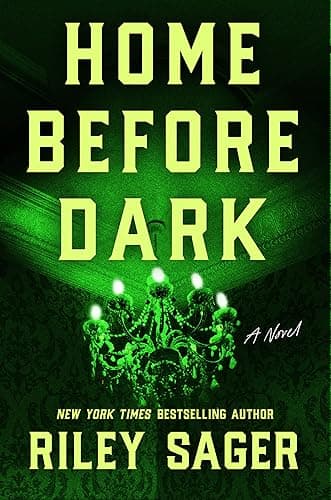
The Premise of Deception
"Every house has a story. Ours is a ghost story. It’s also a lie. And now that yet another person has died within these walls, it’s finally time to tell the truth."
Speaker: Maggie Holt | Context: Chapter 1 | Context: This is part of Maggie's opening narration as she introduces herself and the central conflict of her life: the famous book her father wrote about their family's haunting.
Analysis: This quote masterfully establishes the novel's central theme of Truth vs. Fiction and the Unreliability of Narrative. It immediately creates a meta-narrative where the reader is aware that the "true story" they are about to read excerpts from is, in fact, a fabrication. The juxtaposition of "ghost story" and "lie" sets up Maggie's cynical worldview and her primary motivation for returning to Baneberry Hall. The final line acts as powerful foreshadowing, hinting at the discovery of Petra Ditmer's body and Maggie's determination to uncover the real story that has been buried for twenty-five years.
The Seed of Fear
"He says—" Maggie gulped, trying hard to hold back her tears. "He says we’re going to die here."
Speaker: Young Maggie Holt | Context: House of Horrors, Prologue | Context: In Ewan Holt's book, five-year-old Maggie tells her father about the terrifying warnings she receives from an entity she calls "Mister Shadow."
Analysis: This line is the cornerstone of the supernatural horror element within House of Horrors. It establishes the malevolent nature of the haunting and positions young Maggie as the primary target and conduit for the spirits. The quote is crucial because it represents the peak of the fiction Ewan created, a terrifying and specific threat that justified their fleeing the house. The reveal that Mister Shadow was actually the well-meaning but frightening Elsa Ditmer completely subverts this moment, transforming it from a supernatural warning into a tragic misunderstanding, highlighting the theme of Supernatural vs. Psychological Horror.
The Devastating "Truth"
"Your father didn’t kill that girl." "Then who did?" "You did, Maggie," my mother says. "You killed her."
Speaker: Jess Holt and Maggie Holt | Context: Chapter 24 | Context: After Maggie confronts her mother with the evidence she's uncovered, Jess finally reveals the secret they've kept for twenty-five years—the supposed reason they created the House of Horrors lie.
Analysis: This exchange is the novel's most significant plot twist, a devastating revelation that re-frames the entire story and Maggie's identity. It appears to be the ultimate secret behind the elaborate fiction, explaining the decades of lies and avoidance. The blunt, brutal delivery from Jess shatters Maggie's quest for a simple truth and forces her to confront the possibility that she is a monster. This moment is the climax of the theme of Family Secrets and Their Consequences, showing the extreme lengths her parents went to protect her, ultimately causing a different kind of lifelong damage.
The Real Killer
"I didn’t mean to, Maggie. It was an accident. All a terrible accident."
Speaker: Marta Carver | Context: Chapter 26 | Context: After poisoning Maggie with baneberries, Marta confesses that she was the one who accidentally killed Petra Ditmer at the top of the stairs twenty-five years ago.
Analysis: This confession is the final, true twist of the novel, revealing the layers of deception that have surrounded Petra's death. Marta's admission exonerates both Ewan and Maggie, revealing that the entire foundation of the House of Horrors lie was based on a tragic misunderstanding. The quote exposes Marta not as a grieving victim, but as a woman who allowed another family to be destroyed to protect her own secret. It underscores the theme of The Past Haunting the Present in a deeply psychological way, as Marta's guilt and fear have driven her to become a killer to preserve her lie.
Thematic Quotes
Truth vs. Fiction and the Unreliability of Narrative
The Photographic Memory
"What I do recall is colored by what’s in the Book. Instead of memories, I have excerpts. It’s like looking at a photograph of a photograph. The framing is off. The colors are dulled. The image is slightly dark."
Speaker: Maggie Holt | Context: Chapter 1 | Context: Maggie reflects on her inability to remember her time at Baneberry Hall, explaining that her father's book has replaced any genuine memories she might have had.
Analysis: This quote perfectly encapsulates Maggie's central psychological conflict. The simile "like looking at a photograph of a photograph" illustrates how her personal history has been filtered through her father's narrative, making it feel distant, distorted, and inauthentic. It highlights the power of storytelling to shape reality and memory, a core component of the Truth vs. Fiction theme. Her entire journey is an attempt to see the original "photograph"—the unvarnished truth of what happened—rather than the murky, second-hand version she has lived with her entire life.
The Public Lie
"I’ve lied about a great many things in my life... But what happened at Baneberry Hall isn’t one of them. Every word of that book is true. I swear to the Great Almighty."
Speaker: Ewan Holt (as imagined by Maggie) | Context: Chapter 1 | Context: Maggie imagines what her father's stock answer would be to a fan of House of Horrors who asks if the story is real.
Analysis: This quote establishes the public persona of Ewan Holt and the unwavering conviction with which he maintained his lie. The use of religious language ("I swear to the Great Almighty") adds a layer of performative sincerity, making the deception even more profound. It demonstrates the deep chasm between the public narrative and the private reality of the Holt family. This quote is essential for understanding the weight of the fiction Maggie has lived under and the immense pressure her parents must have felt to uphold a story that became a worldwide phenomenon.
Family Secrets and Their Consequences
The Unspoken Truth
"Sometimes, Mags, a couple can go through something so terrible that not even love can fix it."
Speaker: Ewan Holt | Context: Chapter 8 | Context: During a trip to Paris when Maggie is fourteen, she asks her father why he and her mother divorced. This is his cryptic, melancholic response.
Analysis: This line is a poignant piece of foreshadowing that hints at the immense, unspoken trauma that destroyed the Holt family. Ewan's words suggest a tragedy far deeper than a simple haunting, pointing toward the secret of Petra Ditmer's death and the cover-up that followed. The quote reveals the profound emotional consequences of their secret, showing that the lie they constructed to protect Maggie was the very thing that fractured their family. It underscores that the psychological fallout from their secret was more destructive than any ghost could have been.
The Lie of Protection
"We were worried you’d be disappointed in us... Everything you have is because of that book... We didn’t know how you’d react if you found out it was all because of a lie."
Speaker: Jess Holt | Context: Chapter 2 | Context: During their tense lunch, Jess gives Maggie a partial confession, explaining why she and Ewan never told her the truth about House of Horrors.
Analysis: This quote reveals the complex and flawed logic behind the parents' decades of deception. Jess frames the secret not as a malicious act, but as a misguided attempt to protect Maggie from disappointment and to preserve the comfortable life the book provided. This highlights the theme of Family Secrets and Their Consequences by showing how a lie, even one born from protective instincts, can fester and cause deep emotional harm. The irony is that by trying to prevent Maggie's disappointment, they guaranteed it, creating a relationship built on a foundation of mistrust.
The Past Haunting the Present
The House That Remembers
"I’m saying that Baneberry Hall remembers... It remembers everything that’s happened since Indigo Garson gulped down those berries. And sometimes history has a way of repeating itself."
Speaker: Walt Hibbets | Context: House of Horrors, Chapter 6 | Context: After Ewan confronts him in the woods, the caretaker Walt Hibbets gives him a cryptic warning about the house's malevolent history.
Analysis: This quote personifies Baneberry Hall, transforming it from a mere setting into an active, conscious entity that retains the trauma of its past. Hibbs's warning is a classic gothic trope that establishes the theme of The Past Haunting the Present. The idea that "history has a way of repeating itself" serves as direct foreshadowing for the events Ewan believes are happening to his family, suggesting they are the next victims in a long line of tragedies. This concept of a cyclical, inescapable past is central to the horror of House of Horrors.
The Psychological Haunting
"It’s not the house I’m afraid of."
Speaker: Jess Holt | Context: House of Horrors, Chapter 18 | Context: As Jess flees Baneberry Hall with Maggie, she reveals to Ewan that her fear is not of a supernatural entity, but of him and what she believes he has done to their daughter.
Analysis: This powerful line marks a crucial shift from supernatural horror to intense psychological drama. For Jess, the true terror isn't a ghost but the man she loves, whom she now believes is a danger to their child. It demonstrates how the "haunting" has become internalized, infecting their family dynamics and destroying their trust. This quote is essential because it reveals the true cost of the events at Baneberry Hall: not a haunting of the house, but the complete and utter haunting of their family, a trauma that will follow them long after they've left the physical location.
Character-Defining Quotes
Maggie Holt
"I’ve been associated with that book since I was five. People read it and think they know me, but what they’ve read is a lie. Their perception of me is a lie. And I never knew how to handle that because you and Dad never wanted to talk about the Book."
Speaker: Maggie Holt | Context: Chapter 2 | Context: Maggie pleads with her mother during lunch to finally tell her the truth about Baneberry Hall, explaining the profound impact the book has had on her identity.
Analysis: This quote perfectly defines Maggie's character and lifelong struggle. It shows that her primary conflict is not with ghosts, but with a narrative she had no part in creating yet has completely defined her. Her frustration stems from the dissonance between her true self and the public's perception of her as the "freaky girl" from a haunted house. This speech reveals her desperation for authenticity and control over her own story, which is the driving force behind her decision to return to Baneberry Hall and uncover the truth, no matter the cost.
Ewan Holt
"I need you to know that we did it for you. We wanted to spare you from the brutal existence you certainly would have had if the police got involved."
Speaker: Ewan Holt | Context: House of Secrets Manuscript | Context: In the letter he leaves for Maggie, Ewan explains the rationale behind the cover-up, framing it as an act of profound, if misguided, paternal love.
Analysis: This quote captures the essence of Ewan's character: a father whose love for his daughter leads him to make a morally catastrophic decision. It reveals that his primary motivation was not fame or money, but a desperate desire to protect Maggie from the consequences of an act he believed she committed. While his actions were wrong, this line shows they came from a place of love, complicating his legacy. It defines him as a tragic figure, a man who sacrificed his integrity, his marriage, and ultimately his peace of mind for his child.
Jess Holt
"We’re done with this, Ewan. No more talk of ghosts. No more talking to ghosts. No more pretending there isn’t a logical explanation for all of this."
Speaker: Jess Holt | Context: House of Horrors, Chapter 15 | Context: After a terrifying night and a session with the Ouija board, Jess throws it in the trash and confronts Ewan, demanding that he abandon his belief in the supernatural.
Analysis: This quote defines Jess as the pragmatist of the family, desperately clinging to logic in the face of what appears to be mounting supernatural evidence. Her forceful repetition of "no more" reveals her deep-seated fear and her refusal to accept the haunting narrative Ewan is embracing. She represents the voice of reason and denial, acting as a foil to Ewan's growing belief. This moment shows her breaking point, where her concern for Maggie's psychological well-being outweighs any possibility of a ghostly presence.
Marta Carver
"We’re a lot alike, Maggie. Both of us have been defined by Baneberry Hall."
Speaker: Marta Carver | Context: Chapter 18 | Context: When Maggie asks to speak with her privately at the bakery, Marta agrees, creating a false sense of kinship and shared trauma.
Analysis: This line is a masterful piece of manipulation that defines Marta's deceptive character. On the surface, it appears to be a moment of connection between two women whose lives were irrevocably altered by the same house. However, knowing the truth, the quote is deeply ironic and sinister. Marta is not a fellow victim; she is the perpetrator who allowed Maggie's family to take the blame. She uses this feigned similarity to gain Maggie's trust, defining her as a cunning and self-serving individual hiding behind a mask of grief.
Memorable Lines
The New American Dream
"We love it... But is it haunted enough for a book deal?"
Speaker: Narrator (quoting a New Yorker cartoon) | Context: Chapter 1 | Context: Maggie recalls a cartoon that was published after House of Horrors became a sensation, satirizing her family's fame.
Analysis: This memorable line provides sharp, witty commentary on the commercialization of tragedy and the public's appetite for macabre stories. It perfectly captures the cultural impact of House of Horrors, showing how it bled into the zeitgeist and turned a terrifying experience (real or not) into a viable, almost desirable, business opportunity. The quote is darkly humorous and highlights the cynical lens through which Maggie views her family's legacy, where even a haunting is measured by its marketability.
A Prophecy in Shards
"Shards bring luck. That’s how the saying goes."
Speaker: Elsa Ditmer | Context: House of Horrors, Chapter 4 | Context: While helping the Holts unpack, Elsa mentions a German tradition of breaking plates for good luck in a new home.
Analysis: This line is steeped in dramatic irony and foreshadowing. Elsa's seemingly innocent comment about "shards" bringing luck takes on a much darker meaning later in the book. The broken glass from the chandelier becomes the instrument Ewan uses to "threaten" suicide to save Maggie, a moment of desperate "luck." Ultimately, the most significant "shards" are the fragmented pieces of the truth about Petra's death, which, once assembled, bring a painful but necessary resolution for everyone involved.
Opening and Closing Lines
Opening Lines
"Every house has a story to tell and a secret to share."
Speaker: Maggie Holt | Context: Chapter 1 | Context: The novel's very first sentence, setting the stage for a story about architecture, history, and hidden truths.
Analysis: This opening line functions as the novel's thesis statement. It immediately frames houses not just as structures, but as repositories of memory and secrets. It invites the reader to look beyond the surface of Baneberry Hall and to consider the hidden narratives within its walls. The line establishes the gothic atmosphere and primes the reader for a mystery where the setting itself is a key character, holding the answers Maggie seeks.
Closing Lines
"Every house has a story to tell and a secret to share."
Speaker: Maggie Holt | Context: Epilogue | Context: The novel's final sentence, which Maggie types on her father's typewriter as she begins to write her own book, House of Secrets.
Analysis: By closing the novel with the same line it began with, Sager creates a powerful sense of circularity and resolution. In the beginning, the line was a premise for the mystery; by the end, it is a conclusion Maggie has earned. Having uncovered Baneberry Hall's true story, she is now ready to tell it, taking control of the narrative that once controlled her. This repetition signifies her transformation from a victim of her family's story to its rightful author, bringing her journey full circle.