Opening
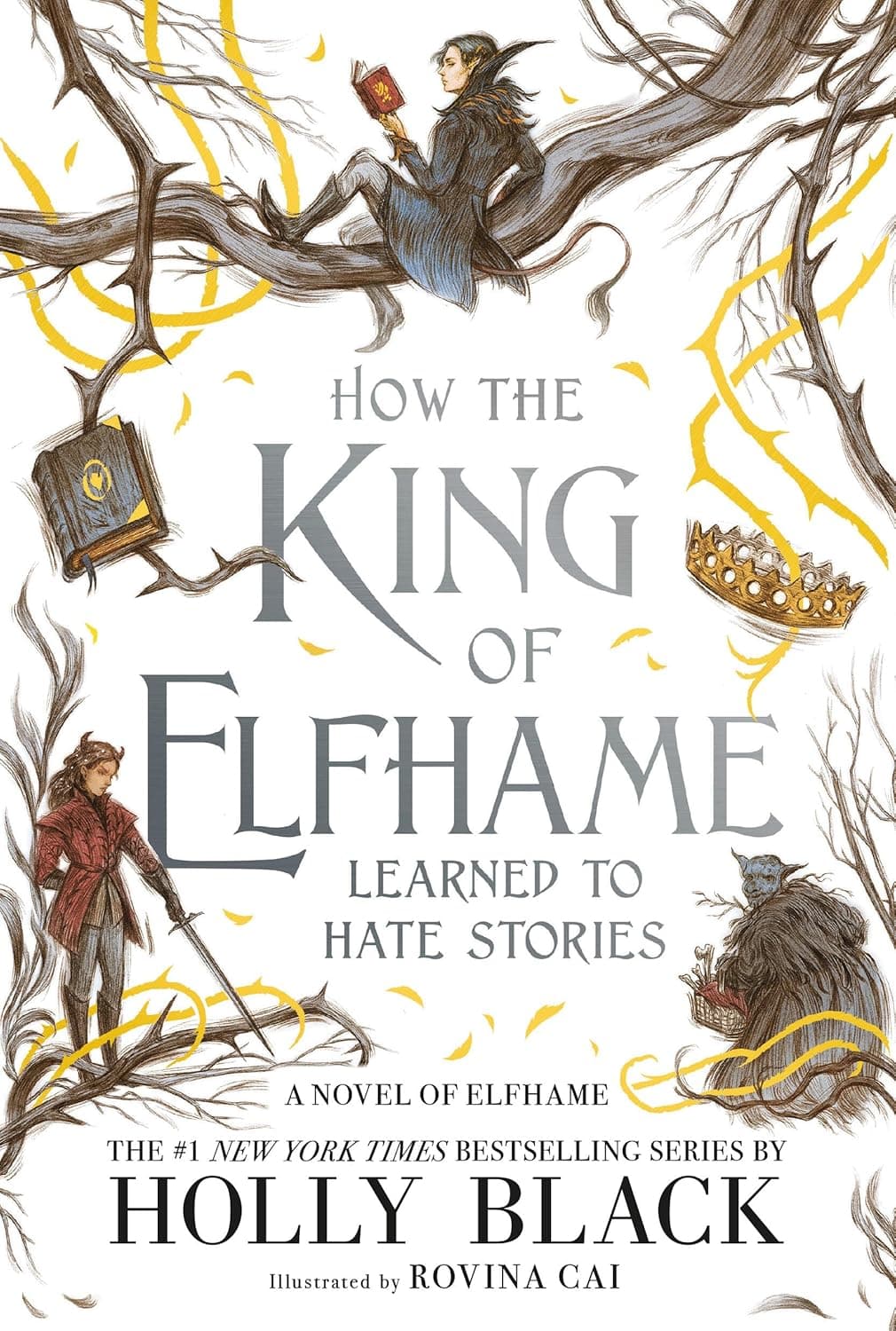
Alone in the mortal world, Prince Cardan stalks a monster with nothing but wit, a glamoured hoodie, and Jude Duarte’s sword on his back. He means to end Aslog of the West’s terror, not with a duel, but with a story sharp enough to cut. The chapter turns his oldest wound—stories used as weapons—into the blade that saves him.
What Happens
Chapter 11: The King of Elfhame Gets What He Deserves
Cardan wanders Portland, Maine with Bryern’s crude directions, stopping at a gas station where he refuses to glamour the clerk—memories of the ensorcelled servants at his brother Balekin’s estate still haunt him. He buys an old paper map and a self-published guide, A Guide to the Secret Places of Portland, Maine, then traces Aslog of the West’s lair to William Baxter Woods, rumored site of three joggers’ disappearances. Dropping his glamour under the trees, he follows the stink of burning hair to a camp cobbled from rusted mortal furniture, where Aslog grinds fine white powder with a makeshift mill. She boasts of her newfound infamy: the powder is human bone. She even fed Queen Gliten the bones of her own consort, baked into bread.
Cardan keeps his voice light. He offers a bargain: as High King, he can force Queen Gliten to grant Aslog the land she was promised—though she will face judgment for her crimes. Aslog’s bitterness curdles any hope of justice. Mocking the sword he can’t wield, she lures him forward; he plunges into a narrow pit lined with powdered iron. The filings burn his skin and dim his bond to the land, leaving his magic weak. She jabs at him with a rough spear, and he does the only thing he can: he begins to talk. He tells a tale—about a cruel boy with a clever tongue who asks a troll to turn his heart to stone, then seeks to win a warlord’s daughter cursed to become a monster each night. The tale is a deliberate weapon and a confession, an embodiment of The Power and Peril of Stories and an examination of Cruelty as a Defense Mechanism.
The story twists. The girl chose her curse to seize power no father could control; the warlord rewrote it so that if a suitor showed no fear for three nights, she’d be forced to obey him. On the third night, the boy sees the trap: “winning” would enslave her. He chooses to fail, screams on purpose, and the monster strikes him hard enough to crack his stone heart. They marry, and he vows always to be a little afraid so her freedom endures. Cardan uses the parable to tell Aslog that stories—and hearts—can change. She prepares to kill him anyway. He gambles once more, claiming he waited not for sunrise but for his queen, Jude. As Aslog turns, he bends a tree with the last of his magic, swings out of the pit, and shoves her into her own iron-laced trap. He waits beside her until dawn turns her to stone. Jude arrives furious and afraid; Cardan admits he was “playing the hero” only because the best part was not having to be terrified for her—a quiet nod to Love and Redemption.
Character Development
Cardan steps into danger alone and survives by reshaping the weapon that once harmed him: narrative. The chapter crystallizes his growth into a ruler who chooses cunning over cruelty and love over fear.
- Prince Cardan: Claims agency without spectacle; rejects mindless heroics yet risks himself for Jude. His self-spun fairy tale doubles as a confession, mapping his old numbness (“heart of stone”) to the tenderness he now protects. He experiments with the role of hero, then reframes it to fit his Identity and Self-Perception: clever, vulnerable, and unwilling to win at the cost of someone else’s freedom.
- Aslog of the West: Once a wronged storyteller, now a devourer who makes grief into a creed. She is sharp enough to trap a king but too bitter to accept justice. Her final look—betrayed as the sun petrifies her—marks the endpoint of a life consumed by grievance.
- Jude Duarte: The invisible constant. Cardan measures his carelessness against her vigilance, carries her sword, and acts to keep danger from her door. When she arrives—furious, relieved, protective—their banter reasserts a partnership built on steel and tenderness.
Themes & Symbols
Stories as weapons and bridges: Cardan turns the tale that once cursed him into his shield and blade, proving that narrative can both imprison and free. He openly theorizes about storytelling’s authority—who shapes truth, who deserves power—making the chapter a meditation on authorship and consequence as much as plot. Love reframes victory: the boy in his fable refuses a win that would enslave the woman he loves, transforming conquest into consent and mercy into strength.
Cruelty and its costs: Both Cardan and Aslog use sharp tongues to survive, but only one grows past it. Her spiral from ignored petitioner to bone-miller loops back to the court that failed her, implicating the legacy of rulers like High King Eldred. Symbols sharpen these ideas: iron filings strip Cardan to his essence so wit becomes his only magic; the pit literalizes vulnerability; the “heart of stone” cracks at the exact moment love must choose freedom over possession. The dawn that turns Aslog to stone reads as judgment—and release.
Key Quotes
“Stories can justify anything… No one can reward him or punish him, save the storyteller.”
Cardan names the danger and allure of narrative control. He reclaims that power without repeating Aslog’s cruelty, using story to reveal truth rather than to coerce—an ethical pivot that defines his rule.
“No part of that was a lie, save for the whole.”
This quintessential fae paradox captures how Cardan wins: he tells an allegory that is emotionally true while technically misleading Aslog. The line distills the series’ dance between honesty, omission, and intention.
“I was playing the hero. I didn’t like it. The best part was not having to be terrified for you.”
His refusal of heroic vanity clarifies motive: love, not glory. It completes the arc from defensive cruelty to protective vulnerability, aligning personal change with the chapter’s stakes.
Why This Matters and Section Significance
This chapter closes the frame narrative and crowns Cardan’s arc. He defeats Aslog not by outmatching her strength but by redirecting the force that once harmed him—story—into a saving craft. The title’s promise pays off: the “king of Elfhame” gets what he “deserves” not in punishment, but in responsibility reclaimed and love chosen. The scene binds the series’ concerns—power, consent, truth—into a single, intimate victory that cements Cardan and Jude’s partnership and recasts him from cruel prince to complicated, redeemed king.