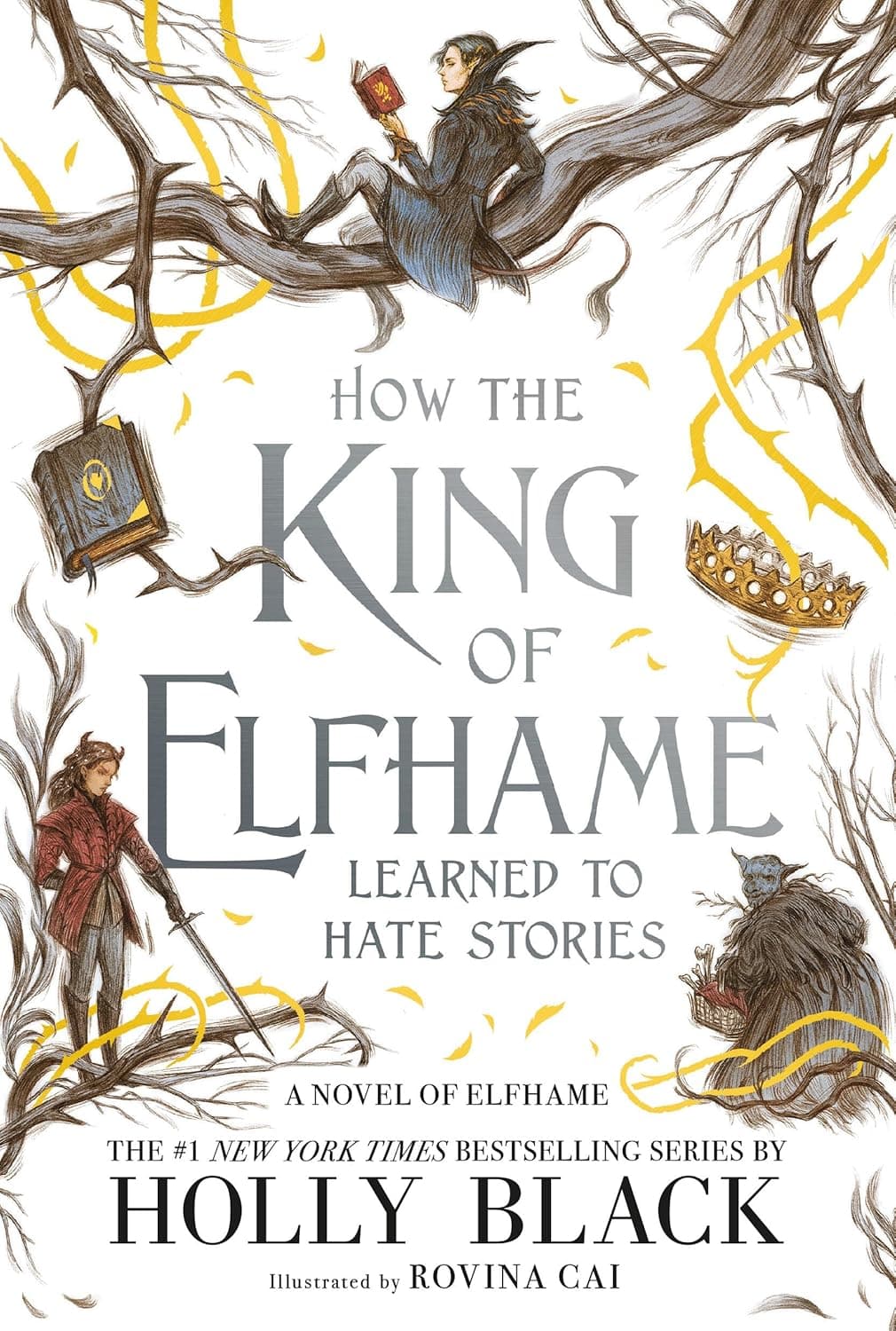
Opening
Banished from court and from his father’s favor, Prince Cardan learns to survive by turning pain into performance. These chapters chart the making of his cruel persona—and then crack it open—revealing how humiliation hardens into hatred, and how a single secret mercy exposes the loneliness beneath the mask.
What Happens
Chapter 3: Hates Everything and Everyone
Framed by his brother Dain and disowned by High King Eldred, Cardan is sent to Hollow Hall to live under his eldest brother, Balekin. Numb and abandoned, he compares himself to the boy with a heart of stone from tales told by Aslog of the West. Balekin makes the terms clear: become a “proper Prince of Elfhame” or be sent somewhere worse. To show what failure costs, he presents Margaret, an ensorcelled mortal, who will punish Cardan for any misstep.
Balekin forces a choice—submit to a mortal’s strap or leave and face whatever comes. Cardan kneels. Each blow sears away his numbness until the “heart of stone” flares into a “heart of fire,” a bright hatred burning for his family, for mortals, for Elfhame itself. He welcomes the heat. The moment rewires him, introducing the logic of Cruelty as a Defense Mechanism: strike first, so no one can strike deeper.
Under Balekin’s tutelage, Cardan remakes his Identity and Self-Perception. He dresses in finery like armor, cultivates decadence like a weapon, and polishes a sneer into a crown. Back at court, Queen Orlagh of the Undersea arrives to foster her daughter, Princess Nicasia. While his siblings flatter, Cardan is deliberately rude. She admires the venom. Soon the two, with Valerian and the sly Locke, congeal into a cruel clique. Cardan leans into the role of storybook villain—powerful, selfish, feared—embracing the lure and doom of The Power and Peril of Stories.
Chapter 4: The Prince of Elfhame Gets a Moth Drunk
Years later, during the events of The Cruel Prince, Cardan rides a giant moth toward the mortal world with a hidden passenger: Margaret. He insists this is only a prank on Balekin, not an act of mercy. Yet the façade slips as he thinks of the mortal girls at the palace school—especially one with a scornful, defiant gaze, Jude Duarte. He contrasts her bright defiance with the empty eyes of the glamoured, feeling both horror and a terrible relief at the idea of her power over him erased.
On a moonlit beach, he breaks Margaret’s glamour and tells her to go. When she asks why he chose her, he replies, coldly, “Because I don’t want to look at you anymore.” The truth hangs unsaid: she embodies his humiliation. She begins to protest she never wanted to hurt him, but he cuts her off; he already knows what compulsion steals from a person.
As she walks toward mortal lights, Cardan stands “wrung out, wretched, and foolish. And alone,” swallowing the urge to shout that he isn’t weak and doesn’t need her pity. The scene exposes the tenderness he hides beneath cruelty and hints at Love and Redemption. Then the night tilts absurd: the moth refuses to carry him home until he buys it a six-pack of lager.
Character Development
Cardan’s origin as a self-fashioned villain takes shape under calculated abuse, then falters as he chooses a quiet, costly mercy. His cruelty begins as armor and hardens into identity—until compassion slips through a seam.
- Prince Cardan:
- Reforges numbness into rage (“heart of fire”) and learns to weaponize image and indulgence.
- Masters performance—rudeness, decadence, distance—to preempt vulnerability.
- Reveals a hidden ethical line by freeing Margaret, then loathes himself for wanting absolution.
- Balekin:
- Engineers punishments that force complicity, binding pain to humiliation to break Cardan’s will.
- Becomes the blueprint Cardan imitates—and resists.
- Nicasia:
- Recognizes and affirms Cardan’s venom, catalyzing a mutually toxic dynamic built on contempt and spectacle.
- Margaret:
- Serves as both Cardan’s trauma made flesh and the recipient of his first clandestine act of grace.
Themes & Symbols
Cruelty as armor defines Cardan’s adolescence. Balekin’s system teaches that to be powerless is to be humiliated, so Cardan chooses fear over tenderness. The mask works: people recoil; therefore they cannot touch him. Yet the act of freeing Margaret complicates the lesson, suggesting the limits of fear as protection and the cost of a conscience that refuses to die.
Stories script identity. Cardan picks the villain’s crown because villains are allowed to be selfish, untouchable, and blazing with style—even if stories doom them in the end. The choice underlines the peril of narrative roles: they grant power but narrow futures. Clothing, parties, and cruelty become props in a stage-managed self, aligning with the ongoing negotiation of identity and self-perception.
Symbolically, the “heart of stone” and “heart of fire” chart his emotional evolution—from numb endurance to active, consuming hate. Fire warms and protects, but it also burns indiscriminately; the same heat that steels Cardan isolates him.
Key Quotes
“Become a proper Prince of Elfhame.”
- Balekin reframes survival as performance: manners, wardrobe, and obedience as royal essence. The demand births Cardan’s obsession with image as shield and weapon.
“My heart is not stone. It is fire.”
- The pivot from numbness to rage marks cruelty’s genesis as a deliberate choice. Fire grants agency, but it also commits him to a volatile, self-scorching path.
“Because I don’t want to look at you anymore.”
- Cardan’s cruelty masks the truth: Margaret is a mirror he cannot bear. The line both denies tenderness and admits its presence—he frees what he cannot face.
“Wrung out, wretched, and foolish. And alone.”
- The façade collapses once the act of mercy is done. Isolation lingers as the cost of his persona; power keeps him safe but never accompanied.
Why This Matters and Section Significance
These chapters supply Cardan’s origin story: how humiliation curdles into spectacle, how fear becomes a craft, and why he greets the world with claws. Chapter 3 roots his court persona in trauma—linking Balekin’s engineered degradation to the birth of the “Cruel Prince” and to early alliances with Nicasia, Valerian, and Locke. Chapter 4 bridges to the main trilogy, showing the private mercy that contradicts his public myth and the destabilizing pull Jude exerts on him. Together, they prove Cardan is not a pure villain or a secret saint but a performer caught between the role he chooses and the person who keeps breaking through.