Opening
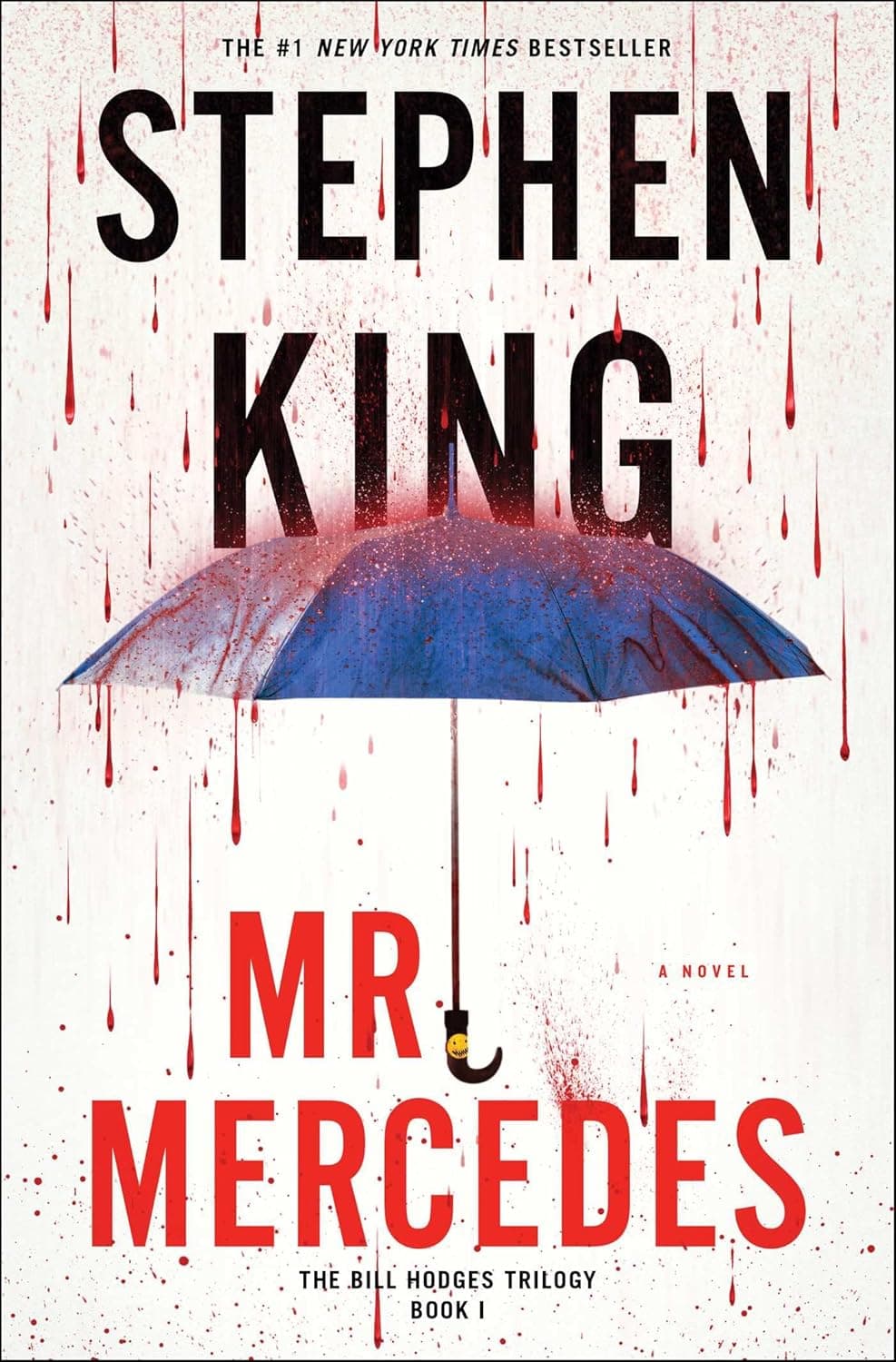
Chapters 106–110 tighten the noose. As Brady Hartsfield readies a mass-casualty attack, the unlikely trio of Hodges, Jerome, and Holly races through a trail of digital crumbs and gut instincts. Tension spikes as both arcs converge on the same fluorescent-lit big-box store—one side building a bomb, the other building a case.
What Happens
Chapter 106: Brady’s Nihilistic Philosophy
Alone in a dark motel shower, Brady frames the universe as a cruel joke. There is no God, no judgment, no afterlife—only “darkness,” a “universal null set.” He absolves himself of blame for every catastrophe in his life—his father’s death, his brother’s death, his mother’s decline—reassigning responsibility to the indifferent world, a move that twists Guilt and Responsibility into a weaponized alibi.
He dismisses the 9/11 terrorists as dupes of fantasy, deciding the only posthumous truth is the mark you carve into history. “Cutting the skin of the world and leaving a scar,” he thinks, turning history into scar tissue he intends to enlarge—an ice-cold expression of the Banality of Evil cloaked in philosophical bravado.
Chapter 107: Brady’s Preparations
Brady heads out for last-minute logistics: disposable razors for a cleaner shave, extra batteries, horn-rimmed glasses, and an oversized ’Round Here concert T-shirt—confirmed to be that night. He tests his new look, calibrates his timeline, and feels the clock start to bite.
Paranoia snaps into focus when he thinks of his Subaru, registered in his name. Fearing discovery by K. William Hodges, he stashes the car in long-term parking at the airport. It’s just after 9:00 AM—about twelve hours until showtime.
Chapter 108: Hodges and Jerome’s Investigation
At Hodges’s house, Jerome Robinson spots the retired detective strapped into a shoulder holster with a .38 and running on fumes. Hodges vows that if he can’t find his man by nightfall, he’ll hand everything to his old partner, Pete Huntley. He drafts Jerome to pose as “Martin Lounsbury,” a paralegal working on the estate of Olivia Trelawney, to pry loose the name of the IT specialist who serviced Olivia’s computer.
The bluff works. A guard, Radney Peeples, calls back with the lead: Cyber Patrol, the in-home tech arm of Discount Electronix, whose techs drive green VW Beetles. Hodges and Jerome find the staff photos—Freddi Linklatter, Anthony Frobisher, and Brady Hartsfield—and bolt for the store. Before they go, Hodges pockets a still-valid police ID, a line-crossing step toward Vigilantism and Justice Outside the Law.
Chapter 109: Brady’s Bomb Preparation
Back at the motel, Brady unfolds a new wheelchair and seats a cushion stuffed with plastic explosive. He hides more explosive in the back pocket, tapes bags of ball bearings under the frame to serve as shrapnel, and routes everything to a single master wire for his detonator, Thing Two. Even if stopped, he plans to trigger the device in any crowded corridor and rack up casualties.
Spent, he falls asleep beside a framed photo of his dead brother, Frankie—a totem from a home life that curdled into trauma and control, underscoring the novel’s Dysfunctional Family Dynamics.
Chapter 110: Holly’s Breakthrough
Outside Discount Electronix, Holly Gibney waits for Hodges and Jerome, jittery and triumphant. While her mother and uncle were out, she returned to Olivia’s computer and remembered the killer’s “SPOOK” program. Checking the junk folder, she found a trove of Discount Electronix emails and Cyber Patrol coupons—the decisive breadcrumb of Technology and Modern Crime that points straight to Brady’s workplace.
Hodges orders Jerome and Holly to wait and call 911 if he isn’t back in ten minutes. Holly casually mentions she drove Olivia’s fully repaired gray Mercedes; Jerome recoils at the pristine “murder weapon.” When Holly mentions ice cream while talking frozen yogurt, the word sparks Jerome’s memory—he suddenly knows where he has seen Brady’s face before.
Inside, the store is nearly empty. Hodges spots Anthony Frobisher and Freddi Linklatter; neither recognizes him. Flashing his old police ID, he asks for Brady. Freddi shrugs: Brady called in sick. She figures he finally had to commit his alcoholic mother to rehab—a personal detail Hodges files as a potential lead.
Character Development
The section crystallizes each protagonist’s trajectory as their arcs intersect.
- Brady Hartsfield:
- Articulates a fully formed nihilism that reframes mass murder as “leaving a scar.”
- Escalates from swagger to strategic paranoia, hiding his car and perfecting a disguise.
- Channels family trauma into purpose, sleeping beside Frankie’s photo as he readies the bomb.
- K. William Hodges:
- Embraces off-book methods, arming up and using an old police ID.
- Sets a moral line—confess to Huntley by nightfall—while racing to beat the clock.
- Jerome Robinson:
- Executes a flawless phone con that cracks the case open.
- Confronts the visceral aftermath when the repaired Mercedes resurfaces; a single word—“ice cream”—unlocks a memory link to Brady.
- Holly Gibney:
- Acts independently and incisively, mining a junk folder for the key clue others missed.
- Steps from anxious observer to essential investigator, earning her place in the team.
Themes & Symbols
Hodges’s methods push him into vigilantism, revealing how pursuit of justice can slide beyond sanctioned lines when time and bureaucracy fail. His choice to flash an old badge and carry a gun reframes legality as a tool rather than a boundary.
Digital ephemera becomes fate. The overlooked junk folder and corporate coupons expose how modern crimes—and their solutions—live in metadata, receipts, and routine emails. Brady, the tech-savvy predator, stumbles over a basic oversight; the same network that empowers him betrays him.
Symbols sharpen the stakes. The repaired Mercedes glides back into view as a spotless ghost—evidence can be polished away, but trauma persists. The wheelchair bomb perverts an emblem of vulnerability into a weapon, embodying the banality of evil: monstrous harm masked by ordinary objects.
Key Quotes
“darkness,” a “universal null set.”
Brady’s worldview erases cosmic meaning and moral consequence, clearing the path for atrocity. If nothing matters, then only impact—harmful, memorable impact—counts.
“Cutting the skin of the world and leaving a scar.”
He recasts history as an archive of wounds and himself as a surgeon of pain. It’s the manifesto of a killer who wants not survival, but legacy.
“SPOOK”
The name of Brady’s program becomes the hinge of the investigation. Holly’s memory of it—and her decision to check the junk folder—transforms a taunt into a trail.
“Call 911 if I’m not back in ten minutes.”
Hodges blends caution with recklessness: he is both planning for disaster and walking into it. The line marks his commitment to act now and answer for it later.
Why This Matters and Section Significance
These chapters mark the investigation’s tipping point and the protagonists’ convergence on Brady’s home turf. Alternating perspectives fuse dread and urgency: we watch Brady wire shrapnel into a wheelchair while Hodges, Jerome, and Holly stitch together a lead from a phone con, a junk folder, and a sudden word-triggered memory.
The trio’s complementary strengths finally click—Hodges’s resolve, Jerome’s performance, Holly’s unconventional insight—just as Brady reaches operational readiness. The novel tightens into high-stakes dramatic irony: the heroes stand steps from the truth while the bomb waits in the wings, primed to turn a public celebration into scar tissue.