Opening
The chase reignites. Retired detective K. William Hodges shakes off stagnation as a new lead draws him toward Olivia Trelawney’s surviving sister, online traps, and a killer who still prowls. While Hodges leans back into the hunt, the narrative dives into the murderer’s home life and workshop, revealing a mind bent on escalation—and a second atrocity already in motion.
What Happens
Chapter 26: Chos Fo Hos
Driving back from Sugar Heights, Hodges feels the case pull him upright. He learns that Olivia Trelawney’s sister, Janelle "Janey" Patterson, inherits Olivia’s estate and lives nearby. He admits he’s skirting the law—especially by withholding the killer’s letter—but the arrogance in that letter lights a spark. The investigation becomes “a pretty terrific thing,” a counterweight to The Psychological Toll of Retirement that has been flattening him.
At home, he finds a comic, wearying note from Jerome Robinson, written in mock “Ebonics,” and reflects on Jerome’s brilliance and their odd, necessary friendship. He wonders if his isolation shades him toward the same emptiness he senses in his quarry. Searching for “Under Debbie’s Blue Umbrella,” Hodges locates the site but balks, remembering Jerome’s warnings about phishing and online traps tied to Technology and Modern Crime. He calls Jerome for help and tracks down Janey’s number, determined to reach out without spooking her.
Chapter 27: Ma
The story shifts to Brady Hartsfield, who slogs home to a shabby house and the suffocating air of Dysfunctional Family Dynamics. His mother, Deborah Ann Hartsfield, drinks vodka and watches TV in a loose robe, their conversation laced with an incestuous charge that both arouses and revolts him. She demands a kiss and turns it intimate—wet, lingering, a glancing tongue—before reminding him he’s responsible for her car’s inspection sticker.
Brady retreats to the basement “control center,” haunted by memories of his dead brother, Frankie. Overwhelmed, he masturbates in the bathroom, thinking, “Ma, I see your panties.” He admits to himself that the sexual excitement he described to Hodges about the massacre is a calculated lie; his true fixation is bound up entirely with his mother.
Chapter 28: Thing One and Thing Two
In his bunker-like workshop, Brady’s paranoia and precision gleam. Seven laptops boot at the voice command “chaos,” a self-destruct sequence he cancels with “darkness.” He broods over thwarted ambition—his idea for a robotic vacuum, the “Rolla,” beat to market by the Roomba—resentments that curdle into The Banality of Evil, where petty slights ferment into mass harm.
He catalogs real “successes.” “Thing One,” a remote that changes traffic lights, already causes an accident and doubles as part of his get-away scheme on the day of the City Center massacre. From a padlocked closet, he unveils nine pounds of homemade plastic explosive and a suicide vest studded with ball bearings. He mods disposable phones into a simultaneous detonator and fantasizes about detonation at a Bruce Springsteen concert. Despite claiming to Hodges he’d never repeat his “masterpiece,” he is planning something worse. Before working, he checks the Blue Umbrella site—Hodges hasn’t bitten yet.
Chapter 29: Bill
Hodges visits Janey in Olivia’s old downtown condo, wearing a suit for the first time in months. Janey resembles her sister but radiates confidence Olivia never had. She gets to the point: she wants to hire him to find the man who hounded Olivia into suicide.
Convinced the Mercedes thief is the same tormentor, Janey is furious the police ignore the link. She offers Hodges $5,000 a week plus expenses, nudging him into investigator mode and deepening the theme of Vigilantism and Justice Outside the Law. To cement their alliance, she produces the crucial evidence she has kept back: the killer’s letter to Olivia.
Chapter 30: Ollie
Hodges reads the letter—an instrument of psychological warfare. The writer paints himself as a remorseful victim of childhood abuse, poised on the edge of suicide, then slyly shifts blame: “why oh why oh why did you leave your key in your ignition?” The text targets Olivia’s soft spots, mirroring her anxieties and isolation to create false kinship while jacking up her Guilt and Responsibility. He coerces her onto Under Debbie’s Blue Umbrella, threatening to kill himself if she involves police.
Janey confirms Olivia confides to their elderly mother that she’s “chatting” with a disturbed man to help him. Hodges accepts the job but scales the fee to $2,000 a week, styling himself a “security consultant” since he lacks a PI license. When he asks about Olivia, Janey admits she loved but didn’t like her sister—Olivia is a “big sack of bricks,” a chronic source of stress whose anxiety drags on the entire family.
Character Development
These chapters reset the board: the hunter reawakens, the hunted escalates, and a determined ally steps in with resources and resolve.
- K. William Hodges: Emerges from lethargy into purpose. He suits up, calls in help, and accepts a private mandate, willing to bend rules to pursue the truth.
- Brady Hartsfield: Gains disturbing dimension. His incestuous bond with his mother, fixation on control, and wounded pride reveal a planner intent on mass murder, not a one-off killer.
- Janelle “Janey” Patterson: Arrives as a savvy catalyst. Direct, generous, and strategic, she reframes the case as an active pursuit rather than a dead file.
- Jerome Robinson: Moves from neighbor kid to essential partner. His tech fluency bridges Hodges’s generational gap and opens a door into the killer’s online hunting ground.
Themes & Symbols
Family rot breeds violence. The scenes between Brady and Deborah make domestic dysfunction the crucible of his misogyny and control obsession. Their intimacy isn’t love; it’s possession. In the basement—his “control center”—Brady literalizes that need for power, weaponizing it as explosives, triggers, and kill-switches.
Technology becomes the perfect mask. Under Debbie’s Blue Umbrella offers the illusion of shelter while enabling manipulation at scale. Online, the killer scripts identities, plays to vulnerabilities, and turns words into weapons. The letter to Olivia is remote-control murder: it reassigns blame, isolates the victim, and coerces silence. Meanwhile, Hodges and Janey step beyond official channels to seek justice the system overlooks, embodying a fraught but urgent vigilante ethic.
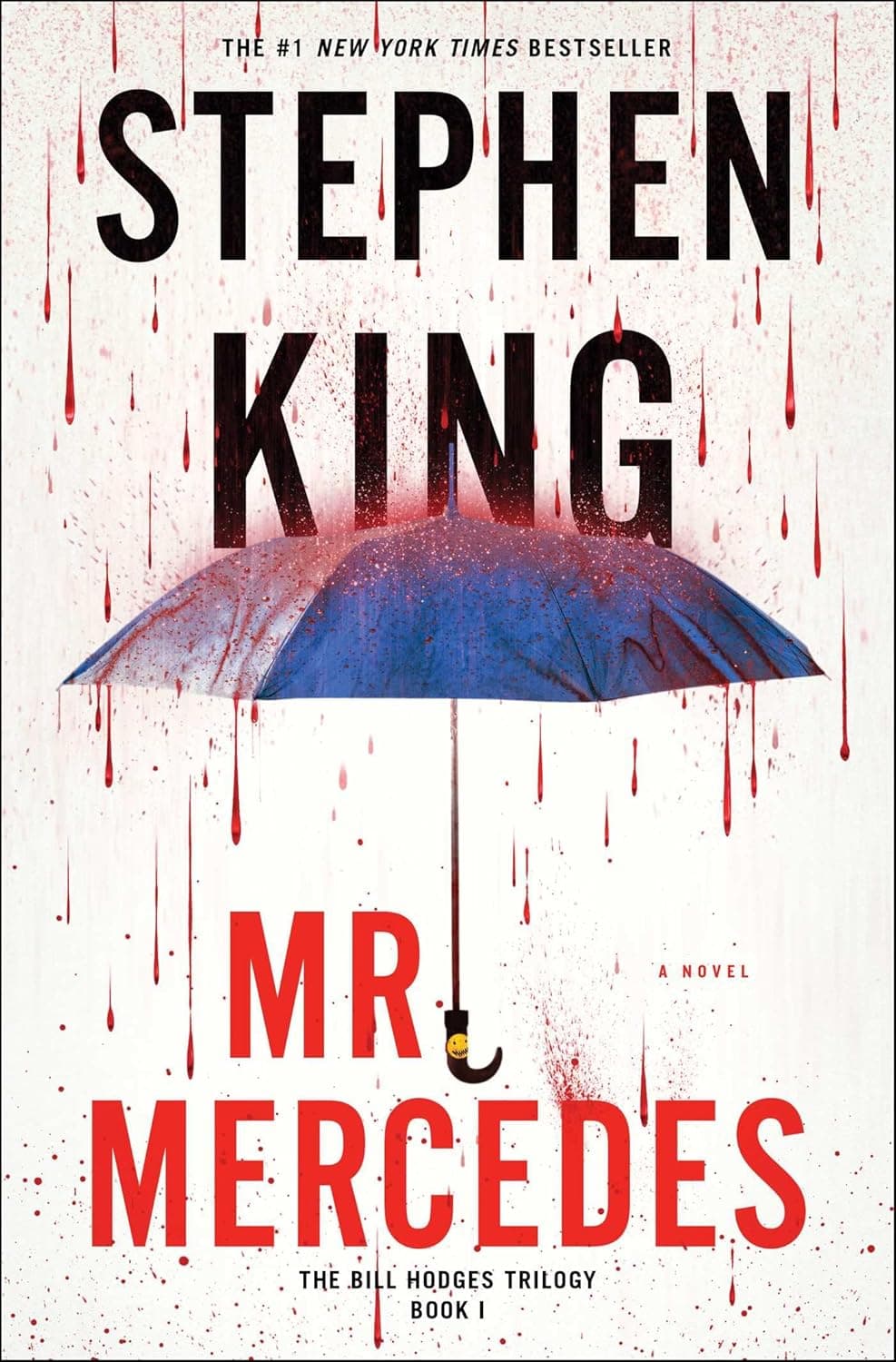
The Blue Umbrella itself symbolizes false safety—friendly branding concealing a predator’s blind-spot: a place that promises anonymity and comfort while delivering exposure and harm.
Key Quotes
“A pretty terrific thing.”
- Hodges’s phrase captures the jolt of purpose that breaks his depressive drift. The case doesn’t just occupy him; it restores identity, shifting him from passive retiree to active seeker.
“Ma, I see your panties.”
- Brady’s thought fuses arousal, shame, and aggression. It exposes the sexualized power dynamic with his mother that underlies his violence and cements the basement as a site of corrupted intimacy.
“Chaos.” … “Darkness.”
- The voice commands frame Brady’s worldview: he engineers catastrophe and retains the power to snuff it out. The theatricality signals both hubris and meticulous control—traits that make him especially dangerous.
“Why oh why oh why did you leave your key in your ignition?”
- The line weaponizes Olivia’s preexisting guilt, shifting responsibility from murderer to victim. In a few taunting words, the letter reframes mass murder as an avoidable accident she enabled, driving her toward self-destruction.
Why This Matters and Section Significance
This stretch pivots the novel from aftermath to pursuit. Hodges formally reenters the arena with Janey’s backing, reframing the case as a live hunt rather than an old wound. Simultaneously, the Brady chapters confirm the stakes: he isn’t finished—he’s upgrading. The dual perspective builds bristling dramatic irony, placing the reader inside the killer’s workshop and the detective’s nascent plan. The outcome now hinges on timing: can Hodges decode the letter, master the online terrain, and track a phantom before the vest detonates and the Blue Umbrella shelters another slaughter?