Opening
Retired detective K. William Hodges steps back into the Mr. Mercedes case when Janelle "Janey" Patterson paints a vivid portrait of her late sister, Olivia Trelawney—a woman ruled by fear, ritual, and relentless self-doubt. As Hodges partners with a sharp teen ally and follows a deceptively simple question, the investigation jolts to life—just as the killer cruises past, hiding in plain sight.
What Happens
Chapter 31: A Sack of Bricks
Janey opens up about Olivia, admitting she loves her but often finds her exhausting—“a sack of bricks.” Olivia grows up anxious, hypochondriacal, and compulsive, chronic miseries that turn everyday tasks into ordeals. Janey recalls Olivia faking food poisoning to avoid a U2 concert, treating every ache as terminal, and obsessively re-checking appliances—once forcing a turnaround to confirm the oven was off, making Janey late for school.
Olivia’s husband, Kent Trelawney, coaxes her into therapy and medication, and for a while the compulsions recede. After Kent’s sudden death, the rituals roar back, then intensify following the City Center Massacre and police scrutiny. Janey believes Olivia stopped her meds and notes how the killer’s letter eerily understands Olivia’s psyche: “It’s as if the guy knew her.” Hodges zeroes in on the core contradiction—would someone with Olivia’s rituals really leave her key in the Mercedes? Janey says no.
Chapter 32: A Kiss on the Cheek
Hodges urges Janey to secure the original Mr. Mercedes letter in a safe-deposit box, asks to visit her mother at Sunny Acres on a “good day,” and confirms her lawyer is competent—he knows he’s edging into Vigilantism and Justice Outside the Law. He slips and says “letters,” briefly revealing he received one too, then covers by claiming he meant the original and a copy.
At the door, Janey thanks him, rises on her toes, and kisses his cheek. The gesture lingers as he rides down in the elevator, and it cements her belief that he’s the right man for this job—and his determination to become that man again.
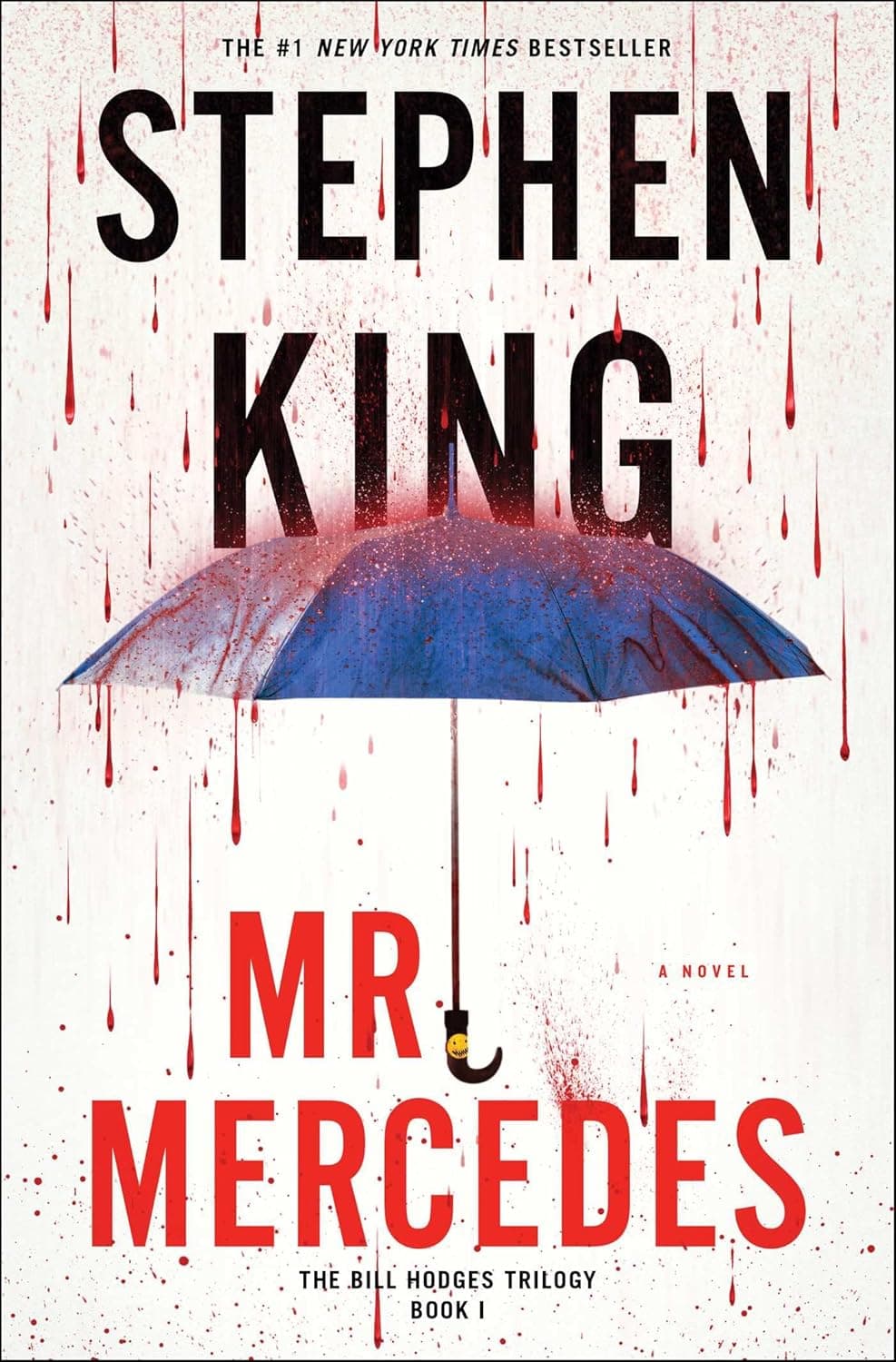
Chapter 33: Under Debbie’s Blue Umbrella
Hodges brings in Jerome Robinson, his tech-savvy neighbor, to assess the “Under Debbie’s Blue Umbrella” website. Jerome warns that harmless façades often front illegal content, a pattern of Technology and Modern Crime. Suspecting spyware or worse, Hodges forbids using Jerome’s personal laptop and offers to replace it if needed.
Jerome sets up an old, isolated iMac to probe the site safely and backtracks its history to see if it’s a legitimate chat service or a one-off lure. In a chilling brush with irony, he mentions the Geek Squad-style service at Discount Electronix—where Brady Hartsfield works. To widen Jerome’s lens, Hodges poses a “hypothetical” puzzle about a car that moves overnight without a stolen key.
Chapter 34: A Three-Pipe Problem
On a walk to Big Licks with Jerome’s dog, Odell, Hodges lays out the scenario: a man parks his BMW on the street to visit his girlfriend; by morning, the car sits across the street, facing the other way—locked—with the owner’s key still in his pocket. Jerome calls it a Sherlock Holmes “three-pipe problem” and mulls it over while grabbing cones inside.
From the sidewalk, Hodges hears the bright jingle of a Mr. Tastey truck approaching and receding—the very truck driven by Brady Hartsfield—without knowing it.
Chapter 35: The Spare Key
On a park bench, Jerome calmly reveals he knows the “hypothetical” is the Mercedes case and fires the question that detonates the mystery: “Where was his spare key?” Hodges freezes. He and his former partner, Pete Huntley, never asked. Jerome recalls his mother’s new-car packet—owner’s manual and a spare key bagged in the glove box—and the answer snaps into place.
Hodges realizes Olivia likely never knew about the spare key tucked in the glove compartment. The killer doesn’t hot-wire the car; he uses an authorized key. Yet a new puzzle rises: if Olivia locks her doors—as her rituals demand—how does the killer get inside without leaving signs of forced entry? The revelation shifts Guilt and Responsibility off Olivia’s supposed carelessness and onto the killer’s meticulous planning. Jerome wants in. Hodges refuses, citing legal jeopardy and danger. As they head home, a Mr. Tastey truck rolls by. Jerome jokes the ice cream man is “like a cop... Never around when you need him.”
Chapter 36: The Ice Cream Man
The narrative pivots to Brady in his Mr. Tastey truck cruising the same neighborhood. He basks in the mechanical precision of his mind as the jingle plays. The scene confirms how close hunter and hunted now move—separated by feet, not miles.
Character Development
Hodges reclaims his investigative instincts while accepting he needs help navigating modern traps. Janey becomes both client and catalyst, reframing Olivia as a victim of predation, not negligence. Jerome emerges as the nimble intellect who asks the right question at the right time. Brady sharpens into the embodiment of everyday monstrosity.
- K. William Hodges: Shifts from retirement drift to focused inquiry; balances old-school detection with new-tech caution; seizes on the spare-key angle as his first real lead.
- Janelle Patterson: Moves from grief to action; supplies intimate psychological data; her trust—and cheek kiss—galvanizes Hodges.
- Jerome Robinson: Establishes himself as Hodges’s “Watson”; blends internet fluency with deductive clarity; identifies the spare-key solution.
- Olivia Trelawney: Reconstructed from “careless owner” to complex, vulnerable target whose compulsions contradict the official narrative.
- Brady Hartsfield: Glimpsed at work as a stealth predator, making proximity his camouflage and confirming the danger of the ordinary.
Themes & Symbols
The spare-key breakthrough reframes culpability under Guilt and Responsibility: Olivia’s compulsions make carelessness improbable, pushing responsibility toward a killer who anticipates behaviors and exploits blind spots. This empathetic correction of the record matters—Hodges must first absolve the victim to see the crime clearly.
Technology and Modern Crime surfaces through “Under Debbie’s Blue Umbrella” and Hodges’s caution about malware and tracking. Jerome’s sandboxed iMac and the Discount Electronix mention show how digital infrastructure enables both detection and deception. Simultaneously, Vigilantism and Justice Outside the Law shapes Hodges’s tactics—he seeks truth and safety without a badge, necessitating legal foresight and ethical restraint. Brady’s ice cream truck crystallizes the Banality of Evil: a cheerful jingle masking a predatory mind.
Key Quotes
“She could be a sack of bricks.”
- Janey’s blunt affection captures Olivia’s burden on loved ones and primes Hodges to distrust the “careless woman” narrative. The phrase humanizes Olivia while acknowledging her exhausting patterns.
“It’s as if the guy knew her.”
- Janey recognizes the killer’s psychological precision. The line foreshadows a predator who studies victims’ routines—and leverages them to devastating effect.
“Where was his spare key?”
- Jerome’s question reframes the entire case in one stroke. By focusing on overlooked common sense, he exposes the flaw in months of police assumptions.
“You’re the right man for the job.”
- Janey’s confidence rekindles Hodges’s purpose. The endorsement turns a favor into a mission and signals a deepening personal bond.
“He’s like a cop... Never around when you need him.”
- Jerome’s joke lands as dark irony: the “ice cream man” is the killer they need to catch. The quip collapses innocence and menace into a single, unsettling image.
Why This Matters and Section Significance
These chapters ignite the novel’s cat-and-mouse momentum. Hodges re-enters the hunt with a clarified view of Olivia, a credible path forward (the spare key), and a modern partner in Jerome. The near-passing of Hodges and Brady elevates the tension and defines the book’s stakes: the killer isn’t distant—he’s embedded in the everyday. This stretch marks the shift from mourning and misdirection to active detection, where empathy, logic, and caution begin to outpace the lies that buried the truth.