Opening
Opening: Hodges and Jerome brush past the killer in daylight, then pivot into a high-stakes online hunt that pulls the retired detective back to life. Brady’s point of view exposes the everyday mask of a predator as Hodges prepares to meet him on a shadowy, encrypted site. The section ends with the first direct contact—a click that turns the cat-and-mouse into open psychological war.
What Happens
Chapter 36: The Ice Cream Man
As K. William Hodges and Jerome Robinson climb the hill, Hodges wheezes and vows to slim down. He swears Jerome to secrecy about the Mercedes case, stepping outside official channels and into a vigilante posture; Jerome agrees with an easy “Mum’s the word.”
The jingle of a Mr. Tastey truck cuts through their chat. Jerome waves to the driver. Hodges can’t see a response. The driver—unseen by them—is Brady Hartsfield. Jerome jokes that the ice cream man is “never around when you need him,” while the man Hodges needs most rolls past, hiding in plain sight.
Chapter 37: Bats in the Belfry
The narrative shifts to Brady behind the wheel, scorning “Kermit William ‘I wish I was young’ Hodges and Jerome ‘I wish I was white’ Robinson” in a sneering inner monologue. He hopes Hodges bites the hook he planted in his letter and logs onto Debbie’s Blue Umbrella, the private chat site he rigged.
Brady catalogs the “bats in his belfry”—violent fantasies from poisoning Jerome’s dog to a presidential suicide mission—while selling a popsicle to a little boy with a pleasant smile. The The Banality of Evil lands hard: a friendly jingle, a clean white truck, and a killer savoring the power of appearing harmless.
Chapter 38: The Fisherman’s Lure
Back home, Hodges skips TV and beer for a yellow legal pad. He compares the letter sent to him to the one sent to Olivia Trelawney, noting tonal differences—arrogant gloating versus manipulative sympathy—and flagging stylistic “fingerprints”: “perk” for “perp,” odd hyphenations like “bee-hive.”
The pattern clarifies: the killer surveils his targets. Hodges realizes Brady watched Olivia and is likely watching him—maybe even through the window when Hodges handled his service revolver. The thought sparks not fear but focus and purpose. He’s back on the hunt—when the phone rings.
Chapter 39: Under the Umbrella
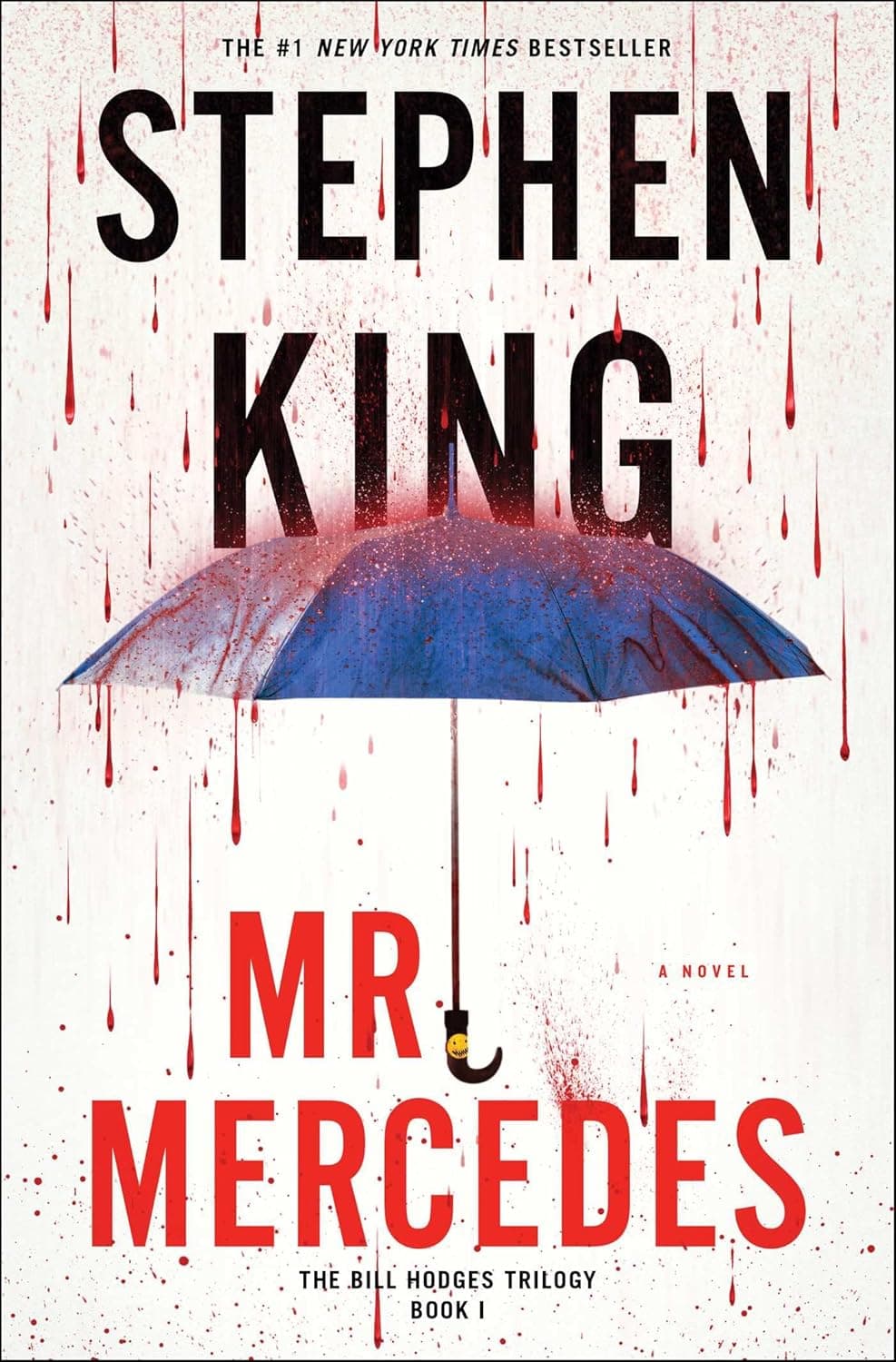
Jerome’s on the line. He has accessed Debbie’s Blue Umbrella and walks Hodges through the tech: an “extreme privacy” platform hosted on encrypted servers in Bosnia, purpose-built to be untraceable—an emblem of Technology and Modern Crime. The site blocks screenshots and printing; attempts trigger a lips-and-finger image with a “SHHH” warning.
Registration requires a fee, but there’s a catch: if someone supplies you a username, they’ve paid for your account. Jerome connects the dots—Mr. Mercedes already set an account for Hodges. The mood turns grave. Jerome warns that if Hodges has a username, “this guy’s waiting for you.”
Chapter 40: Waiting for the Bait
Brady waits at home, seething that Hodges hasn’t appeared on the site. His mother, Deborah Ann Hartsfield, lies passed out on the couch; he briefly imagines smothering her, a chilling flash of the Dysfunctional Family Dynamics that warp him. In the basement command center, frustration spawns a migraine he calls “the Little Witches.”
Hodges refuses to rush. He tells himself he must be the fisherman, not the fish, and searches for the right lure. In the night, the answer clicks. He logs into Debbie’s Blue Umbrella with the password: kermitfrog19. A prompt pops up—merckill wants to chat with you!—and Hodges hits “Y,” typing his opening salvo to begin the duel.
Key Events
- Hodges and Jerome unknowingly encounter Brady’s ice cream truck—pure dramatic irony.
- Brady’s POV reveals racist contempt, violent fantasies, and the polished mask of a service worker.
- Hodges’ letter analysis uncovers repeat tics and the killer’s surveillance pattern.
- Jerome decodes Debbie’s Blue Umbrella as a near-untraceable trap already primed for Hodges.
- Hodges commits to a baited strategy and initiates contact with “merckill.”
Character Development
Hodges reclaims his investigative identity as the case moves from passive obsession to active pursuit. Brady’s façade and fantasies sharpen into a portrait of calculated malice. Jerome cements his role as the bridge between instinct and infrastructure.
- K. William Hodges:
- Shifts from aimless retirement to focused hunter.
- Uses meticulous, analog methods to map the killer’s voice and habits.
- Chooses strategy over impulse before entering the chat.
- Brady Hartsfield:
- Exhibits narcissism, racism, and performative normalcy.
- Reveals grandiose, violent ideation alongside migraines and maternal contempt.
- Controls the digital terrain yet frays with impatience.
- Jerome Robinson:
- Provides crucial technical literacy and threat modeling.
- Identifies the prepaid username as the killer’s invitation.
- Functions as Hodges’s ethical and practical counterweight.
Themes & Symbols
Debbie’s Blue Umbrella turns the web into a private killing field—anonymity as weapon and architecture. Encrypted servers, self-policing privacy features, and prepaid access show how crime modernizes, demanding an alliance of old-school deduction and new-school fluency.
The banality of Brady’s day job—smiles, jingles, and soft-serve—sits beside fantasies of mass murder. That clash underscores evil’s camouflage in routine roles and settings. Brady’s household rot, coupled with casual thoughts of matricide, threads family dysfunction into the making of a predator, while Hodges’s “fisherman” mindset reframes the central conflict: patient, methodical good countering agile, tech-empowered malice.
Key Quotes
“Never around when you need him.”
- Jerome’s offhand joke about the ice cream man doubles as a knife-twist of irony. The killer passes within greeting distance while remaining invisible, proving how proximity without knowledge changes nothing.
“Bats in his belfry.”
- Brady’s pet name for his violent fantasies sanitizes the grotesque, signaling how he normalizes escalation. The playful phrase masks intent, a linguistic mirror of his public façade.
The site flashes an image of lips with a finger and the message: “SHHH.”
- Debbie’s Blue Umbrella silences traceability on purpose. The warning becomes a mission statement—privacy as both shield and cudgel, privileging predation over accountability.
“If you already have a username, this guy’s waiting for you.”
- Jerome compresses the trap into a single sentence. It reframes the investigation from search to confrontation and positions Hodges as an expected guest in the killer’s arena.
“merckill wants to chat with you!” — password: “kermitfrog19”
- The prompt and childlike password combine taunt and theater. Hodges’s acceptance signals full commitment, while the killer’s handle boasts lethal intent before a single word is exchanged.
Why This Matters and Section Significance
These chapters pivot the novel from groundwork to direct engagement. The near-miss with the truck amplifies tension through dramatic irony, while Brady’s interiority makes him a textured, terrifying antagonist. Most crucially, the section establishes Debbie’s Blue Umbrella as the primary battlefield and confirms Hodges’s choice to fight beyond official structures, advancing the arc of Vigilantism and Justice Outside the Law. The fisherman casts his line; the monster tugs back.