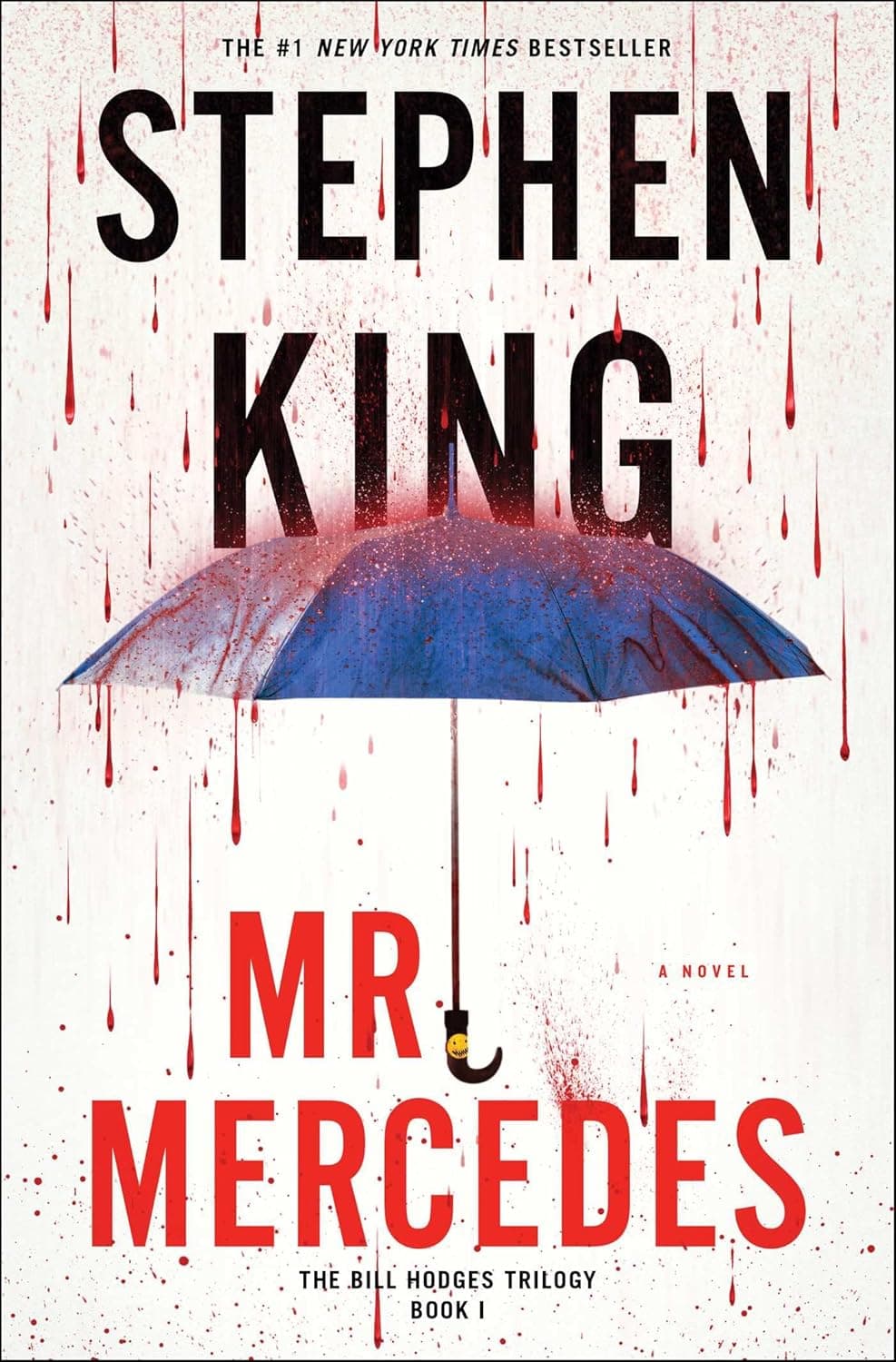
Opening
A late-night epiphany jolts K. William Hodges from despair into action: he can’t just keep the Mercedes Killer talking—he has to provoke him. That shift from passive watcher to active antagonist ignites a personal war of wills that reframes the story’s Good vs. Evil conflict as a live, dangerous game.
What Happens
Chapter 41: I HAVE TO WIND HIM UP
Hodges wakes in the dark with a clear strategy: the killer is clever but unstable, and only a direct hit to his ego will draw him out. He sits at his computer, reenters the “Debbie’s Blue Umbrella” chat, and accepts a ping from “merckill.”
He fires off a calculated insult: he claims “withheld evidence” proves the chatter isn’t Mr. Mercedes and tells him to get lost. Clicking send, Hodges steps fully into a risky, psychological offensive that reanimates his instincts and identity as a cop.
Chapter 42: It Was Me!
Three miles away, Brady Hartsfield can’t sleep. Haunted by his brother and his mother—and stung by the “fat ex-cop”—he heads to his basement and reads Hodges’s message. The dismissal detonates his fury. His killer identity is the only thing that makes him feel powerful; being called a fraud is intolerable.
He reaches for revenge that will hurt indirectly but deeply. He decides to target Jerome Robinson through Jerome’s dog, Odell, so Hodges will blame himself for what follows—a chilling play on Guilt and Responsibility.
Chapter 43: Poison Bait
Brady constructs a meticulous plan. Using a false identity, he orders Gopher-Go, a strychnine poison, and researches its effects with cruel fascination. He plans to hide the poison in hamburger and toss it to Odell while Barbara Robinson has the dog tied outside a convenience store on his Mr. Tastey route—evil cloaked in routine, underscoring The Banality of Evil.
A backlash of doubt hits him: killing the dog would prove he’s the real killer and might galvanize Hodges, not destroy him. With a splitting headache and spiraling thoughts, he goes to his mother’s room. In a disturbing scene that exposes their long-standing incest, Deborah Ann Hartsfield “soothes” him—evidence of catastrophic Dysfunctional Family Dynamics. Cleared and cold afterward, he recommits to killing Odell and to reasserting his credibility to Hodges.
Chapter 44: A Service Call
Morning brings a veneer of normalcy. Brady cooks for his hungover mother; neither acknowledges the night before. His boss, Tones Frobisher, assigns a house call in Sugar Heights, the affluent neighborhood where Olivia Trelawney lived. Brady agrees—Mrs. Rollins tips well—and the errand neatly masks his double life: courteous tech support on the surface, lethal plotting underneath.
Chapter 45: The Danus Circuit
At Paula Rollins’s lavish home, Brady quickly diagnoses the “problem”: she unplugged her computer to vacuum. When she steps out, he guesses her password—“PAULA”—logs in to Debbie’s Blue Umbrella, and sends Hodges a taunting reply. He cites details never made public—the bleach and the hairnet—and dares Hodges to name his supposed “withheld evidence,” showcasing the precision and reach of Technology and Modern Crime.
After wiping his traces, he strews tools to fake a complex repair, spins a story about a faulty “trimmer switch” and a fried “danus circuit,” and warns of a near-fire. Mrs. Rollins gratefully tips him eighty dollars. The section ends with Hodges reading Brady’s new message, the trap fully sprung.
Character Development
This stretch shifts the investigation into a face-to-face psychological duel, revealing what each man needs most: Hodges needs purpose; Brady needs recognition.
- Hodges: Reclaims agency and craft. He moves from passive depression to active manipulation, using a bluff about evidence to force his enemy into the open.
- Brady: Exposed as narcissistic and status-obsessed. Denial of credit enrages him more than the threat of being caught, and he weaponizes cruelty to inflict secondhand pain.
- Deborah Ann Hartsfield: Functions as enabler and co-architect of Brady’s pathology. Their incest isn’t aberrant but habitual, a ritualized means of regulation and control.
Themes & Symbols
Technology and Modern Crime: The internet flattens distance and scrubs fingerprints. Brady purchases poison under an alias, infiltrates a chat from a client’s machine, and exploits a simple password to broadcast a challenge. Everyday devices become tools and cover, making predators both invisible and omnipresent.
The Banality of Evil: Brady’s bland routines—cooking breakfast, running service calls, driving an ice cream truck—sit beside plans for agonizing death. The contrast strips away the myth of a monstrous visage; monstrosity hides in plain sight, in jobs, errands, and neighborly smiles.
Dysfunctional Family Dynamics: Brady’s incest with his mother reveals a family system built to gratify and stabilize his worst impulses. Their “comfort” ritual doesn’t heal; it sanctions transgression, deepening his detachment from empathy and restraint.
Good vs. Evil: The battle becomes deliberate strategy rather than chance encounter. Hodges weaponizes deception for justice; Brady weaponizes innocence—Jerome’s dog—to inflict intimate harm. The moral lines sharpen as both commit to escalation.
Key Quotes
“I have to wind him up.”
- Hodges reframes the conflict as provocation rather than patience. This motto shifts the narrative from a cold case to an active hunt, restoring his purpose and setting new stakes.
“Seen a lot of false confessions in my time, but this one’s a dilly. I’m retired but not stupid. Withheld evidence proves you are not the Mercedes Killer. Fuck off, asshole.”
- Hodges’s message is both bait and insult. By denying Brady’s identity and invoking secret evidence, he goads Brady into proving himself—and into making traceable mistakes.
“It was me!”
- The chapter’s title crystallizes Brady’s need: acknowledgment. His rage at being dismissed reveals that recognition, not merely killing, is his core drive, making him vulnerable to challenges that question his authorship.
Why This Matters and Section Significance
These chapters mark a turning point: Hodges turns offense-minded, forcing Brady to react in real time. The “withheld evidence” gambit compels Brady to reengage the case directly, exposing his methods and psychology.
Brady’s plan to kill Odell moves the danger from abstract threat to personal assault on Hodges’s small circle. The stakes escalate from public atrocity to targeted cruelty, ensuring the cat-and-mouse confrontation can no longer remain theoretical or remote.