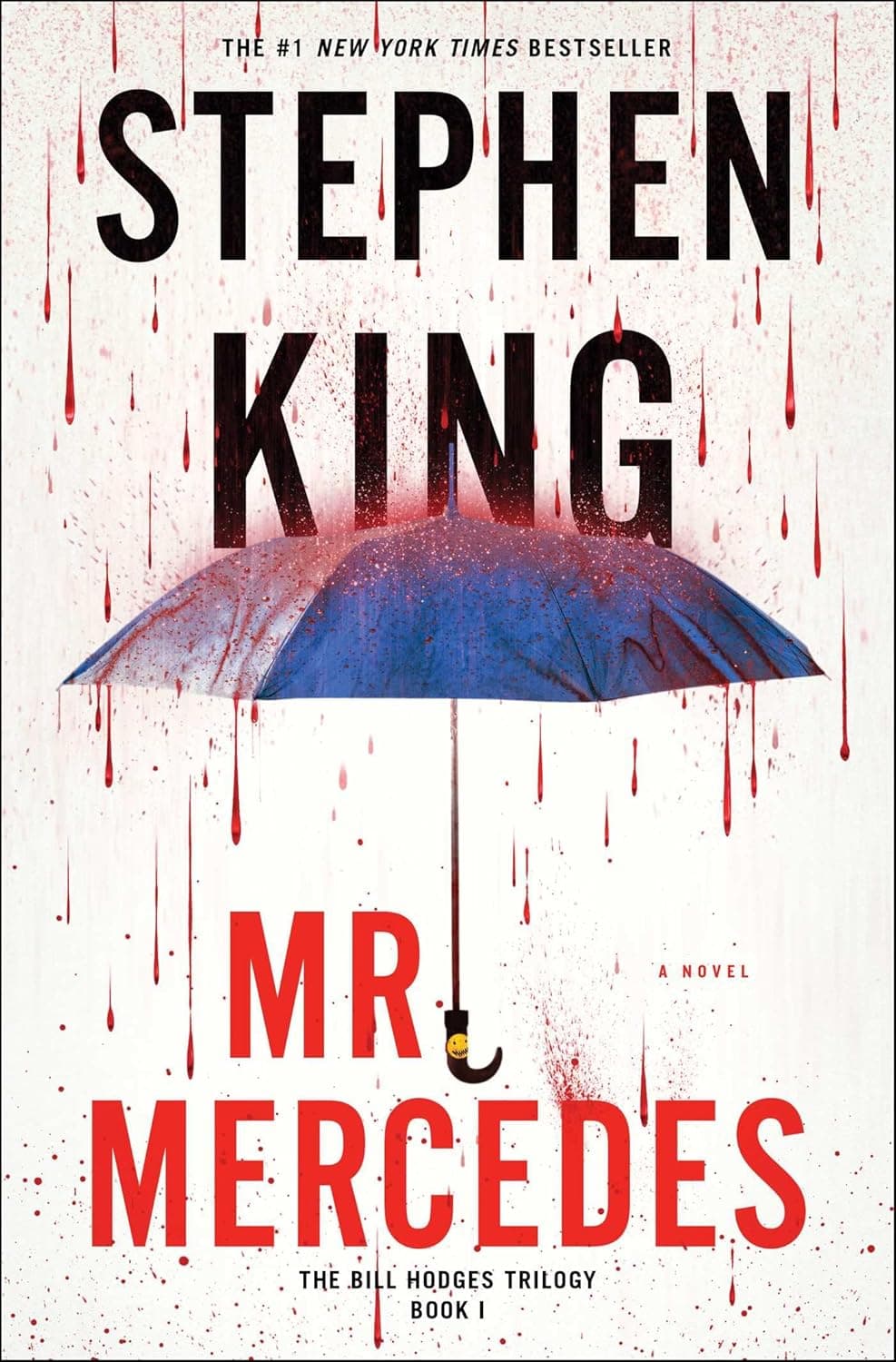
Opening
Retired detective K. William Hodges turns the hunt into a psychological cage match, using taunts and lies to flush the killer out, even as his bond with Janelle "Janey" Patterson deepens. Across town, Brady Hartsfield unravels, his need for recognition overriding caution. With help from Jerome Robinson, Hodges leans into Vigilantism and Justice Outside the Law, seizing control and forcing the conflict from the screen into the street.
What Happens
Chapter 56
In the afterglow of intimacy, Hodges and Janey lie in bed and talk strategy. He warns her to BOLO—Be On the Lookout—for any tail and keeps circling back to the danger he’s inviting by poking the killer. He admits Jerome has been seen at his place, widening the blast radius of risk as he commits to running this case outside official channels.
Hodges lays out a plan: leverage his old partner Pete Huntley’s recent bust of “Turnpike Joe.” In his next message, he’ll suggest this new serial predator will “confess” to the City Center massacre, stealing Mr. Mercedes’s thunder. He also reconsiders what Janey’s mother said about Olivia Trelawney hearing “ghosts in the machine,” suspecting the clue sits inside her computer.
At Janey’s laptop, he logs into the anonymous forum, Debbie’s Blue Umbrella, and fires off a coolly contemptuous message to “merckill.” For the first time since retirement, he feels whole—and sleeps.
Chapter 57
Brady stumbles home to a smoke-filled kitchen and a note from his mother, Deborah Ann Hartsfield. The lasagna she left him burns to a blackened brick while she passes out drunk on the couch. He cleans up, disgust curdling into the thought that both their lives might be better if she were dead.
He descends to his basement command center and hesitates, afraid of what Hodges might have posted—then clicks. The message from “kermitfrog19” is surgical cruelty: a dismissal of Brady’s “confession,” a sneer at his forensics, and a planted lie about a crucial detail the real killer would know—the valet key.
Enraged, Brady hammers a reply riddled with typos, insisting there was no valet key and that the spare sat in the glove compartment. He threatens Hodges and signs as “The REAL Mercedes Killer,” giving Hodges exactly what he wanted: confirmation and leverage.
Chapter 58
Saturday morning brings eggs, coffee, and an almost domestic calm at Janey’s condo. Buoyed by this new intimacy, Hodges still thinks like a cop, urging Janey to change her simple password and keep her phone close.
Together they log into Debbie’s Blue Umbrella. Brady’s reply is a mess—“complartment,” “uynlocked,” “wouldn’tr.” Janey spots the spiral immediately: he’s “fully wound.” Hodges sees the same thing. The errors aren’t misdirection; they’re proof of a temper hijacking a mind that once prided itself on meticulous control.
With the hook sunk deep, Janey pushes him to go harder—“Poke him harder. He deserves it.” Hodges grins and begins composing the next blow, doubling down on the lie that already has Brady burning.
Chapter 59
Hodges and Janey agree to keep their relationship “a day at a time,” tender minutes threaded with reminders: be careful, stay alert, keep the phone handy. Then he heads out.
Back in his car, a parking ticket—plus his forgotten phone—waits. Three missed calls from Jerome pop up, each more urgent. In his mock-DJ voice, Jerome says, “I think I know how he did it. How he stole the car. Call me.” Sensing a breakthrough, Hodges turns the wheel toward Jerome’s house without hesitation.
Chapter 60
At Discount Electronix, Brady’s eye twitches as he rereads Hodges’s latest post on a store terminal. The new message hits harder: the valet key lie expands to a “magnetic box under the rear bumper,” and Hodges calls him a “chickenshit asshole,” daring him to bring his threats to Hodges’s front door. The post ends with two infuriating words: “Go away.”
Brady shakes with a cold-hot rage that feels physical. Coworker Freddi Linklatter almost catches him; he alt-tabs out just in time. When his manager mentions a service call, Brady volunteers at once. He has an “errand to run,” and it won’t wait—Hodges’s taunts have yanked him off the keyboard and into open conflict.
Character Development
The balance of power flips. Hodges rediscovers purpose and precision, Janey becomes more than a client—she’s a catalyst—and Brady’s composure shatters, exposing the fear beneath the bravado.
- K. William Hodges: Swings fully into a proactive, extra-legal hunt. His planted “valet key” lie and Turnpike Joe feint show expert psychological manipulation sharpened by renewed vitality from his relationship with Janey.
- Brady Hartsfield: Reveals a fragile, recognition-hungry ego. Typos, impulsive threats, and the need to reclaim authorship of the crime make him sloppy and predictable.
- Janey Patterson: Steps into an active partner role—supportive, perceptive, and unflinching. She urges escalation and helps Hodges read the killer’s tells.
- Jerome Robinson: Emerges as a crucial problem-solver, calling with a concrete method for the car theft that could crack the case wide open.
Themes & Symbols
The duel is a study in Good vs. Evil played on a digital battlefield. Hodges uses deception to corner a greater monster, complicating morality as he leans on tactics that resemble the villain’s own. Through the anonymous forum and planted details, the novel probes identity, pride, and the need to be seen.
Technology and Modern Crime frames every move: a chatroom becomes a crime scene, passwords are shields, and disinformation is a weapon. Meanwhile, Brady’s home life embodies Dysfunctional Family Dynamics, showing how rot at home can fuel violence outside it. The result is a portrait of a digital-age manhunt run off the books, driven by rage, loneliness, and the will to control the narrative.
- Symbol: The Valet Key. This invented detail is psychological C4. For Hodges, it’s a pry bar—an elegant untruth that forces the killer to over-explain. For Brady, it’s a splinter in the brain, a challenge to the perfection he believes defines him.
Key Quotes
“BOLO.”
- Hodges turns a police acronym into a mantra of survival for Janey, underscoring the omnipresent threat. It also signals his shift from passive retiree to field commander, even off the force.
“The REAL Mercedes Killer.”
- Brady’s signature is a tell. His need to claim authorship exposes the fragile ego driving his crimes and confirms for Hodges that the bait has worked.
“Poke him harder. He deserves it.”
- Janey’s line marks her evolution from client to ally. She reads the psychology as keenly as Hodges does and pushes the offensive that will force Brady into the open.
“I think I know how he did it. How he stole the car. Call me.”
- Jerome’s voicemail signals a pivot from theory to method. It promises a practical breakthrough that can anchor Hodges’s psychological game with hard mechanics.
“Go away.”
- Hodges’s curt dismissal is surgical. It belittles Brady’s power, stokes his fury, and dares him into the rash, physical move Hodges is engineering.
Why This Matters and Section Significance
These chapters mark the novel’s decisive momentum shift. Hodges stops reacting and starts dictating terms, converting a cold case into a live confrontation. Brady’s godlike anonymity cracks; his rage narrows to a single target, putting Hodges, Janey, and Jerome in immediate danger.
The escalation from screen to street sets up the endgame. Hodges’s gambit works—Brady is moving—but the victory cuts both ways. By seizing control of the narrative, Hodges also paints a bullseye on everyone he cares about.