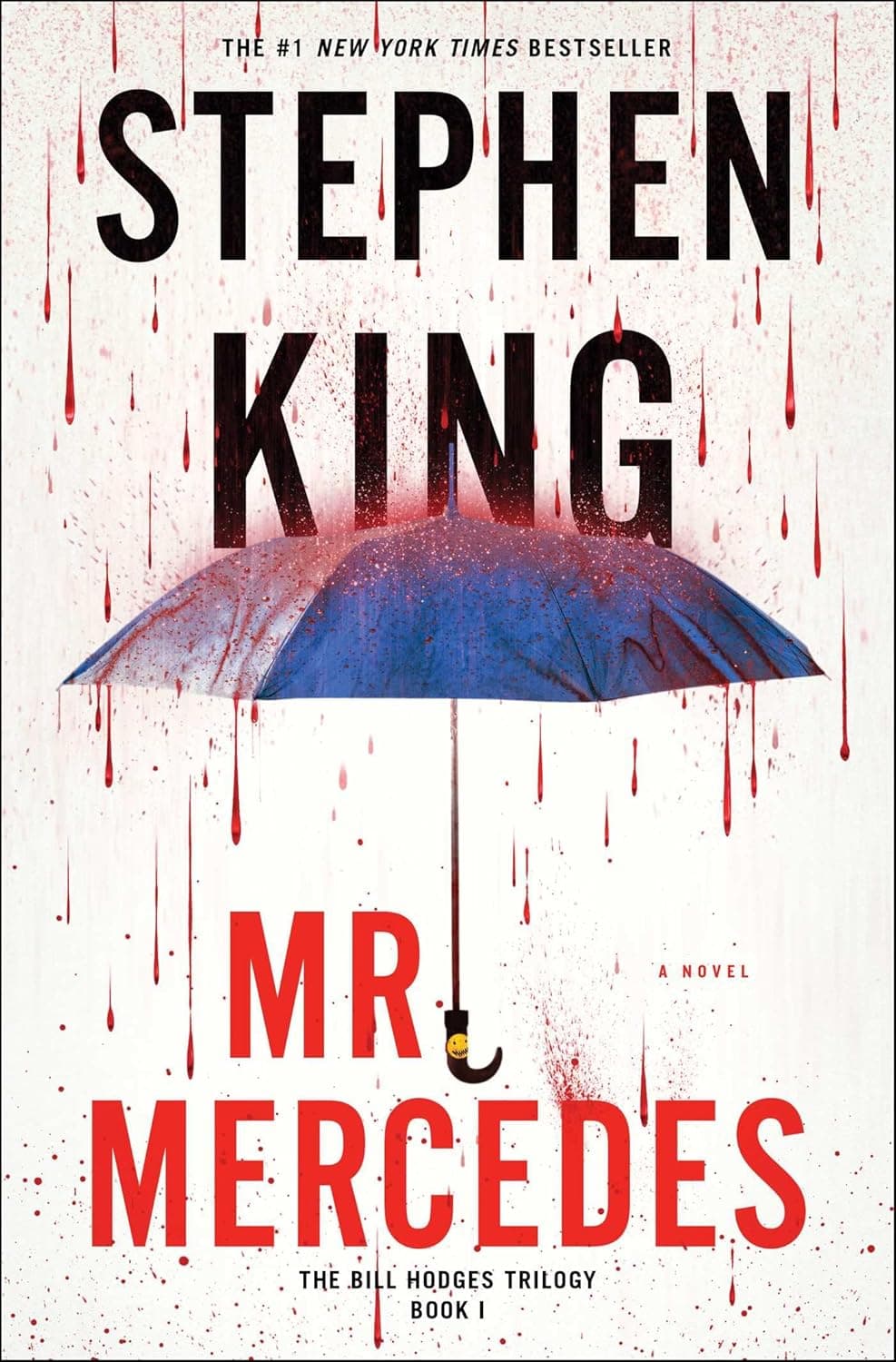
Opening
Retired detective K. William Hodges finally cracks how the Mercedes was taken just as killer Brady Hartsfield escalates from taunting to terrorism. As grief pulls Hodges closer to Janey, Brady plots a mass-casualty “final bow,” turning the investigation into a race against catastrophe.
What Happens
Chapter 61: Stealing the Peek
Hodges stops by the Robinsons’ home, where Jerome Robinson is watching his younger sister. After some joking around, Jerome demonstrates how modern Passive Keyless Entry systems work by using Hodges’s own fob, then explains how thieves can capture and clone a fob’s radio signal with a homemade relay device—what his friends call “stealing the peek.” In a single, chilling stroke, the mystery of the stolen Mercedes turns from human error to technological vulnerability.
The revelation slams into Hodges. He realizes this is almost certainly how the killer took Olivia Trelawney’s car, and that the original investigation—including his and Pete Huntley’s—rested on a false assumption that blamed the victim. Shame and Guilt and Responsibility wash over him. Convinced Jerome is both invaluable and already in danger, Hodges brings him fully into the case, sharing the details of his secret correspondence with Mr. Mercedes and cementing their partnership.
Chapter 62: Paki Boy’s PC
We shift to Brady on a service call in a shabby neighborhood he privately dubs “Hillbilly Heaven.” At a bakery he contemptuously labels “Paki Boy’s,” he fixes a frozen cash-register screen with a simple reboot. The quick, indifferent repair highlights Brady’s scorn for the people he serves and how his day job functions as camouflage for his darker pursuits, a textbook example of The Banality of Evil.
Brady’s inner monologue drips with racism and contempt, but on the surface he’s efficient and forgettable. That ordinary mask is exactly how he moves through the world unseen.
Chapter 63: A Grand Gesture
Avoiding the mall where he works, Brady heads to a big-box garden store and buys two cans of Gopher-Go—strychnine—burying them beneath harmless lawn supplies. He pays cash, sweating through paranoia that the clerk will notice, telling himself this purchase is nothing compared to the City Center massacre. Every choice he makes—what he buys, how he pays—exploits the blind spots of Technology and Modern Crime.
In the van, his plan crystallizes. First, poison Odell, the Robinsons’ dog, to torment Hodges. Then kill Hodges. But he wants a “grand gesture” to enshrine his legacy. The radio delivers his inspiration: the boy band ’Round Here is playing the Midwest Culture and Arts Complex. Brady pictures thousands of kids packed into an auditorium and imagines the carnage he could unleash—a pivot from personal revenge to mass murder.
Chapter 64: A Friend for the Arrangements
Back home, Hodges dozes off and leaves his cell in the car. The landline jolts him awake: Janelle "Janey" Patterson is calling from the hospital—her mother, Elizabeth Wharton, has suffered a massive stroke. Hodges offers to drive out immediately. They concoct a discrete cover story for Janey’s family about how they met: he’s a friend she knows through a security company tied to her sister’s neighborhood.
By the time he arrives, Elizabeth has died. Janey sits stunned on an ambulance bumper, and when she collapses in his arms, Hodges gathers her into his car, holds her, and lets her weep. The hunt pauses so the relationship can deepen; the detective becomes caretaker, their bond tightening in the wake of loss.
Chapter 65: The Final Bow
On Saturday, Brady runs his ice-cream route around Little League diamonds, absorbing the chatter of tween girls ecstatic about the ’Round Here concert. It confirms his target. He manipulates his boss for a shift swap, clearing two afternoons to stake out the Robinsons’ block and poison Odell. He buys top-shelf hamburger meat to mask the taste of the toxin.
At home, he plays dutiful son for his surprisingly sober mother, then posts a new taunt on Debbie’s Blue Umbrella: “I’m going to fuck you up, Grampa.” When she passes out drunk, he mixes Gopher-Go into the meat with clinical focus, seals it, and hides it in his mini-fridge. He sleeps well, his conscience silent. The book crosscuts starkly between this cold preparation and Hodges’s compassion—an escalating portrait of Good vs. Evil.
Chapter 66: Deathwork
Hodges and Janey shoulder the practical burdens that follow a death. He taps his professional experience to coordinate the funeral home and release of the body. She drafts the obituary and works the phone, calling friends and family. The administrative grind of “deathwork” contrasts with the raw grief between them, yet it quietly binds them together.
At the Holiday Inn, relatives arrive: uncle Henry Sirois; aunt Charlotte Gibney; and Charlotte’s daughter, Holly Gibney, close to Janey’s age but painfully shy, avoiding eye contact and speaking in a mutter. Their dynamics hint at Dysfunctional Family Dynamics. Holly seems peripheral, but the introduction plants a crucial seed for what’s coming.
Character Development
These chapters sharpen the conflict and deepen bonds, pushing allies closer and the antagonist further into monstrosity.
- K. William Hodges: His pride takes a hit when the PKE angle reveals how wrong the original case was, but he adapts quickly, trusts Jerome fully, and shows tenderness and steadiness as Janey’s support.
- Brady Hartsfield: He escalates from targeted cruelty to mass-murder fantasies, perfecting his mask of normalcy while indulging racist contempt and precise, clinical planning.
- Jerome Robinson: He becomes indispensable, contributing the key technological breakthrough that reframes the Mercedes theft and earns Hodges’s full confidence.
- Janelle "Janey" Patterson: Grief strips away her armor; she leans on Hodges, moving their connection from flirtation to a real partnership built on care and crisis.
- Holly Gibney: Introduced as anxious and withdrawn, she nonetheless registers as quietly important, foreshadowing a larger role in the investigation.
Themes & Symbols
The chapters hinge on modern vulnerability and moral contrast. Jerome’s “stealing the peek” reveals how contemporary systems invite exploitation, and how conventional police instincts can misfire when technology leads the crime. That blind spot fuels the novel’s critique: assumptions—especially those that tip toward victim-blaming—obscure truth and justice.
Across the aisle, the narrative pairs Brady’s errand-running, retail purchases, and tech service calls with murderous intent to underscore the Banality of Evil. He blends into everyday life even as he engineers atrocity. Meanwhile, the alternating scenes of Hodges comforting Janey and Brady poisoning meat crystallize Good vs. Evil in human terms: empathy and duty against dehumanization and spectacle. The arrival of Janey’s family, with Holly at its fringes, adds a vein of Dysfunctional Family Dynamics that will complicate loyalties and reveal unexpected strengths.
Key Quotes
“Stealing the peek.”
Jerome’s phrase names the technique—and the turning point. It reframes the Mercedes theft as a solvable, tech-enabled crime rather than a moral failing by Olivia Trelawney, and forces Hodges to confront the limits of old-school policing.
“I’m going to fuck you up, Grampa.”
Brady’s message on Debbie’s Blue Umbrella is a swaggering power play meant to rattle and lure Hodges. It also betrays his need to be seen and feared, a craving that drives him toward a public, theatrical attack.
“A grand gesture.” / “Final bow.”
Brady casts mass murder as performance, revealing the narcissism beneath his violence. He doesn’t just want to kill; he wants a legacy, an audience, and a script that centers him.
“Hillbilly Heaven” and “Paki Boy.”
These cruel labels expose how Brady dehumanizes others to justify harm. The casual slurs are the scaffolding of his everyday evil, allowing atrocity to coexist with routine.
Why This Matters and Section Significance
This stretch marks the story’s pivot from cold-case autopsy to imminent crisis. The PKE breakthrough legitimizes Hodges’s hunt and exposes a foundational error that warped the original investigation. Simultaneously, Brady’s shift to a concert bombing transforms the stakes from a private duel into a mass-threat scenario. Janey’s bereavement deepens the book’s emotional core and draws Hodges further into genuine attachment, while Holly’s introduction quietly seeds the team that will matter most. The plotlines converge as Brady targets Hodges’s inner circle through Odell, bringing the killer’s malice to the detective’s doorstep.