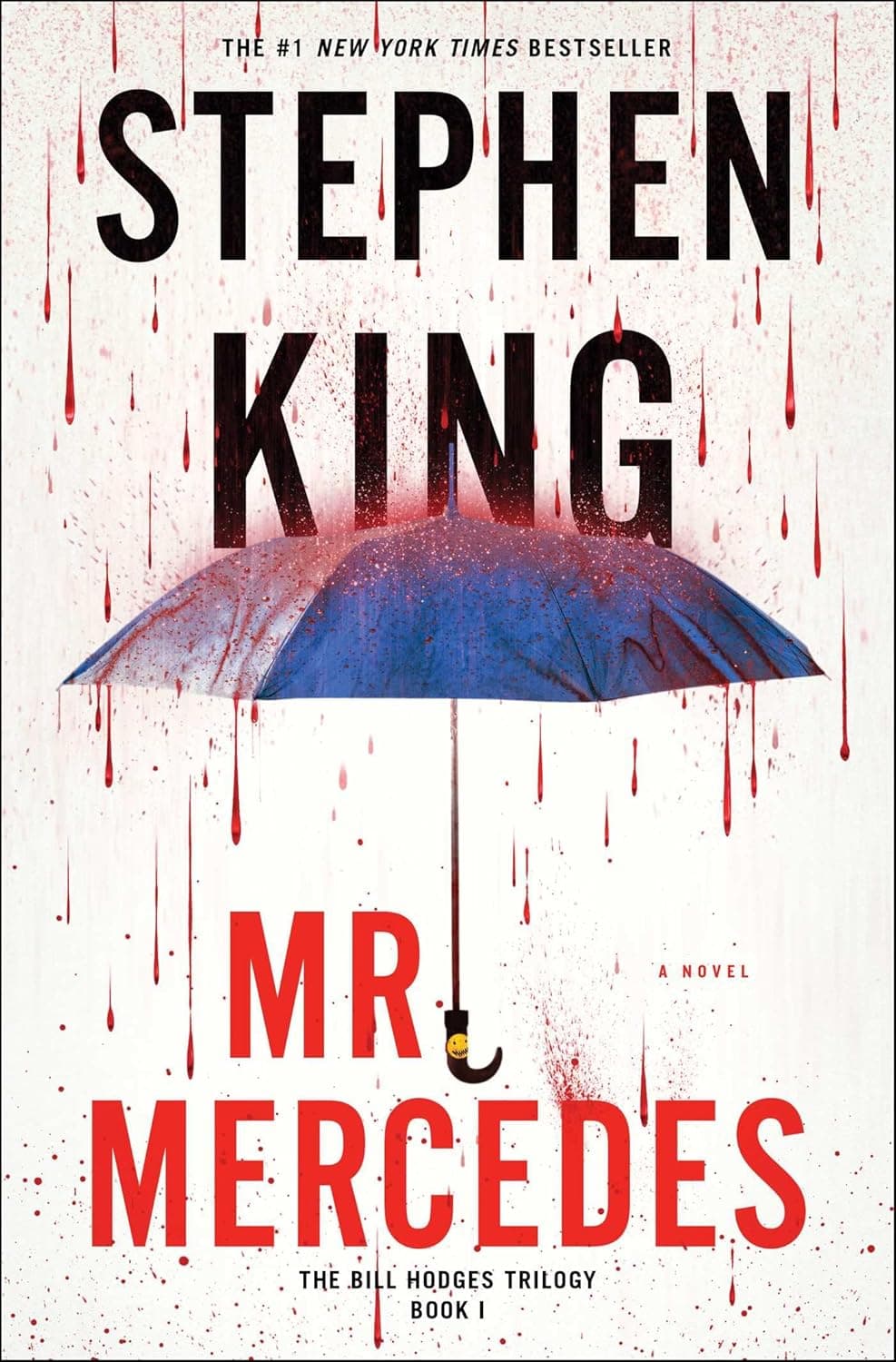
Opening
A tragedy detonates Brady Hartsfield’s world, snapping the cat-and-mouse chase into open war. As Brady Hartsfield spirals after a grotesque accident at home, K. William Hodges builds a fragile circle of trust—and a path toward the truth. The clock starts ticking toward a crowded concert where innocence and malice are on a collision course.
What Happens
Chapter 71: Murphy’s Law
Brady comes home to find his mother, Deborah Ann Hartsfield, dead on the living room floor—victim of the poisoned hamburger he meant for the Robinsons’ dog. The stench, the twisted face, and the vomit freeze him in a numb, clinical horror. He fixates on Murphy’s Law, even looking up its origin online, as if trivia can hold back grief.
Blaming Hodges for “forcing” his hand, Brady wrestles with the body. He vetoes the basement—his “control room”—and drags his mother upstairs, her pajama pants slipping, the incestuous past flashing in sickening beats. Unable to clean or redress her, he covers her entirely on the bed, shutting the eyes he can’t face. The scene lays bare Dysfunctional Family Dynamics: Brady can manage logistics, not loss.
Chapter 72: Call for the Dead
Rage replaces shock. Brady logs into Debbie’s Blue Umbrella and sends Hodges a direct, unambiguous threat: “I’m going to kill you. You won’t see me coming.” The shift from riddles to a death promise marks a stark escalation in their Good vs. Evil duel.
The narrative cuts to the glow of DeMasio’s Italian Ristorante. Hodges dines with Janelle "Janey" Patterson and Jerome Robinson; warmth and quick rapport replace the novel’s chill. Janey gifts Hodges a brown fedora—playful and pointed. Conversation turns to Janey’s pushy relatives, including her anxious cousin Holly Gibney, who surprises Janey by being “very taken with” Hodges.
Chapter 73: A Path of Investigation
Work follows the wine. Hodges hands Janey and Jerome full case folders—a safeguard in case anything happens to him—and falsely claims the killer hasn’t contacted him again. The lie protects them while exposing them, embodying Hodges’s impulse toward Vigilantism and Justice Outside the Law. He tells them to “BOLO our asses off,” coaching Jerome to note any vehicle that reappears on his street.
Then Hodges pivots: “What if Olivia Trelawney actually did hear ghosts?” He reframes Olivia’s “hauntings” as engineered by the killer, a signal that Brady uses tech to stage the supernatural. Hodges follows the thread toward Technology and Modern Crime, trusting that if he tracks method, motive will surface.
Chapter 74: A Dopey Boy Band
Outside the restaurant, Jerome tosses off a complaint that lands like a seed. His mother lost a family draw and has to chaperone his little sister Barb and her friends to a ’Round Here boy-band concert at the MAC on Thursday. He jokes about the ordeal—“vanilla pudding” for the ears—but the detail hangs in the air, quiet and ominous.
Jerome heads home. In the lot, Janey and Hodges choose tenderness over solitude. Janey asks if they’re going to his place; he says yes. Their bond, quickened by danger, offers the calm that Brady’s life pointedly lacks.
Chapter 75: Two Houses
At Hodges’s, intimacy becomes ease. They talk beers and family—Hodges’s estranged daughter Allie included—and Janey asks him to attend her mother’s viewing and memorial. He agrees, both for her and as a chance to spot Mr. Mercedes. They sketch the logistics of the service and dreaded reception.
Across town, the air turns cold. Brady sits in his basement “control room,” inert amid parts for a suicide vest. The images of his mother’s death play on a loop. Sunk in Guilt and Responsibility, he contemplates abandoning the ’Round Here plan, even killing himself to silence the “snapshots from hell.” The story splits into two houses: one where connection steadies a man, one where solitude devours him.
Character Development
These chapters harden the stakes and expose fault lines. Love and alliance give Hodges momentum. Loss and rage unmask Brady’s fragility.
- Brady Hartsfield: Shock calcifies into vengeance; the threat he sends is his most naked move yet. Still, grief punctures his control—he’s depressed, self-loathing, and briefly suicidal, proof his sociopathy is brittle under real loss.
- K. William Hodges: From retired drifter to self-directed investigator, he builds a team and a plan. His lie about new contact reveals a protector’s instinct with a risky blind spot.
- Janelle “Janey” Patterson: Shifts from client to partner to lover. She seeks emotional steadiness, keeps her humor, and pushes forward despite grief.
- Jerome Robinson: Empathetic, sharp, and proactive. His offhand concert detail becomes the crucial lead he doesn’t yet recognize.
Themes & Symbols
Brady and Hodges embody isolation versus community. While Brady stares into a void of his own making, Hodges eats, laughs, and plans with allies. That contrast charges the story’s heartbeat: evil isolates; connection resists.
The banality of evil surfaces in Brady’s procedural response to his mother’s corpse—dragging, covering, googling Murphy’s Law—as if cleanup can replace contrition. Elsewhere, Hodges’s embrace of a tech-based theory traces how modern predators manipulate perception and fear. The brown fedora Janey buys him signals a threshold crossed: the “Det-Ret” becomes a self-chosen detective, not by badge but by purpose. Vigilante instincts drive him, but responsibility—personal and professional—defines the edge he walks.
Foreshadowing hums in casual talk: the MAC concert, a joke for Jerome, a silent gong for the reader. King hides disaster inside the ordinary, building dread through everyday chatter.
Key Quotes
“I’m going to kill you. You won’t see me coming.”
Brady’s message abandons riddles for a death vow. It transforms a psychological duel into an imminent, physical threat and confirms he now moves on anger rather than strategy.
“BOLO our asses off.”
Hodges blends cop lingo with urgency to deputize his makeshift team. The line captures his shift from solitary thinker to collaborative hunter—and the ethical gray of pulling civilians into danger.
“What if Olivia Trelawney actually did hear ghosts?”
This question reframes the case. Hodges recognizes “hauntings” as engineered illusions, steering the investigation toward digital manipulation and the killer’s reliance on tech.
“Whatever can go wrong, will go wrong.”
Brady’s fixation on Murphy’s Law reads as self-indictment. His own contingency—poison for a dog—rebounds to destroy his mother, exposing the rot beneath his illusion of control.
Why This Matters and Section Significance
These chapters flip the switch from cat-and-mouse to pursuit. Brady’s accidental matricide erases his last human tether and accelerates his timetable, while his explicit threat forces Hodges to consolidate allies and commit to a tech-driven theory.
The ’Round Here concert drops the endgame on the board. The dinner at DeMasio’s cements the team—Hodges, Janey, Jerome—that will confront Brady, and the romance gives Hodges a reason to live beyond the case. The narrative now races toward a public arena where private malice seeks maximum harm—and where connection might be the only counterforce strong enough to stop it.