Opening
Grief and resolve collide as Hodges and Janey shoulder family obligations, quiet guilt, and a growing determination to bring Mr. Mercedes down. Across town, Brady’s home turns into a horror scene that snaps his last tether to ordinary life. The section locks the protagonists into a shared mission while freeing the antagonist to become even more dangerous.
What Happens
Chapter 66: The Deathwork
After the death of Janelle "Janey" Patterson's mother, she and K. William Hodges tuck into a hospital side room and move briskly through logistics. Hodges, steady and practiced, calls the funeral home that handled Olivia Trelawney and arranges release of the body. Janey composes and submits her mother’s obituary on her iPad, her voice steady until she speaks with the longtime nurse. When the hearse arrives, Hodges signs the death certificate, takes the receipt, and finds Janey outside; they sit shoulder to shoulder, watching the hearse pull away, then head to a Holiday Inn.
That night, Janey’s relatives arrive: Uncle Henry Sirois, large and perpetually hungry; Aunt Charlotte, thin, sharp, and suspicious; and their daughter, Holly Gibney, withdrawn and anxious, eyes down and murmuring to herself. Dinner is stiff. Charlotte rails about flights and salad dressing while Hodges tries to smooth the edges with “security job” stories that are really sanitized police tales. Over dessert, Janey invites them to stay at her mother’s Sugar Heights home.
Back at the hotel, Janey asks Hodges to sleep with her for comfort—no sex, just not being alone. He says yes. In the night, he wakes to find her by the window, crying and choking on Guilt and Responsibility about the nursing home, about leaving Olivia to carry the weight while she lived in California. He holds her. They fall asleep spooning.
Chapter 67: I’m Going to Fuck You Up, Grampa
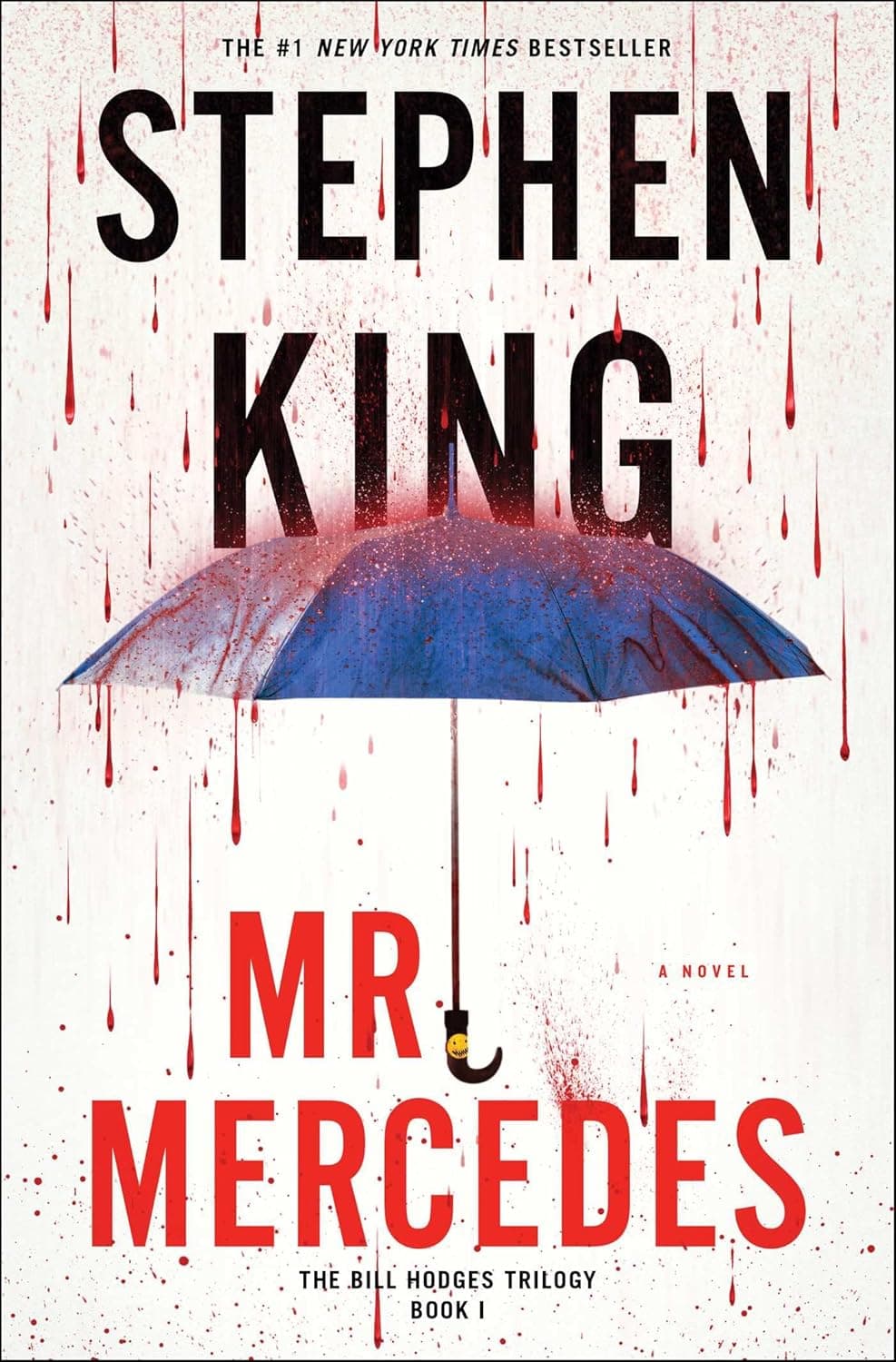
In the morning, Hodges opens Debbie’s Blue Umbrella on Janey’s iPad and finds a fresh message from Brady Hartsfield: “I’m going to fuck you up, Grampa.” Hodges laughs at its bluntness; Janey doesn’t. He decides the “Happy Slapper” won’t cut it anymore and resolves to carry his old service weapon. Aunt Charlotte calls mid-conversation to complain about their room and summons them to breakfast.
On the way, Hodges asks if Olivia’s computer is still at Sugar Heights. He wants Jerome Robinson to examine it—not for the Blue Umbrella traces, but for the “ghosts” Olivia thought she heard. They’ll wait until the nosy relatives leave. Janey brightens as they laugh over Hodges mishearing Holly’s order as “sneezebagel hellbun,” a fleeting moment of levity in an increasingly fraught time.
Chapter 68: This Is Ours
Riding the elevator, Hodges asks the question he dreads: could his digging into Olivia have triggered Janey’s mother’s fatal stroke? Janey says it’s possible…but she doesn’t regret it. She argues that her mother has had a full life, while Olivia was robbed of hers by the “cuckoo bird” who stole her car and, through psychological torture, her sanity.
She grips Hodges’s hands. “This is ours, Bill. Do you get that? This is ours.” The investigation shifts from Hodges’s private obsession to their shared crusade. When the doors open, Aunt Charlotte is there, frowning, and Hodges braces for long, hard days—while feeling the bit slide between his teeth.
Chapter 69: The Poisoned Meat
While Hodges and Janey slog through grief and logistics, Brady returns from a good day selling ice cream, takeout in hand for Deborah Ann Hartsfield. The house reeks of burnt meat; wet, ragged sounds spill from the living room. In the kitchen: a greasy skillet and a half-finished vodka bottle. Dread surges. Brady tears open the main fridge, then the mini-fridge in the garage. The baggie of hamburger he laced for Jerome’s dog is half-empty.
Back in the living room, Deborah convulses on the couch—rigid, belly swollen, vomiting blood. Her eyes bulge; her feet drum against the floor. She wrestles out, “Caw… nie… wha… whan!”—Call 911. Brady lifts the phone, then sets it down. A call invites discovery of everything. He watches her agony crest—and runs downstairs to his sanctuary to shut it out.
Chapter 70: Murphy’s Law
In the basement, Brady’s voice-activated system fails; he has to boot everything by hand. He could look up antidotes, but he already knows there’s no time. He reconstructs the chain: she got drunk, foraged, found the poisoned meat. He wraps himself in Murphy’s Law—whatever can go wrong, will—pretending that makes it an accident and not the predictable result of his own malice.
He numbs himself: web surfing, solitaire, The Staple Singers murmuring in his ears. He even checks Debbie’s Blue Umbrella for Hodges’s messages while his mother dies overhead. When he finally climbs the stairs, she’s dead on the floor, body twisted grotesquely. A brief pang flickers—and collapses into blame. This is Hodges’s fault. It all leads back to him. Brady’s practical mind clicks on: do they have carpet cleaner? He settles in to plan the disposal, darkly amused that no one will miss her.
Key Events
- The Gibneys arrive, bringing tension, judgment, and the first appearance of Holly.
- Janey claims the investigation as “ours,” binding her to Hodges in purpose and resolve.
- Deborah eats the poisoned hamburger intended for Jerome’s dog and dies in a brutal seizure.
- Brady refuses to call 911, hides in the basement, and distracts himself until the death is certain.
- Brady shifts blame to Hodges, hardening his path toward revenge.
Character Development
The section deepens grief, purpose, and monstrous detachment, clarifying who will risk themselves for others—and who never will.
- K. William Hodges: Patient, competent, and protective, he manages grim logistics and comforts Janey. The threat pushes him to rearm, confirming his willingness to act outside official structures.
- Janelle “Janey” Patterson: Efficient in crisis, she owns her grief and converts it into mission. Her “This is ours” redefines the case and her relationship with Hodges.
- Brady Hartsfield: His psychopathy crystallizes. Faced with his dying mother, he chooses distance, distraction, and rationalization. The last vestige of his ordinary life is gone.
- Deborah Ann Hartsfield: A victim of abuse and addiction, she dies horribly from her son’s poison—a devastating endpoint to a toxic bond.
- Holly Gibney: Introduced as jittery, literal, and awkward, she makes a quiet first impression that will echo through the trilogy.
Themes & Symbols
The collision of compassion and cruelty foregrounds Good vs. Evil. Hodges and Janey answer death with care, partnership, and responsibility; Brady answers with self-preservation and vengeance. The same domestic setting—beds, kitchens, a living room couch—becomes either a space of comfort or a stage for atrocity, underlining the thin line between ordinary life and nightmare.
The section also exemplifies The Banality of Evil. Brady listens to music, plays solitaire, and scans a message board while his mother dies above him. His evil isn’t operatic; it’s logistical, convenience-driven, and steeped in numb routine. That banality sits inside a broader pattern of Dysfunctional Family Dynamics, contrasting the Gibneys’ grating but dutiful cohesion with the Hartsfields’ corrosive, fatal intimacy. Meanwhile, Janey’s window-side breakdown crystallizes Guilt and Responsibility as a moral hinge: human guilt spurs accountability; Brady’s lack of it enables annihilation.
Key Quotes
“I’m going to fuck you up, Grampa.”
Brady’s message strips away pretense. The taunt is personal and overt, escalating the duel. It jolts Hodges into arming himself and underscores Janey’s fear, sharpening the stakes for both.
“This is ours, Bill. Do you get that? This is ours.”
Janey reframes the case as a shared vow. The pronoun shift—ours—turns grief into agency, cementing a partnership that runs on love, rage, and justice.
“Caw . . . nie . . . wha . . . whan!”
Deborah’s mangled “Call 911” lays bare a desperate will to live. The plea spotlights Brady’s moral void: he chooses secrecy over salvation, proving that his self-preservation trumps even the most basic human bond.
“Whatever can go wrong, will go wrong.”
Brady hijacks Murphy’s Law as a shield against blame. The aphorism becomes an alibi, revealing his habit of converting intention into “accident” and responsibility into fate.
Why This Matters and Section Significance
Deborah’s death is the novel’s sharpest catalyst since the Mercedes massacre. It severs Brady’s final tie to any semblance of normalcy and frees him to pursue vengeance without restraint. His cold, procedural reaction marks a point of no return.
For the protagonists, shared mourning forges commitment. Janey’s claim—“ours”—turns a solitary investigation into a united crusade, deepening her bond with Hodges and clarifying the moral stakes. The introduction of Holly plants a quiet seed that will grow into a key alliance. Together, these chapters lock the story onto a collision course: a partnership galvanized by empathy versus an antagonist unbound by it.