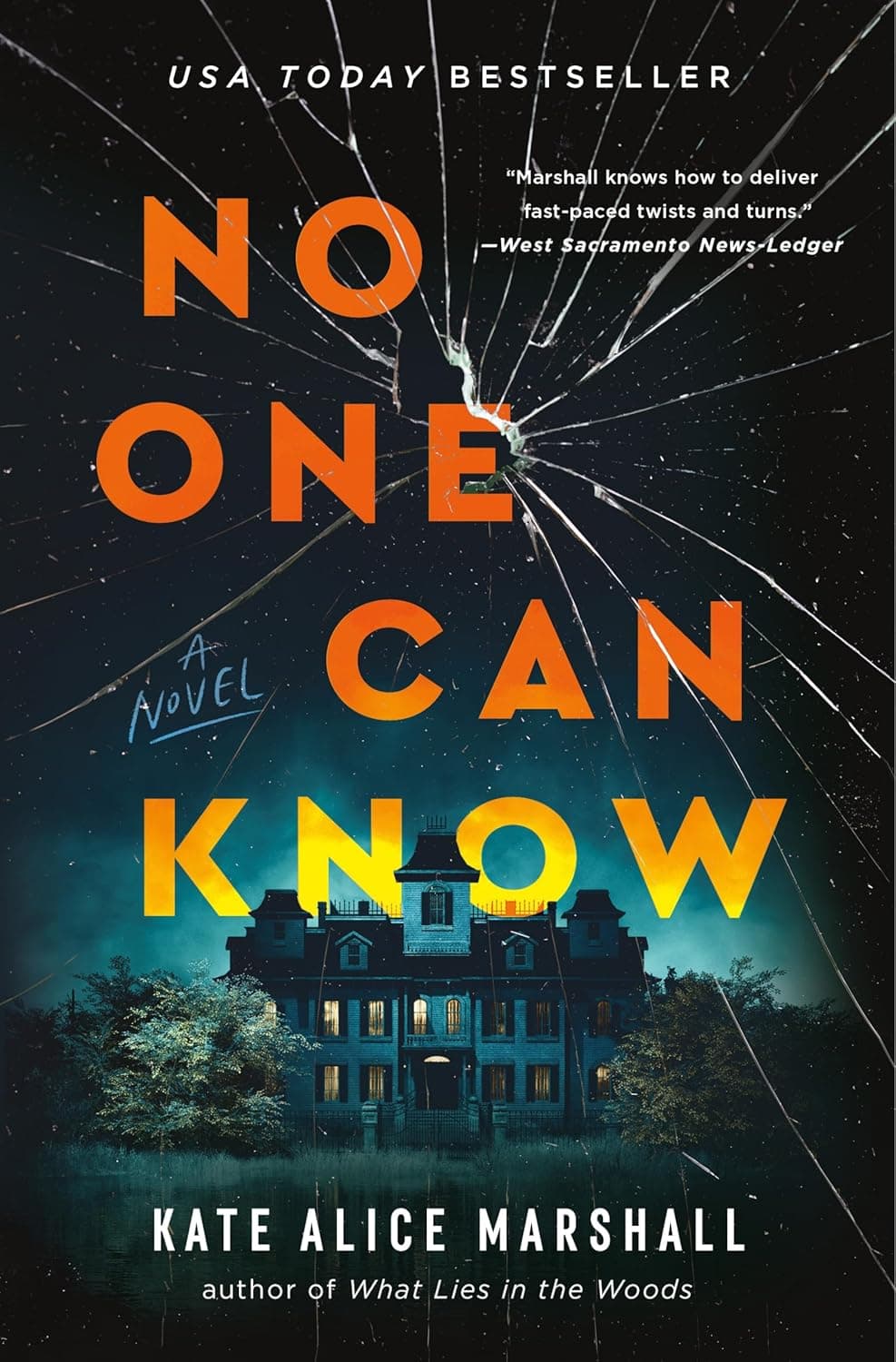
Opening
Emma returns to her childhood home and peels back layers of rot—on the walls and in her past. As renovations stir old memories, new evidence shifts suspicion toward her seemingly perfect sister, Juliette, while Emma’s marriage buckles under secrets, jealousy, and the corrosive legacy of abuse.
What Happens
Chapter 16: A Daisy in the Rubble
In the wreckage of her childhood house, Emma Palmer works through morning sickness and drywall dust while her husband, Nathan Gates, runs errands. A fist-sized hole in the wall—one she believes her father made—pushes her to call her former lawyer, Chris, and ask whether her father, Randolph Palmer, had enemies. Chris warns her off: “You are safer forgotten.” But he adds a bombshell—months before the murders, Emma’s mother, Irene Palmer, privately told him she had information on something illegal Randolph was doing and feared she’d be implicated. Emma flashes back to a hidden flash drive and a green Post-it she found as a teen, deepening the pattern of Secrets and Lies.
Teenagers hurl something at the house and sprint into the woods. Emma gives chase to the ruin of the Saracen house, confronts Travis and Abraham, and learns they only meant to scare the town “murderess,” not break in. Poking through graffiti and smashed glass, Emma notices a tiny carved daisy on a doorframe—the private signature of her sister, Juliette "JJ" Palmer. The sight rewrites Emma’s certainty about Juliette’s primness and whereabouts the night of the murders, an early rupture in The Past's Influence on the Present. Emma texts Gabriel Mahoney: We need to talk about Juliette.
Chapter 17: The Grandmother’s Story
Emma visits Gabriel’s home. His grandmother, Lorelei, is brittle with old anger but lets her in. Gabriel admits he saw Juliette at the Saracen house and assumed she was hooking up with Logan Ellis, the police chief’s son. In a tense exchange, he confesses he once suspected Emma—she’d said she wanted her parents dead and fled the house that night—but he never told the police, protecting her even when he was the prime suspect.
Emma says her pregnancy forces her to face the truth—she won’t raise a child under the shadow of a public “murderer.” Talk turns to Gabriel’s father, Kenneth, whom Randolph fired for alleged theft. Lorelei bursts in to correct the record: Kenneth discovered shady “weights on the trucks” at the Palmer business and brought it to Randolph; the next day, Randolph fired him and smeared him as a thief. Kenneth tried to report it to Chief Ellis, but the chief was drunk and dismissed him. The story widens the circle of motive, tying the murders to business corruption and the churn of Family Trauma and Dysfunction. Lorelei adds one last twist—after disappearing for years, Kenneth slipped back into town right around the time of the murders.
Chapter 18: Nine Hours Before
A flashback drops us into the evening of the murders. Emma hides in the sunroom, assembling an art portfolio for UCLA—far beyond the “one-hour radius” her parents allow—when her youngest sister, Daphne Palmer, summons her to their father’s study. Randolph and Irene have found the application. The confrontation ignites. Emma, done with hypocrisy, calls out her father’s serial affairs. Irene slaps her for “disrespect,” and Emma realizes with horror that her mother has known all along.
Irene leaves. Randolph’s violence escalates. He hits Emma in the stomach and ribs. Upstairs, Emma finds Irene methodically slicing her paintings with a utility knife. Emma lunges; Randolph punches her in the face. He rips up every piece of her portfolio—her ticket out—until nothing remains. Emma, shaking and blazing with fury, spits “Fuck you” and bolts from the house. She knows worse punishment waits when she returns, but the murder of her art feels like the worst has already happened.
Chapter 19: The Photograph
Back in the present, Emma comes home to a drunken, furious Nathan. He used a phone tracker and knows she visited Gabriel. He accuses her of obsession, of “lying and sneaking around,” and in the heat of it all realizes he didn’t even know she used to be a painter. Emma admits she let her dream die after the murders because “you lose a dream and it starts to hurt to even remember you ever had it.” Pressed hard, she slips: “We promised. All of us,” hinting at a pact among the sisters about that night.
A text from Gabriel arrives: a years-old photo inside the Saracen house. Juliette looks skittish, her arm around Logan Ellis. She wears a red flannel and oversized Doc Martens—the same clothes Emma remembers when Juliette crept home in the early morning after the murders. The image is proof: Juliette is at the party and wearing someone else’s clothes. Emma hides the photo from Nathan. She thinks about what it means to accuse a sister, the weight of love and damage, and admits that the first feeling she had upon seeing her mother’s body was relief—an unsettling fracture between Truth vs. Perception.
Chapter 20: The Kiss
Another flashback shifts to Juliette. After overhearing Emma’s blowup, she waits out the house. Irene peeks in and calls her the one child she doesn’t have to “worry about,” cementing Juliette’s perfect-daughter mask. Once her parents retreat, Juliette sneaks out, trading her prim armor for revealing clothes and borrowed boots. Daphne watches from the treehouse; the sisters share a wordless look that captures Sisterhood and Shifting Loyalties.
Logan meets Juliette with a pill and bourbon, and they head to the Saracen party. Juliette frames her secret life as rebellion—a way to prove she’s not who they think she is. The night drags until Nina arrives. Juliette brightens; they dance, the room chanting for a kiss. When Nina leans in, Juliette kisses her. The moment snaps her fantasy world into painful clarity. Panicked, cracked open by desire and fear, she runs into the night.
Character Development
In these chapters, masks slip. Private selves and public narratives collide, forcing characters to redefine each other and themselves.
- Emma Palmer: Shifts from avoidance to pursuit, contacting sources, chasing leads, and confronting her past. Her pregnancy anchors her resolve. The Chapter 18 flashback deepens her trauma and clarifies her rage.
- Juliette Palmer: Reframed from perfect daughter to conflicted rebel. Her secret nightlife, drug use, and queer desire expose a fractured identity straining against family expectations.
- Nathan Gates: Supportive spouse turns controlling partner—drinking, tracking, and jealousy reveal insecurity and a demand for transparency Emma cannot meet.
- Gabriel Mahoney: Complicated and loyal; he harbors doubts about Emma yet protects her. He becomes a vital conduit for information about Juliette and the Palmer business.
- Randolph and Irene Palmer: Unmasked as abusers. Their violence and control—physical, emotional, and artistic—supply motive for familial hatred and silence.
Themes & Symbols
Secrets detonate lives. Hidden flash drives, private investigations, the sisters’ pact, Juliette’s double life, and Emma’s concealed history with Nathan fuse into a web that drives the plot and isolates each character. The present-tense investigation is inseparable from the buried past; every new clue (the carved daisy, the photo, Kenneth’s story) drags fourteen-year-old sins into today’s living room.
Family dysfunction permeates every scene—parents who police distance and ambition, who punish with fists and destroy art, shape daughters who lie, run, and fracture. The novel interrogates how perception fails truth: the town’s respectable Palmers are monsters at home; the “perfect” sister is a closeted rebel; the “murderess” is a survivor. Renovating the house becomes a metaphor for remaking memory and identity.
Symbols sharpen the stakes. Emma’s portfolio is her selfhood and exit route; its destruction is a spiritual killing. The Saracen house functions as a liminal zone—outside Arden’s rules—where teens build secret identities and where the past leaves physical marks, like Juliette’s daisy carved into wood.
Key Quotes
“You are safer forgotten.”
Chris’s warning crystallizes the danger of reopening old wounds. It frames the investigation as a choice between safety and truth—and signals that powerful people benefited from burying the past.
“Fuck you.”
Emma’s defiance after the annihilation of her art marks a point of no return. It is a survivor’s cry, severing the performative obedience that sustained her parents’ control.
“You lose a dream and it starts to hurt to even remember you ever had it.”
Emma’s confession exposes the long tail of trauma: self-erasure. It also shows Nathan how little he knows about her, widening the marital rift and underscoring the cost of silence.
“We promised. All of us.”
This slip reveals a sisters’ pact and reframes the case as a collective act of secrecy. It raises new questions: What did they see? What do they owe each other—and the truth?
“She could believe that Juliette had harmed her parents, but she couldn’t stand the thought of someone else believing it—or believing it without also loving her. Without understanding what it had been like in this house.”
Emma draws a line between judgment and understanding. The quote articulates the novel’s moral core: truth must be read through love and context, not headlines and suspicion.
Why This Matters and Section Significance
This stretch pivots the investigation. Suspicion shifts from Emma and Gabriel toward Juliette, whose hidden life provides opportunity and motive for secrecy if not violence. The brutally intimate flashback redefines the victims—Randolph and Irene—as perpetrators, transforming the mystery from a simple whodunit into a why-dunit rooted in generational harm.
At the same time, external forces—Randolph’s corrupt business, Kenneth’s silenced whistleblowing—suggest the murders may intersect with a larger conspiracy. Internally, Emma’s marriage buckles as truth presses in, making her present as volatile as her past. What began as home repair becomes excavation: of rot, memory, and the dangerous love that binds sisters to a shared, ruinous night.