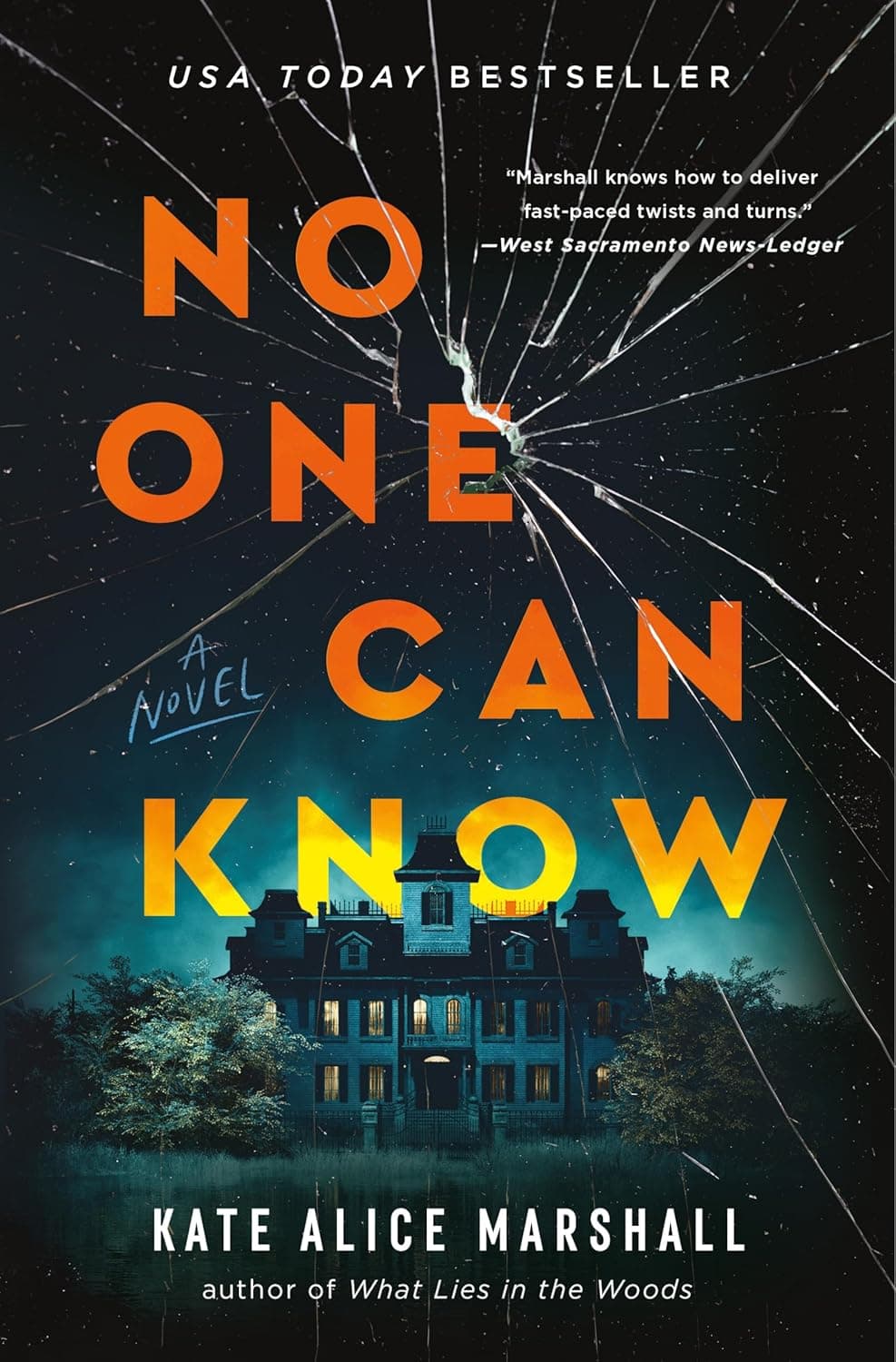
Opening
Fireworks misheard as gunshots jolt Emma Palmer and Nathan Gates awake, igniting a spiral of suspicion that pushes their fragile marriage toward collapse. As old wounds reopen, the web of Secrets and Lies expands: a locked carriage house, a resurfaced arsenal, a bartender with the town’s dirtiest whispers—and, finally, a sister’s bombshell about a hidden gun. The section pivots the story from simmering domestic tension to high-stakes thriller.
What Happens
Chapter 21: Fireworks and Firearms
A crack of night explosions sends Emma and Nathan scrambling, only to realize it’s fireworks—not gunshots. Nathan’s paranoia spikes; he installs security cameras, a constant reminder of his surveillance and mistrust. Emma’s morning sickness overwhelms her, and when her estranged sister Juliette "JJ" Palmer arrives with the carriage house key Nathan asked for, JJ steadies her, and the sisters briefly bond over their chaotic childhood—an uneasy nod to Family Trauma and Dysfunction.
Inside the murder house, JJ walks Emma through their parents’ deaths with clinical precision: Randolph Palmer is shot in the back of the head—“didn’t see it coming”—and Irene Palmer bleeds out over minutes. The forensic detail unnerves Emma, who presses JJ about sneaking out to meet Logan Ellis the night of the murders. Nathan returns, and the tension spikes: he admits he called JJ behind Emma’s back and then produces a duffel bag from storage filled with Randolph’s guns. He brandishes a Glock, saying they need protection. Emma, horrified by weapons in a house steeped in violence, demands they go. She storms off, the fight unresolved—and the guns now inside the home.
Chapter 22: The Breaking Point
Emma wakes alone; Nathan’s already in the carriage house. In the quiet, she sees her marriage with new clarity: years of appeasement, deflection, and self-erasure—a pattern learned from her parents’ volatility and proof of The Past's Influence on the Present. She decides she won’t bend anymore.
On the kitchen table sits the disassembled Glock. Muscle memory from an unwanted childhood education takes over: she cleans and reassembles the gun with practiced calm, a ritual that feels like both reclamation and violation. When Nathan returns, their argument exposes a buried truth—Randolph used to point guns at his daughters as a “joke.” Emma locks the Glock in the cabinet and keeps the key. That night, the conflict explodes. Nathan, shut out and suspicious, suggests terminating the pregnancy, accuses her of hiding something, and grabs her arm. Emma realizes nothing she says will satisfy him—and leaves, choosing distance over destruction.
Chapter 23: The Bartender’s Confession
Emma drives to Wilson’s, the local dive, to confront Logan Ellis, JJ’s old flame and the retired detective’s son. Logan confirms he and JJ fought at the Saracen party; she ran into the woods after he gave her pills—oxy or benzos. Then he upends Emma’s understanding of her family. Irene, he says, bought prescription pills from him for five years. Maybe she escalated to heroin; maybe she found another dealer. And Randolph? Logan hints at illicit business: he got paid to move mysterious cargo and tells Emma to ask Gabriel Mahoney why his father was fired from Randolph’s company. Randolph, he warns, kept dangerous company.
Logan is smooth, withholding, and a little menacing—the keeper of Arden Hills’ secrets. He pours Emma a shot, and she drinks it, despite her pregnancy, a measure of her distress. Before she leaves for Nathan, she gives him her number. The investigation has widened: her parents’ secrets may be darker, and more public, than she ever imagined.
Chapter 24: The Night Of (Juliette’s Flashback)
From JJ’s point of view, the night of the murders unspools. At the Saracen house, she’s drunk, high, and spiraling after a sexual encounter with Logan and a girl named Nina that leaves her shaken. “I don’t like girls,” she tells Logan; he shrugs it off. The moment triggers a deeper memory: Randolph catching her kissing a boy and later aiming a gun at her, saying he’d rather his daughters be “dead than whores.” Terror, shame, and rage crash over her.
JJ shoves Logan and sobs. Nina comforts her and offers a ride, but when Nina goes for the car, JJ panics—afraid of being alone with someone who might know too much. She sees headlights and stumbles into the woods toward home. Her memory fades to black. The hours before the murders disappear into a blackout.
Chapter 25: The Hidden Gun
Back in the present, JJ hides out in a grim Arden Hills motel, haunted by a fragment—“Yellow wallpaper, white grip, red hand”—and replaying a fight with her partner, Vic, who warned that returning home is a “trap.” She admits the truth: if she’d told police about the blackout and the fight with Logan, she—not Emma—would have looked like the prime suspect, complicating Sisterhood and Shifting Loyalties.
An unknown number rings. It’s their estranged sister, Daphne Palmer—brisk, impatient, and alarmed that Emma is at the house. Daphne drops a revelation that rewrites everything: there was another gun. “I hid it in the carriage house,” she says. JJ goes cold. She just gave Nathan the keys to the exact place where Daphne’s been hiding evidence for fourteen years. The section ends on a cliff: the sisters’ secrets are more dangerous than Emma ever knew.
Character Development
The sisters’ past collides with Emma’s present, forcing everyone to reveal who they are under pressure—protector, aggressor, witness, or keeper of the most damning truth.
- Emma Palmer: Stops appeasing, reclaims agency, and becomes an active investigator. Cleans and locks away the Glock, confronts Nathan, seeks answers from Logan, and chooses self-preservation when the marriage turns coercive.
- Nathan Gates: Fear curdles into control—cameras, guns, interrogation. His suggestion of termination and physical intimidation echo Randolph’s tactics, darkening his moral shading.
- Juliette “JJ” Palmer: The tough exterior fractures. Her flashback exposes sexual confusion, substance use, and terror instilled by Randolph. Her blackout renders her both unreliable and vulnerable.
- Daphne Palmer: Enters as a decisive catalyst. Her confession about the hidden gun reveals a years-long cover-up and positions her as a pivotal holder of the truth.
Themes & Symbols
Secrets and Lies: The single question of Emma’s “secret” expands into a lattice of deceptions: Irene’s pill addiction, Randolph’s criminal dealings, JJ’s blackout and sexuality, Daphne’s concealed weapon. Each revelation collapses the family myth and redraws the stakes.
Family Trauma and Dysfunction: Randolph’s cruelty warps his daughters’ sense of safety and self. Emma recognizes the lineage of abuse in Nathan’s behavior, and JJ’s breakdown shows trauma’s immediate, devastating power inside a single night.
The Past’s Influence on the Present: Emma’s reflexive gun handling, Nathan’s escalating suspicion, and the sisters’ estrangement all flow from childhood patterns. The home itself functions as a pressure chamber, forcing old roles to replay until someone breaks them.
The Gun (symbol):
- Randolph’s power and control, literalized in his collection.
- Nathan’s fear masquerading as protection.
- Emma’s inheritance of violence turned into a bid for control.
- Daphne’s “second gun” as a concrete, plot-driving object—the likely key to the murders.
Truth vs. Perception: Competing narratives—Logan’s insinuations, JJ’s blackout, Nathan’s accusations—underline how precarious “truth” is when memory, fear, and self-interest distort it. The hidden gun promises evidence, but the sisters’ fractured perspectives complicate what it will mean. (Truth vs. Perception)
Key Quotes
“He didn’t see it coming.”
- JJ’s forensic description of Randolph’s execution-style death is chillingly detached, revealing both her intimate knowledge of the crime and the emotional distance she’s constructed to survive it.
“I don’t like girls.”
- JJ’s confession to Logan exposes her vulnerability in a moment that should invite care; his dismissal deepens her shame and accelerates her flight into the woods, setting up the blackout.
“Dead than whores.”
- Randolph’s threat, delivered with a gun in hand, crystallizes the family’s terror. It explains the sisters’ lifelong hypervigilance and foreshadows Nathan’s slide into coercion.
“I hid it in the carriage house.”
- Daphne’s admission reframes the entire mystery. It introduces a tangible object that could verify or shatter memories and instantly raises the stakes for all three sisters.
“Yellow wallpaper, white grip, red hand.”
- JJ’s sensory fragment compresses place, weapon, and blood into one hard shard of memory, hinting at proximity to the gun and the murders without supplying a full narrative.
Why This Matters and Section Significance
- Breakage of the Core Bond: Emma and Nathan’s relationship hits a point of no return, isolating Emma and forcing her into the lead investigator role.
- Expansion of the Mystery: Logan’s revelations connect the Palmer murders to addiction pipelines and potential organized crime around Randolph’s business.
- Reframing the Sisters: JJ’s interiority recasts her as a traumatized, unreliable witness rather than a simple antagonist; Daphne’s entry reveals a long-term cover-up that may trump Emma’s “secret.”
- The MacGuffin Emerges: The hidden gun becomes the beating heart of the plot—everyone’s choices now orbit the search for it, and what it will prove.