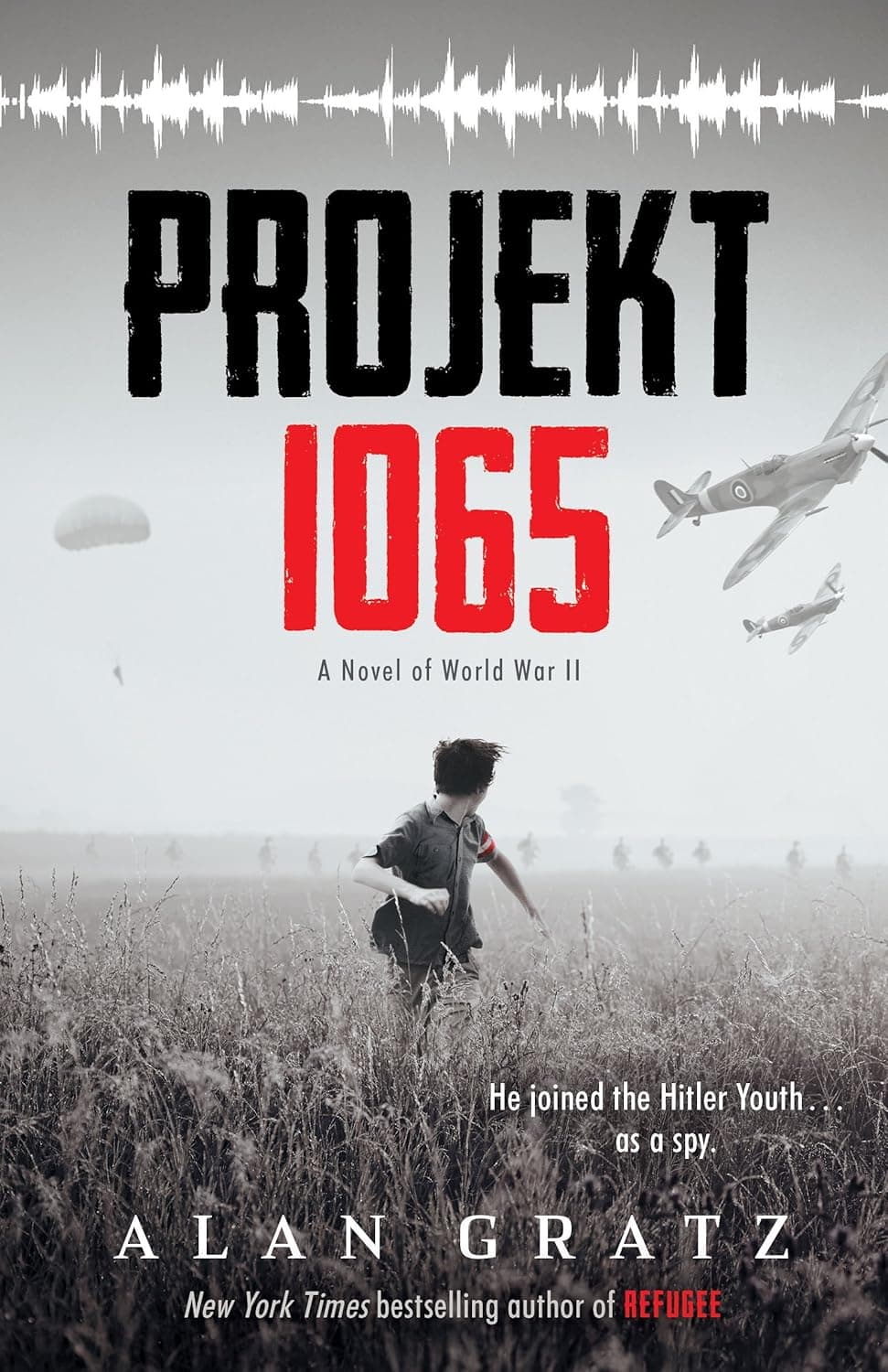
Herr Professor Doktor Major Melcher
Quick Facts
Aging World War I veteran and former university professor, now condemned to teach Nazi “applied mathematics” to Hitler Youth boys in Berlin. First seen at Michael O'Shaunessey’s school, Melcher wears a brown wool suit instead of a uniform, his bristly white mustache and a liver spot “the shape of Czechoslovakia” suggesting both age and a map of the Europe he’s losing. Key relationships include Michael (a silent kindred spirit) and the Hitler Youth boys—especially Fritz Brendler—who ultimately become his accusers. Arrested after a public classroom defiance.
Who They Are
At his core, Herr Professor Doktor Major Melcher is an embattled remnant of Germany’s humanistic, scholarly tradition—an intellectual forced to feed a militarized curriculum to children trained for obedience. His very titles—Professor, Doctor, Major—stack up like a résumé of a vanished Germany; his suit and sarcasm signal he no longer belongs to the one he serves. Melcher’s presence makes visible how ideology hollows out institutions, turning classrooms into parade grounds and students into informants, a living emblem of The Corrupting Influence of Ideology.
Personality & Traits
Melcher blends razor-edged wit with exhausted despair. He meets indoctrination with irony, yet that irony is a shield that keeps cracking. Even his insults—“little wretches,” “ignoramuses”—double as a lament for the death of rigor and curiosity.
- Cynical, weaponizing sarcasm: He undercuts Nazi pageantry with barbs that only sound like jokes if you miss the grief behind them. Quipping that students will “keep warm today by burning books,” he exposes the moral inversion of a regime that makes culture into fuel.
- Disillusioned intellectual: He yearns for “the mathematics of the heavens” (calculus), resenting his forced pivot to “the mathematics of firebombs and distances marched,” a bitter summary of science repurposed for conquest.
- Passive resistor turned open dissident: Long a “fellow faker” in Michael’s eyes, Melcher masks contempt with compliance—until grief rips off the mask. He then dismantles Nazi racial theory aloud, choosing truth over survival.
- Tragic, self-aware defiance: After learning of his son’s death at Stalingrad, he engineers his own downfall, trading safety for integrity. His rebellion is less strategy than an ethical last stand.
Character Journey
Melcher’s arc traces the price of living under a lie. He begins as background noise in a noisy classroom—gruff, sardonic, resigned. Quietly, he signals to Michael that not everyone believes what they must teach, modeling how adults survive by playing along. The telegram announcing his son’s death detonates that uneasy truce with the regime. Grief clarifies his duty: he exposes the absurdity of “Aryan ideals,” names the rulers “culture destroyers,” and reclaims the classroom—briefly—as a place for truth. The cost is immediate. His students, deputized by ideology, invert the teacher-student hierarchy and drag him out. In a final, silent exchange with Michael, Melcher acknowledges the boy’s necessary secrecy. His fall crystallizes the theme of Moral Compromise and the Cost of War: every choice under tyranny—compliance, resistance, even silence—bleeds someone.
Key Relationships
-
Michael O'Shaunessey: Michael recognizes in Melcher a co-conspirator of conscience, someone wearing the same mask he does. When Melcher erupts into open defiance, Michael faces an impossible choice: save his teacher and jeopardize his mission—or stay silent and preserve his cover. Melcher’s fate becomes a measure of Michael’s burden, and a warning about how truth-telling can demand a sacrifice Michael cannot yet afford.
-
The Hitler Youth (including Fritz Brendler): Melcher sees his students as children transformed into instruments—“monsters” not by nature but by training. They, in turn, dismiss him as a relic. The classroom confrontation flips the social order: boys emboldened by the SRD infrastructure refuse commands, then physically overpower their teacher. Their betrayal isn’t personal revenge; it’s the system working as designed.
Defining Moments
Melcher’s story is punctuated by a few charged scenes that reveal both his character and the regime’s machinery.
-
Introduction to “Nazi Math”
- What happens: He derides the curriculum as “the mathematics of firebombs and distances marched.”
- Why it matters: Redefines education as militarized utility; confirms his values are irreconcilable with the state’s.
-
The Classroom Rebellion
- What happens: After his son’s death, he publicly unmasks Nazi racial myths, pointing out leaders’ failure to meet their own “Aryan ideal.”
- Why it matters: Converts private dissent into public truth; it’s an ethical declaration that doubles as a death sentence.
-
Showdown with the SRD boys
- What happens: Students refuse his authority, standing together until he’s powerless.
- Why it matters: Demonstrates how ideology deputizes children to police adults, reversing natural hierarchies.
-
Capture and Final Look
- What happens: Beaten and dragged away to the Gestapo; he and Michael share a silent understanding.
- Why it matters: Fixes the novel’s moral paradox in one glance—courage can condemn the courageous, and survival may require complicity.
Essential Quotes
“Sit down, sit down, you little wretches... It’s already enough that I waste my time on you ignoramuses when I should be teaching at university.”
Melcher’s cruelty is diagnostic, not petty: he’s naming a loss—the university, inquiry, rigor—that the class has been trained not to miss. The insult is aimed less at the boys than at the regime that emptied the classroom of its purpose.
“As it is, I must debase myself with the mathematics of firebombs and distances marched.”
Here he draws a stark boundary between knowledge that elevates and knowledge that annihilates. “Debase” captures both moral degradation and professional humiliation, showing how totalitarianism corrupts even neutral disciplines.
“If you’re afraid of freezing to death, don’t worry... I understand some of you will be keeping warm today by burning books.”
The joke burns colder than the fire it mocks. By treating book-burning as a student pastime, Melcher exposes how cruelty has been normalized—violence rebranded as civic virtue—and turns a classroom aside into an indictment.
“We know the truth, don’t we, students? Tell me—what does the ideal Aryan look like? The perfect example of the master race... Like our beloved Führer, yes? The Aryan ideal! Our Führer, who has dark hair and dark eyes. Whose nose is bulbous, who is short and never takes physical exercise.”
This is his most dangerous moment: using the regime’s own criteria to reveal its hypocrisy. The rhetorical questions walk students to a conclusion they’re not supposed to reach, turning doctrine into its own rebuttal.
“No matter who created these things, we must defend them against the culture destroyers, yes? For what do culture destroyers do? They burn books. They ban music. They rip great art from museum walls... They are monsters!”
By shifting focus from bloodlines to culture, Melcher reframes loyalty: defend human achievement, not racial purity. Naming the “culture destroyers” as “monsters” flips the Nazi dehumanizing script back onto its authors, an act of moral clarity that seals his fate.