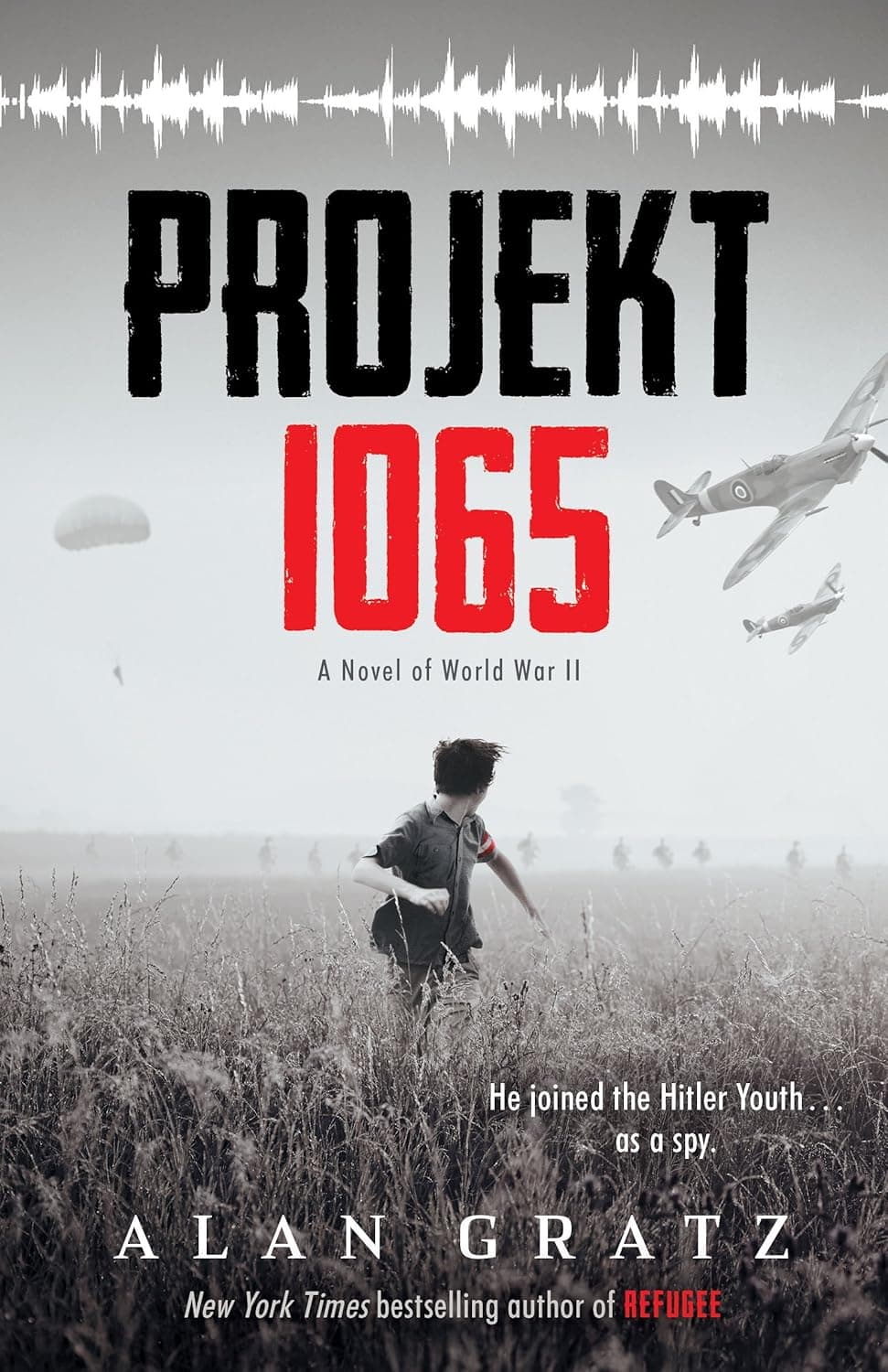
Moral Compromise and the Cost of War
What This Theme Explores
Moral Compromise and the Cost of War probes how far a person can bend their values in the name of a greater good—and what is lost along the way. It asks whether courage sometimes looks like cruelty, and whether “right” action in war inevitably requires doing harm. For Michael O'Shaunessey, survival and success demand a performance that corrodes his self-conception, forcing him to mimic the very ideology he detests. The theme ultimately weighs tactical victory against the psychological and relational wreckage such choices leave behind.
How It Develops
The novel seeds this theme early, when Michael’s first clear view of Nazi violence during Kristallnacht turns abstract evil into a daily reality. His parents’ revelation that the family are Allied spies reframes passivity as strategy: silence, smiles, and uniforms become tools. At first, Michael’s compromises are outward and performative—wearing the Hitler Youth armband, parroting slogans, curbing his disgust—costly to his conscience but not yet to others.
In the middle stretch, the masquerade demands action rather than mere appearance. Hiding Lieutenant Simon Cohen forces Michael to lie to his new friend Fritz Brendler and to accept that protecting one life might endanger many. Passing the boxing test by brutalizing Fritz shows Michael turning the enemy’s methods against the enemy—and against himself. When the SRD drags Herr Professor Doktor Major Melcher away and Michael chooses not to intervene, the cost becomes complicity; to preserve the mission, he intentionally numbs his empathy.
By the end, the theme peaks in a deliberate, devastating choice: Michael publicly “betrays” Simon and even his own parents to secure access and stop an assassination plot. The plan succeeds at the price of Simon’s life and Michael’s remaining innocence, and it exiles his parents. In the climactic confrontation with Fritz, Michael channels a ruthless efficiency he once loathed, proving that winning the mission and preserving one’s humanity are not always compatible goals.
Key Examples
The novel renders moral compromise through specific acts that require Michael to trade pieces of himself for progress.
-
Burning Books (during a book burning): Tossing “degenerate” books into the flames feels like burning his own principles, yet Michael participates to maintain his cover. The scene makes hypocrisy tactile: each book is a unit of trust won from Nazis and a unit of integrity lost to Michael.
-
The Boxing Match: To ascend within the Hitler Youth and stay close to crucial intel, Michael savagely beats Fritz—the one person who has shown him friendship. The test functions as an initiation not just into the organization but into the moral arithmetic of espionage, where harming a friend is rationalized as serving a greater good.
-
Not Intervening for Melcher: When authorities seize Melcher, Michael’s choice to stand by is an act of intentional hardening. He locks away his compassion to protect the mission, illustrating how war can force people to treat empathy as a liability.
-
Hiding Simon: Taking in a Jewish pilot risks his family and the operation; Michael’s parents debate the ethics of endangering many for one. The decision exposes the cold calculus of resistance work, where mercy and prudence tug in opposite directions.
-
Bombing the Factory: Learning that forced laborers—not soldiers—will likely die in an Allied strike shakes Michael’s simple assumptions about good and evil. Simon’s explanation that “sometimes good people have to be sacrificed to win a war” maps the uneasy terrain where strategic necessity collides with human worth.
-
Turning in Simon: The most excruciating compromise is engineered by Simon himself, who offers his life to thwart a larger atrocity. Michael’s complicity secures the mission while branding him with the knowledge that victory demanded a friend’s death.
Character Connections
Michael O’Shaunessey’s arc charts a steady narrowing of moral options. Each successful deception requires a deeper silence or sharper blow, so that by the finale he’s fluent in the enemy’s cruelty even as he uses it against them. His growth is measured not only by the secrets he obtains, but by the parts of himself he learns to hide or discard to obtain them.
As parents and handlers, Megan and Davin O'Shaunessey embody the adult face of compromise, constantly weighing their son’s safety against the mission’s stakes. Their arguments—whether to shelter Simon, how much danger Michael can bear—reveal the war’s cost at the family level: love is not a refuge from compromise, but another arena where it must be managed.
Simon Cohen functions as both moral tutor and sacrificial victim. He articulates the grim logic of wartime decisions, then lives it, offering his life to protect others and preserve the operation. His acceptance of prejudice’s long reach—visible in his past and in his final choice—underscores how war compresses years of ethical wrestling into irreversible moments.
Fritz Brendler is Michael’s foil: a boy who suppresses his own love of books to gain power by aligning with Nazism. Where Michael performs cruelty to stop cruelty, Fritz embraces it to escape vulnerability. Their final clash dramatizes the theme’s core question: when methods converge, does motive still matter?
Symbolic Elements
-
The Hitler Youth Uniform: Michael’s uniform is both keycard and curse. It grants access to secrets but announces a borrowed identity, symbolizing the necessary ugliness he must wear to do good.
-
Kristallnacht: The shattering glass and sanctioned mob violence mark the boundary where disbelief ends and action begins. As a recurring memory, it transforms fear into resolve while reminding Michael of the innocence already lost.
-
The Bombed-Out City of Berlin: Ruins, air raids, and civilian casualties create a landscape where every tactical win is framed by visible, human loss. The city’s rubble mirrors the internal wreckage moral compromise leaves behind.
Contemporary Relevance
The novel’s moral terrain echoes current debates about intelligence work, counterterrorism, whistleblowing, and wartime targeting: when do ends justify means, and who pays for those means? It urges readers to question simple binaries of hero and villain, asking how institutions and individuals rationalize harm when the stakes feel existential. By tracing a young spy’s increasingly costly choices, the story foregrounds the invisible bill of strategic success—guilt, grief, and alienation—and challenges us to demand accountability not only for outcomes, but for the methods used to achieve them.
Essential Quote
I hated pretending to like these people, hated pretending to agree with their awful hatred of the Jews, hated pretending I wanted them to win the war and conquer the world. But I smiled because I had to.
This confession crystallizes the heart of the theme: a deliberate divorce between conviction and conduct. The repeated “hated pretending” stacks moral revulsion against tactical necessity, while the final clause—“because I had to”—reduces heroism to endurance inside a lie. It captures how war enlists not just bodies but consciences, conscripting even a boy’s smile into a weapon that leaves a wound.