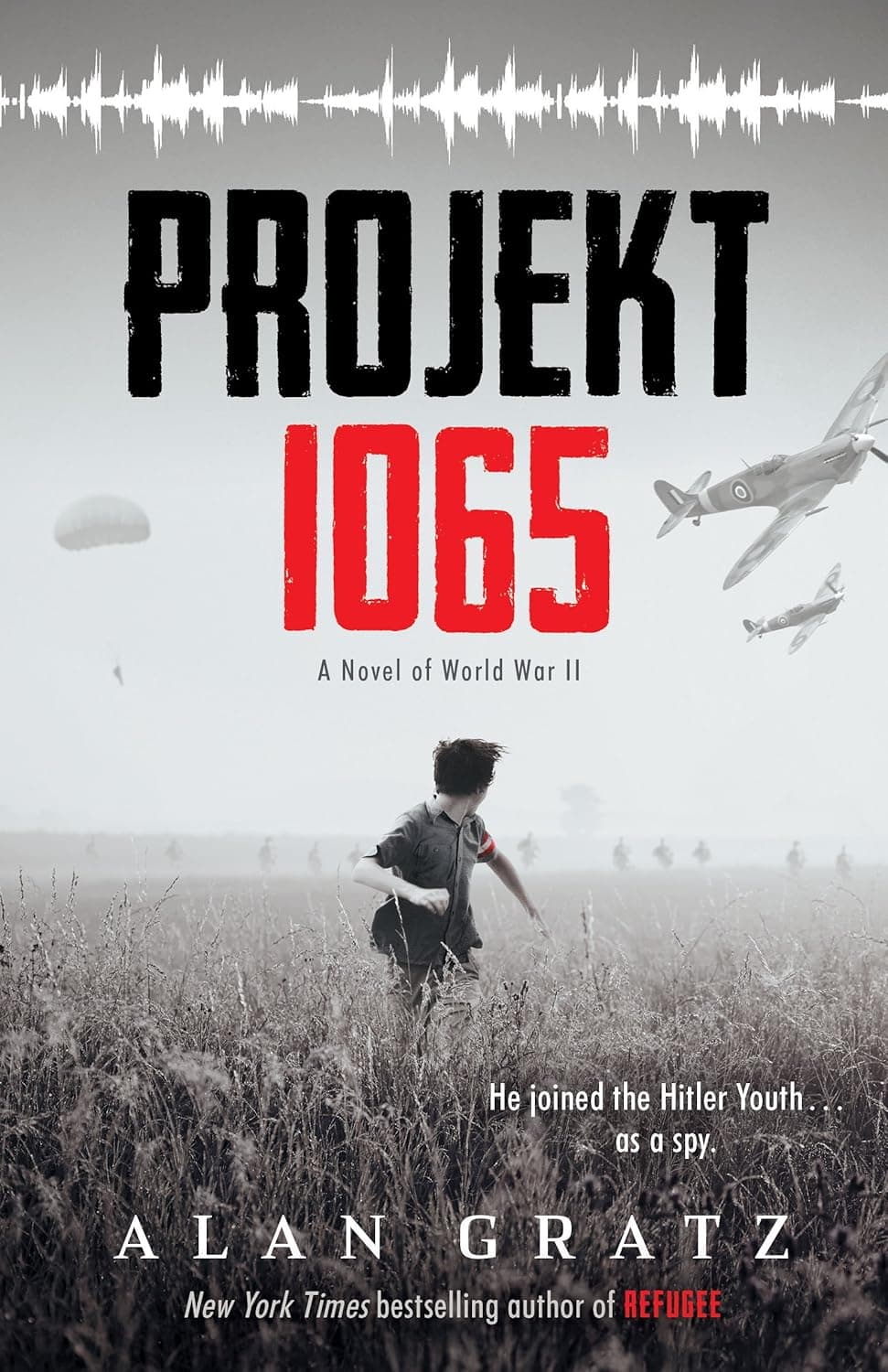
In Alan Gratz’s Projekt 1065, the high-stakes world of wartime espionage becomes a crucible for testing conscience, courage, and identity. Through the perspective of the young spy Michael O'Shaunessey, the novel narrows global catastrophe into intimate choices—where every secret kept or revealed has a human cost. The book dramatizes how ideology shapes boys into soldiers, and how resisting it requires a different kind of strength.
Major Themes
Moral Compromise and the Cost of War
The story asks whether righteous ends can ever justify corrosive means—and what those means do to a person. Michael infiltrates the Hitler Youth, smiles through propaganda dinners, throws books into a fire, and even appears to betray Lieutenant Simon Cohen and his own parents to reach the Projekt 1065 team, each step scarring his conscience in the name of the mission. War, the novel suggests, doesn’t offer clean choices—only gradients of damage to the self.
Deception and Espionage
Spying is both the engine of the plot and the pressure that distorts identity, turning life in Berlin into a performance where a single misstep can be fatal. Michael’s photographic memory, grape-juice diversions, chloroform, and staged captures reveal espionage as meticulous choreography, while the pervasive Deutscherblick (“German Look”) shows a culture of mutual surveillance in which everyone watches and lies. The novel probes the psychological toll of living in costume—how staying alive can mean not only deceiving others, but also steadily silencing one’s own moral voice.
The Corrupting Influence of Ideology
Gratz renders Nazi indoctrination as a machine that converts fear and insecurity into fanaticism, with the Hitler Youth training boys to equate cruelty with strength. Fritz Brendler evolves from hesitant book-burner to zealot ready to die for the Führer, while SS-Obersturmführer Trumbauer models the adult ideal—finding purpose in domination. The presence of Herr Professor Doktor Major Melcher, who moves from complicity to rejection, reminds us that ideology’s grip is powerful but not invincible.
Courage, Fear, and Confronting Weakness
The novel reframes courage as acting effectively despite fear, contrasting physical daring with moral resolve. Michael’s acrophobia cripples him on ladders, rooftops, and the Mutprobe high dive, yet he learns to manage panic—culminating in the cable car roof sequence—because lives depend on it; Simon’s confessed fear of birds underscores that bravery is trained, not innate. True strength, Projekt 1065 argues, lies not in the absence of fear but in mastering it for a just purpose.
Supporting Themes
Friendship and Betrayal
Michael and Fritz’s relationship is built on real affection and shared secrets, yet it becomes a battlefield where trust is weaponized. Michael protects, then pummels Fritz in the boxing ring to maintain cover; Fritz rescues Michael and later deceives him with switched suitcases and stolen plans. In a surveillance state, even friendship becomes a mask, and loyalty is the first casualty.
Coming of Age and Loss of Innocence
Michael’s arc is a rapid descent from playful spy games to the lonely adulthood of unspoken sacrifice. Kristallnacht’s shattered storefronts foreshadow a world where heroism must remain secret; by the end, “boy-men” name the generation robbed of youth and bound to silent duty. His maturity isn’t celebratory but elegiac—the price of seeing clearly and still choosing to act.
A compressed arc:
- Game → Witness → Choice → Sacrifice → Silence
Theme Interactions
Moral Compromise ↔ Friendship and Betrayal: The mission demands that Michael instrumentalize his bond with Fritz, turning affection into leverage. The brutal boxing match crystallizes this collision—private loyalty yields to public performance so the larger deception can hold.
Courage, Fear ↔ Ideology: Two paths diverge. Michael faces fear to preserve human life; Fritz faces fear to erase it, equating ruthlessness with strength. One courage resists indoctrination, the other is produced by it.
Deception ↔ Moral Compromise: The tradecraft that keeps the O’Shaunesseys alive slowly erodes their sense of self. Each fake smile and staged denunciation protects the mission while nudging the spies toward the very roles they abhor.
Ideology ↔ Human Bonds: Nazi doctrine weaponizes fear to sever families and friendships—boys report parents, peers brutalize peers—making betrayal seem virtuous. Against this assault, genuine care itself becomes an act of resistance.
Coming of Age ← Moral Compromise + Deception: The adult world arrives not as privilege but as weight. Every calculated lie and necessary sacrifice accelerates Michael’s transition from child to operative.
Character Embodiment
Michael O’Shaunessey
Michael is the nexus where nearly every theme meets: he learns espionage’s deceptions, carries the weight of moral compromise, trains courage against acrophobia, and grows up under the burden of secrets. His victories are tactical and internal—measured in lives saved and innocence lost.
Megan and Davin O’Shaunessey
As diplomatic cover and covert operatives, Michael’s parents model principled complicity: they endure inaction during atrocities to protect a larger operation. Their mantra—balancing one life against many—teaches Michael both the necessity and the cost of hard choices.
Lieutenant Simon Cohen
Simon anchors the mission to ideals, translating the “game” of spying into a fight for human dignity. He mentors Michael in managing fear and accepts sacrifice as part of service, embodying courage with a conscience.
Fritz Brendler
Fritz personifies ideology’s seduction of the insecure: desperate to disprove weakness, he embraces fanaticism and redefines cruelty as strength. His friendship with Michael becomes the testing ground where indoctrination and empathy collide.
Herr Professor Doktor Major Melcher
An emblem of ambivalent complicity turned resistance, Melcher shows that education does not immunize against propaganda—but loss and reflection can rekindle moral clarity. His turn away from the regime complicates the novel’s portrait of guilt and redemption.
SS-Obersturmführer Trumbauer
Trumbauer is zealotry made flesh: he delights in hierarchy, surveillance, and punishment, illustrating the adult endgame of the Hitler Youth’s training. Where Michael’s courage protects, Trumbauer’s authority destroys—two uses of power with opposite moral trajectories.