What This Theme Explores
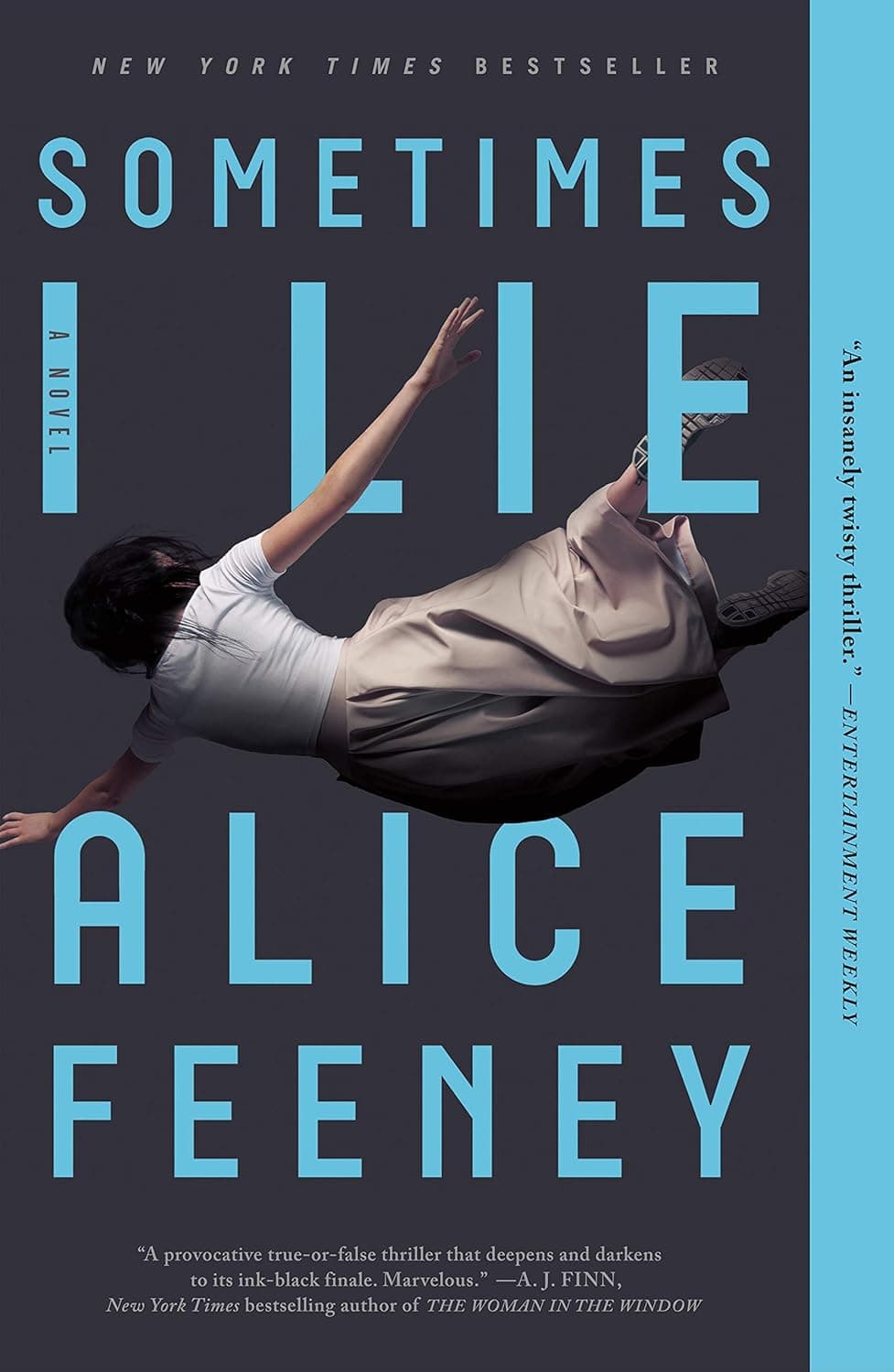
Memory and Reality in Sometimes I Lie probes how the mind manufactures truth when the actual past becomes unbearable. The novel asks whether identity is something we remember or something we perform, and what happens when those two diverge. Through trauma, jealousy, and self-preservation, memories become tools—edited, stolen, or suppressed—to build a livable version of the self. The book ultimately confronts the ethics of such invention: if a lie keeps you alive, does it become your reality?
How It Develops
The story opens inside the fog of Amber Reynolds’s coma, where every sensation is suspect, and the “Now” chapters make perception itself a puzzle. Amber clings to a handful of facts—name, age, husband—as if they can anchor her in truth, but each detail feels provisional, already smudged by forgetfulness and fear. Parallel to this, the “Before” diary entries present a coherent childhood that seems to verify Amber’s identity, tempting both her and the reader into a false sense of clarity.
As the middle section unfolds, Amber’s overheard conversations and dreamlike hallucinations refuse to align. Nightmarish recollections of a crash, a laughing girl, and a shattering windshield fracture her sense of cause and blame. The diaries keep accruing seemingly objective data, yet small dissonances—a voice, a detail out of place—hint that this firm foundation might be borrowed. The tension tightens as the “reality” outside her hospital bed and the visceral “truth” inside her mind circle each other without meeting.
In the final act, the scaffolding collapses: the diaries are revealed to be Claire’s, and “Amber” is Taylor wearing her sister’s past like a mask. With this reversal, the book forces a full re-reading of every earlier certainty; memory is not a mirror but a weapon, and identity an elaborate heist. The denouement refuses moral neatness. The protagonist chooses the constructed life over the fractured original, asserting that the most consistent story—however false—can eclipse the chaotic truth.
Key Examples
-
The coma as a limbo state
Amber’s first moments of consciousness dramatize the fight to fix reality out of fragments. Her mantra of facts functions like life rafts, yet the admission that “the last few pages [are] ripped out” signals a narrative missing its spine.I can't recall where this is or how I got here, but I know who I am. My name is Amber Reynolds. I am thirty-five years old. I'm married to Paul. I repeat these three things in my head, holding on to them tightly, as though they might save me, but I’m mindful that some part of the story is lost, the last few pages ripped out.
— Chapter 1-5 Summary -
Hallucinatory memories of the crash
The car accident appears first as a surreal tableau: a laughing child, a body through glass, time slowed. The dream-image both shields Amber from trauma and encodes guilt, foreshadowing that her mind is smoothing jagged facts into symbols that can be endured.I watch as the car swerves to avoid her, skids, then smashes into the tree I am sitting in. The force of the impact almost knocks me from the branch, but someone in the distance tells me to hold on. Below me, time has slowed. The little girl laughs uncontrollably and I watch in horror as a woman’s body smashes out of the windshield.
— Chapter 31-35 Summary -
The diary as a false reality
The “Before” sections pose as bedrock: names, places, causes. When they are exposed as Claire’s, the book reveals how easily a written record—so authoritative on the page—can be appropriated to manufacture identity. The house fire entry, with its bald confession, becomes the stolen cornerstone of a counterfeit self.Taylor told me to do it.
— Chapter 66-67 Summary -
The final confession
The twist reframes everything as performance: a name adopted, a life curated, memories curated into a persona. The neat triptych of “three things” mirrors the opening mantra, showing how the same rhetorical structure can cradle either truth or lie—and how form itself can make deception feel trustworthy.
Character Connections
Amber Reynolds (Taylor) is both architect and captive of a fabricated past. By absorbing her sister’s diaries until they feel native, she transforms memory into costume—an identity worn so convincingly that even she becomes its most ardent believer. Her arc suggests that self-deception can be less a choice than a survival strategy, but one that exacts a moral cost.
Claire, the real Amber Taylor, embodies the inconvenient, buried reality the novel keeps trying to surface. Her diaries act as a ledger of truth, and her desperate attempts to expose her sister’s theft—culminating in the crash—show the violence required to puncture a lie this complete. Claire’s erasure underscores the theme’s darkest claim: when a counterfeit story is more coherent than the truth, the real person can be edited out.
Paul becomes collateral damage of competing narratives. His love binds him to the version of Amber he knows, even as anomalies unsettle him. Paul’s confusion illustrates how persuasive a performed reality can be to bystanders, and how intimacy offers no automatic protection against sustained, skillful deception.
Edward's fixation is fueled by a memory planted through forged letters, proving that even external witnesses can be scripted into someone else’s story. His retaliation—based on a wronged-man narrative that never belonged to him—shows how secondhand falsehoods metastasize, turning one person’s lie into another’s purpose.
Symbolic Elements
-
The coma
A physical state of suspension becomes a metaphysical one: the mind floats free from verifiable input and begins to write its own world. The limbo dramatizes how easily the brain prioritizes coherence over accuracy. -
The diaries
As written artifacts, the notebooks suggest objectivity and permanence. Once stolen and internalized, they expose how documents can be misused as passports into identities their authors never consented to grant. -
Mirrors and reflections
The protagonist’s alienation from her reflection embodies a disjunction between inner narrative and outward presentation. The mirror refuses the chosen story, reminding us that the body carries histories the mind cannot fully rewrite. -
The robin doorstop
Recurring in past and present, the doorstop is a stubborn shard of shared history that survives narrative tampering. It’s a tactile check against fabrication—an object that remembers even when people misremember.
Contemporary Relevance
In an era awash with curated feeds, “alternative facts,” and weaponized nostalgia, the novel’s portrait of memory as author, not archivist, feels uncomfortably familiar. The book maps the mechanics of gaslighting—how repetition, confidence, and selective evidence reshape another’s reality—and extends that logic to the self. It echoes current debates over the reliability of eyewitness accounts and the plasticity of trauma-scarred recollection, warning that stories which feel truest are often those we most need to believe.
Essential Quote
There are three things you should know about me: I was in a coma. My sister died in a tragic accident. Sometimes I lie.
These lines recast the opening mantra as confession, revealing how a tidy triad of facts can smuggle in a falsehood under the cover of form. The cadence invites trust even as it declares deceit, capturing the book’s thesis: the right narrative shape can make any memory feel like reality.