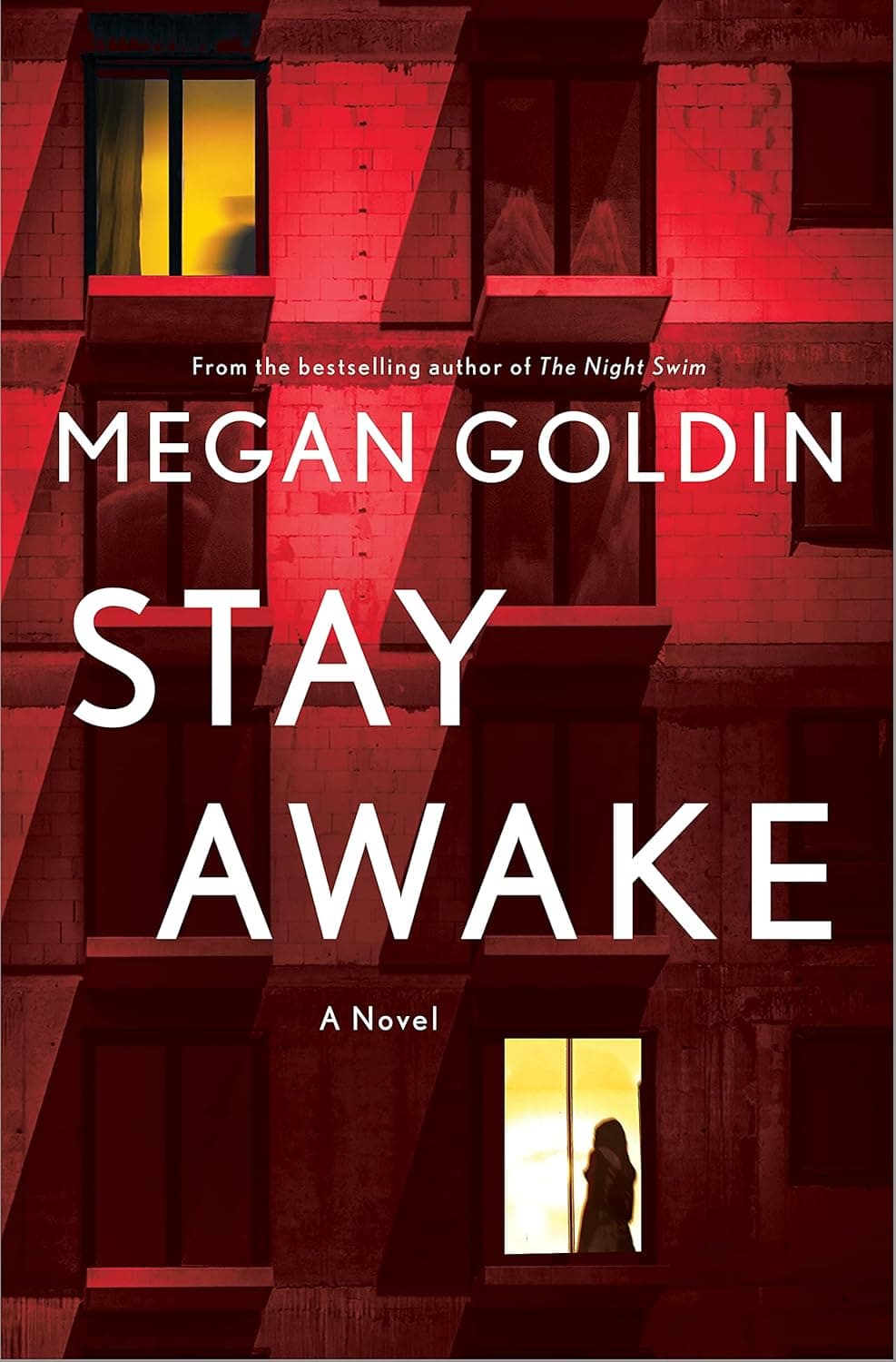
What This Theme Explores
The Unreliability of Perception asks how we know what we know—and how easily that “knowledge” can be bent by trauma, manipulation, and bias. For Liv Reese, perception isn’t just shaky; it resets each time she sleeps, turning daily life into a high-stakes guessing game about who to trust and what is true. The detectives face a different version of the same problem: evidence can be staged, context can be missing, and first impressions can be dead wrong. The novel makes readers complicit too, constantly inviting us to doubt what we’re told and recognize how fragile our own interpretive habits can be.
How It Develops
The theme first emerges as pure disorientation. Liv wakes with no recent memories, misreading the season, the city, and even her own home. Sensory facts—cold air, bare trees, a changed apartment—collide with internal certainties, immediately casting her as an unreliable narrator and making perception itself a tense, unstable terrain.
In the middle stretch, the net widens from Liv’s private confusion to public interpretation. Detectives Darcy Halliday and Jack Lavelle view the same crime scene but assemble different stories: Lavelle gravitates to the simplest motive while Halliday interrogates anomalies, treating “obvious” clues as invitations to look again. Meanwhile, people who know Liv contradict her self-image—the bartender at Nocturnal recognizes a sleepless regular—forcing her to confront a self she can’t remember and teaching readers to distrust any single vantage point.
By the end, unreliability becomes a weapon. Brett Graham exploits Liv’s condition, carefully staging evidence to frame her for killing Ted Cole and to retroactively explain earlier murders. The final reveals don’t merely solve the case; they expose how perception can be engineered at scale—across relationships, institutions, and media—turning the theme from a personal plight into a system of deception.
Key Examples
The novel repeatedly dramatizes how easily perception skews, then invites us to re-interpret what we thought we knew.
-
Liv’s initial disorientation: She reads a familiar hallway as proof that nothing has changed, even as reality refuses to bend to memory.
I almost believe him until I catch a glimpse of the distinctive tiled hallway floor and the dark timber staircase banister with its curved edge. They’re unique period features preserved to maintain the building’s heritage character. “I’ve lived upstairs with Amy for years.” Her insistence collapses against present-tense facts, illustrating how memory supplies a persuasive but unreliable map of the world.
-
The police investigation splits into competing narratives: Lavelle embraces a straightforward story; Halliday notices what the “easy” reading can’t explain.
“Looks to me like he slept through his own murder.”
“You think he was drugged?”
“I’d say it’s a distinct possibility. There’s no bruises or scratches on his body. No sign of a struggle.” (Chapter 1-5 Summary) Halliday’s interpretive method—treating incongruities as signals, not noise—models how reliability is built through skepticism and pattern-testing. -
Conflicting realities in social spaces: At Nocturnal, strangers “know” Liv better than she knows herself.
“You hate sleeping. Especially at night.”
The manager announces the bar is closing in five minutes. As if in unison, all the stragglers sitting along the bar swallow what’s left of their drinks and trail out of the main doors to the street. I hang around talking to the bartender as the staff pile chairs on tables.
“How do you know so much about me?”
“You tell me all your secrets,” he teases. The bartender’s casual certainty destabilizes Liv’s self-perception and shows how identity becomes a collage of others’ memories when one’s own memory fails. -
The final confrontation exposes perception as a stage set:
“I always knew your memory would come back. That’s why I had to kill your ex last night and frame you as the killer. I figured when you were found with his body, they’d pin Amy and Marco’s murders on you, too. It would get me off the hook for good.” (Chapter 61-65 Summary) Brett’s confession reframes the novel’s chaos as design, proving that the most convincing perceptions are often the most carefully manufactured.
Character Connections
Liv Reese’s fractured memory makes her a test case for how perception is built. She must outsource what most people keep internally—writing instructions on her skin, reading rooms for clues, and treating each day as a cold case on herself. Her arc charts the painstaking work of replacing reflexive certainty with evidence-based self-understanding.
Detective Darcy Halliday embodies disciplined perception. Rather than trusting the neat narrative delivered by the scene, she interrogates what doesn’t fit—the single stab wound, the lack of struggle—and refuses to confuse plausibility with proof. Her growth lies in sharpening doubt into method, showing how reliability is earned, not assumed.
Jack Lavelle personifies the pull of cognitive shortcuts. His early certainty about motive and perpetrator mirrors common investigative and readerly biases: we prefer linear stories, and we see what we’re primed to see. His position in the narrative warns how institutional authority can amplify misperception.
Brett Graham is the theme’s dark architect. He anticipates how others will see—Liv’s lapses, the police’s heuristics, the public’s appetite for tidy causality—and curates evidence to fit that expectation. By turning perception into a tool, he demonstrates that unreliability isn’t just a flaw of the mind; it can be an instrument of control.
Symbolic Elements
-
The writing on Liv’s hands: Messages like STAY AWAKE and WAKE UP! externalize perception itself. Because Liv cannot rely on her internal continuity, she tattoos her reality onto the body, turning skin into a prosthetic memory and underscoring how truth must sometimes be anchored outside the self.
-
Mirrors: Liv’s estrangement from her reflection literalizes her fractured identity. The familiar-yet-strange face reflects a life she can’t access, suggesting that self-perception is a composite that can shatter and recombine.
-
The WAKE UP! message in blood: As staging, it frames Liv as deranged; as symbol, it’s a command to characters and readers alike. It urges a shift from passive seeing to active scrutiny—wakefulness as the ethical posture required to pierce manipulation.
Contemporary Relevance
In an age of deepfakes, curated feeds, and algorithmic echo chambers, perception is a contested resource. The novel’s maze of staged evidence and broken memory echoes our daily challenge: distinguishing signal from noise when both can be engineered. Stay Awake argues for methodological skepticism—testing stories against inconsistencies, seeking corroboration, resisting the comfort of neat explanations—as a civic and personal survival skill. The danger isn’t only being wrong; it’s having our reality authored by someone else.
Essential Quote
“I always knew your memory would come back. That’s why I had to kill your ex last night and frame you as the killer.”
This admission crystallizes the theme by showing perception as something planned, not accidental. Brett doesn’t merely exploit Liv’s amnesia; he choreographs what others will perceive, preloading motives and meanings so the “truth” will seem self-evident. The line exposes how easily narrative coherence can be faked—and how vigilance, not certainty, is the surest path to reality.