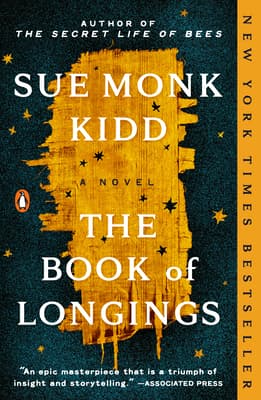
Following the death of Nathaniel, Ana's relief at her newfound freedom manifests as an irrepressible smile at the funeral banquet, drawing the ire of Nathaniel’s daughter, Marta. The next day, Ana’s brother, Judas, leaves to lead the Zealots, warning Ana to be wary of Herod Antipas. Ana's mother, Hadar, reveals that Matthias has disowned Judas, jeopardizing the family's future and leaving Ana vulnerable to societal scorn.
Chapter 29: The Widow and the Dancer
Marta confronts Ana, accusing her of lacking remorse for Nathaniel's death. Hadar, devastated by Judas's departure, warns Ana that her troubles have just begun, as Marta spreads rumors that Ana slept with Nathaniel, further damaging her reputation. The situation worsens when Hadar reveals that Matthias's disowning of Judas means the family home will pass to his cruel brother, Haran, leaving Ana, Hadar, and Yaltha's fates uncertain.
Yaltha comforts Ana, reminding her of a past promise and sharing the story of her own marriage. She recounts how, in Alexandria, unchosen girls would dance in the vineyards, hoping to be selected as brides. Yaltha danced for three years before being chosen by her cruel husband, admitting she lacked the courage to refuse. She urges Ana to take control of her own destiny, saying, “We make our moments, Ana, or we do not.”
Inspired, Ana retrieves her wedding dress, tears it to shreds, and performs a wild, defiant dance on her rooftop under the stars. This act is a powerful reclamation of her body and spirit, a central expression of The Search for Self and Personal Longing. She dances not for a husband or for God, but for Sophia—the feminine divine—and for herself.
Chapter 30: The Scorn of the City
As Ana's family walks to the synagogue after the mourning period, they face public shaming. Instead of piety, the townspeople gather to stare, mutter, and shout insults. Cries of “Harlot!” and “fornicator!” follow Ana, and people spit as she passes. Yaltha holds Ana’s hand tightly, whispering, “Fear nothing.” The walk becomes a public shaming, confirming Ana's status as an outcast.
Chapter 31: The Mamzer
Determined to reclaim her life, Ana manipulates her father into allowing her to resume her studies. She journeys to the cave to retrieve her writings and incantation bowl, where she finds Jesus praying. She invites him to share her meal, and he accepts. Ana confesses her status as a pariah, detailing the rumors and public scorn she endures.
Jesus reveals that he, too, is a mamzer (an outcast), sharing the stigma he has faced due to rumors about his illegitimate birth. This shared vulnerability forges a deep bond. Their conversation explores Alternative Faith and Spirituality, with Jesus describing God as "Abba, Father" and envisioning a kingdom built on compassion for the outcast. Before leaving, Ana tells him that she is a scribe and that she came to the cave to unearth her salvaged writings.
Chapter 32: The Concubine
Ana’s freedom is short-lived when Herod Antipas summons her to the palace to view the mosaic of her face. Her father insists she go. In the frigidarium, Antipas states, “I would have you for my concubine.” Matthias reveals he has already agreed, arguing it is the best Ana can hope for. Antipas offers lavish gifts, but Ana declares, “My answer is no,” snatches a sheet of ivory, and flees.
Chapter 33: The Stoning
Ana runs through Sepphoris, trying to evade Antipas’s steward, Chuza. Recalling Yaltha’s words, she seeks out Jesus at the amphitheater construction site. Chuza catches her, accusing her of theft and blasphemy. When he pulls the ivory sheet from her sleeve, the crowd turns into a violent mob, chanting, “Stone her!”
As stones fly, Ana collapses. Suddenly, Jesus appears, placing himself between her and the mob. He challenges their fury, questioning their trust in Antipas’s steward. When Chuza questions Jesus’s right to speak, Jesus declares: “I am neither father, brother, nor husband to her, but I will soon be her betrothed.” He vouches for her character, and the crowd hesitates. In a final appeal, Jesus says, “Let the one who is without sin cast the next stone.” One by one, the people drop their stones and disperse.
Chapter 34: The Betrothed
In the aftermath, Jesus remains with Ana until the street is empty. He tells her, “I will walk with you as far as your house,” solidifying the new reality his declaration has created.
Key Events
- Judas leaves home to lead the Zealots, warning Ana about Herod Antipas.
- Ana learns her father has disowned Judas, jeopardizing the family's future.
- Ana performs a defiant dance on her roof, reclaiming her body and spirit.
- Ana is publicly shamed and insulted on her way to the synagogue.
- Ana and Jesus meet again at the cave, bonding over their shared status as outcasts.
- Herod Antipas demands that Ana become his concubine, with her father's approval.
- Ana is accused of theft and nearly stoned to death by a mob.
- Jesus saves Ana by declaring he will be her betrothed and challenging the mob's hypocrisy.
Character Development
Ana transforms from a victim of circumstance into an agent of her own destiny. Empowered by Yaltha’s wisdom, her rooftop dance is a pivotal moment of self-creation. She becomes bolder, first in manipulating her father and then in seeking out Jesus. Her honesty with Jesus about her shame allows for a true connection, and her defiance of Antipas, though it nearly costs her life, is the ultimate expression of her refusal to be owned.
- Ana: Moves from passive resistance to active self-preservation.
- Jesus: Reveals his radical thinking and immense courage.
- Yaltha: Solidifies her role as Ana’s mentor and the story’s voice of female wisdom.
- Matthias: Exposed as weak and hypocritical, prioritizing patriarchal power over his family.
Themes & Symbols
These chapters highlight the themes of Feminism and Women's Voices, The Search for Self and Personal Longing, and Alternative Faith and Spirituality. Ana's struggle is a direct confrontation with a patriarchal society that seeks to control her. Her rooftop dance, refusal to become a concubine, and pursuit of Jesus are acts of rebellion. The conversation between Ana and Jesus introduces a spiritual path that challenges rigid religious dogma.
- The Rooftop Dance: Symbolizes Ana's liberation and self-consecration.
- Stones: Represent the judgment and cruelty of patriarchal society.
- The Ivory Sheet: Symbolizes Ana's defiance and claim to her identity as a writer.
Key Quotes
“We make our moments, Ana, or we do not.”
Yaltha's words encapsulate the section's central theme: the importance of agency and self-determination. This quote inspires Ana to take control of her own destiny, leading to her defiant acts and ultimately her connection with Jesus.
“Let the one who is without sin cast the next stone.”
Jesus's words challenge the mob's hypocrisy and expose the flaws in their rigid moral code. This quote, a direct import from the Gospel of John, is recontextualized as a deeply personal act of love and protection for Ana, highlighting the novel's central themes of compassion and empathy.
Significance
This section marks a critical turning point, forcing Ana to move from passive resistance to active self-preservation. The convergence of major plotlines culminates in the dramatic stoning scene, intertwining Ana’s and Jesus’s fates. His public declaration of betrothal is a radical commitment that saves her life and sets the course for the remainder of the story.
Analysis
Sue Monk Kidd masterfully builds tension, layering threats upon Ana until she is cornered. The narrative structure creates a powerful parallel between the false choices offered by the patriarchy and the choice Ana makes for herself. The climax at the construction site is rich with symbolism, grounding Jesus's spiritual authority in his identity as a common laborer and framing his public ministry as rooted in his private commitment to Ana.