Most Important Quotes
These quotes are the cornerstones of the novel, capturing its primary conflicts and philosophical questions.
The Life Not Lived
"I have heard that when you are about to die, your life flashes before your eyes. But I do not picture my husband, Brian... Or Meret... Instead, I see him. As clearly as if it were yesterday, I imagine Wyatt in the middle of the Egyptian desert... A man who hasn’t been part of my life for fifteen years. A place I left behind. A dissertation I never finished."
Speaker: Dawn Edelstein | Context: As her plane is about to crash in the Prologue, Dawn’s mind leaps not to her present family but to the love, work, and life she abandoned.
Analysis: This moment crystallizes the novel’s core tension: the magnetic pull of the road not taken. It inaugurates the theme of Choices and Alternate Paths by revealing the past as Dawn’s deepest “true north,” and it exposes the ache of Regret and Unfinished Business. The stark juxtaposition of Brian with Wyatt announces the book’s dual structure—two men, two geographies, two selves—while the desert imagery evokes both literal archaeology and psychic excavation. Functioning as a psychological inciting incident, it foreshadows the pilgrimage that follows survival.
The Central Metaphor
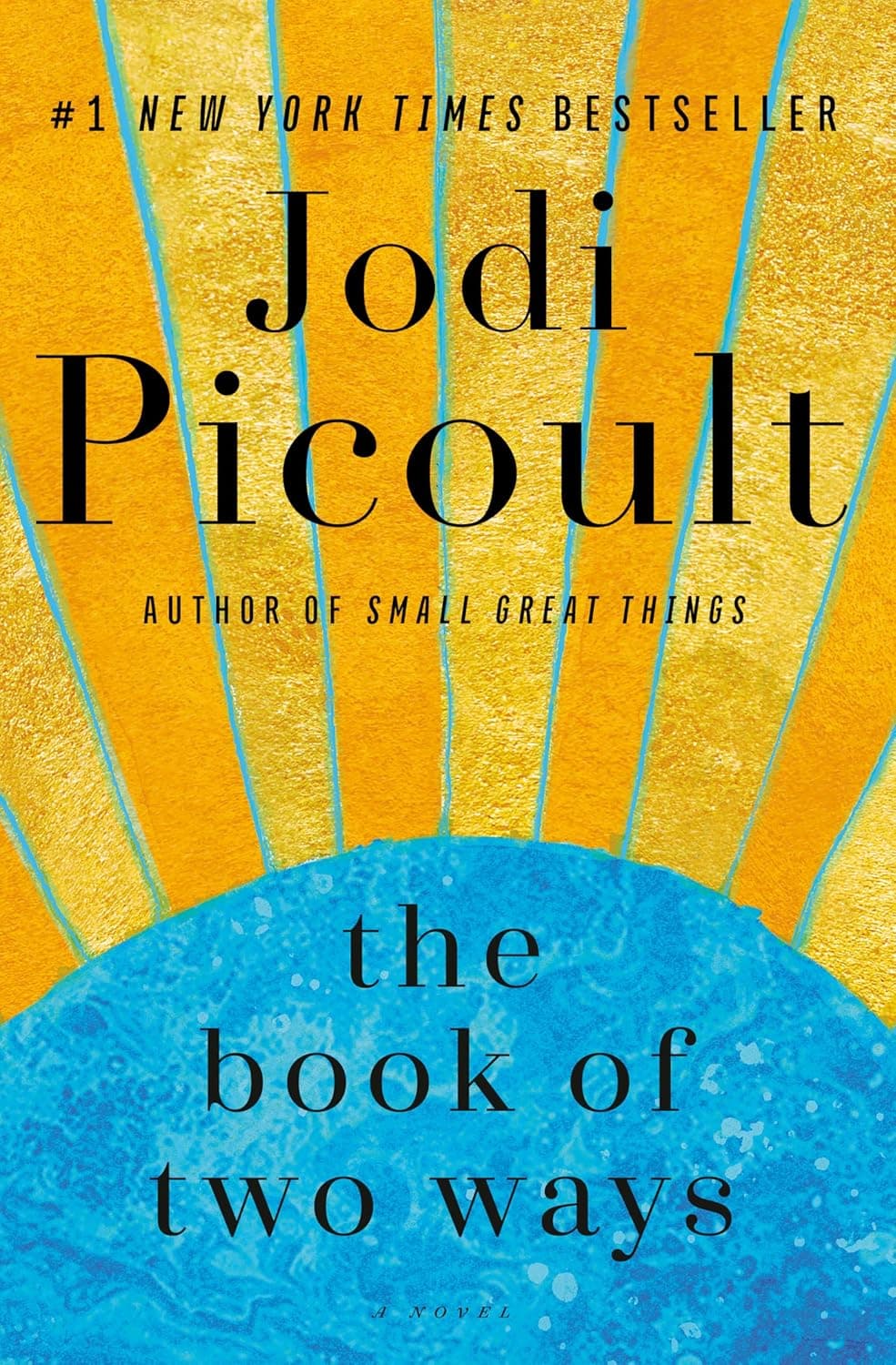
"Also part of these Coffin Texts was the Book of Two Ways, the first known map of the afterlife... It showed two roads snaking through Osiris’s realm of the dead: a land route, black, and a water route, blue, which are separated by a lake of fire... both ways wind up in the same place: the Field of Offerings, where the deceased can feast with Osiris for eternity."
Speaker: Dawn Edelstein (Narrator) | Context: In Egypt (Land), Dawn explains the ancient text that lends the novel its title and architecture.
Analysis: The cartographic imagery becomes an extended metaphor for decision-making, with the land and water routes mirroring Dawn’s divergent lives. Color symbolism (black/blue) and perilous obstacles (“lake of fire”) underscore that every path exacts a cost, even if both promise a kind of arrival or peace. The passage yokes myth to modernity, aligning Egyptian cosmology with Dawn’s contemporary crossroads and the book’s toggling “Land/Water” structure. Crucially, it reframes her dilemma beyond romance: she is navigating two possible identities, not merely two partners.
The Question of Regret
"One of the questions I ask my clients is What’s left unfinished? What is it that you haven’t done yet, that you need to do before you leave this life?... For me, it’s this. This dust, this tooth-jarring ride, this bone-bleached ribbon of landscape."
Speaker: Dawn Edelstein | Context: Traveling through Egypt (Land) after the crash, Dawn turns her doula question inward.
Analysis: By applying her professional script to herself, Dawn admits that Egypt—its work, its love, its intellectual promise—is her own ledger of the undone. The visceral, tactile details (“dust,” “tooth-jarring,” “bone-bleached”) translate abstract longing into embodied urgency, anchoring Regret and Unfinished Business in place and sensation. This pivot repositions her from guide to pilgrim, reversing the direction of care she usually offers others. The line also prefigures excavation as both method and metaphor: she must dig where it hurts.
The Physics of Choice
"Everything that can happen does happen—in another life."
Speaker: Brian Edelstein | Context: In Boston (Water), Brian introduces Dawn to the multiverse when they first meet at the hospice.
Analysis: Brian’s scientific axiom reframes the novel’s dualities as parallel timelines, offering a rational counterpoint to Egypt’s sacred maps. The idea of branching realities sharpens the theme of Choices and Alternate Paths: every decision both opens and forecloses lives. For Dawn, the concept is balm and blade—comforting in its generosity, tormenting in its implication that a happier “you” might exist elsewhere. It also defines Brian’s worldview: he is a man of models and probabilities, not omens.
Thematic Quotes
Choices and Alternate Paths
The Pivotal Decision
"I have already called my husband. Brian offered to come get me, but I told him not to. I didn’t say why. I clear my throat. 'I have to book a flight,' I say. 'Absolutely.' The woman nods. 'Where do you need to go?' Boston, I think. Home. But there’s something about the way she phrases the question: need, instead of want; and another destination rises like steam in my mind. I open my mouth, and I answer."
Speaker: Dawn Edelstein and Airline Representative | Context: In the immediate aftermath of the crash in the Prologue, Dawn is offered a ticket anywhere.
Analysis: The semantic hinge between “need” and “want” exposes desire’s deeper register, positioning Dawn’s choice as compulsion rather than caprice. The ellipsis of the final clause withholds the destination, a narrative gambit that creates suspense and mirrors the book’s cyclical ending. The scene literalizes the novel’s map: one answer routes her to Boston, the other to the desert’s “land” path. It’s a reminder that lives veer on quiet diction and single syllables.
The Universal "What If"
"Did you ever wonder who you would have been, if you hadn’t become who you are?"
Speaker: Winifred 'Win' Morse | Context: In Boston (Water), Win voices the question Dawn has been living.
Analysis: As Dawn’s foil, Win articulates the novel’s haunting counterfactual in a clean, piercing sentence. The line spotlights The Past's Influence on the Present and universalizes Dawn’s crisis: every chosen self implies a chorus of silenced selves. Its rhetorical structure invites the reader into complicity, making introspection a shared act. For Dawn—already en route to test an alternate life—it functions as both permission and provocation.
Death, Dying, and the Afterlife
The Doula's Journey
"A flight attendant is the guide who helps you navigate that passage smoothly. As a death doula, I do the same thing, but the journey is from life to death, and at the end, you don’t disembark with two hundred other travelers. You go alone."
Speaker: Dawn Edelstein | Context: On the plane in the Prologue, Dawn draws a parallel between her work and air travel.
Analysis: The extended metaphor recasts dying as transit, yoking the novel’s aviation crisis to its spiritual itinerary. “You go alone” lands with austere truth, asserting the existential solitude that makes Dawn’s role both necessary and tender. Irony shimmers beneath the comparison: she is about to face death in a crowd, yet the passage itself remains singular. The image prepares readers for the book’s braid of practical care and sacred myth.
The Key to a Good Death
"The way to have a good death is to have a good life."
Speaker: Dawn Edelstein | Context: In Egypt (Land), Dawn shares her credo with Wyatt, linking hospice wisdom to ancient belief.
Analysis: This aphorism collapses the temporal distance between modern hospice and Old Kingdom theology into an ethic of living. It argues that end-of-life peace is accrued through daily choices, not last-minute rites, reframing death as the sum of a life’s investments. For Dawn, the principle becomes a test: can she shape the present so she won’t die in deficit to her past. The line’s simplicity is its force, a compass more than a conclusion.
Love, Marriage, and Infidelity
The Nature of Betrayal
"He may not have acted on it, but that doesn’t mean it wasn’t a betrayal."
Speaker: Dawn Edelstein | Context: In Boston (Water), Dawn parses Brian’s near-infidelity with Gita.
Analysis: The distinction between act and intent exposes how trust fractures at the level of attention and allegiance. Dawn names the invisible injury—emotional displacement—as the true break, supplying the narrative spark for her departure. The line complicates culpability within Love, Marriage, and Infidelity, insisting that betrayal can be psychological long before it is physical. Its moral precision gives her flight its logic, not just its drama.
The Practicality of Love
"You can love someone so much your teeth ache, so much that it feels like he is carrying your heart in his own rib cage, but none of it matters if you can’t find a practical way to be together."
Speaker: Winifred 'Win' Morse (in her letter) | Context: In an unsent letter after the fact, Win autopsies a passion that couldn’t survive logistics.
Analysis: The visceral imagery (“teeth ache,” “heart in his own rib cage”) embodies love as both ache and intimacy, then coolly counters it with the stern prose of practicality. Win’s verdict reverberates through Dawn’s dilemma, weighing the ferocity of Wyatt against the durable architecture of life with Brian. The sentence punctures romantic absolutism without denying its force, arguing for compatibility as love’s infrastructure. It’s a manifesto for staying, even as it honors the ones who couldn’t.
Character-Defining Quotes
Dawn Edelstein
"For someone who makes a living through death, I haven’t given a lot of thought to my own."
Speaker: Dawn Edelstein | Context: Just before the crash announcement in the Prologue, Dawn confronts her avoidance.
Analysis: The line’s irony is surgical: a professional of endings has neglected the end that governs her own choices. It exposes the protective distance she maintains in her work and signals the narrative’s project of collapsing that distance. The impending catastrophe forces her to internalize her craft, turning theory into practice. As a thesis for her arc, it frames the book as Dawn’s belated reckoning with self.
Wyatt Armstrong
"I don’t know why you’re here. I don’t know what you’re hiding. And you may well be out of practice. But I unearth things for a living."
Speaker: Wyatt Armstrong | Context: In Egypt (Land), after accepting Dawn on his dig, Wyatt makes clear he intends to dig deeper than artifacts.
Analysis: The double entendre defines him: an archaeologist of soil and of secrets, adept at exhuming what others bury. His cadence—brusque, wry, assured—signals a man who reads stratigraphy in people as easily as in ruins. The line promises tension: professional collaboration entwined with emotional excavation. It positions Wyatt as both lure and instrument, the past lover who will not collude in Dawn’s silence.
Brian Edelstein
"I know you by heart. I can put you back together."
Speaker: Brian Edelstein | Context: After the truths about Wyatt and Meret surface, Brian reaches for Dawn with familiar steadiness.
Analysis: This tender assertion reveals love as repair, rooted in long study and habit of care. Yet its “fixing” metaphor betrays a scientist’s reflex—to restore the known system—contrasting with Wyatt’s impulse to discover the unknown. The sentence crystallizes the couple’s fissure: Brian loves the woman he has mapped; Dawn is becoming someone unmappable. It’s both vow and blind spot, proof of devotion and of the limits of cure.
Winifred 'Win' Morse
"People who are comfortable—people who are content—they don’t create art."
Speaker: Winifred 'Win' Morse | Context: In Boston (Water), Win explains why happiness quieted her painting.
Analysis: Win’s aesthetic creed links art to friction, arguing that contentment blunts the urgency that drives making. Her choice of domestic stability over artistic tumult mirrors Dawn’s pivot from Egyptology—her “art”—to a safer life. The claim is provocative, not prescriptive, inviting debate about what nourishes creativity and what it costs. It casts comfort as both blessing and relinquishment.
Memorable Lines
The Duality of Existence
"Life and death are just flip sides of the same coin."
Speaker: Dawn Edelstein | Context: In Egypt (Land), Dawn aligns her doula work with her Egyptological lens.
Analysis: This distilled metaphor fuses Re’s daily rising and Osiris’s realm with hospice wisdom, collapsing opposites into continuum. By refusing a hard binary, it lowers the temperature around mortality and reimagines endings as transitions. The line becomes a governing motif, guiding Dawn’s approach to clients and to her own crossroads. It teaches the reader how to read the book: in cycles, not stops.
The Definition of Home
"Home isn’t a where, Olive. It’s a who."
Speaker: Wyatt Armstrong | Context: After Win’s funeral, Wyatt reassures Dawn that geography need not dictate love’s viability.
Analysis: The aphorism cuts through the Boston-versus-Egypt impasse by relocating “home” in relationship rather than map. His use of “Olive,” the intimate nickname, layers the claim with history and tenderness, making the abstract personal. The line reframes the stakes: Dawn’s decision is less about coordinates than allegiance. It’s an argument for belonging as a person-shaped place.
Opening and Closing Lines
Opening Line
"MY CALENDAR IS full of dead people."
Context: The novel opens in the Prologue with Dawn’s matter-of-fact articulation of her work.
Analysis: The blunt, arresting declaration hooks the reader and normalizes death as Dawn’s daily terrain. Its tonal steadiness signals a book that treats mortality with both rigor and compassion. It also foreshadows the narrative’s ledger of lives—clients, lovers, selves—that Dawn must honor and reconcile. As an opening thesis, it frames the story as an accounting.
Closing Line
"I open my mouth, and I answer."
Context: After everything, the book ends with Dawn poised to choose again.
Analysis: The structural echo of the Prologue folds the story into a loop, emphasizing choice as the engine rather than the endpoint. Its purposeful ambiguity resists closure, privileging the act of deciding over the content of the decision. The line returns agency to Dawn without prescribing her future, consistent with the novel’s respect for multiplicity. In a book about maps, it leaves us at the fork—alive to possibility.