What This Theme Explores
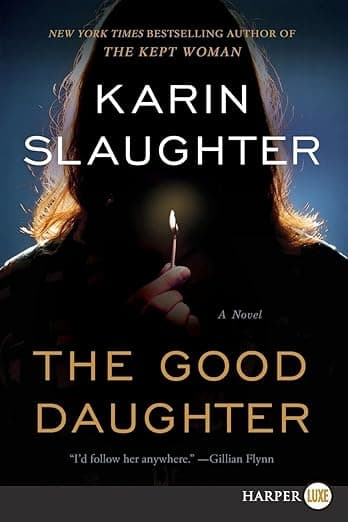
Family Trauma and Its Aftermath asks what a single act of violence does to a family’s story—how it splinters identity, rewrites loyalties, and embeds silence where truth should be. In The Good Daughter, trauma is not an event to be survived once but a living force that keeps redrawing the Quinns’ map of love, duty, and selfhood. The novel probes the cost of “protection”: when does hiding pain shield a loved one, and when does it calcify into a lie that shapes every relationship? It also examines how bodies remember what minds bury, and whether telling the truth—however late—can begin to stitch a family back together.
How It Develops
The novel establishes its core wound in the prologue, Thursday, March 16, 1989: the murder of Gamma Quinn, the shooting and live burial of Samantha Quinn, and the rape of Charlotte Quinn. In the stunned immediate aftermath, Rusty Quinn chooses secrecy over exposure, urging Charlotte to lock her assault away to spare her further harm. That choice becomes the template for how the Quinns will manage pain—contain it, rename it, and hope it cannot seep through.
Nearly three decades later, the story shifts to a town still shaped by what happened and a family orbiting its absence. A new crisis—the school shooting in Chapter 1—reverberates through the same neural pathways, dragging buried memories to the surface. The sisters’ estrangement, their divergent coping styles, and their careers all point back to that night, and the investigation binds them to relive what each tried to survive alone.
By the climax, the plot insists on naming what was once unspeakable. The revelation of Mason Huckabee’s role and the full truth of Charlotte’s assault in Chapter 18 collapse decades of misdirection. Rusty’s murder underscores how far the original violence has traveled, claiming new ground. The novel ends without easy absolution: the past remains irrevocable, but speaking it aloud makes the first fragile space where the sisters might meet each other honestly.
Key Examples
-
The initial attack in the prologue is a blueprint for the novel’s psychology: violent rupture followed by immediate narrative containment. The sensory shock imprints itself on the sisters, and Rusty’s decision to suppress Charlotte’s rape turns survival into silence. From that point forward, the family’s “after” is structured around what must not be said.
-
The school shooting decades later operates as traumatic echo and catalyst. Charlotte’s automatic, dissociative responses show how unresolved terror turns present danger into a replay of the past. The new crime forces the sisters to reenter old roles—but with adult stakes and a growing need to contradict the old script.
-
The sisters’ coping strategies make the aftermath visible: Samantha’s precise routines and vigilance reflect a mind guarding against chaos, while her scars literalize memory. Charlotte’s recklessness, emotional distance, and choice to defend the accused are attempts to reclaim power and to argue, in court and in life, for complexity where once there was helplessness.
-
The secrecy around Charlotte’s rape is the novel’s most corrosive inheritance. Rusty’s bid to “protect” her consolidates his authority and silences hers, teaching the family to box pain instead of process it. That secret distorts intimacy, work, and sisterhood until it is finally confronted, proving that protection without truth becomes its own violence.
Character Connections
Charlotte Quinn embodies the push-pull of denial and self-assertion that follows sexual violence. Her courtroom ferocity and penchant for risky choices are not contradictions but parallel strategies: she armors herself against vulnerability while trying to transmute helplessness into agency. The breakdown of her marriage exposes how secrecy colonizes intimacy; without language for her past, closeness becomes unsafe.
Samantha Quinn channels trauma into control—of time, space, and emotion. Her brain injury renders some consequences involuntary, but her rigor is a chosen discipline, a way to ensure the world does not surprise her again. She shoulders a promise made at the edge of death, and that vow hardens into duty that both binds her to Charlie and pushes her away.
Rusty Quinn is the tragic architect of the family’s silence. His guilt—fueled by his work as the “Attorney for the Damned” and his belief that his choices invited violence—leads him to equate secrecy with care. In trying to save his daughters from the justice system’s brutality, he creates a private system just as unforgiving: one where a father’s love decides what a daughter can say about her own life.
Gamma Quinn, though killed in the opening pages, remains the gravitational center. Her murder ignites the narrative, and her final charge to Sam—care for your sister—mutates into a lifelong mandate that confuses love with obligation. Gamma’s absence is a presence; the family keeps living in conversation with what she can no longer say.
Symbolic Elements
The Higgledy-Piggledy Farmhouse is the family made architecture: patched together, precarious, and full of rooms that do not quite fit. After the attack, its crookedness reads as destiny rather than charm, mirroring a home life that can be inhabited but not restored.
The Blind Pass, introduced as a relay technique, symbolizes familial trust and continuity. Gamma’s instruction to place the baton firmly in Charlie’s hand becomes an ethic of care the sisters struggle to execute; the dropped baton is their broken handoff from childhood to adulthood.
The Sealed Box is Rusty’s metaphor and the novel’s critique: conceal the worst thing, tape it shut, put it high out of reach. The image captures the seduction of control, but the narrative shows the cost—what is boxed does not disappear; it leaks, warps, and dictates the shape of a life.
Contemporary Relevance
The novel speaks to current conversations about PTSD, sexual assault, and the fraught path to justice. It illustrates how trauma lives simultaneously in body and behavior—and how systems designed to remedy harm can reproduce it, especially for survivors navigating courts and community judgment. By tracing the ripple effects across decades and relationships, the book argues for trauma-informed care, patient truth-telling, and the necessity of naming harm even when the naming hurts.
Essential Quote
“What happened to you,” Rusty said, sounding strident. “It’s not your fault, but we can’t tell anybody else, okay?” … “They’ll hang for this. Those two boys are murderers, and they’ll die for it, but please don’t let them take my daughter with them. Please. It’s too much. It’s just too much.”
This plea crystallizes the novel’s moral knot: a father’s fierce love enlisting secrecy as salvation. Rusty frames silence as protection, but the story reveals how that protection becomes a prison, defining Charlie’s relationships and choices for decades. The quote thus marks the hinge where trauma’s immediate aftermath hardens into the family’s governing myth—and the burden the daughters must finally break to begin to heal.