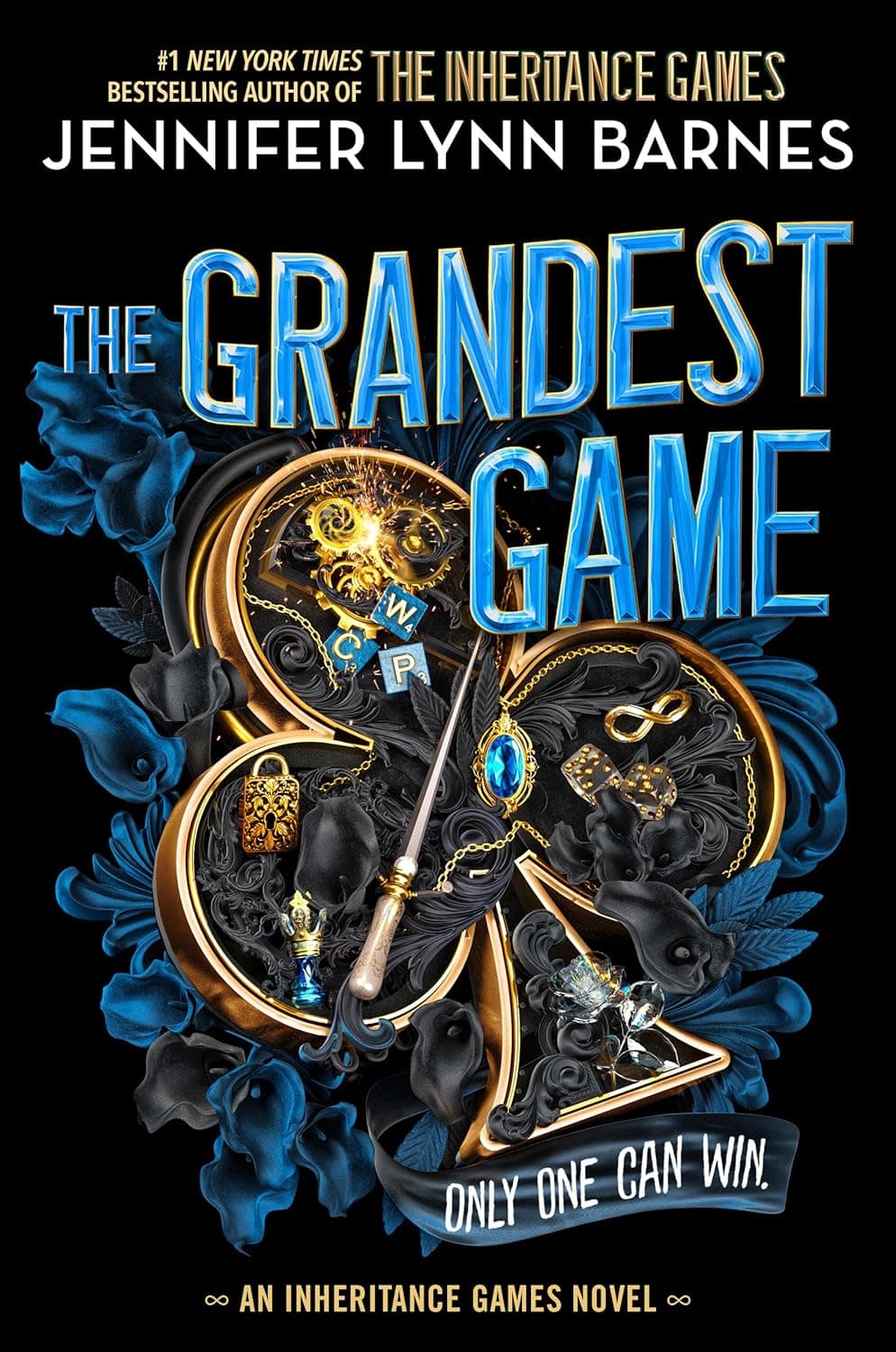
Lyra Catalina Kane
Quick Facts
- Role: Central protagonist; 19-year-old college student and former dancer
- First appearance: Chapter 1
- Core drive: Win the Grandest Game to save her family’s home, Mile’s End
- Key relationships: Grayson Hawthorne, her adoptive family (mother, father, younger brother), Odette Morales, her biological father
- Signature strengths: Pattern recognition, physical precision, kinesthetic intelligence, protective loyalty
Who They Are
At once razor-smart and emotionally guarded, Lyra Catalina Kane is a reluctant hero who enters the Grandest Game not for glory, but to keep her family’s home from slipping away. A year before the novel opens, repressed memories of her biological father’s suicide slam back into focus, tethering her life to the powerful Hawthorne family—and to Grayson Hawthorne in particular. That trauma casts a long shadow, but it doesn’t define her entirely: the novel gives us a young woman whose dancer’s discipline—“a girl with a body that said party to some people more than it had ever said dancer” (Chapter 1)—becomes a survival strategy. A masquerade mirror fixes her in the reader’s mind—“dark hair, amber eyes in a heart-shaped face, golden-tan skin” (Chapter 17)—but it’s her deliberate, balanced movement that tells us who she is. Lyra’s arc probes how far the past can shape the present, making her a living study in The Influence of the Past and the perilous lure of Secrets and Hidden Truths.
Personality & Traits
Lyra’s mind works like a lockpick: quiet, precise, and relentless. She notices patterns—emotional and logical—that other people miss, yet she keeps her own inner life barricaded. The result is a character who feels both flinty and tender; she meets the world with a sharpened edge because she refuses to let it cut her first.
- Perceptive and analytical: In Chapter 1, she wakes mid-exam for a class she’s not enrolled in and scores a 94% by deducing the test’s patterns. That moment establishes her as a puzzle-solver who reads structure under chaos.
- Guarded and prickly: Her sarcasm and hostility—especially toward Grayson—function as armor. The bite in her voice is less cruelty than boundary-setting from someone who’s been hurt.
- Resilient and determined: Nightmares don’t make her fragile; they make her disciplined. She channels pain into running and competition, translating psychic pressure into physical endurance.
- Fiercely loyal: “I’m here for the money” isn’t greed; it’s devotion to Mile’s End and the people in it (Chapter 16-20 Summary). Her choices consistently prioritize family over pride.
- Kinesthetically intelligent: As a former dancer, she thinks with her body: mapping spaces by steps, solving through motion and touch. “I don’t fall… Good balance” is both literal and philosophical—she stabilizes herself through control (Chapter 6-10 Summary).
Character Journey
Lyra begins “just treading water,” exiled from her own life and pretending at normalcy while trauma erodes her from within (Chapter 1-5 Summary). The game drags the past into the present: notes bearing her father’s names appear like booby traps, proving that her pain isn’t incidental to the Game—it’s engineered into it (Chapter 11-15 Summary). Forced into partnership with Grayson, the person most entangled with her father’s last words, she fights him—and herself—until the theater sequence detonates the repression. When the film triggers a full flashback, Grayson’s unexpected steadiness allows Lyra to stop running long enough to feel, remember, and begin to integrate what happened (Chapter 46-50 Summary). By the time she kisses him on the cliff (Chapter 82), that gesture isn’t a romantic victory lap but an act of agency: she chooses presence over avoidance, inquiry over fear. The girl defined by what was done to her becomes the woman who decides what she’ll do next—about her family, about the Hawthornes, and about the truth.
Key Relationships
- Grayson Hawthorne: What begins as flammable antagonism—rooted in Lyra’s father’s final accusation and Grayson’s earlier refusal to help—evolves into wary collaboration and, ultimately, earned intimacy. He’s the first person she lets see her in crisis, and he responds with care instead of control, reframing what trust can look like. Their push-pull becomes the book’s emotional live wire and a case study in Romance and Complicated Relationships.
- Her Adoptive Family: Lyra’s moral North Star and the reason she accepts the ticket at all. She performs “normal” to keep her pain from spilling into their lives, but every risk she takes is for Mile’s End and the people who made it home—a throughline that anchors the theme of Family and Legacy.
- Odette Morales: A manipulator and matchmaker of necessity. Odette pushes Lyra and Grayson onto the same chessboard, doling out hints that force Lyra to interrogate both her father’s past and her own instincts; Lyra distrusts Odette’s motives even as she recognizes the old woman may hold the master key.
- Her Biological Father: Less a memory than a rupture. His suicide and the words “A Hawthorne did this” become the riddle she must solve to heal; uncovering who he really was—and what really happened—moves Lyra from inherited pain toward self-authored meaning.
Defining Moments
Lyra’s turning points prove that cognition and courage can coexist—and that understanding isn’t the opposite of feeling, but its partner.
- The unwitting test (Chapter 1): She aces a class exam she never studied for by reading its design. Why it matters: It frames her genius as applied pattern-recognition, not performative brilliance, and foreshadows how she’ll survive the Game.
- Confrontation at the ruins (Chapter 8): Grayson recognizes her voice from their old calls, pulling their buried history into the open. Why it matters: Voice—what’s said and what’s withheld—becomes the battleground for power and trust.
- The theater flashback (Chapter 48): A film shatters her repression, and she breaks down in front of Grayson. Why it matters: Lyra stops outsourcing her past to amnesia; choosing to feel is the first step toward choosing her future.
- The cliffside kiss (Chapter 82): Lyra initiates, on her terms. Why it matters: The moment redefines vulnerability as strength—she grants herself permission to want, even when wanting is dangerous.
Essential Quotes
“Trying to write trick questions backfires if the person taking the test knows how to look for tricks.” — Lyra to the professor (Chapter 1) This line encapsulates Lyra’s epistemology: systems, even manipulative ones, can be read if you know where to look. It also reframes the Grandest Game not as chaos but as a solvable design—one she’s uniquely equipped to navigate.
“I don’t fall. Good balance.” — Lyra to Grayson Hawthorne (Chapter 7) On the surface, it’s a dancer’s boast; underneath, it’s a survival credo. Balance here means self-governance—Lyra insists on being the stabilizing force in her own life, not a person others steady or topple.
“I’m here for the money... And you don’t get to act like I’m a threat because of some list made by your soulless, life-ruining billionaire grandfather. I am here because... because I deserve this.” — Lyra to Grayson Hawthorne (Chapter 19) A mission statement and a boundary. Lyra reframes need as worth, rejecting shame and claiming the moral legitimacy of fighting for her family—and for herself.
“You are not going to ruin this for me. I need this.” — Lyra to Grayson Hawthorne (Chapter 25) Need is a dangerous word for someone who hates vulnerability; using it signals growth. She’s learning to say the quiet part out loud, prioritizing purpose over pride.
“You never stopped dancing. Every time you move, you dance. It’s there in the way you hold your head, like there’s music the rest of us can’t hear. Every step you take, every twist, every turn, every pissed-off whirl.” — Grayson Hawthorne to Lyra (Chapter 63) Grayson names what the narrative has shown: movement as memory, identity, and resilience. By recognizing Lyra’s embodied intelligence, he meets her where she lives—in motion—and offers a kind of seeing that feels like safety.