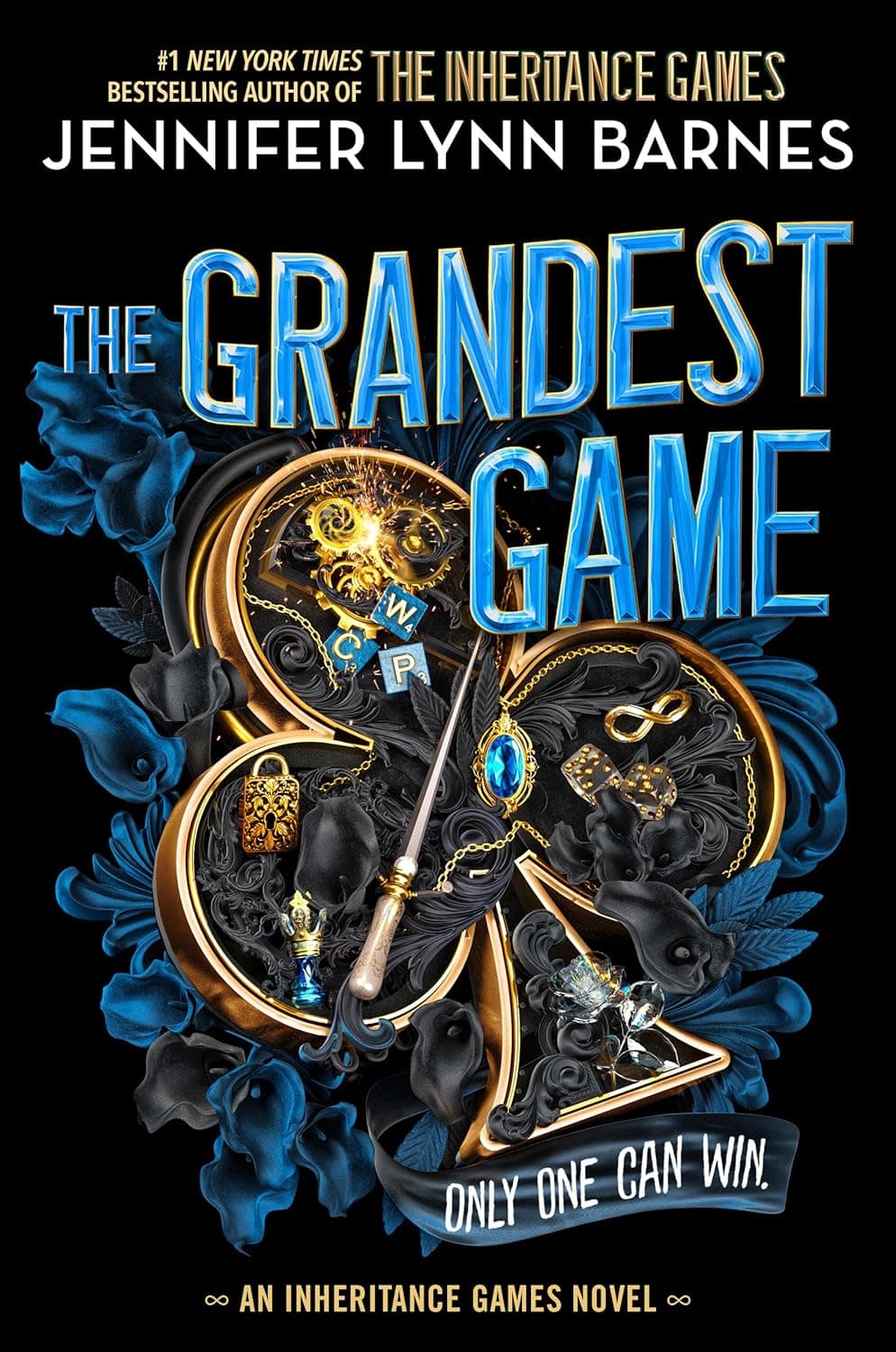
Opening
Three players step onto the board: Lyra Catalina Kane, Gigi Grayson, and Rohan. Family debt, buried secrets, and a golden ticket pull them toward The Grandest Game, where pattern-reading, obsession, and cold strategy collide.
What Happens
Chapter 1: The Test
Lyra wakes from a recurring childhood nightmare: a calla lily in one hand, a broken candy necklace in the other, and her biological father’s shadow whispering, “A Hawthorne did this,” before walking away with a gun. The dream spits her into consciousness in a college lecture hall, where she realizes she has slept through most of a test. The professor sneers, assuming she was out partying. With only ten minutes left, she decides to take the exam anyway.
Lyra doesn’t need the content—she reads the system. Tapping her gift for structural logic, she maps the cadence of the “trick” questions and treats the test like a puzzle, a perfect showcase of Games, Puzzles, and Strategy. She finishes with a minute to spare. The professor grades it immediately to humiliate her—and freezes at a 94%. When he lectures her on effort, she coolly reveals she isn’t even enrolled in his class. As she leaves, he calls after her, rattled, and she explains that his tricks follow a pattern. Lyra’s power rests in seeing systems from the outside—and turning them against themselves.
Chapter 2: Mile’s End
An email places a financial hold on Lyra’s enrollment. Her mom calls, bubbly and familiar, while Lyra strains to keep up the normal-girl facade she’s worn for three years since the nightmares returned. On speaker, her father, Keith Kane, admits the money isn’t there. Their “option”: sell Mile’s End, the Kane ancestral home.
The prospect guts Lyra. Mile’s End is childhood—carved names in the family tree, tradition, and the feeling of being known. Her dad frames it as downsizing, but she hears the loss under his voice. The call ends in heavy silence. Lyra decides she won’t be the reason her family loses its legacy, anchoring the story’s stakes in Family and Legacy.
Chapter 3: The Golden Ticket
Lyra runs—punishment and release in equal measure—remembering how a single dream about her father’s suicide cracked her identity. The immediate solution seems brutal but simple: drop out to spare her parents the tuition. Yet when she reaches the Registrar’s, she can’t go inside. At her campus P.O. box, a heavy linen envelope waits: no return address, no postage.
Inside: a note that reads “YOU DESERVE THIS,” which disintegrates to dust in her hands, and a golden metal ticket engraved with a QR code and three words—The Grandest Game. The delivery feels fated and faintly impossible. For a girl about to quit, the ticket offers a different path to save her family, christening the series’ engine of Competition and Ambition.
Chapter 4: The Reverse Heist
The narrative shifts to Gigi, who balances on her roof, chasing a public puzzle for a wild-card ticket. Her older half brother, Grayson Hawthorne, pulls her back from the edge and surveys her room—a cyclone of notes, strings, and calculations. Gigi refuses to use Hawthorne power; she wants in on merit alone. When Grayson notices her antique bed is gone, she grins: she pulled a “reverse heist,” selling the bed and leaving the cash for someone who needed it.
Grayson probes whether this spiral connects to their father, Sheffield Grayson. Gigi deflects, and the silence around “THE SECRET” throbs—fuel for Secrets and Hidden Truths. Grayson produces a golden ticket from Avery Grambs, tinged with guilt. Gigi refuses. If she won’t take it, Grayson says, it goes to her twin, Savannah Grayson. Gigi, fiercely protective, doubles down: Savannah is thriving and doesn’t know the secret. Gigi will earn her spot—and shield her sister.
Chapter 5: The Chessmaster
On a rooftop in Atlanta, Rohan faces a gun and doesn’t blink. The armed competitor demands a wild-card ticket; Rohan calmly reveals he already secured the last two. With surgical manipulation, he sends the gunman chasing a phantom ticket into a courtyard—where Gigi happens to be working a puzzle—and delivers a flat warning: “Hurt her, and you’ll regret it.”
Later, in a luxury suite he has quietly infiltrated, Rohan watches the news confirm all seven player slots are filled. He moves like a ghost: precise, untraceable. In the shower steam, he sketches six chess pieces with a knife: Odette Morales as bishop, Brady Daniels as rook, Knox Landry as knight. The youngest—Gigi, Savannah, and Lyra—he marks as pawns with the power to transform. Which one possesses the queen’s versatility? Rohan’s motives stay veiled, but his board vision—and willingness to treat people as pieces—is chillingly clear.
Character Development
These chapters position a brain, a heart, and a blade at the game’s edge—and hint at the fractures beneath their surfaces.
- Lyra: A trauma-haunted pattern reader who turns systems inside out.
- Aces a test she never studied for by decoding structure, not content.
- Shoulders the threat of losing Mile’s End and resolves to protect her family.
- Receives a golden ticket that reframes quitting as competing.
- Gigi: Chaotic brilliance masking duty and guilt.
- Rejects Hawthorne shortcuts and pulls a “reverse heist,” signaling a skewed moral code rooted in generosity.
- Refuses a gifted ticket to prove herself—and to keep Savannah insulated from “THE SECRET.”
- Grayson: The composed fixer.
- Acts as guardian and enforcer, ferrying tickets and boundaries while skirting the truth he doesn’t voice.
- Rohan: The strategist who sees people as pieces.
- Neutralizes threats without violence, using psychology and misdirection.
- Catalogs opponents as chess roles, signaling a detached, controlling worldview.
Themes & Symbols
The influence of the past: The opening nightmare—father, gun, “Hawthorne”—anchors Lyra’s present to a wound she can’t cauterize, embodying The Influence of the Past. Gigi’s unnamed secret with Avery and Sheffield exerts equal pressure, dictating what she accepts, refuses, and protects. The game doesn’t start on a clean slate; it starts on old fault lines.
Family and legacy vs. merit and ambition: Mile’s End symbolizes lineage and identity, binding Lyra’s choices to Family and Legacy, while the ticket dangles a meritocratic escape hatch powered by Competition and Ambition. Gigi’s refusal of favoritism pits personal honor against structural privilege. Rohan’s view strips away both sentiment and fairness, reducing the field to moves and outcomes.
Secrets and systems: The narrative loves mechanisms—tests with tells, public clues, social hierarchies—and the lies humming beneath them, core to Secrets and Hidden Truths. The chess motif literalizes this: roles, ranges, and conversions, with pawns capable of crowning—if they survive the board.
Symbols:
- Chess pieces: Rohan’s taxonomy frames players as functions, foreshadowing power dynamics and transformations.
- Mile’s End: A living archive of the Kane line, the cost of failure made physical.
- The golden ticket: Invitation and verdict, promising possibility with strings attached.
- The dissolving note: A whisper of the uncanny, marking the game as bigger than ordinary puzzles.
Key Quotes
“A Hawthorne did this.”
This line fuses Lyra’s trauma to a powerful name, launching the central mystery and positioning the Hawthorne legacy as both target and trigger. It turns a death into a riddle—and Lyra’s life into a crime scene.
“YOU DESERVE THIS.”
The message disintegrates in Lyra’s hands, signaling a game that bends reality and intention. “Deserve” becomes a test: of worth, will, and what she’s willing to risk to keep Mile’s End.
“Hurt her, and you’ll regret it.”
Rohan’s flat delivery makes the threat colder than rage. His power is control; he doesn’t escalate—he defines the board and forces others to play on it.
“Your trick questions have a pattern.”
Lyra’s line reframes education as a solvable system. It’s not rebellion; it’s mastery—proof that she excels at reading the game beneath the game.
Why This Matters and Section Significance
These chapters assemble the board and set the stakes. Lyra supplies the emotional core: a brilliant outsider racing to save a home that made her who she is. Gigi spotlights the Hawthorne world from within, where privilege, guilt, and loyalty knot into a single choice: accept an easy path or earn the right to protect what matters. Rohan introduces a formidable antagonist-protagonist energy—the player who treats people as instruments and wins by never getting rattled.
Together, the rotating perspectives map the conflicts that will drive the story:
- Lyra’s need for answers and a financial lifeline
- Gigi’s fight for self-worth and her sister’s safety
- Rohan’s mission to control the outcome at any cost
The result is a high-stakes promise: once The Grandest Game begins, intellect, legacy, and secrecy won’t just shape strategy—they will decide survival.