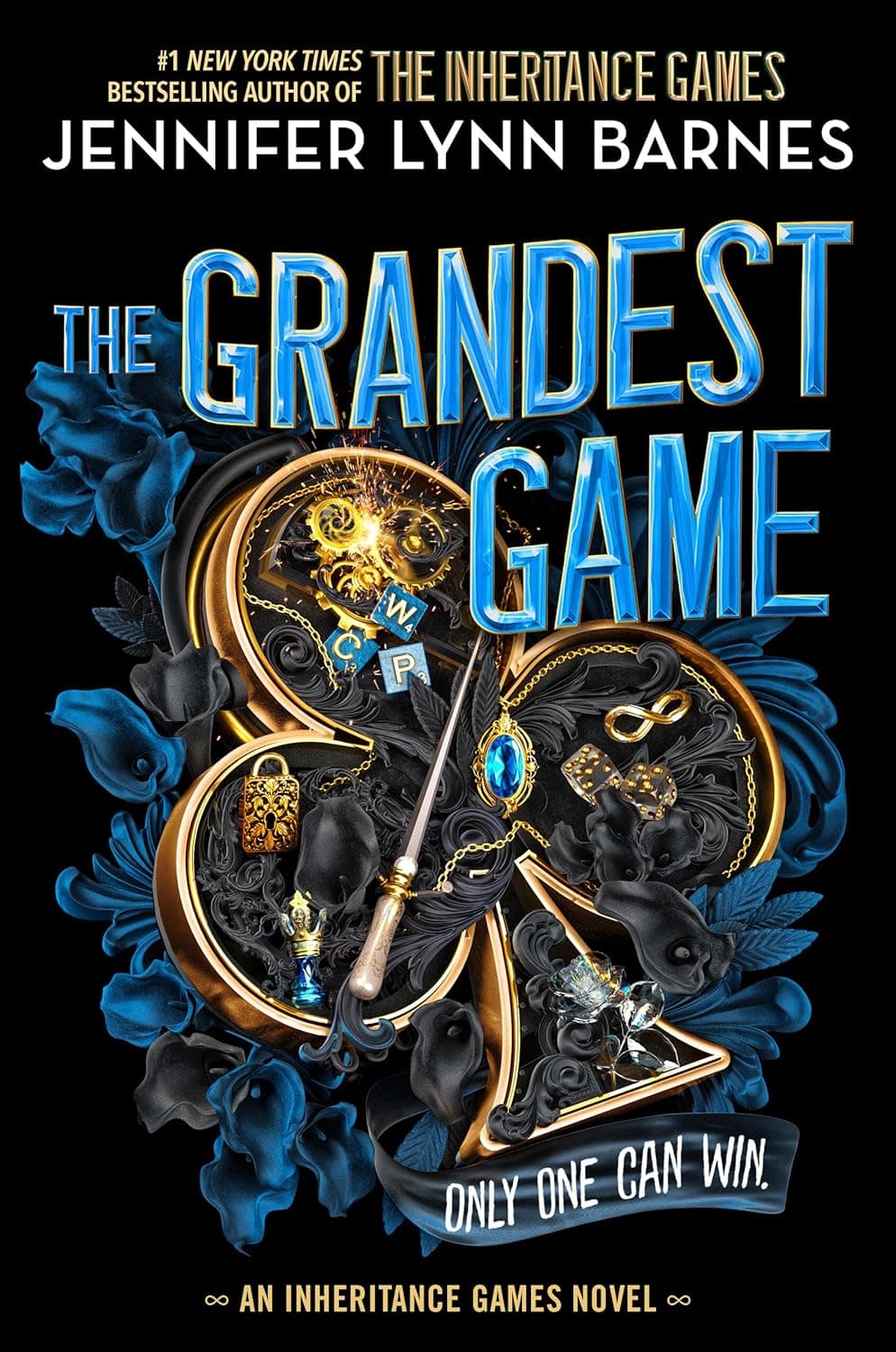
In The Grandest Game, the thrill of solving riddles doubles as a study of people under pressure: how ambition collides with loyalty, how history refuses to stay buried, and how intimacy blooms—and breaks—when everyone is playing to win. The Hawthorne world runs on strategy, secrets, and carefully curated appearances, but the book keeps asking what lies beneath the moves: What do you owe family? What will you sacrifice? And who are you when the mask slips?
Major Themes
Games, Puzzles, and Strategy
The entire narrative runs on the logic of games, with the Grandest Game acting as both plot engine and metaphor for social maneuvering. Challenges—from the team-locked escape sequence launched in Chapter 24 to Truth-or-Dare-as-power-play between Rohan and Savannah Grayson in Chapter 58—demand logic, nerve, and the ability to read people. Characters approach the game as extensions of themselves: Grayson Hawthorne with cold precision, Gigi Grayson with pattern-hunting intuition (as in her study analysis in Chapter 27), and Rohan with ruthless, social calculation. Recurring symbols—the chess sets and the hourglass introduced at the ball in Chapter 20—underline that time, leverage, and placement are everything.
Family and Legacy
Family is the story’s emotional gravity, pulling characters toward protection, vengeance, or escape. Tobias Hawthorne’s shadow defines expectations and resentments, from the Hawthorne brothers’ upbringing to Savannah’s belief that Avery Grambs wronged her father. For Lyra Catalina Kane, the game is a bid to save Mile’s End and decipher a biological legacy she barely remembers, while the bond between Brady Daniels and Knox Landry shows how found family can be both refuge and liability. Even the player pins echo the Hawthorne name: entry into a lineage of power, secrecy, and shared stakes.
Secrets and Hidden Truths
Secrets power the plot and shape the people. Lyra’s repressed memory of her father’s death resurfaces in Chapter 48, reframing her motives and fears; Odette Morales drip-feeds her past to manipulate the field; a listening device found in Gigi’s necklace in Chapter 45 exposes outside interference. Architecturally and emotionally, the book is built like a puzzle box—masks, hidden compartments, invisible ink—reminding us that truth often exists in plain sight but requires the right angle and the courage to look.
The Influence of the Past
The past doesn’t merely inform the present; it traps and tests it. The ruins on Hawthorne Island—and the Lincoln quote Lyra discovers in Chapter 8—insist that yesterday’s choices set today’s arena. Old fires, vanished girls, and heir-making childhoods dictate who these players are: Grayson’s hyper-control, Knox’s hair-trigger responses, and Lyra’s literal running toward and away from memory all speak to scars that strategy alone can’t cover.
Competition and Ambition
The prize makes the competition visible; deeper ambitions make it dangerous. Every player’s “why” sharpens their “how”: Rohan’s inheritance, Savannah’s revenge, and Lyra’s fight for home push them toward alliances of convenience and lines they might cross. Timed challenges, scoreboards, and one-shot hints test not just skill but ethics—what you’ll risk, whom you’ll betray, and which cost you can live with.
Romance and Complicated Relationships
The game accelerates intimacy, then weaponizes it. Lyra and Grayson are drawn together by misunderstood histories and mutual steadiness under pressure; Savannah and Rohan match each other move for move, blurring strategy and desire; Gigi and Brady spark intellectually even as his hidden motives undercut trust. Dances, near-touches, and forced proximity act like puzzles too: highly structured, emotionally volatile, and always timed.
Supporting Themes
Identity and Self-Discovery
The game functions as a mirror. Lyra starts to see herself beyond trauma; Grayson learns the value of being “wrong” and flexible; Gigi refuses to be anyone’s liability or mascot. Each revelation links back to the major themes: strategy refines identity, and family scripts are rewritten—sometimes painfully—through truth.
Trust and Betrayal
Alliances form under a countdown clock, which means trust is transactional until it isn’t. The Brady–Knox rift grows from earlier betrayal, and Savannah–Rohan’s pact bakes in future treachery, asking whether honesty is possible when winning demands secrecy. Secrets fuel strategy; strategy invites betrayal.
Power and Manipulation
Institutional power (the Hawthorne name) meets soft power (information, charisma, timing). Odette and Rohan excel at psychological leverage, while the game itself is engineered manipulation, corralling players into choices that reveal their hierarchies of need. Power, in this world, is the ability to decide which truth surfaces when.
Sacrifice and Cost
Every advantage has a price. Bloodied knuckles, forfeited “treasure,” burned hints, and Odette’s ultimate exit show victory as subtraction: what gets given up to move forward. Ambition turns ethical questions into practical ones—what hurts least now, and what will still haunt you later?
Theme Interactions
- Family and Legacy ↔ Competition and Ambition: Family creates the stakes that make winning feel necessary. Lyra’s home and Savannah’s father convert prize money into moral currency, turning a contest into a crusade.
- Secrets and Hidden Truths ↔ Romance and Complicated Relationships: Intimacy requires disclosure; the game punishes it. Relationships become laboratories for truth—revelations heal or shatter, but either way they accelerate character change.
- Games, Puzzles, and Strategy ↔ The Influence of the Past: Many puzzles echo Hawthorne history; solving them means decoding earlier sins and intentions. Progress demands reckoning, not evasion.
These forces braid rather than run in parallel: strategy is shaped by backstory; ambition is justified by lineage; romance exposes secrets that reorder alliances.
Thematic Development
-
Setup (Chs. 1–16): The game and its stakes snap into place as legacies and past traumas surface. Secrets flicker at the edges, establishing motive and mystery.
-
Pressure Cooker (Chs. 17–62): The grand escape sequence concentrates everything—strategy, trust tests, and confessions. Brady’s lie and Odette’s layered history break cover; romance intensifies under the clock.
-
Unmasking and Fallout (Chs. 63–83): External threats raise the danger while the Hawthorne past—Alice, the omega symbol—moves to the foreground. Characters confront what history has already decided for them and what they can still change.
-
Epilogue: Some truths land, others are deferred. The unresolved outside threat and the unfinished Hawthorne ledger keep the thematic questions alive for what comes next.
Character Embodiment
Lyra Catalina Kane embodies Identity and Self-Discovery, Secrets and Hidden Truths, and Family and Legacy. Her repressed memory drives the plot, while her fierce loyalty to Mile’s End reframes competition as love-in-action.
Grayson Hawthorne is the crucible of Games, Puzzles, and Strategy intertwined with The Influence of the Past. Groomed as an heir, he must unlearn rigidity to protect people rather than just win positions.
Gigi Grayson channels Games and Identity through creative patterning. Seen as “pixie dust,” she asserts competence and moral clarity even while carrying family secrets that complicate trust.
Savannah Grayson fuses Competition and Ambition with Family and Legacy. Her righteous fury sharpens her strategy—and risks turning vengeance into self-sabotage.
Rohan personifies Power and Manipulation married to Competition. A product of the Devil’s Mercy, he treats every interaction as a move—until attraction and respect disrupt his perfect calculus.
Brady Daniels illustrates Trust and Betrayal and the Costs of Ambition. His lies reveal how desperation blurs lines, especially where grief (Calla) and need collide.
Knox Landry mirrors The Influence of the Past in body and mind—trauma informs his temper and fears. His strained brotherhood with Brady captures found family under siege.
Odette Morales is Secrets and Power in motion. By curating what she reveals, she steers the game—until her ultimate sacrifice reframes what winning even means.
Avery Grambs looms as legacy incarnate. Whether scapegoat or symbol, her presence defines the Hawthorne stakes against which others measure justice and inheritance.
Universal Messages
The book insists the past isn’t past; it is the playing field. Family is both ballast and burden, powerful enough to justify risk and to distort truth. And like any great game, life is less about the final score than the choices you make under pressure—the strategies you trust, the people you protect, and the truths you’re willing to face.