Guilt and Innocence
What This Theme Explores
Guilt and innocence in The Life We Bury are not tidy legal categories but lived conditions that shape identity, memory, and choice. The novel asks where the law’s verdict ends and a person’s moral truth begins, especially through Carl Iverson, who is legally guilty yet morally more complicated than his conviction allows. It also probes the quieter forms of guilt borne by Joe Talbert, whose past inaction haunts him, by his brother Jeremy, whose vulnerability intensifies Joe’s sense of duty, and by Lila Nash, whose shame constricts her view of herself and others. The book ultimately suggests that exoneration and atonement answer different questions: the first clears a name, the second frees a conscience.
How It Develops
The theme first surfaces in the stark contrast between public record and private reality. Joe arrives at a hospice to interview a convicted murderer and finds a man whose account complicates the official story. Carl’s reputation, fixed by a jury, collides with the intimate self-portrait he offers Joe: a soldier who has done terrible things, a prisoner who insists on a different truth about the crime that defines him. Simultaneously, Joe’s own life is already a case file of unprosecuted guilt—his silence about his grandfather’s death, his distance from Jeremy, his instinct to keep moving rather than look back.
As Joe’s investigation opens, the novel methodically dismantles the certainty of Carl’s conviction. Physical artifacts—burned photographs, a coded diary—introduce fracture lines in the case and force Joe and Lila to reconsider the categories of “monster” and “victim.” The work of uncovering another man’s innocence becomes the mechanism by which Joe confronts his obligations at home, particularly the cost of leaving Jeremy in harm’s way. The search for truth outside the courtroom is echoed by a search for courage inside the self.
The theme sharpens at revelation: the deciphered diary exposes the true killer, Dan "DJ" Lockwood, and reclassifies Carl’s legal status. Yet Eskens resists a clean slate. Carl admits to a different moral transgression—an act in Vietnam that he, not the state, has been judging ever since. The story therefore separates legal innocence from moral innocence, allowing one to be restored while the other remains a burden to be owned.
Resolution arrives as action rather than declaration. Carl finds a measure of peace by telling his whole truth before any official clearing of his name, accepting that a soul can be acquitted of one charge while still seeking atonement for another. Joe, choosing Jeremy over his own self-preservation, translates remorse into responsibility. Lila, recognizing that shame is not destiny, opens herself to the possibility that people are more than the worst things said or done to them. The novel closes with verdicts that matter most to the characters’ consciences.
Key Examples
Even as the plot advances, crucial moments crystallize how guilt and innocence operate on parallel tracks.
-
Carl’s duality of guilt: For decades, he is legally guilty of Crystal Hagen’s murder, yet the investigation uncovers evidence that he did not commit the crime. As detailed in the Chapter 6-10 Summary, Carl distinguishes between killing in war—a tragic duty—and murder as a moral violation; he accepts responsibility for the latter even while contesting the former charge. His desire to “pay a debt,” despite a wrongful conviction, exposes how conscience can impose a harsher sentence than the court.
-
Joe’s survivor’s guilt: Joe believes he failed his grandfather and confesses that he watched rather than acted. In the Chapter 31-35 Summary, speaking this secret aloud shifts him from paralysis to purpose, reframing the Carl case as a chance to do what he didn’t do before: intervene. His later decision to safeguard Jeremy completes that arc from private shame to accountable adulthood.
-
Lila’s buried shame: “Nasty Nash” and the scars on her shoulder mark a past she tries to outpace, leading her to judge Carl quickly because she judges herself harshly. Working the case with Joe destabilizes her certainty that labels tell the truth about people. Her willingness to revise her view of Carl mirrors her tentative reimagining of her own worth beyond what was done to her.
Character Connections
Joe and Carl form a confessional bond grounded in reciprocal recognition. Joe sees in Carl someone crushed by a narrative that may not be true; Carl sees in Joe a man whose life is bent by a secret he refuses to face. Each gives the other what he lacks: Carl offers Joe a moral vocabulary for distinguishing kinds of guilt, and Joe offers Carl the courage of being fully known. Their relationship suggests that naming our guilt in the presence of another is itself an act of moral repair.
Joe and Lila, both shaped by trauma, initially protect themselves with skepticism—about others’ motives and their own capacity for good. The joint pursuit of truth requires them to trust in evidence over prejudice, and in each other over isolation. In learning to recognize innocence where the world assumed guilt, they rehearse gentler judgments toward themselves.
Joe and Jeremy embody guilt transmuted into guardianship. Joe’s early neglect intensifies his self-reproach, but the novel pointedly ties his final growth to the concrete act of taking responsibility for his brother. By choosing care over escape, Joe redefines innocence not as a state of never having failed, but as the steady, daily work of making amends.
Symbolic Elements
-
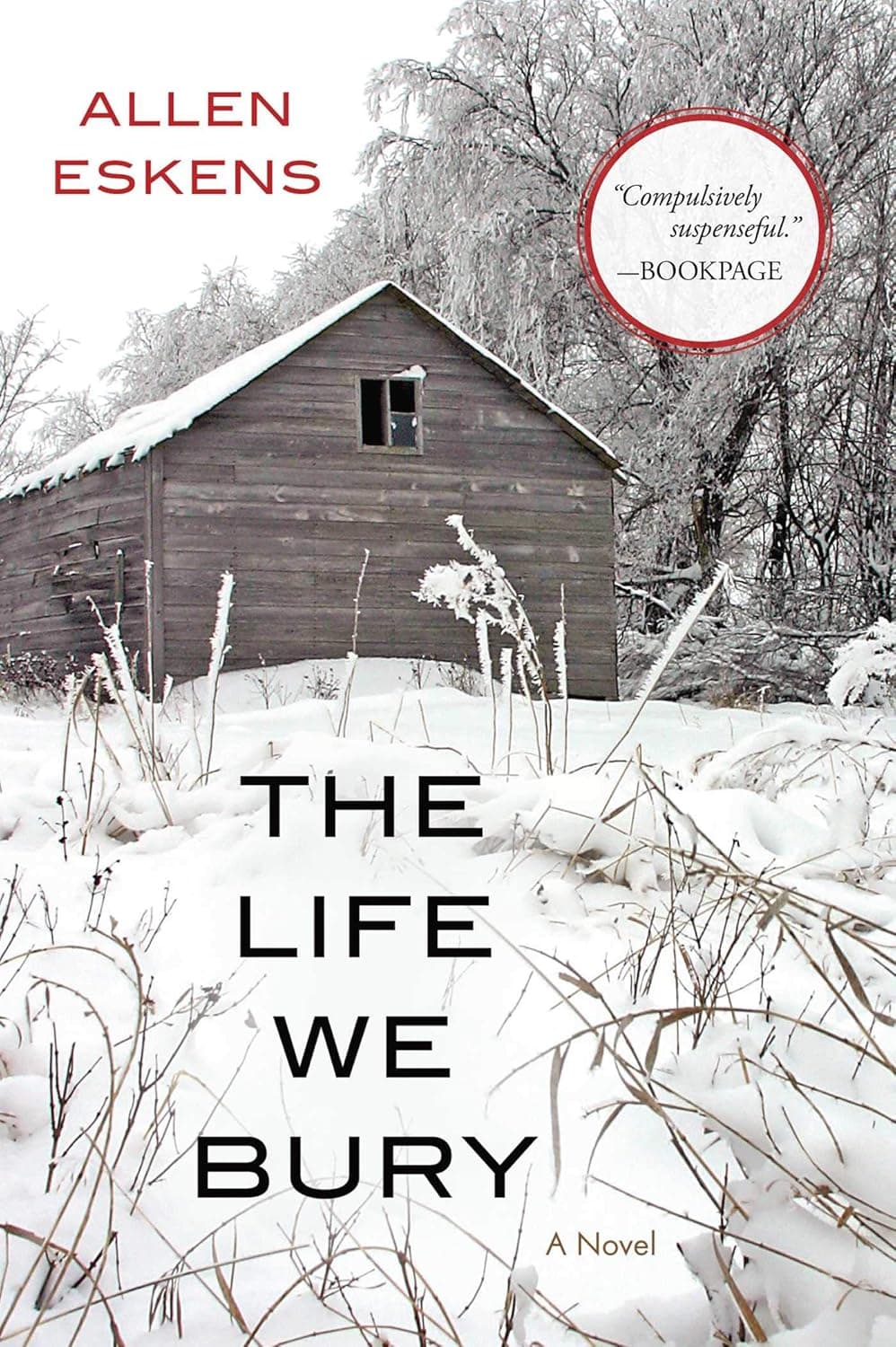
The Life We Bury: The title is a map of the novel’s moral excavation. Carl buries the wartime act that most condemns him, Joe buries the memory that most defines him, and Lila buries the shame that most distorts her. Digging up these “lives” is painful, but the exhumation is the only path to clarity and, finally, to mercy.
-
The Anchor Rope: Joe gripping the rope while his grandfather drowns becomes a tactile emblem of paralysis—holding fast to the wrong thing. The rope tethers Joe to a single failed moment until he learns that letting go of misplaced duty is the first step toward taking the right kind of responsibility.
-
The Scars: Lila’s hidden scars externalize private pain and the belief that she is marked forever. As she shifts from concealment to cautious honesty, the scars become less a sentence and more a testament to survival, aligning the body’s healing with the soul’s.
Contemporary Relevance
Eskens’ portrait of wrongful conviction resonates with ongoing efforts to exonerate the innocent and interrogate the justice system. The story cautions that evidence can be misread, narratives can harden into errors, and institutions can fail precisely where certainty is loudest. At the same time, its attention to trauma and self-blame speaks to contemporary conversations about mental health: we may not control the verdicts others render, but we can participate in our own restoration through truth-telling, repair, and care. The novel insists that people are not reducible to their worst moment—or to what was done to them.
Essential Quote
“There is a difference. I've done both. I've killed…and I've murdered.”
Carl’s admission articulates the theme’s core distinction: legal categories can collapse unlike acts under a single word, while conscience insists on finer lines. By asserting both culpability and innocence, Carl rejects the comfort of absolutes and models the difficult integrity of telling the whole truth. The sentence reframes justice as twofold—what the law decides and what the soul must still reckon with.