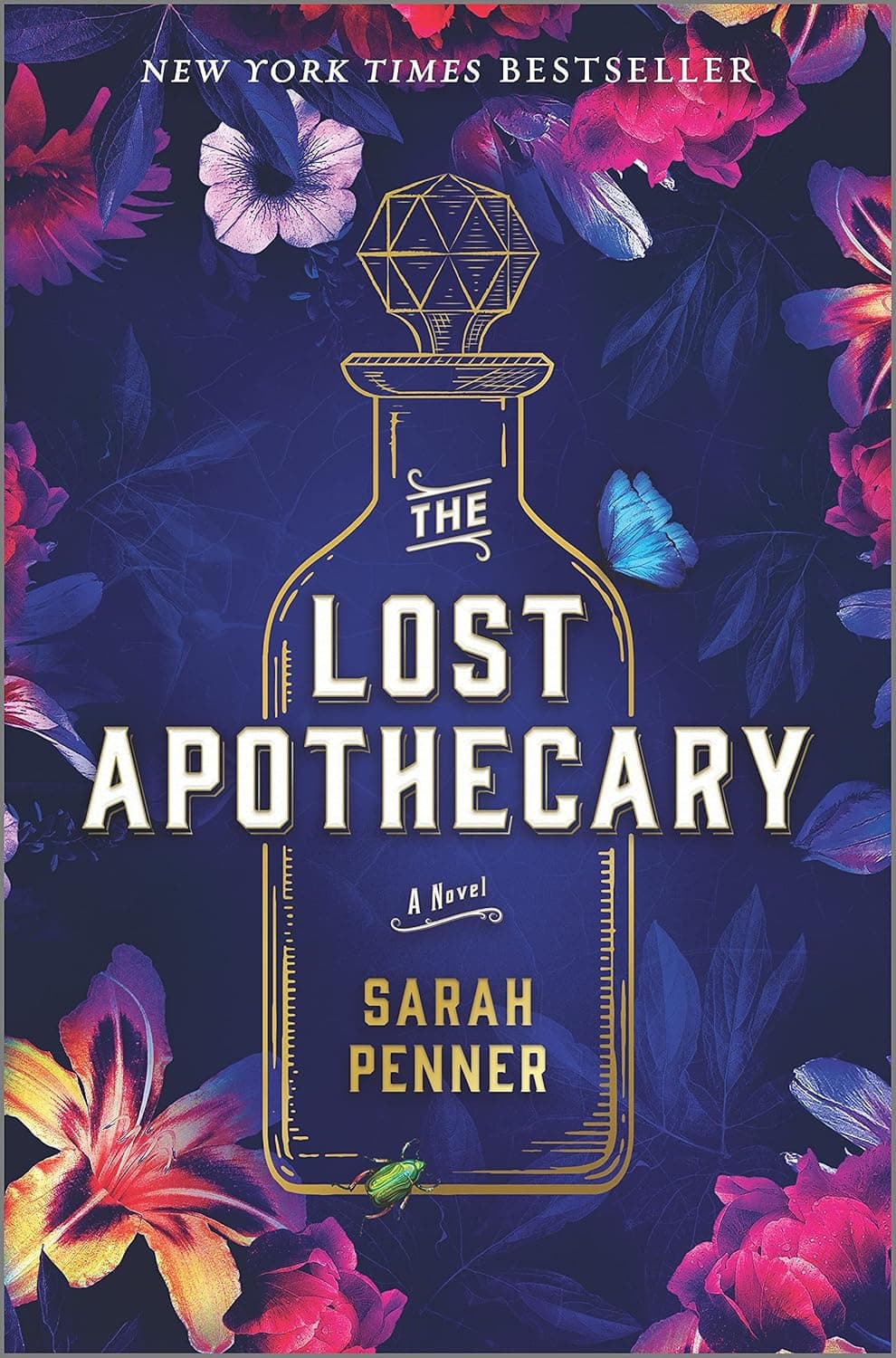
At a Glance
- Genre: Historical fiction with mystery/thriller elements
- Setting: 1791 London’s back alleys and apothecaries; present-day London’s libraries and riverbanks
- Perspective: Dual timeline told through multiple first-person narrators (Caroline, Nella, Eliza)
Opening Hook
A hidden shop down a shadowed alley once sold deliverance—measured in drops and powders—to women with no other recourse. Centuries later, a mudlarker’s glint on the Thames pulls an American traveler into the shop’s wake, where secrets steep like tinctures and the past refuses to stay buried. As Caroline Parcewell hunts the truth behind a tiny vial etched with a bear, another voice rises from 1791: Nella Clavinger, a healer-turned-poisoner who kept a ledger of women’s desperate hopes. Their stories fuse into one question: when the world denies justice, what will women dare to make for themselves?
Plot Overview
Present Day
Arriving in London alone for what should have been an anniversary celebration, Caroline’s plans implode after discovering her husband James Parcewell’s affair. On a whim, she joins a mudlarking tour and unearths a small apothecary vial engraved with a bear—an artifact that rekindles the academic ambition she once abandoned. At the British Library, a research note referencing “Bear Alley” and a woman-friendly apothecary sends her hunting through archives and city streets, aided by a savvy librarian, Gaynor.
James turns up to patch things over, but their strained reunion worsens when he falls ill after ingesting eucalyptus oil from Caroline’s bag. Police find Caroline’s poison research and suspect foul play. With Gaynor’s help she’s cleared—especially after James confesses he knowingly took the oil to win sympathy—forcing Caroline to recognize one last manipulation she refuses to forgive.
Drawn back to Bear Alley, Caroline slips through a hidden gate and discovers the apothecary shop concealed behind a false wall. Inside sits the ledger: a register of poisons, dates, and women’s names. She photographs the pages and follows the trail to the apothecary’s final days—and to the fate of a girl named Eliza Fanning—until the mystery dovetails with her own rebirth. Leaving James, Caroline applies to Cambridge and shapes her future around the story she has brought into the light.
1791
In a narrow London alley, Nella, once a healer like her mother, now measures out poisons for women whose lives leave no room for mercy. The change followed a private devastation: a lover, Frederick, tricked her into aborting their child and proved to be already married. Sick in body and spirit, Nella records every transaction in a leather-bound register, vowing never to harm a woman.
Twelve-year-old Eliza Fanning arrives on behalf of her mistress, Mrs. Amwell, seeking a poison for a brutal husband. The plan works; the man dies. But Eliza returns, nervy and earnest, insisting the dead man’s spirit haunts her. Longing for belonging and dazzled by “magick,” she begs to be Nella’s apprentice—gently cracking Nella’s guard.
When the imperious Lady Clarence demands a poison for her husband’s mistress, Nella refuses—she will not hurt women. Lady Clarence threatens exposure, and Nella destroys the first batch in defiance. Blackmailed into making another, Nella accepts Eliza’s help. In a crucial mistake, Eliza decants the poison into a jar engraved with the shop’s address.
The poison kills Lord Clarence instead. A maid, panicked, shares a wax impression of the marked jar with authorities. Bulletins circulate bearing the bear sigil; rumor spreads of an “apothecary killer.” With the net closing, Eliza stages a desperate escape, leaping from Blackfriars Bridge to fake her death and draw the hunt away. Believing the killer gone, the police move on. Nella—shattered, indebted to the bravery that saved her—makes a final entry for Eliza, then disappears, the shop sealed until Caroline breaks it open centuries later.
Central Characters
The novel orbits three women whose choices reverberate across time, each pushing against the limits set for her.
-
Nella Clavinger
- A former healer turned clandestine poisoner whose compassion curdles into purpose after a grievous betrayal. The ledger she keeps is both penance and creed, and her bond with Eliza reignites a nearly extinguished instinct to protect.
- Timeline: 1791
- Core Motivation: To redress harm done to women when legal remedies fail
- Arc: From isolated avenger to guarded mentor, capable of sacrifice and grace
-
Caroline Parcewell
- An aspiring historian who buried her ambitions in a marriage that asked for smallness. The bear-etched vial jolts her into pursuit—of a mystery, a vocation, and her own voice.
- Timeline: Present day
- Core Motivation: To reclaim her future and define herself beyond her marriage
- Arc: From hesitant spouse to independent scholar determined to chart her own life
-
Eliza Fanning
- A curious maid whose appetite for “magick” becomes courage in action. She starts as a messenger and becomes the story’s surprise savior.
- Timeline: 1791
- Core Motivation: To protect those she loves and step into a larger world
- Arc: From wide-eyed girl to decisive young woman who risks everything for a friend
Others to know:
- James Parcewell: Caroline’s unfaithful husband, whose manipulations push her toward freedom
- Frederick: Nella’s lover whose deceit sets her on a darker path
- Mrs. Amwell: Eliza’s mistress, catalyst for Eliza’s first trip to the shop
- Lady Clarence: A powerful client whose demands trigger the investigation that threatens to expose Nella
Major Themes
-
Female Solidarity and Empowerment Women shore up one another where society refuses to help. Nella’s shop becomes an underground court of last resort; Eliza’s leap seals that quiet covenant. In the present, Caroline’s allies—Gaynor and longtime friends—model how community turns individual resolve into transformation.
-
Secrets and Deception False walls hide a shop; coded notes hide a lineage; lies rot marriages and lives. The story treats secrecy as both refuge and rot—necessary to survive, corrosive when wielded to control.
-
Revenge and Justice Nella’s tinctures blur the line between vengeance and remedy, raising hard questions: what counts as justice when the law ignores women’s suffering? The novel refuses easy answers, but it makes clear why desperate people improvise their own courts.
-
Betrayal One man’s deceit shatters Nella’s life; another’s infidelity jolts Caroline awake. Betrayal devastates, but it also clarifies—forcing both women to decide who they are without the men who diminished them.
-
The Power of the Past and History Caroline’s archival chase is more than scholarship; it becomes a mirror and a map. By resurrecting Nella and Eliza’s story, she finds direction and purpose, proof that history’s buried threads can pull the present into new shapes.
-
Self-Discovery and Identity Caroline’s hunt for the apothecary doubles as a hunt for herself. She learns to trust her instincts, claim her intellect, and choose a future aligned with her deepest self.
Literary Significance
The novel’s dual-timeline architecture knits together a propulsive present-day investigation with a moody, candlelit past, showcasing how structure can mirror theme: the present is literally built on the past. As feminist historical fiction, it spotlights women’s hidden networks and the ingenuity required to survive in systems arrayed against them, giving narrative weight to the unrecorded. Its genre blend—history, mystery, and a touch of gothic thriller—broadens its reach while maintaining a tight emotional core. The ledger at its heart is both artifact and argument: story as evidence, evidence as liberation.
Historical Context
- Women’s legal constraints in 1790s England—limited property rights, scant recourse against abusive husbands, onerous divorce—create the pressure that makes clandestine solutions plausible. Nella’s shop fills the void left by a justice system that rarely served women without wealth.
- Apothecaries were everyday medical providers, and the craft’s herbal, domestic knowledge often traveled through mothers and daughters. Nella’s practice sits at the crossroads of folk healing and a formalizing, male-dominated medical sphere.
- Forensic toxicology barely existed. As noted in the author’s Historical Note, many poisons left little trace by contemporary methods, making Nella’s “natural causes” strategy chillingly credible.
Critical Reception
On release, The Lost Apothecary became an instant New York Times bestseller and a popular book-club pick. Critics praised its soot-and-lantern atmosphere, the memorable claustrophobia of the hidden shop, and the momentum of a mystery braided across centuries. Readers responded to the novel’s insistence on women helping women, even as some noted modern-plot conveniences. Overall, it was celebrated as an engrossing debut that marries dark intrigue with a clear-eyed feminist pulse.