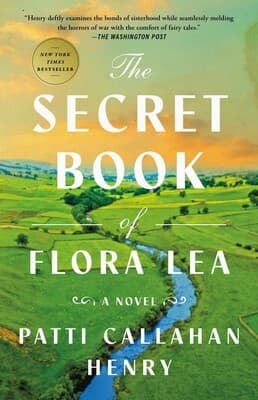
The group gathers in Embankment Gardens, but the joy is short-lived when Hazel Mersey Linden clarifies that she seeks the origin of Peggy Andrews's stories, not to claim them, but to find Flora. The tense atmosphere explodes with the arrival of Peggy's furious mother, Linda Andrews, who reveals Hazel's letter prompted her hasty trip to London. Cornered, Linda confesses the truth about Whisperwood's origins, forever changing the course of their lives.
Chapter 46: The Truth in the Gardens
Linda explains that her sister, Maria, a volunteer in Newcastle during the war, cared for children of war widows. One little girl used the story of Whisperwood as a "pacifier." After Maria's brother-in-law died at Pearl Harbor, she shared the story with a grieving Peggy. Over time, Linda and Peggy adopted it as a cherished family heirloom born of shared loss. Linda insists she never knew the little girl's name, dismissing it as "just a story," but Hazel counters, "It is never just a story."
Camellia Linden urges a reluctant Hazel to contact journalist Dorothy Bellamy, believing an article about a girl from Newcastle might reach someone who knew her. Convinced, Hazel retrieves Dorothy's letter and arranges a meeting at The Perch pub in Binsey, their most significant lead in twenty years.
Chapter 47: The River Child
Hazel waits for Dorothy Bellamy at The Perch in Binsey, resolved to tell the whole truth. When Dorothy arrives, Hazel feels an uncanny familiarity. As Dorothy, who introduces herself as "Dot," removes her coat, Hazel sees a birthmark shaped like two rabbit ears on her wrist. The world shifts as Hazel realizes the journalist she has been avoiding is her lost sister.
In a trembling voice, Hazel begins reciting the opening lines of the Whisperwood story: "Not very long ago and not very far away, there once was and still is an invisible place right here with us." Dot, stunned, finishes the line: "And if you are born knowing…" The recognition dawns, and Hazel declares, "You are my sister." Dot is terrified and confused, but as Hazel holds her hand, fragmented memories surface: a river, a stone house, a well. The truth crashes over her, and she accepts the impossible: "I am Flora. I am the River Child." The sisters embrace, crying, reunited after twenty years in the same place they were separated. Dot, now grappling with a shattered identity, learns that her mother is still alive and has never stopped looking for her.
Chapter 48: The Nurse
Hazel calls her mother, telling her to come to The Perch immediately. While they wait, Hazel and Dot—now Flora—begin to piece together the past. Hazel recounts their year in Binsey, but Flora's memories are dreamlike and fragmented. Hazel then tells her about Peggy Andrews and the American publication of Whisperwood, explaining how the book found its way back to her and led to this moment. As they talk, Flora mentions that her aunt, Imogene Wright, had warned her away from investigating stories of lost children. Hazel is stunned into silence. She realizes that Dot's aunt is the same Imogene who was a nurse in Binsey and babysat them during the war. The kidnapper has been hiding in plain sight all along.
Camellia arrives and runs to her daughter. The reunion is profoundly emotional for Camellia but confusing for Flora, who doesn't remember her. Overwhelmed, Flora explains that she needs time to process everything and must speak to Imogene to understand what happened to her life. She asks Hazel to delay calling the police, and Hazel agrees, promising her the afternoon. As Flora walks away, unsteady but determined, Camellia collapses into a chair, terrified of losing her daughter a second time. Hazel reassures her, placing her faith in the power of their story: "Whisperwood, Mum. It brought her back and it will show us the way."
Chapter 49: A Wondrous Place
The narrative shifts to Peggy and Wren, who spend the evening celebrating at a jazz club. Peggy, feeling liberated, gets her hair cut into a stylish bob like Jackie Kennedy's, a physical manifestation of her newfound independence. The night is a culmination of their blossoming love, a stark contrast to the sheltered life Peggy has left behind. When they return to The Savoy in the early morning hours, they find Peggy’s mother, Linda, sitting in the same spot in the lobby where they left her, having waited for them for nearly eleven hours out of fear for their safety.
In a moment of profound reconciliation, Linda apologizes for her controlling behavior and her past treatment of Wren. She even compliments Peggy’s new haircut, an unexpected gesture of acceptance that moves Peggy deeply. Peggy, in turn, offers her mother forgiveness and a new perspective. She points out that Linda's actions, while secretive and misguided, ultimately kept the story of Whisperwood alive, allowing it to travel back across the ocean and lead to Flora being found. This reframes Linda's role from one of theft to one of accidental preservation. Mother and daughter embrace, their fractured relationship beginning to heal under the weight of honesty and love.
Chapter 50: The Choice
The next morning, the first day of spring, Barnaby Yardley appears at Hazel’s flat, looking disheveled and angry after being abandoned at the train station. Hazel tells him the miraculous news: they have found Flora. As he showers, Hazel receives a call from Sotheby’s, assuring her the job is still hers. In a moment of clarity, she turns it down, telling the director that the experience has opened her eyes to what she truly wants from life. When Barnaby emerges, he is shocked to learn she has rejected her "dream job."
Their conversation becomes a painful reckoning for their relationship. Hazel explains that she no longer wants a life of pretense or safety; she wants truth and the freedom to pursue her own stories, not just curate others'. She confesses that her guilt over Flora’s disappearance—specifically, being distracted by a kiss from Harry Aberdeen—has made her terrified of "wild desire" ever since. Barnaby interprets this as a confession that she has never truly desired him. The conversation reveals the cracks in their relationship, including Barnaby's inability to move on from his own past, symbolized by his ex-wife's boxes still in his flat. He gives Hazel an ultimatum: she must choose what she wants and come to him. After he leaves, Hazel makes her choice. She picks up the phone and calls Inspector Aiden Davies to report Imogene Wright.
Key Events
- Linda Andrews reveals the Whisperwood story originated with a little girl in Newcastle during the war.
- Hazel meets Dorothy "Dot" Bellamy and realizes Dot is her lost sister, Flora, due to a recognizable birthmark.
- Flora is reunited with her mother, Camellia, though her memories are fragmented.
- Hazel discovers Flora’s adoptive aunt is Imogene Wright, the nurse from Binsey, identifying her as the kidnapper.
- Peggy and her mother reconcile, with Peggy reframing her mother's actions as the preservation of the story.
- Hazel turns down the Sotheby's job and has a final confrontation with Barnaby, leading to their separation.
- Hazel calls the police to report Imogene Wright, choosing to pursue the full truth.
Character Development
- Hazel Linden: Hazel's journey culminates in finding Flora, empowering her to reclaim her life. She rejects the Sotheby's job, confronts her relationship with Barnaby, and reports the crime, moving from a haunted past to actively shaping her future.
- Flora Lea Linden / Dorothy 'Dot' Bellamy: The mystery of her identity is solved, but she must reconcile two separate lives. Her initial terror gives way to a need to uncover her past by confronting Imogene.
- Peggy Andrews: Peggy transforms into a confident, independent woman, standing up to her mother, embracing her love for Wren, and finding forgiveness.
- Linda Andrews: Linda evolves from a controlling antagonist into a sympathetic figure, her actions motivated by loss and love. She finally accepts Peggy's independence.
- Barnaby Yardley: Barnaby's supportive façade cracks, revealing his insecurities and attachment to pretense, leading to the end of his relationship with Hazel.
Themes & Symbols
The Power of Stories and Imagination: The fictional story of Whisperwood unlocks a real-world mystery, acting as a homing beacon, bringing Flora back to Hazel after twenty years. Hazel's declaration, "It is never just a story," serves as the novel's thesis.
Truth, Memory, and Secrets: Secrets break as Linda reveals the story's origin, Hazel uncovers Flora's identity, and Imogene is exposed. The chapters explore the nature of memory, as Flora's past exists only in fragments, contrasting with Hazel's vivid recollections.
Guilt, Blame, and Forgiveness: Peggy forgives her mother, understanding her motivations. Hazel confronts her guilt, confessing her "failure" to Barnaby, contributing to their breakup but aiding her healing.
The Birthmark: The "bunny ears" on Flora's wrist serve as definitive proof of her identity, symbolizing an unchangeable truth connecting Flora Lea Linden to Dorothy Bellamy.
The Perch Pub: The setting of both Flora's disappearance and reunion with Hazel, transforming a place of trauma into one of recovery and Grief, Loss, and Hope.
Significance
This section represents the climax of the novel's central plot. The twenty-year search for Flora Lea Linden concludes, resolving the primary mystery. The reveal of Dorothy Bellamy as Flora is the pivotal moment the narrative has been building toward.
However, the resolution gives rise to new conflicts. Flora's discovery creates an internal crisis, Hazel's relationship with Barnaby implodes, and Imogene's identification sets up the final confrontation. These chapters transition the story from a mystery about a lost child to a drama about the aftermath of her return.
Key Quotes
"It is never just a story."
Hazel's powerful statement encapsulates the novel's central theme. It underscores the profound impact that stories can have on our lives, shaping our identities, connecting us to others, and even altering the course of reality. In this context, Whisperwood is more than just a tale; it is the key to unlocking the truth and reuniting a family.
"Whisperwood, Mum. It brought her back and it will show us the way."
Hazel's words to her mother highlight the enduring power of their shared narrative. Even in the face of overwhelming uncertainty and fear, Hazel clings to the belief that the story of Whisperwood will continue to guide them, offering hope and direction as they navigate the complex aftermath of Flora's return. It is a testament to the strength of imagination and the unbreakable bond between sisters.
Analysis
Patti Callahan Henry masterfully uses pacing and dramatic irony to build to the climax in Chapter 47. The shared Whisperwood verse as a moment of recognition cements the idea that the sisters' bond transcends memory and time, existing within the magical framework of the story they created.
The narrative structure, alternating between Hazel's and Peggy's perspectives, creates a compelling juxtaposition. While Hazel experiences the reunion with her sister, Peggy undergoes her own personal liberation. This parallel structure highlights storytelling's transformative power. Finally, Hazel's decision to call the police rather than chase after Barnaby signifies her ultimate character arc: she chooses the difficult path of truth over the comfortable illusion of safety, fully embracing the courage she learned in Whisperwood.