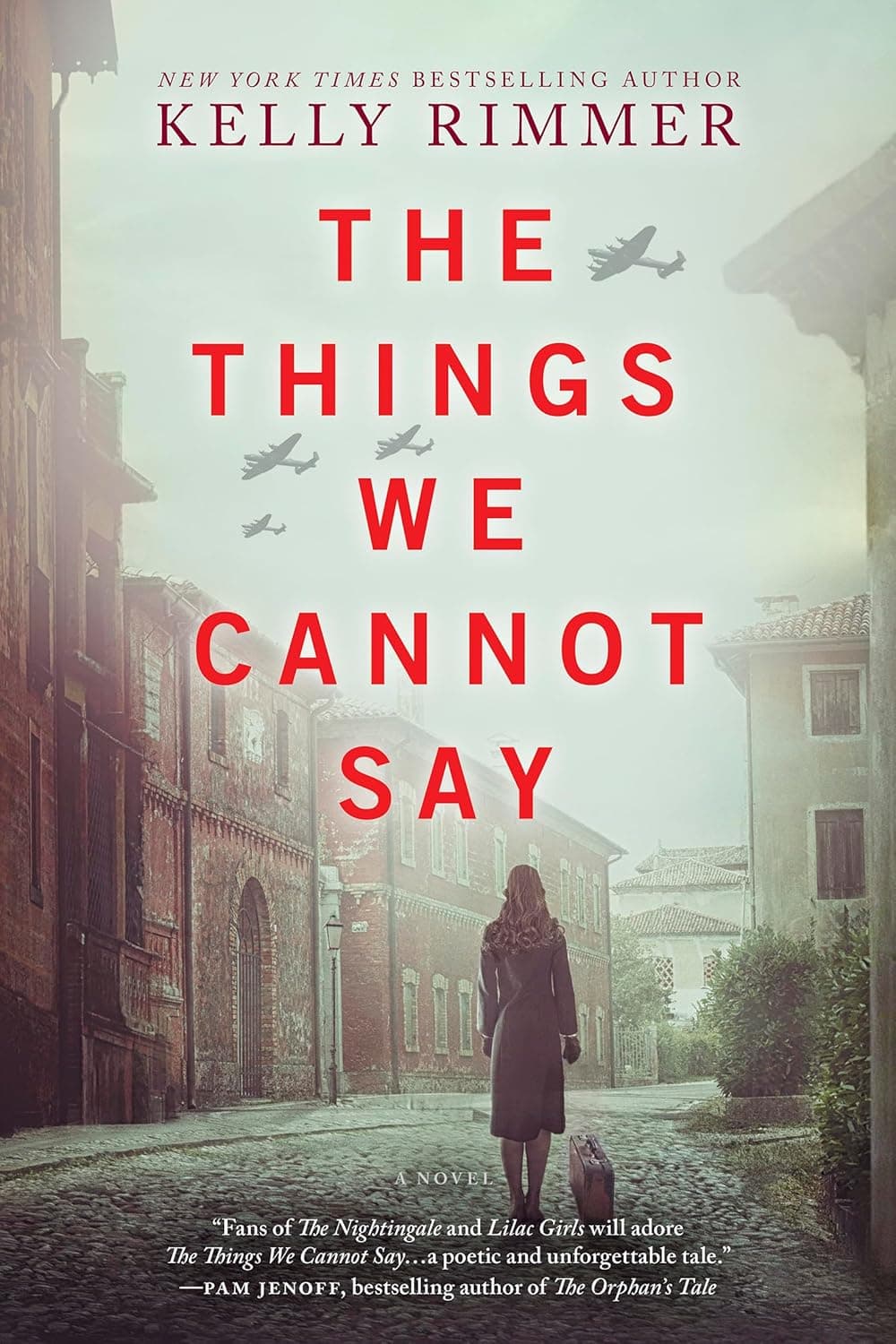
Opening
Two timelines crack open at once: in the present, Alice commits to a journey that reclaims her identity; in 1942, Alina loses everything and chooses flight over annihilation. Both women step into the unknown, driven by love and the need to speak what has long been unsaid.
What Happens
Chapter 21: Alice
Alice Michaels braces for fallout as she tells her daughter, Callie, she’s flying to Poland. Callie erupts, cataloging her father Wade’s incompetence—from mishandling Eddie Michaels’s AAC device to mangling the coffee machine—until Alice reframes the trip as not only for Babcia, but for herself and as a model of womanhood beyond motherhood. Callie pivots, dubbing it a “badass quest.”
At the hospital, Alice shares the plan with Babcia via AAC, and Babcia’s tears and gratitude steady her resolve—until Julita Slaski-Davis storms in, furious. Julita lashes out, reciting Alice’s supposed failures—from studying journalism instead of law to staying home with the kids—until the real fear surfaces: Julita doesn’t want to be alone with her mother at the end. Alice holds the line. She switches the AAC to Polish, transforming Communication and Silence into connection, and Babcia, finally understood, tells Alice she’s proud.
Later, Alice calls her father. He quietly offers what Julita cannot: he’ll cut his golf trip short and come home to support her, admitting Julita would never ask for help. His calm acceptance of her “crazy quest” seals Alice’s decision.
Chapter 22: Alina
In 1942, Alina Dziak flees into the cellar with Tomasz Slaski as soldiers pound on the door. Above, a familiar voice asks for the “hübsche tochter,” and Alina’s mother lies—Alina is in Warsaw, she says—while boots thunder through the house. The soldiers finally leave; the silence feels worse.
Tomasz’s news is worse still: the Nazis aren’t just hunting Alina. They’re clearing the region to make an Interessengebiet around the work camps. Her parents have been taken. The fragile order of hiding collapses in an instant, and Tomasz pushes action over shock: they must move now.
Outside in the dark, Tomasz sketches the perilous network that’s kept them alive. His resistance contact is Nadia. Their neighbor, Jan, hides Jewish people—including Saul Weiss and his pregnant wife, Eva—but only for money. Tomasz forbids Alina from joining his supply run; she’s too recognizable. He vanishes into night, leaving her alone with the cold, the cellar’s damp, and the knowledge that her parents are gone.
Chapter 23: Alina
Hours tick by before Tomasz returns, gray-faced, with the name that shatters denial: Oświęcim. Not the town—the camps. Auschwitz. Birkenau. He tells Alina what the smoke means and refuses false hope. The dreamer in him is gone; survival speaks plainly.
He lays out the choice. Stay, and starve under a regime designed to erase them. Or try to flee. A resistance photographer once smuggled film out—maybe he can smuggle people. Tomasz redefines home as a future they build together, not a place already lost.
Love hardens into resolve. He asks Alina to imagine the life they could still choose—his medical studies, their children, a horizon not shaped by fear. Heartbroken but clear-eyed, Alina chooses him. They run.
Chapter 24: Alice
With 36 hours to spare, Alice spirals into preparation. She crafts scripts and visual schedules for Eddie, knowing Wade won’t follow them, and resents the lonely math of being the “autism mom.” Panic spikes at the airport; she nearly quits.
Wade stops her. He admits he’s failed as a partner and as Eddie’s father, and asks to carry the weight this time so she can reclaim herself. He even calls Eddie by his old nickname. The words puncture years of silence, and the marriage shifts.
Alice’s fear loosens into purpose. The trip no longer feels like abandonment—it’s sanctioned, shared. The gate ahead looks like a threshold, not an exit.
Chapter 25: Alice
Krakow surprises her—sleek, English everywhere. A hotel delay pushes her into the Old Town Square, alive with music, children, and flowers. She takes photos for Babcia and a smiling selfie of her own, orders pierogi and a beer, and feels the lift of freedom.
Back at the hotel, a Skype call home implodes. Glass breaks; the kids scream. Callie reports Wade ignored instructions; Eddie spiraled. Alice sees Eddie’s distress and, for once, doesn’t fix it from afar. She can’t. She chooses to hold her boundary.
A text pings later: Callie calls her “inspirational.” Between the square’s light and her daughter’s faith, Alice steps back out into the city, leaning into independence.
Character Development
Both timelines pivot from passivity to choice, exposing fault lines in families and forging new identities in crisis.
- Alice Michaels: Moves from overextended caregiver to self-authoring traveler. She sets boundaries with Julita, accepts Wade’s accountability, and embraces solo agency in Krakow.
- Alina Dziak: Loses her parents and childhood in one sweep. Grief hardens into determination as she chooses flight with Tomasz.
- Tomasz Slaski: Shifts from idealist to strategist. He tells brutal truths, abandons the fantasy of resistance-from-within, and stakes everything on escape.
- Julita Slaski-Davis: Anger masks fear. Her control fractures to reveal a daughter terrified of facing her mother’s death alone.
- Wade Michaels: Drops the facade of competence. His airport confession marks the first real partnership in years.
Themes & Symbols
The arc of Communication and Silence runs through every scene: Alice and Babcia connect once the AAC speaks Polish; Wade finally names his failings; Julita’s tirade translates as grief. In 1942, silence is survival—cellars, whispers, lies to soldiers—yet the truth Tomasz speaks is the only path forward.
Love, Sacrifice, and Loyalty reshapes both women’s choices. Tomasz offers exile for life; Alina accepts. Alice sacrifices routine and control to honor Babcia and herself; Wade sacrifices pride to support her. Meanwhile, War, Trauma, and Survival escalates from background dread to direct dispossession as the Interessengebiet swallows Alina’s family, forcing resistance to become escape. Alice’s journey embodies Family Legacy and Intergenerational Connection: a granddaughter walks back into a history that once pushed her grandmother out, and a daughter watches her mother model a braver life.
Symbols sharpen the turn: the cellar as tomb and launchpad; the Old Town Square as a bright counter-image to Alice’s constricted life; a chaotic Skype call as a transfer of weight from Alice to Wade.
Key Quotes
“badass quest”
Callie’s reframing recasts Alice’s trip from abandonment to agency. The phrase names a new family narrative of womanhood—adventure as love, not neglect.
“hübsche tochter”
The soldier’s objectifying demand collapses Alina’s safety to gendered vulnerability. It marks why lies, cellars, and speed become her only defenses.
“Interessengebiet”
Bureaucratic vocabulary cloaks atrocity. The sterile term reveals the mechanized logic of dispossession that sweeps Alina’s parents away.
“Oświęcim”
Spoken as destination rather than hometown, the word signals Auschwitz/Birkenau and ends denial. It turns rumor into a map of annihilation.
“crazy quest”
Alice’s father uses Alice’s own language to validate her. His easy support contrasts Julita’s condemnation, freeing Alice to trust her choice.
“divine”
Alice’s word for the challenge after Wade’s confession elevates duty into vocation. The trip shifts from guilt to grace.
“inspirational”
Callie’s text shows the journey’s immediate legacy: a daughter absorbing a model of strength and permission to be more than one role.
Why This Matters and Section Significance
This is the hinge of the novel. Alina’s parents’ abduction ends the possibility of waiting out the war; flight becomes the only viable story. Alice’s departure ends years of silent accommodation; partnership and selfhood become negotiable at last.
The parallel is precise: Alina is forced from home to stay alive; Alice chooses to leave home to feel alive. Each step outward—into night, into an airport queue, into a foreign square—redefines love as action and identity as a decision made under pressure.