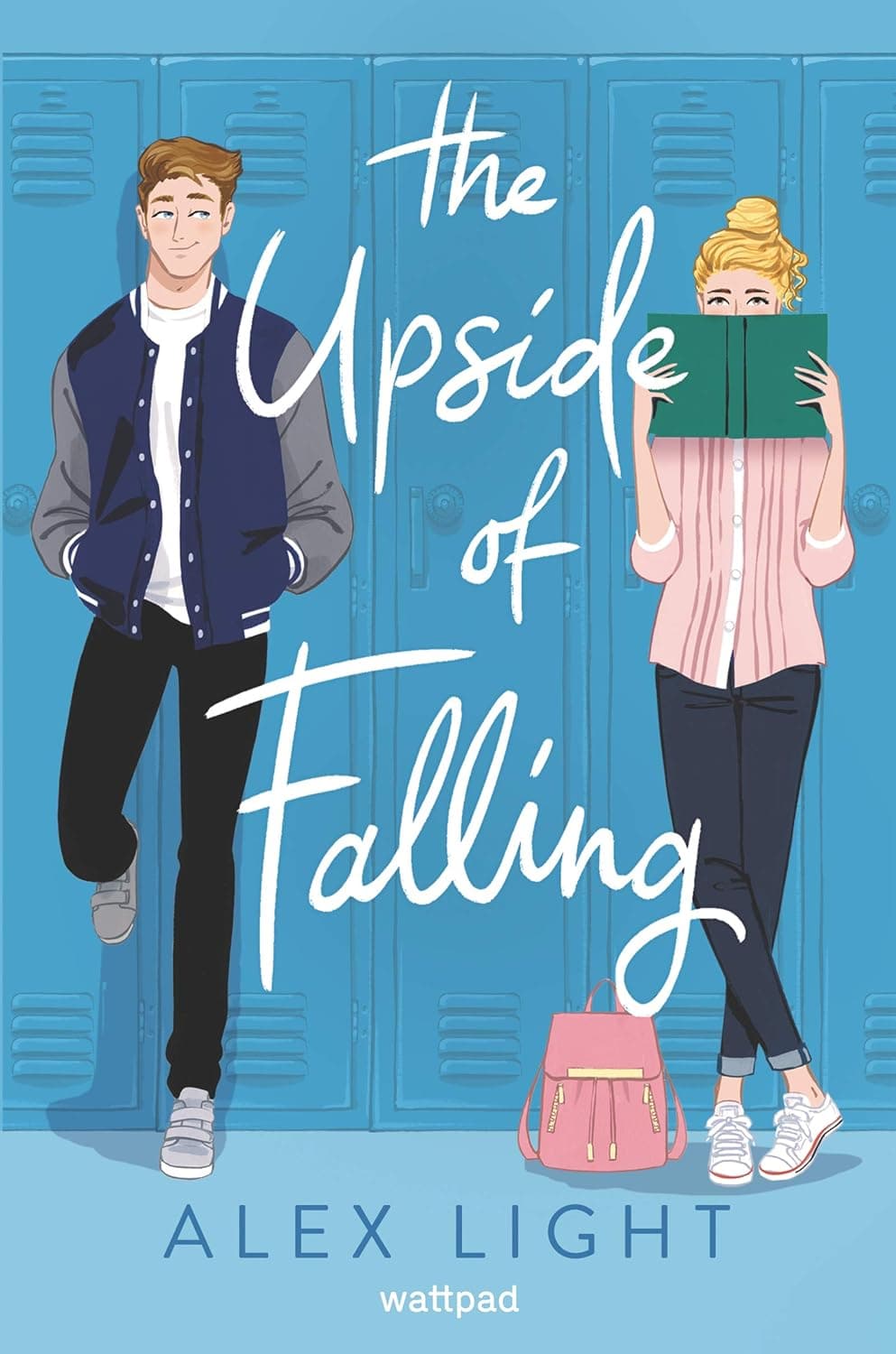
This collection of quotes from The Upside of Falling by Alex Light explores the novel's central themes of love, family, and self-discovery through the words of its characters.
Most Important Quotes
The Fake-Dating Pact
"So we’ll pretend to be dating for a few months, then have a mutual breakup, and part as friends. Deal?"
Speaker: Brett Wells | Context: Early in their arrangement (Becca, Chapter 2), Brett and Becca outline the rules at a lunch table, formalizing their pretend relationship.
Analysis: This line establishes the book’s central engine and spotlights the theme of Appearance vs. Reality. Brett’s tidy plan is laced with dramatic irony: a “mutual breakup” is simple only if emotions never get involved, and the reader senses from the outset that feelings will complicate the script. The pact solves immediate image problems—placating authority figures and shutting down gossip, particularly from Jenny McHenry—but it also forces sustained proximity that makes authenticity inevitable. As a plot catalyst, the pact turns a lie into a laboratory for truth, where staged affection becomes the crucible for real intimacy and growth.
The Weight of a Father's Dream
"I was continuing the dream he never had the chance to live out."
Speaker: Brett Wells | Context: Reflecting on his father’s past (Brett, Chapter 1), Brett explains why he pursues football so relentlessly.
Analysis: This confession anchors Brett’s arc and introduces the novel’s interest in inherited identity and Family Dysfunction and Secrets. He frames his ambition as filial duty, revealing how his goals have been shaped by someone else’s unfinished story rather than his own desires. The line foreshadows a painful reckoning: when the flawless father image cracks, Brett must decide whether football—and his persona—are truly his. In that choice lies the heart of his Coming of Age and Self-Discovery journey, as he learns to separate loyalty from self-erasure.
The Upside of Love
"I never thought I’d love anyone. And with all the downsides of love, you managed to show me the upside."
Speaker: Becca Hart | Context: After their reconciliation on the backyard swing in the rain (Becca, Chapter 11), Becca finally admits her feelings to Brett.
Analysis: This title-echoing line completes Becca’s arc and articulates the book’s thesis about The Nature of Love and Heartbreak. Having hidden in the safe confines of fictional romance, she now recognizes that real love’s risks are inseparable from its rewards. The phrasing contrasts “downsides” and “upside,” turning their relationship into proof that vulnerability can yield security, joy, and growth. As a resolution, the quote transforms Becca’s fear into faith, reframing love not as a trap but as a choice worth making.
Thematic Quotes
Appearance vs. Reality
Fiction Over Reality
"It was like, if love couldn’t exist in reality, at least it was alive in fiction. Between the pages it was safe. The heartbreak was contained."
Speaker: Becca Hart | Context: Watching football practice in the opening chapter (Becca, Chapter 1), Becca explains why she clings to romance novels.
Analysis: Becca’s metaphor casts fiction as a safety net, establishing the emotional armor she wears at the start. Reality, for her, is synonymous with divorce and disappointment; the page offers controlled emotion without consequences. The line bridges the novel’s central conceit: a fake relationship mimics fiction’s containment while letting real feelings seep through the cracks. By story’s end, this mindset is inverted—love is no longer something to quarantine but something to live.
The Perfect Family Facade
"From an outsider’s perspective, his family appeared picture perfect."
Speaker: Becca Hart (Narrator) | Context: At the hotel grand opening (Becca, Chapter 9), Becca appraises the polished image of Brett’s parents just before the affair comes to light.
Analysis: The phrase “picture perfect” reads like a glossy photograph—composed, curated, and flat—hinting that something essential has been edited out. The line heightens dramatic irony: the audience, aware of the affair, watches the performance with dread, sensing the rupture to come. It also mirrors Brett’s own belief in his family’s spotless image, a belief whose collapse triggers his identity crisis. The quote crystallizes how public veneers can conceal private wreckage, a core tension that the novel methodically exposes.
The Nature of Love and Heartbreak
Love as a Destructive Force
"No, it wasn’t worth it. Falling in love destroyed both of their lives. What is the point of loving someone when you’re certain you can’t be together?"
Speaker: Becca Hart | Context: In English class (Becca, Chapter 1), Becca argues that Romeo and Juliet’s love isn’t worth its tragic cost.
Analysis: Becca’s hardline verdict serves as her opening thesis: love equals damage. It’s a defensive stance forged by her parents’ breakup, allowing her to reject intimacy before it can reject her. Ironically, this pronouncement is what Brett overhears, catalyzing the fake relationship that will overturn her belief. The quote thus functions as both character sketch and structural setup, a position the narrative spends the rest of the book testing and transforming.
The Complexity of Lasting Love
"You can’t shut off eighteen years of loving someone because of one mistake, Brett. Love is more complicated than that."
Speaker: Willa Wells | Context: After the affair is revealed (Brett, Chapter 8), Brett’s mother explains her willingness to try counseling.
Analysis: Willa’s measured response reframes love not as all-or-nothing but as layered and cumulative—habits, history, and hope entangled with hurt. Spoken from the eye of betrayal, her perspective complicates Becca’s early absolutism, suggesting that endurance and repair can be as honest as rupture. The line humanizes the adults, urging Brett to see beyond idolization or condemnation to the messier middle where most relationships live. It’s a pivotal re-education in empathy and nuance that reshapes how Brett understands commitment.
Family Dysfunction and Secrets
The Fault in Leaving
"People leave, Brett. It’s not our fault for not giving them a reason to stay. It’s their fault for not finding one."
Speaker: Becca Hart | Context: In Brett’s parents’ bedroom after uncovering evidence of the affair (Brett, Chapter 5), Becca comforts him with wisdom drawn from her own father’s abandonment.
Analysis: Becca redirects blame away from children and toward the adults who choose to walk away, relieving a familiar burden of misplaced guilt. The chiasmic phrasing—our fault/their fault—distills accountability into a crisp, memorable maxim. In offering this solace, Becca steps out of the “fake” script and into authentic intimacy, deepening their bond. The line articulates the novel’s insistence that kids aren’t responsible for repairing the fractures they didn’t cause.
Uncovering the Mess
"It was like lifting up a curtain and finding a huge mess hiding behind."
Speaker: Brett Wells (Narrator) | Context: As Brett begins to sense something is off at home (Brett, Chapter 6), he reaches for a metaphor to explain the shift.
Analysis: The curtain image captures the shock of revelation: a neat stage set concealing chaos in the wings. It encapsulates Brett’s disillusionment as the family performance gives way to unseen truths, aligning with the book’s broader interest in what appearances conceal. The metaphor also signals an awakening—the moment he stops accepting the show and starts interrogating the set. That shift propels him toward painful honesty and eventual self-definition.
Character-Defining Quotes
Becca Hart
"I’d thought my love for romance novels would have died with my parents’ divorce. Instead, it made me crave them more. I was going through two books a week. I could not get enough. It was like, if love couldn’t exist in reality, at least it was alive in fiction."
Speaker: Becca Hart | Context: Early reflection on reading as refuge (Becca, Chapter 1).
Analysis: This confession distills Becca’s paradox: she is both skeptical of love and starving for it. Books become controlled experiments in feeling—narratives that promise catharsis without the chaos of real risk. The passage explains her initial cynicism in class and her willingness to try “fake” romance, which feels like fiction made safe. Her arc charts the move from curated emotion to lived experience, where love’s uncertainty becomes not a threat but a thrill.
Brett Wells
"The problem with having a dad you idolized was that you never wanted to let him down."
Speaker: Brett Wells | Context: Introducing his family dynamic and athletic drive (Brett, Chapter 1).
Analysis: Brett names the trap of idealization: when love becomes a standard to uphold rather than a relationship to inhabit. The line exposes the pressure beneath his perfectionism and explains why he embraces the fake-dating optics that flatter his family’s image. It also primes the devastation of betrayal—when a pedestal collapses, so does the identity built atop it. From that rubble, Brett must rebuild a self that isn’t contingent on pleasing a flawed hero.
Jenny McHenry
"Love. It’s easy to ridicule it when you’ve never felt it."
Speaker: Jenny McHenry | Context: During the English class debate (Becca, Chapter 1), Jenny counters Becca’s skepticism about romantic love.
Analysis: Jenny’s barb draws the battle lines between former friends: lived experience versus literary distance, confidence versus caution. Her certainty reads as social currency—using romance as status—yet the novel later reveals insecurities beneath the sheen. The comment therefore doubles as characterization and foreshadowing, hinting that Jenny’s authority on love is as performative as the high school stage they share. Her eventual softening mirrors the book’s broader move from posing to honesty.
Memorable Lines
A Shared Escape
"Because you go somewhere else when you read. I want to go there with you."
Speaker: Brett Wells | Context: Under the oak tree in the final chapter (Becca, Chapter 11), Brett asks Becca to read aloud.
Analysis: Brett doesn’t just accept Becca’s sanctuary—he asks to inhabit it, turning her private refuge into a shared space. The line uses reading as a metaphor for intimacy, suggesting that love is a willingness to enter the other’s interior world. It beautifully resolves the book’s central tension: fiction is no longer an escape from reality but a bridge between two realities. In joining her “elsewhere,” Brett makes connection itself the destination.
Opening and Closing Lines
Opening Line
"THERE WERE CERTAIN DAYS I could remember like they were yesterday... I had gotten into the habit of ending every day with the same question: Was it worth remembering or forgetting?"
Speaker: Becca Hart (Narrator) | Context: The novel’s first paragraph (Becca, Chapter 1).
Analysis: Becca’s framing question reveals a defensive, archivist mindset—curating memory to limit pain. It’s a controlling posture that treats life as material to be sorted rather than fully lived, a stance born of earlier hurt. The book proceeds to challenge that binary, filling her days with experiences that resist such neat filing. By the end, the “worth remembering” answer is no longer about avoiding sorrow but embracing meaningful complexity.
Closing Line
"We sat there and I read aloud, my back to Brett’s chest. He pulled me a little closer, held me a little tighter. And this time, we escaped together."
Speaker: Becca Hart (Narrator) | Context: Final scene on the backyard swing in the rain (Becca, Chapter 11).
Analysis: The closing image reclaims Becca’s old escape and recasts it as communion. What began as solitary protection becomes shared solace, resolving the novel’s movement from isolation to intimacy. The tactile details—closer, tighter—make safety feel physical, not just imagined on a page. “We escaped together” affirms that love can transform flight into finding home.