
Best ChatGPT Alternatives for Studying

Ishan Chawla
Student, Northwestern University
Since you're searching for ChatGPT alternatives, it's probably not because ChatGPT breaks. Unlike some tools I've reviewed on this blog, ChatGPT always works. The reason students look for alternatives is different; ChatGPT is a blank text box, and studying with a blank text box means you do all the structuring, pasting in your material, and re-prompting for flashcards every time.
I know this because I tested it directly where I put ChatGPT against Turbo with real coursework. It's the best explainer-on-demand ever built. But it also couldn't ingest my lecture audio, failed on a YouTube video that had a public transcript, and offered no flashcards, no quizzes, and no podcast features built-in.
Quick disclosure before we start, which is the same as always: I work at Turbo AI, so I'm obviously not neutral. That's exactly why everything below is based on hands-on testing you can check for yourself, and why the full head-to-head (with every screenshot) is linked above.
Let's dive in.
1. Turbo AI — Best ChatGPT Alternative for Studying
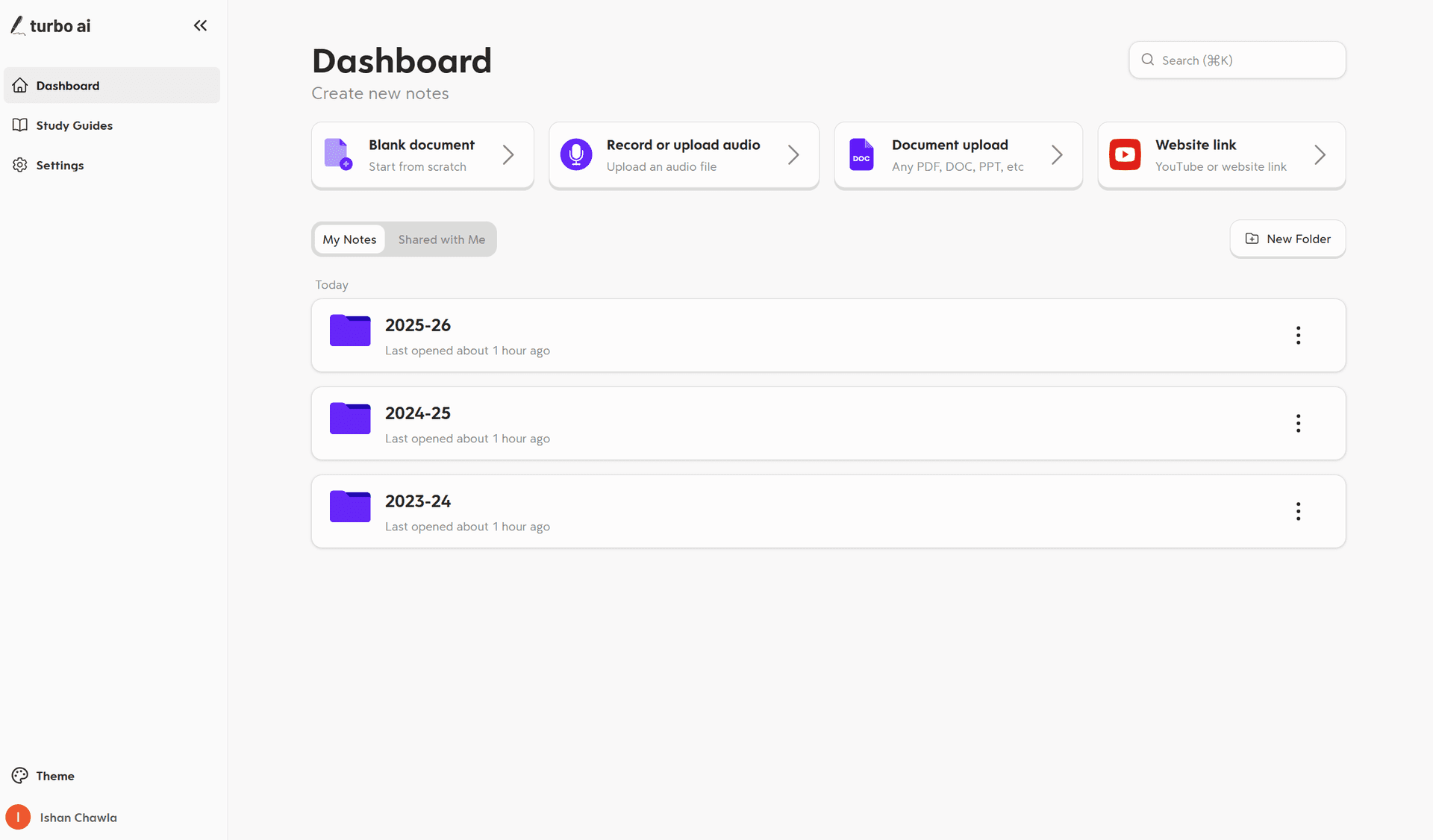
Turbo tops this list because it's the systematized version of everything students use ChatGPT for when studying.
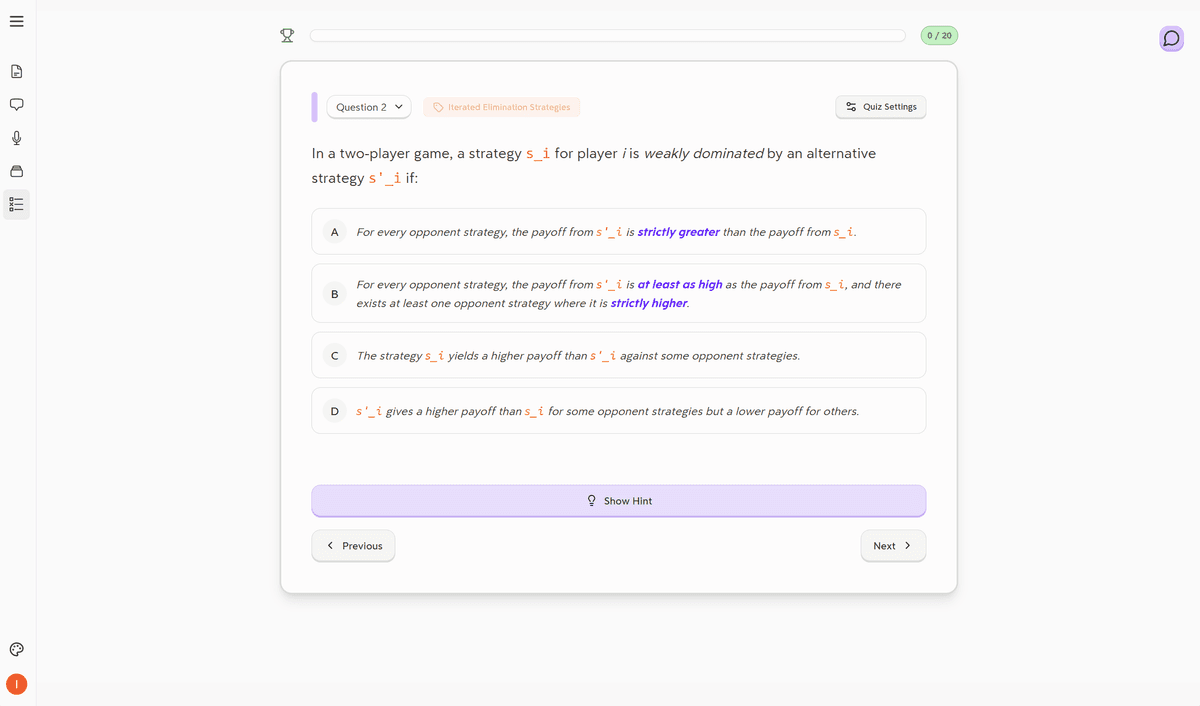
The workflow: upload a lecture recording, a PDF, lecture slides, or a YouTube video, and Turbo automatically generates clean, organized notes. From your notes, everything else is one tap away: flashcards, multiple-choice quizzes, a chatbot that answers in the context of your material, and a podcast version you can listen to on the go.
Notes
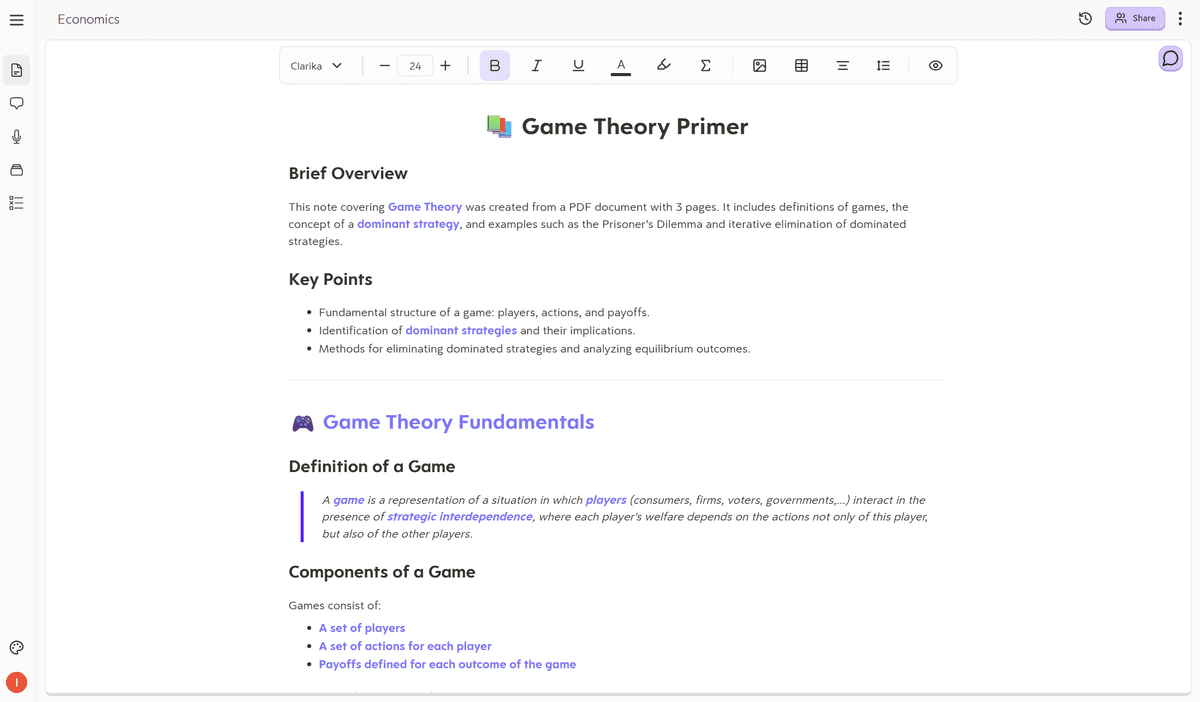
Flashcards
Quiz
Podcast
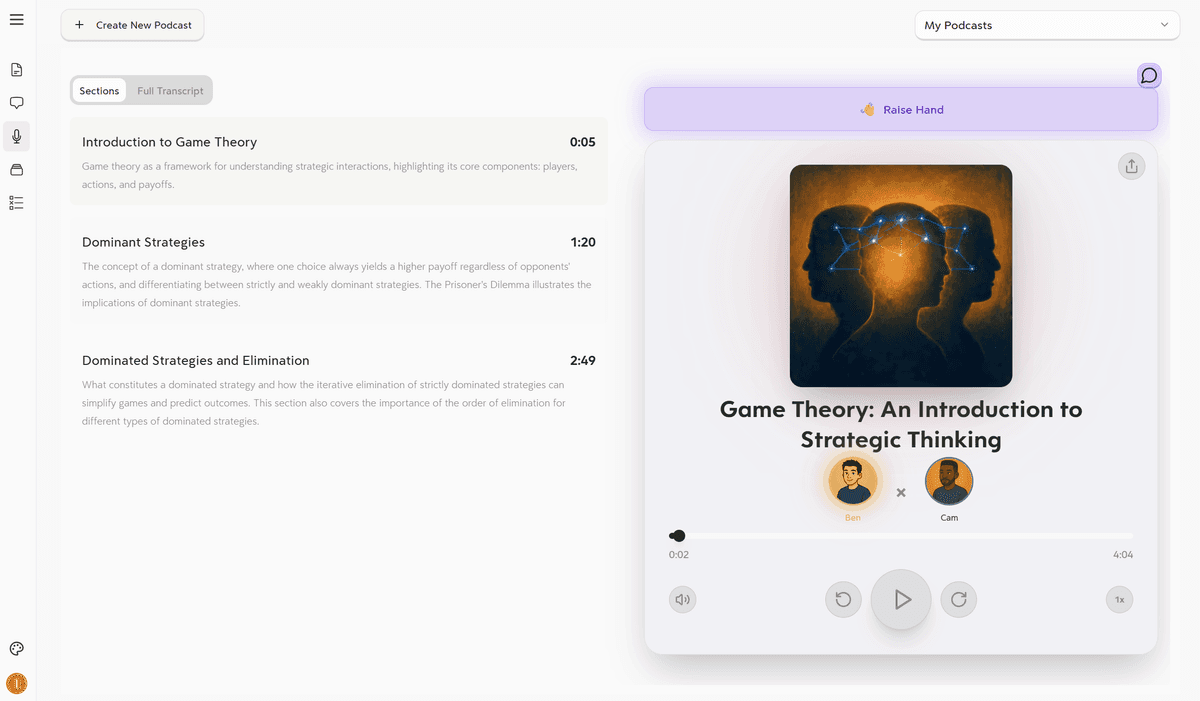
The differences from ChatGPT showed up at every step of my testing. Turbo ingested my lecture audio and YouTube links in one step; ChatGPT had no path for the audio and came back empty on the video. On a 32-page economics paper, Turbo's notes opened with an overview and key points, compressed the paper's framework into a table I could rebuild on an exam, and kept the paper's actual figures with captions. And everything lives in a persistent notebook you organize.
ChatGPT, however, is still the better pure explainer, and its memory of who you are enables personalization Turbo doesn't attempt. That's why the real answer for most students is both, but if you're choosing which to build your studying around, Turbo is the pick.
Pricing: $20/month billed monthly, or $10/month billed annually ($120/year, roughly the cost of one textbook) — the same monthly price as ChatGPT Plus.
Best for: Students who are tired of re-prompting ChatGPT into being a study tool and want the whole pipeline (upload → notes → flashcards → quiz → podcast) to happen automatically.
2. NotebookLM (Now Gemini Notebook) — Best Free Source-Grounded Alternative
NotebookLM is the closest thing to ChatGPT, but anchored to your documents. Upload sources, chat with them, and get answers grounded in what you actually uploaded rather than the model's general knowledge, which also means fewer confident wrong answers about your specific course material. Its Audio Overview feature turns documents into a podcast-style conversation, and is free.
The limitation is that NotebookLM is a research tool, not a study system. While NotebookLM does offer some study tools such as flashcards and quizzes, there is no spaced repetition or integrated, targeted study protocol.
Best for: Research-heavy courses, and anyone whose main ChatGPT frustration is answers that drift away from the actual reading or lack technical depth.
3. Claude — Best Alternative General Assistant
Claude is the most direct ChatGPT substitute on this list: a general-purpose assistant that handles explanations, long documents, and writing help. If your reason for leaving ChatGPT is about the assistant itself rather than the studying workflow, this is the comparable swap.
However, the structural limitations of ChatGPT apply here too: no auto-generated flashcards, no quiz interface, and no persistent course notebook. Swapping one general assistant for another changes little.
Best for: Students who want a different general assistant, paired with an actual study system from this list.
4. Quizlet — Best If You Mainly Used ChatGPT to Quiz You
Quizlet is the oldest tool on this list, and it's still good at what it does: flashcards and matching games. If your main ChatGPT habit was quizzing, Quizlet is that experience with an actual interface: progress tracking, game modes, and actual flashcards.
Quizlet, however, doesn't make the material for you. You either build flashcard sets manually or rely on other students' sets, which may not match your class.
Best for: Students who already have their notes handled and just want a dependable testing experience.
5. StudyFetch — Best If You Want Maximum Features
StudyFetch converts your materials into notes, flashcards, and quizzes, adds an AI tutor ("Spark"), and layers on practice tests, study games, and study calendars.
I'll be straight with you: I tested StudyFetch, and the execution is littered with bugs, clutter, and features that don't connect. However, its study calendars and planning tools are a genuine niche nothing else on this list attempts.
Best for: Students who want scheduling and planning features, and are willing to trade some polish for them.
Which One Should You Pick?
It depends on what's driving you away.
- Tired of doing all the structuring yourself? Turbo.
- Tired of answers that drift from your actual readings? NotebookLM.
- Just want a different assistant? Claude.
- Only ever used it to quiz you? Quizlet.
And the closing note from my full comparison: for most students the answer isn't leaving ChatGPT entirely, but keeping it for explanations and tasks outside coursework while giving the job of studying to a tool built for it.
The Bottom Line
ChatGPT's problem for students is that it's a conversation system where materials don't flow into organized notes, review doesn't happen on schedule, and nothing carries over from week to week unless you carry it yourself.
That's why Turbo tops this list. Upload your lectures, readings, and videos; get clean notes, flashcards, quizzes, and a podcast, every time, in a notebook that's still organized in week ten.
Ishan Chawla
Student, Northwestern University