Opening
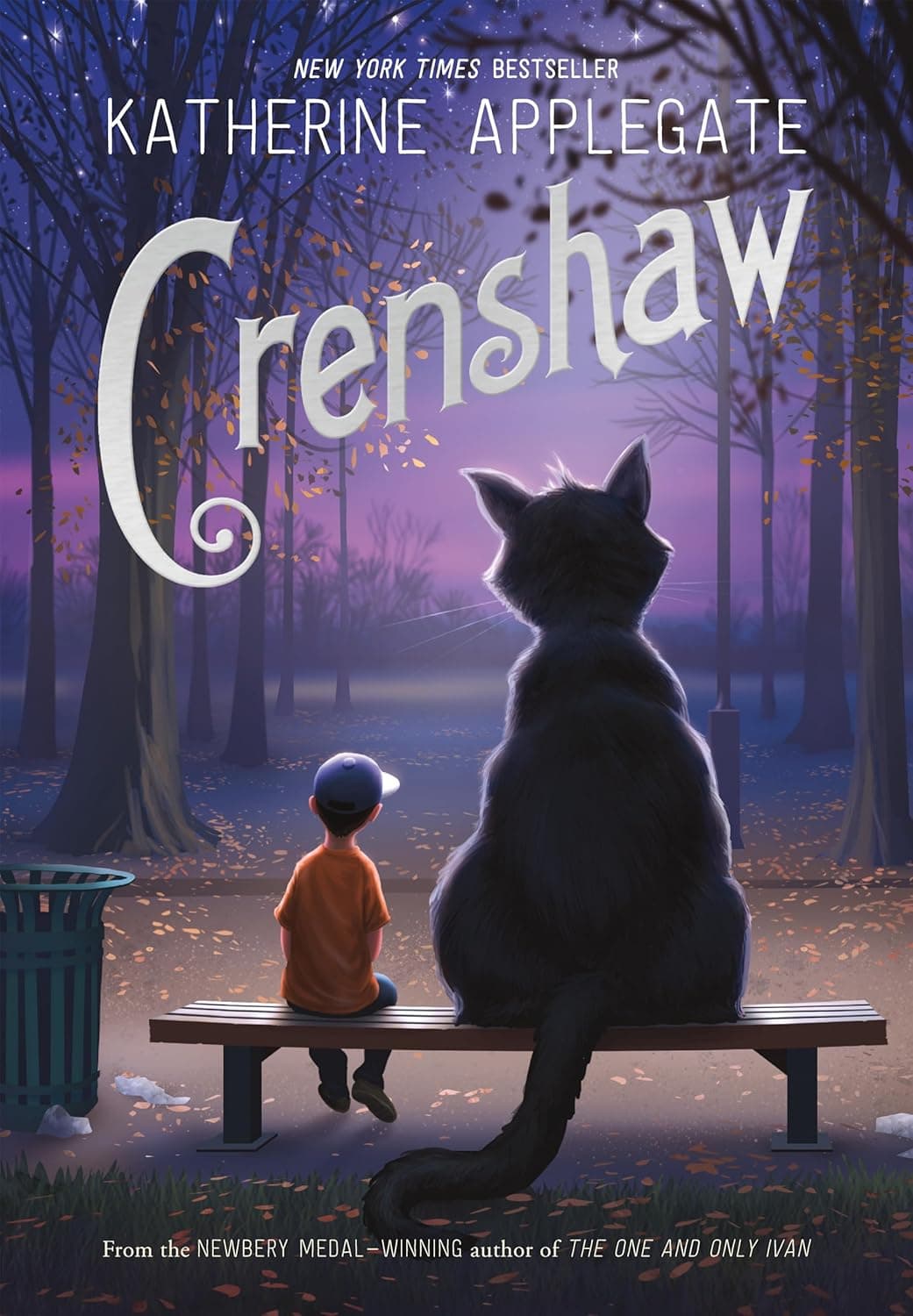
When Jackson orders his giant imaginary cat, Crenshaw, to leave, he discovers the cat follows rules Jackson doesn’t realize he’s writing. Crenshaw pushes him toward hard truths, even as Jackson tries to protect his younger sister, Robin, with gentle lies. A flashback then drops the story into the family’s first slide into homelessness, where “adventure” becomes the word Jackson’s parents use to soften a disaster.
What Happens
Chapter 16: You Make the Rules
Jackson throws open his bedroom window and commands Crenshaw to go. The cat lounges on his bed and calmly refuses, explaining the rules of imaginary friends: they’re invited, they stay as long as they’re needed, and they leave when their work is done. Jackson snaps that he didn’t invite him; Crenshaw just looks doubtful.
Desperate, Jackson tries to shove Crenshaw out the window. The cat won’t budge—he’s impossibly heavy—and his claws snag the family’s quilt. When Jackson asks who makes these rules, Crenshaw sets his paws on Jackson’s shoulders and says, “You do, Jackson. You make the rules.” The moment crystallizes the pull between reality and imagination, anchoring the theme of Truth and Imagination. A frog at the windowsill distracts Crenshaw; he uses it as an excuse to leave, but not before giving Jackson the point he’s been avoiding: “You need to tell the truth, my friend… To the person who matters most of all.” He leaps after the frog, and Jackson feels oddly relieved—and suddenly cold.
Chapter 17: I Have You
In the hallway, Robin waits—she heard Jackson talking. He shrugs it off as talking to himself and leads her to bed for a story. He asks if she’s ever had an imaginary friend. Robin says no; she doesn’t need one—“anyways I have you.” Their simple exchange anchors the novel’s faith in Family and Resilience.
Then Robin asks about the minivan. She remembers living in it and wonders if they’ll have to do it again, worrying most about not having a bathroom. Jackson realizes she’s as scared as he is. Crenshaw’s command to tell the truth rings in his head, but when he sees Robin’s silent tears, he chooses to protect her. He jokes about popsicles and their parents’ snoring, promising everything is fine. Robin drifts off, soothed, while Jackson lies awake “too busy remembering,” a choice that complicates Honesty and Communication.
Chapter 18: A Pile of Kleenexes
Part Two begins with a flashback. Jackson reflects on Poverty and Homelessness through an image from Jackson’s Mom: money trouble spreads like a cold—slow at first, then everywhere. He remembers how, as a first-grader, it felt sudden anyway, like waking up to a different life. He even feels a flicker of excitement at the idea of living in their minivan, a child’s misread of the danger ahead.
Chapter 19: Back. Forth.
The day they move out after first grade is quiet and stripped of ceremony. Jackson slides his pillow into the overcrowded minivan and notices the rear wiper moving even though the day is clear. The wiper looks long and hairy, like a tail. He runs to the back, but it’s ordinary again. The eerie image—his first glimpse of Crenshaw—arrives as the family’s safety dissolves, and Jackson senses something vast and strange is beginning.
Chapter 20: Let the Adventure Begin
They cram into the hot minivan. Tension crackles between Jackson’s Dad and Jackson’s mom as they paste on smiles and call the upheaval temporary—an “adventure.” When Jackson asks why they have to leave, they deflect with “It’s complicated” and “You’ll understand when you’re older.”
Dad cues up a B.B. King blues track about not being loved, which leads to a conversation about love and anger. Jackson asks if kids have to love their parents; Dad says, “You can be mad at someone and still love them with all your heart.” As they pull away, Jackson asks if their neighbor owns a big cat—he can’t shake the tail-like wiper. His mom dismisses it, and their road into homelessness begins under the painfully upbeat banner: “Let the adventure begin.”
Character Development
Jackson tries to banish imagination and stick to facts, but Crenshaw turns that impulse back on him: Jackson is the one writing the rules of what he faces and avoids. His choice to comfort Robin with a lie spotlights both his protectiveness and his fear of saying what’s true.
- Jackson: Doubles down on reason, then breaks his own rules to shield Robin; the gap between what he knows and what he can say widens.
- Crenshaw: Moves from whimsical presence to purposeful guide, pushing Jackson toward truth and agency.
- Robin: Reveals memory, worry, and emotional acuity beneath her cheerful front; she’s not as sheltered as Jackson thinks.
- Jackson’s parents: Lean on vague optimism and euphemism, modeling avoidance even as they try to soothe their kids.
Themes & Symbols
Crenshaw embodies the tension between truth and imagination. He isn’t an escape; he’s a tool Jackson creates to face what he can’t articulate alone. That paradox fuels Jackson’s misstep with Robin: he uses imagination—a comforting lie—to protect her, even as his imaginary friend demands honesty. The family’s habit of softening blow after blow with “adventure” and “it’s complicated” shows how communication falters under stress.
The flashback grounds poverty in the body—like a cold—and in objects: the minivan becomes a rolling symbol of displacement and survival. The B.B. King blues track layers melancholy with resilience, modeling how sorrow can carry its own strength. Across these chapters, the story traces how families cope, introducing the scar tissue of Coping with Stress and Trauma that now shapes Jackson’s choices.
Key Quotes
“You do, Jackson. You make the rules.”
Crenshaw hands Jackson responsibility for his own narrative. The line reframes imagination as agency: Jackson is not powerless, but he must choose to face the truth he keeps dodging.
“You need to tell the truth, my friend… To the person who matters most of all.”
This directive defines the arc ahead. It implies that honesty is both a moral duty and a healing act directed at someone specific—later revealed as Robin, and ultimately himself.
“anyways I have you.”
Robin’s quiet declaration makes sibling care the safest space in their unstable world. It intensifies the stakes of Jackson’s lie: comfort now may delay the real protection truth can offer.
“It’s complicated.”
The parents’ refrain functions as a protective screen—and a wall. It shows love bending into avoidance, modeling the very communication pattern Jackson begins to repeat.
“You can be mad at someone and still love them with all your heart.”
Dad gives language for contradictory feelings, legitimizing Jackson’s anger without erasing love. The line invites nuance in a situation that resists simple explanations.
“Let the adventure begin.”
Irony sharpens this final line: “adventure” becomes a mask for loss. The phrase captures the family’s hopeful spin and the heartbreak it can’t quite hide.
Why This Matters and Section Significance
These chapters reveal why Crenshaw returns: he first appears at the family’s original break into homelessness and resurfaces when old patterns—silence, euphemism, avoidance—threaten to repeat. By shifting into flashback, the novel pairs Jackson’s present fear with the past wound that created it.
Jackson’s choice to lie to Robin defines his central conflict. He wants facts, yet he fears the pain truth will cause. Crenshaw’s challenge forces him toward a different kind of courage: naming what’s happening so his family can actually address it, not just survive it with jokes and “adventures.”