Opening
Back in the High King’s favor, Prince Cardan tries on the mask of a villain and finds it fits too well. A gift, a story, and a betrayal crack that mask, turning swagger into self-sabotage and marking the moment he begins to hate stories—and to wield cruelty like armor.
What Happens
Chapter 7: The Prince of Elfhame Is Given Two Stories
Cardan—performing wickedness to needle his family and nettle Val Moren—slips from a state dinner to hunt for more wine. In the corridor he finds his sister Rhyia reading a mortal curiosity: Alice’s Adventures in Wonderland, a gift from Vivienne, Jude Duarte’s older sister. Rhyia, deciding he needs “a little nonsense,” presses the book into his hands. The gesture feels strange; kindness is not a language Cardan trusts.
The next day by the sea, the troll woman of his childhood—Aslog of the West—steps out of memory and into salt wind. Cardan had half-believed he invented her. She lugs a basket she claims holds bones to grind like grain, a bald threat to High King Eldred. As they walk the market, Aslog offers to retell the story she once gave him—but with a change. This time, she begins, there is “a boy with a wicked heart,” not a wicked tongue.
In Aslog’s altered tale, a witch curses the boy with a heart of stone so he can feel no love, fear, or delight. Seeing only advantage, he seeks to win a rich man’s daughter by outlasting three nights while she becomes a monster. His stone heart keeps him unafraid; he even lies beside her. On the third night, a greater monster arrives—the witch’s son, the girl’s true love, who cursed himself to save her. When the new monster attacks, the boy’s chest cracks; the curse breaks. Flooded with remorse and a tender love for the girl, he tries to defend her, but the two monsters flee together. The boy inherits wealth—and a heart heavier than before. Aslog leaves Cardan with a sharp moral: even stone can break.
Chapter 8: The Prince of Elfhame Learns to Hate Stories
Cardan wakes in the wreckage of a revel at Hollow Hall, his brother Balekin’s estate. He sifts through hungover memories: his friends—Nicasia, Locke, and Valerian—guzzling delight and cruelty; Locke murmuring too close to Nicasia. A prickle of unease turns to certainty when he reaches his room and finds Locke and Nicasia asleep and naked on his rug. The sight strikes like Aslog’s prophecy, as if shards of his heart wedge in his lungs.
The cruel, untouchable persona slips. Cardan rouses them. Locke tries to spin it into a clever anecdote they can laugh about later; Cardan lunges, snarling that he is done with stories. Locke parries with a cold claim that Cardan and Nicasia have only habit, not love. Nicasia’s apology barely rises to the level of excuse. Cardan dismisses her with icy dignity, but the moment calcifies his new belief: stories are weapons and lies, and he refuses to be their mark.
He drinks through three days, then rides, unwashed and swaying, onto the palace grounds where Gentry children study and scatters them like pheasants. In the crowd he spots Jude and recognizes in her eyes a hatred as fathomless as his own; he chases her and Taryn, trying to prove her fury is as impotent as he feels. Back at Hollow Hall, Balekin shrugs off Cardan’s pain and orders him to reclaim Nicasia for political leverage. Cardan sees himself becoming the very fool he loathes—trapped by court games and a broken heart.
Character Development
Cardan’s mask of wickedness fractures into something rawer. What once reads as posturing hardens into a reflex: bruise before you can be bruised.
- Cardan: Learns that his “stone” heart still breaks; pivots from performance to self-destruction; recognizes a dark kinship with Jude’s rage; begins to equate stories with manipulation.
- Locke: Reveals himself as a gamesman who reframes betrayal as entertainment, demanding everyone serve his narrative.
- Nicasia: Exposes fickle loyalty; chooses novelty and power-play over commitment; offers apology without remorse.
- Jude: Speaks no lines yet looms large; her visible hatred becomes a mirror and magnet for Cardan’s own.
- Aslog: Operates as a prophetic storyteller; reshapes a tale to fit Cardan like a curse and a caution.
Themes & Symbols
Stories become both map and minefield. In Aslog’s mouth, narrative shifts from fable to blade, demonstrating The Power and Peril of Stories: a story can warn, reshape fate, or excuse harm. Cardan witnesses both uses—Aslog’s tale as prophecy and Locke’s patter as cover—and recoils into rejection.
Heartbreak catalyzes a sharper mask. Cardan’s lashing out at the school and his escalating humiliation tactics illustrate Cruelty as a Defense Mechanism. Aslog’s fable hints that pain might awaken feeling—and perhaps Love and Redemption—but Cardan’s immediate choice is to double down on the only role he believes is his. These chapters also probe Identity and Self-Perception: Cardan performs “villain” until betrayal forces him to see the aching person underneath.
Symbol spotlight:
- Heart of Stone: A literal curse in Aslog’s story and a metaphor for Cardan’s emotional armor—heavy, brittle, and breakable.
Key Quotes
“Once, there was a boy with a wicked heart.”
Aslog revises the tale’s premise, moving the flaw from surface (tongue) to core (heart). The shift reframes Cardan’s problem as not just cruelty of speech but damage at the seat of feeling.
“A heart of stone can still be broken.”
This moral is both warning and foreshadowing. It predicts Cardan’s coming hurt and insists that numbness is not safety—only fragility in disguise.
“I am tired of your stories.”
Cardan rejects Locke’s narrative spin in the moment he most needs meaning. The line marks his turn from being ruled by other people’s stories to weaponizing contempt instead.
He sees in Jude “a hate big enough and wide enough and deep enough to match his own.”
Recognition, not romance, binds them first. Cardan’s projection forges an early, volatile connection that will govern their battles and intimacy.
Why This Matters and Section Significance
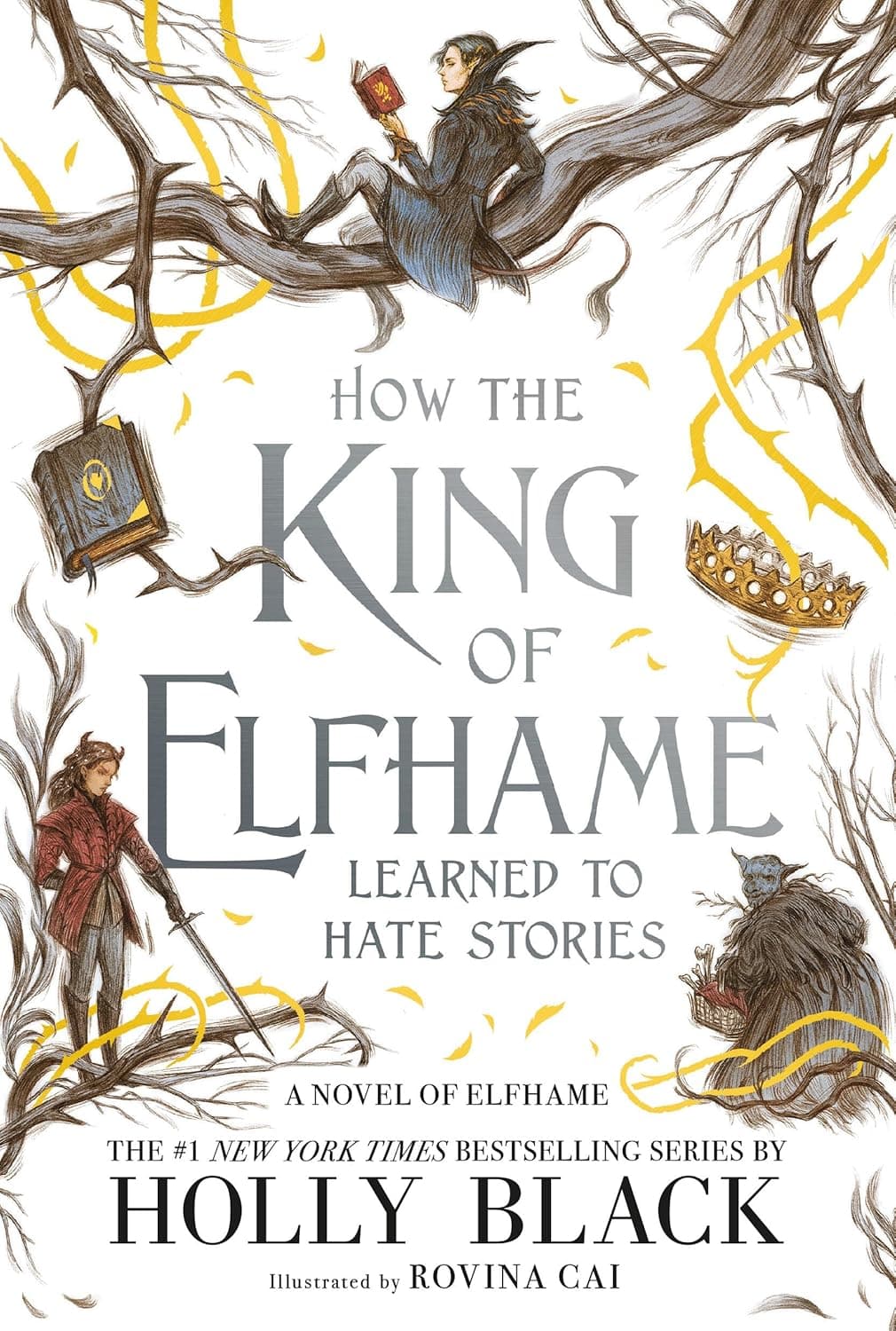
These chapters supply Cardan’s adolescent fracture point—the betrayal that transforms theatrical mischief into sustained, strategic cruelty. They also explain the book’s title: he learns to hate stories because stories, whether Aslog’s prophecy or Locke’s excuses, govern him until he fights back the only way he knows—by hardening.
The section seeds the Cardan–Jude dynamic that drives The Folk of the Air. Cardan targets Jude not at random but because he recognizes himself in her. That warped kinship—hatred first, fascination next—sets the emotional grammar for their future power struggles, compromises, and eventual, complicated love.