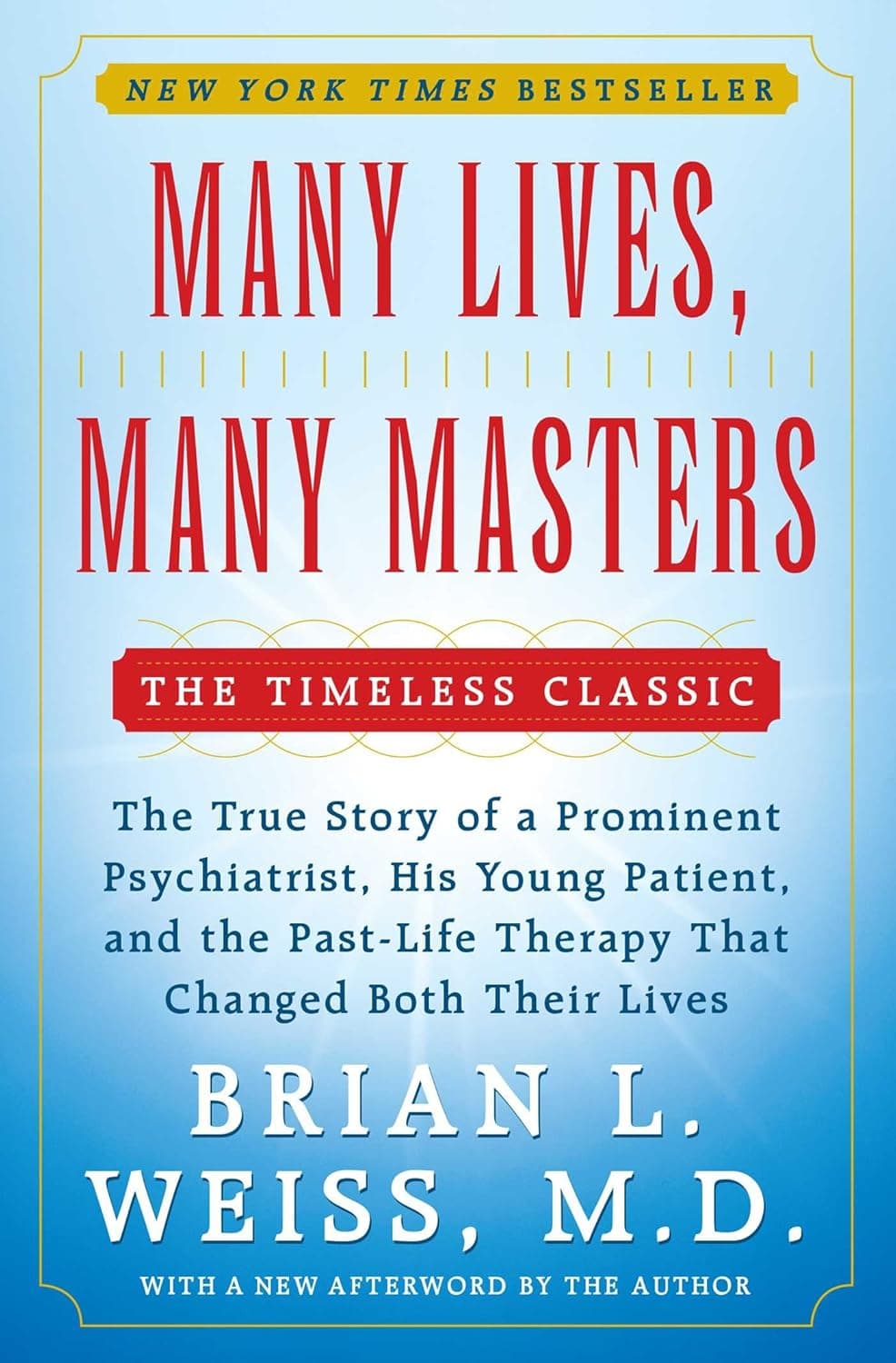
Dr. Brian L. Weiss
Quick Facts
- Role: Author-narrator and psychiatrist; Chairman of Psychiatry at Mount Sinai Medical Center (Miami)
- First appearance: Opening chapters, as the therapist treating Catherine
- Background: Columbia (undergraduate), Yale (medical school); leading figure in biological psychiatry
- Core conflict: A methodical scientist confronted by evidence that challenges materialist assumptions
- Key relationships: Patient (Catherine), spiritual teachers (The Masters), family touchstones (father Avrom and son Adam), partner-in-practice (wife Carole), professional conduit (Dr. Edward Poole)
Who They Are
At heart, Dr. Brian L. Weiss is the consummate rational clinician—disciplined, data-driven, and protective of scientific standards—who becomes an unlikely bridge between psychiatry and spirituality. The narrative frames him as both guide and pilgrim: he leads a patient into hypnosis to heal trauma, then finds himself led into a worldview that redefines life, death, and consciousness. He is not presented through physical description but through an interior portrait: a mind trained to doubt, a conscience trained to care, and a professional standing strong enough to risk reputational loss for truth.
Personality & Traits
Dr. Weiss begins as a skeptical empiricist and evolves into a careful but courageous investigator of what lies beyond laboratory proof. His traits are not static; they reorient as his evidence base changes, revealing how scientific integrity can demand openness to the unexpected.
- Scientific rigor: “Years of disciplined study… I distrusted anything that could not be proved.” He documents every session, tests alternative explanations, and withholds belief until forced by data.
- Methodical determination: After eighteen months of conventional therapy fail, he chooses hypnosis—not out of mysticism, but problem-solving resolve—and tracks patterns across regressions.
- Empathic healer: His persistence is grounded in compassion for Catherine’s suffering; care, not curiosity, keeps him in the room when the material defies his training.
- Self-aware intensity: He calls himself “a bit obsessive, intense, and inflexible,” recognizing the double edge—useful in diagnosis, obstructive when confronting anomalous evidence.
- Courageous openness: When evidence accumulates, he risks his standing to follow it, concluding that silence would be a greater betrayal of science and of patients than speaking out.
Character Journey
Dr. Weiss’s arc embodies the book’s central theme of Transformation from Skepticism to Belief. He begins as a “hotshot” biological psychiatrist, grounded in neurochemistry and psychopharmacology. Catherine’s first regression shocks his clinical expectations; his mind searches for artifact or suggestion. The axis tilts when she channels messages from The Masters revealing private facts about his father, Avrom, and infant son, Adam—details she could not possibly know. That rupture in plausibility dissolves his fear of death and reorders his purpose: from accruing credentials to serving as a conduit for wisdom. He applies these insights practically—comforting his dying mother-in-law, rehumanizing his clinical work—and ultimately accepts authorship as vocation, publicly documenting what he once would have dismissed.
Key Relationships
- Catherine: She is both patient and catalyst. Their therapeutic alliance deepens into a shared inquiry, where her regressions heal her symptoms and force him to revise the boundaries of mind and memory. His duty of care becomes the discipline that keeps him honest as phenomena escalate.
- The Masters: Speaking through Catherine, they become his unexpected teachers—offering cosmological lessons on purpose, suffering, and Reincarnation and Past Lives. Their messages shift him from clinician to interpreter, demanding he balance reverence with verification.
- Avrom and Adam: The intimate, verifiable details about his deceased father and infant son pierce his defenses. What begins as clinical observation turns into personal healing, transforming abstract doctrine into lived consolation.
- Carole Weiss: As spouse and psychiatric social worker, Carole is his sounding board and stabilizer. Her grounded presence helps him metabolize the extraordinary, maintaining professional discipline while expanding their shared framework.
- Dr. Edward Poole: The pediatrician who refers Catherine becomes a node in a larger pattern when Catherine identifies him as her father in a past life—an instance that illuminates Karma and Interconnected Souls and nudges Weiss toward recognizing design within coincidence.
Defining Moments
Dr. Weiss’s turning points move from clinical curiosity to existential commitment, each step tightening the link between evidence and transformation.
- The first past-life regression: Prompting Catherine to “go back to the time from which your symptoms arise” yields a vivid life as Aronda (1863 B.C.). Why it matters: It cracks the frame of conventional therapy, compelling him to test rather than dismiss anomalous data.
- The family revelations: Messages about Avrom’s death and Adam’s rare heart defect arrive via Catherine. Why it matters: The information is specific, private, and decisive—ending his ability to explain everything through suggestion or fantasy.
- The shower epiphany: He feels compelled to write and “put this experience down on paper.” Why it matters: Acceptance turns inward conviction into public responsibility, even at professional risk.
- Guiding Minette’s passing: He uses the teachings to ease his mother-in-law’s death. Why it matters: The book’s ideas prove ethically actionable—compassion translated into practice, not merely belief.
Essential Quotes
Years of disciplined study had trained my mind to think as a scientist and physician, molding me along the narrow paths of conservatism in my profession. I distrusted anything that could not be proved by traditional scientific methods. This articulates his starting posture: skepticism as a virtue of training. The line frames later openness not as credulity, but as the evolution of a principled empiricist confronted with unaccounted-for evidence.
I was stunned! Previous lifetimes? Reincarnation? My clinical mind told me that she was not fantasizing this material, that she was not making this up... My gut reaction was that I had stumbled upon something I knew very little about—reincarnation and past-life memories. It couldn't be, I told myself; my scientifically trained mind resisted it. Here we witness cognitive dissonance in real time—clinical assessment (“she was not fantasizing”) colliding with the constraints of his model. The quote captures the transitional turbulence before belief is integrated.
Catherine could not possibly know this information. There was no place even to look it up... This unsophisticated laboratory technician was a conduit for transcendental knowledge. And if she could reveal these truths, what else was there? I needed to know more. The insistence on “no place even to look it up” is his evidentiary pivot. Intellectual humility drives the next phase: investigation born not of speculation, but of eliminated alternatives.
My life would never be the same again. A hand had reached down and irreversibly altered the course of my life. All of my reading, which had been done with careful scrutiny and skeptical detachment, fell into place. Catherine's memories and messages were true. This is the moment of synthesis—prior skepticism is not discarded but reorganized into a broader paradigm. The metaphor of a guiding “hand” underscores the felt inevitability of his new direction.
I still write scientific papers, lecture at professional meetings, and run the Department of Psychiatry. But now I straddle two worlds... I know that the worlds are connected, that all is energy. Yet they often seem so far apart. My job is to connect the worlds, to carefully and scientifically document their unity. He defines his mature mission: integration rather than abandonment of science. The task is translational—to document unity with rigor, so personal revelation can be responsibly shared with the professional world.